Consistency Across Views in Architectural Renders
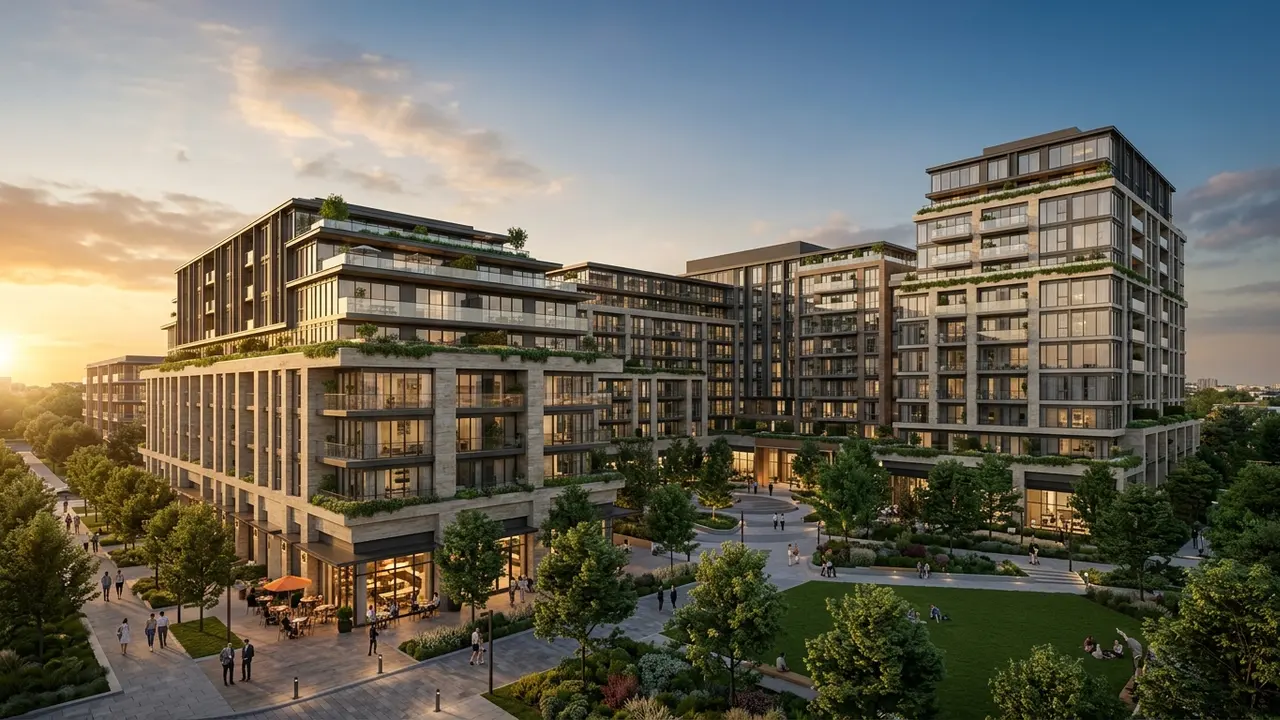
Quick answer: Consistency means every deliverable comes from one model, so the building is the same building in the brochure, the website, the hoarding, the animation and the VR walkthrough. It is the requirement buyers notice least when it is present and trust least when it is missing, and it is structurally what independent image generation cannot provide.
Ask a developer what they are buying when they commission visualization and the answer is usually a number of images. Ask what they are actually relying on and it turns out to be something else: that the images agree with each other. A campaign is not one picture, it is a set that has to hold together across a brochure, a leasing site, a hoarding, an investor deck, an animation and sometimes a VR walkthrough, over a period of months while the design keeps moving.
This is the requirement people underestimate, and it is worth taking apart properly, because a short paragraph does not do it justice.
What inconsistency actually looks like
It is rarely dramatic. It is a set of small disagreements that accumulate:
- The balcony rail is glass in the hero exterior and metal in the amenity view.
- The lobby has a different ceiling in the brochure than in the walkthrough.
- The unit plan in the interior render does not match the floor plan on the same page.
- The tower has fourteen floors in one image and sixteen in another, because one was made before a design change and never revisited.
- The material palette shifts warmer between the website and the printed piece, so the same building looks like two buildings.
Individually each is minor. Together they produce a specific effect: the viewer stops trusting the imagery without being able to articulate why. That is the real cost, and it is hard to measure precisely because it shows up as hesitation rather than as a complaint.
Who notices, and what it costs them
Different audiences catch different disagreements. A buyer notices the finish and the layout, because they are imagining living in it. A broker notices when the plan on the sheet and the render on the wall describe different units, and it undermines them in front of a client. A lender or an investor reviewing a package notices when the unit count implied by the imagery does not match the pro forma. A review board notices when the massing in one view does not match the massing in another, and in a public setting that is the kind of thing that gets raised aloud.
None of those are aesthetic complaints. They are all trust failures, and trust is the thing pre-construction imagery exists to create, since there is no building to visit.
Why one model is the whole answer
When every deliverable is generated from a single model, consistency is not a discipline anyone has to maintain, it is a property of the pipeline. Change the balcony rail once and it is changed in the exterior, the amenity view, the animation and the walkthrough, because they are all views of the same thing. The building cannot disagree with itself, because there is only one of it.
The same is true of the plan set. When interactive floor plans and 3D floor plans come from the same model as the interiors, the unit shown in the render is the unit on the plan. When they are produced separately, from different sources at different times, matching them becomes a manual checking task that someone has to do perfectly, repeatedly, under deadline.
Why generated image sets break here structurally
This is the point where the AI comparison stops being about quality. Each generated image is an independent sample. There is no persistent model behind them, so the second image is not another view of the first, it is a new guess that happens to share a description. That is why generated sets drift so quickly across a campaign: not because the tool is weak, but because there is nothing in the process that could make image four agree with image one.
It also means the drift cannot be fixed by re-prompting, because re-prompting produces another independent sample, changing things nobody asked to change. The dimension-by-dimension comparison in AI rendering versus professional visualization covers where this fits against cost, speed and accountability.
None of that makes generation useless on a campaign, and there is one use of it that directly serves consistency. Generated imagery is genuinely good at settling a direction fast: palette, mood, the general character of an amenity space, explored cheaply before any model exists. Resolving those decisions early is precisely what keeps a modeled set from being rebuilt halfway through, because the expensive kind of inconsistency is the kind introduced by a finish change after production imagery has already shipped. Used at the front of the process, generation reduces drift rather than causing it.
How to specify consistency in a scope
Most scopes describe deliverables and say nothing about coherence, then treat mismatches as a surprise. A few lines prevent it:
- State that all deliverables derive from a single model set, including any animation, VR and plan visuals.
- Name the source of truth: which drawing set and which revision the model is built from.
- Require that design changes propagate to every affected deliverable, not just the one being revised.
- Fix the material and finish schedule before production imagery starts, and treat changes after that as a change to the whole set.
- Ask how the studio handles a design change midway, which is the question that separates a pipeline from a folder of files.
A short QA pass before anything goes public
Before a set is published, lay every image side by side and check the same five things: floor count, balcony and rail treatment, primary facade material, lobby and amenity finishes, and unit layout against the plan sheet. It takes minutes and it catches nearly everything, because the failures cluster in exactly those places.
If the set was produced from one model this pass is a formality. If it was assembled from multiple sources it is the difference between a campaign that reads as one building and one that quietly makes people hesitate. For how the whole package is scoped and priced, see what 3D rendering costs and our real estate rendering services.
Planning a campaign that has to hold together across brochure, website, animation and walkthrough? Request a quote.
Frequently asked questions
Why does consistency matter more than image quality?
A single beautiful image that disagrees with the rest of the set damages trust across the whole campaign. Since pre-construction imagery exists to make people believe in a building they cannot visit, coherence does more work than the polish of any individual view.
What are the most common inconsistencies in a campaign?
Balcony and rail treatment, floor count after a design change, lobby and amenity finishes, material palette shifting between web and print, and interior renders that do not match the floor plan on the same page.
Can AI generated images be made consistent across a set?
Not structurally, because each output is an independent sample rather than another view of a persistent model. Re-prompting produces a new guess and changes elements nobody asked to change. That is a property of how generation works, not a criticism of any specific tool.
How do I write consistency into a visualization scope?
State that every deliverable derives from a single model set including animation, VR and plan visuals, name the drawing set and revision used as the source of truth, and require that design changes propagate to every affected deliverable rather than only the one being revised.
What should we check before publishing a render set?
Lay the images side by side and verify floor count, balcony and rail treatment, primary facade material, lobby and amenity finishes, and unit layouts against the plan sheet. Those five account for most real-world mismatches.
More on this: architectural visualization services and the companies we rank in this category.
Keeping a building's proportions, materials and lighting consistent across multiple rendered views is mostly a modeling discipline rather than a rendering one: if the underlying 3D model is built once and correctly, every view generated from it will automatically match, whereas trying to fix inconsistencies after the fact, view by view, rarely holds up under close comparison. The views that tend to drift are the ones built as separate images rather than separate camera angles on the same model.
Rendimension builds a single accurate model from your drawings and then generates every requested view from that same model, so exteriors, interiors and site plan renders stay consistent with each other. Send your plans through the quote form for a price and timeline within 24 hours, with no site visit required and every draft reviewed online.
Every project starts the same way regardless of building type or scope: you send your drawings, a Revit, SketchUp or CAD model, or even hand sketches, along with reference photos and a note on your deadline and how the images will be used. There is no need to schedule a call before getting a number. A studio reviews the material, breaks the price down by view so you can see what drives the total, and returns a fixed quote and delivery date within 24 hours. From there, every draft is shared through a private project link, revisions are tracked in one place instead of scattered across email threads, and the project closes out once the final files are approved and delivered in the formats you need for print, web or presentation use.