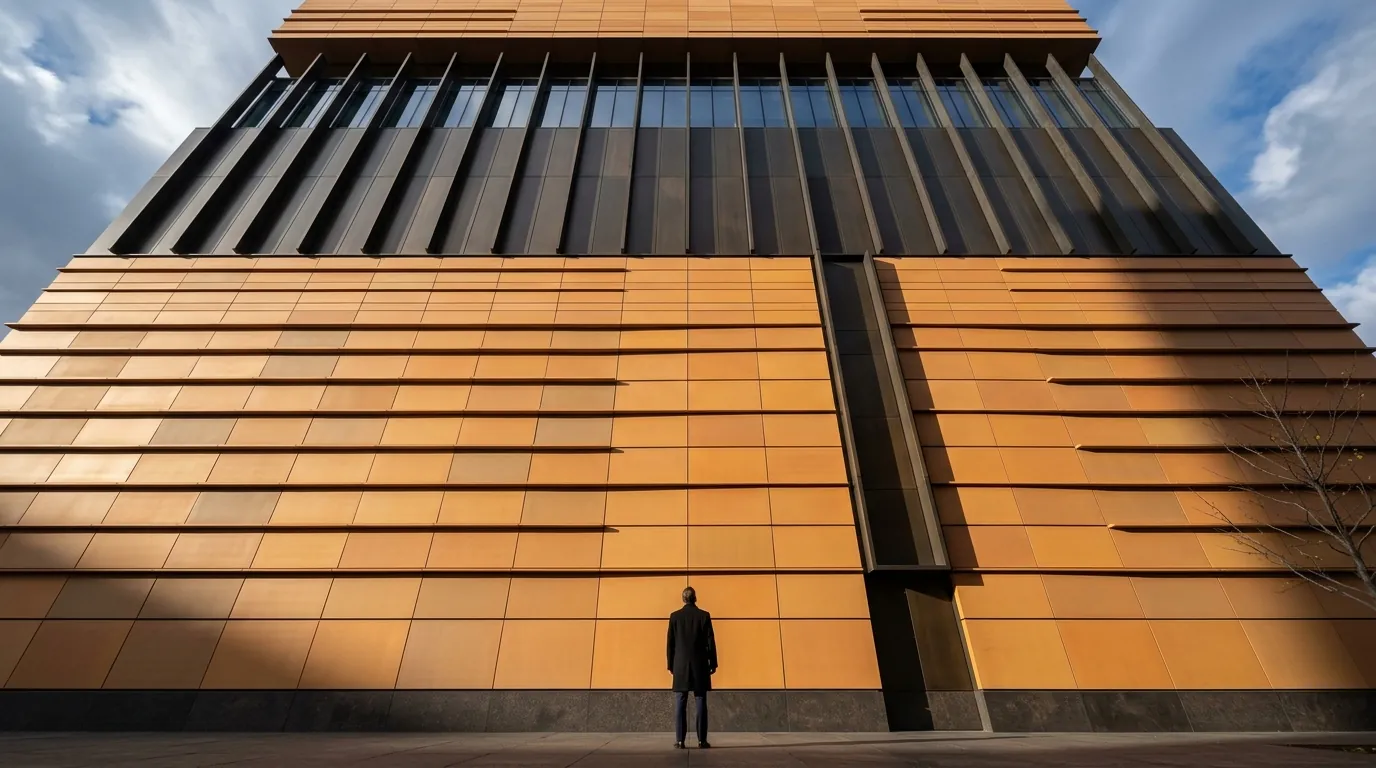
3D architectural visualization of a Chicago terracotta rainscreen tower viewed from a low-angle worm's eye shot with a single figure at the base, by Rendimension
3D Rendering Services · Chicago, IL

3D Rendering & Architectural Visualization in Chicago, IL

Photorealistic pre-construction visualization for Chicago developers, architects, and luxury brands. Timelines depend on project scope, level of detail, and number of views.

 ·  International Architect · Hugo Ramirez

Chicago Real Estate Market · 2026

Why Chicago developers need pre-construction visualization

Chicago is one of the largest development markets in the United States, with an active pipeline spanning multifamily, office conversion, hospitality, and large-scale mixed-use development anchored by a deep institutional capital base of pension funds, REITs, and national private equity firms.

Fulton Market is Chicago's most active mixed-use and adaptive reuse corridor, with adaptive reuse of former industrial buildings combining tech headquarters, boutique hotels, luxury residential, and restaurant concepts that require sophisticated pre-construction visualization.

Chicago's institutional capital base is exceptionally sophisticated. Pension funds, REITs, and national private equity firms evaluate hundreds of deals per year, and developers presenting to this audience cannot rely on schematic plans. Pre-construction visualization is the asset that brings a project to the communication standard these investors expect. Rendimension helps Chicago developers present complex multi-phase programs at the institutional quality level.

Source: The 78 (Related Midwest, city of Chicago public planning documents, 62-acre site), Fulton Market corridor (city planning and commercial real estate industry publications), Lincoln Yards (Sterling Bay, city of Chicago public approvals)

What is actually getting built in Chicago in 2026

Chicago entered 2026 with one of the thinnest construction pipelines among major US metros, and that scarcity changes the job a rendering has to do. When very little is breaking ground, the projects that do move are scrutinized harder, by more parties, for longer.

The 78. Related Midwest's $7 billion mixed-use plan covers roughly 62 acres of former rail land on the South Branch of the Chicago River in the Near South Side, with work scheduled to start in 2026 and completion targeted around 2030. About $425 million in tax increment financing was approved for infrastructure. A district of that scale is sold in phases, which means the visualization has to hold up as both a master plan image and a building-level image, and the two have to agree with each other.

Foundry Park. The City Council approved Sterling Bay's roughly $3 billion redevelopment of the northern portion of the former Lincoln Yards site, with about 3,737 units planned and completion targeted around 2032. Long horizons like this one mean the renderings produced today will be quoted back to the team for years.

Fulton Market. The Fulton at 919 W. Fulton Street opened in late January, the only high-end office building to break ground in Chicago since 2023, at a cost near $350 million and roughly 60 percent leased at opening. It pairs new construction with the conversion of the original Schwinn bicycle factory, which is the pattern Fulton Market keeps repeating: old industrial bones, new performance, and a tenant base that expects the character of the original building to survive.

Honest read: this is not a boom market. It is a market where fewer projects are competing for a smaller pool of attention and capital, and where the ones that communicate clearly get disproportionate benefit.
The LaSalle Street conversion problem is a visualization problem

Nowhere in Chicago is pre-construction visualization doing more work than in the office-to-residential conversions along the LaSalle Street corridor.

Under the LaSalle Street Reimagined initiative, the city is repurposing commercial vacancy into mixed-income housing and neighborhood retail. At 30 N. LaSalle, roughly 432,000 square feet across floors three through 18 becomes about 349 residential units, with 105 set aside as affordable, targeted for completion in 2026. Other projects in the corridor include the Clark Adams Building at about 400 units, the Millinery Mart Building at about 252 apartments, 79 W. Monroe at about 117 mixed-income units, and the Pontiac Building at about 74. Across the corridor, more than 1,600 units are planned with more than 600 affordable, work that would cut upper-story commercial vacancy along LaSalle by close to half.

The market is still pricing this product type. Millennium on LaSalle, a former office building converted to 211 apartments, went up for sale as a live test of what investors will pay for a completed conversion.

Why conversions depend on images more than ground-up does

  • Nobody can picture it. A lender, an alderman, or a future renter looking at a 1920s banking floor cannot visualize an apartment there. Ground-up projects at least look like the thing they will become. Conversions do not.
  • Deep floor plates are the whole argument. The credibility of a conversion rests on what happens to interior square footage far from a window. Light wells, amenity placement, and unit layouts have to be shown, not asserted.
  • The existing facade is fixed. Window line, floor-to-floor height, and column grid are inherited. Visualization that quietly improves the window proportions is not selling the project, it is setting up a dispute later.
  • Affordability commitments are public. When a share of units is set aside, the images become part of a public record about what residents are being promised.

In Chicago the rendering becomes a public document

Chicago's approval path puts visuals in front of people with the power to stop a project, which is the opposite of how entitlement works in cities without discretionary review.

A project that needs a zoning change moves through the local alderman, whose support has historically been decisive for anything in their ward, then through the Committee on Zoning, Landmarks and Building Standards, and where applicable the Chicago Plan Commission. Buildings in landmark districts or with landmark status add review by the Commission on Chicago Landmarks. Community meetings are a normal part of the sequence, not an exception. Projects using tax increment financing carry an additional layer of public accountability because public money is involved.

Each of those steps consumes the same set of images, and each audience reads them differently.

What each audience is looking for

  • Neighbors look at shadow, height against the existing street wall, traffic, and whether the ground floor is active or blank.
  • The alderman looks at whether the project is defensible in a room full of constituents.
  • Landmarks reviewers look at how new work meets historic fabric, materials, and whether additions are legible as additions.
  • Lenders and equity look at unit mix, amenity quality, and whether the building matches its comparables.

Practical consequence: a Chicago visualization set that only flatters the building is incomplete. The set has to include the honest street-level view from where the loudest objection will come from, because that view will be produced by someone eventually, and it is better produced by the project team.

What a Chicago rendering has to get right about the city itself

Chicago has a stricter visual grammar than most American cities, and local reviewers notice immediately when a rendering ignores it.

Light and season

Chicago has four real seasons and a low winter sun. A project rendered exclusively in high summer, full leaf, warm evening light is showing the city about four months of the year. Serious sets include at least one image with bare trees and a low sun angle, because that is what a January leasing tour actually looks like. Wind off the lake is a real design constraint downtown and along the river, and it shows up in canopy design, entry vestibules, and terrace placement.

Material vocabulary

Brick, terra cotta, and limestone are the inherited palette. In Fulton Market and the West Loop, heavy timber, steel sash windows, and exposed masonry are the reference points, and a curtain wall dropped into that context without acknowledgment reads as an outsider's proposal. On the river, the reference shifts toward glass and metal with a strong base.

Street and infrastructure

The alley is a genuine Chicago condition and it determines where loading, trash, and parking access go. The elevated tracks, the setback rhythm of the street wall, and the Riverwalk where a site touches the river all belong in the frame. A site plan that pretends the alley does not exist will be corrected during review.

Density transitions

Much of the pressure in Chicago development is at the seam between a proposed larger building and blocks of two flats and three flats. That transition is where the argument happens, so it is the view that has to be rendered honestly rather than cropped away.

"Rendimension acts as an external decision layer for Chicago projects before construction begins. Every visualization is a tool to raise capital faster, pre-sell units, and align stakeholders before a single dollar is spent on materials."
Scope-based Custom timelines
1,000+ Projects completed
3 Continents served
Who Hires Rendimension in Chicago

Decision-grade visualization for Chicago projects

Chicago clients hire Rendimension when the stakes are too high to guess. Real estate developers presenting to investors. Luxury retail brands expanding into new Chicago, IL locations. Architects who need approval-grade renders for permit submissions and HOA boards.

We don't sell renders. We sell decision support. Photorealistic pre-construction visualization that lets Chicago clients raise capital faster, pre-sell units before construction, and align stakeholders before a single dollar is spent on materials.

The Process

How Rendimension delivers pre-construction visualization for Chicago projects

  1. 01

    Share your plans

    Send architectural plans, CAD files, PDFs, or sketches. Chicago clients work with us entirely digitally. No site visit required.

  2. 02

    Initial visual direction

    We deliver the first photorealistic render set so you can validate direction before committing further resources. Timelines depend on project scope, level of detail, and number of views.

  3. 03

    Full package for investor presentations and approvals

    Final renders, walkthroughs, and VR assets delivered for investor presentations, pre-construction approvals, pre-sales campaigns, and entitlement renderings for Chicago planning boards.

Impact Comparison

What changes when you use Rendimension in Chicago

Capability Without 3D Renders With Rendimension
Pre-construction Marketing closeGuesswork: buyers cannot visualize checkPhotorealistic renders drive pre-sales
Investor Confidence closeFloor plans and spreadsheets only checkDecision-grade visuals that close funding rounds
Design Error Detection closeDiscovered during construction checkCaught at the render stage: zero cost to fix
Material & Finish Validation closeSamples and mood boards checkFull photorealistic material confirmation
Permit & HOA Approvals closeDrawn sections, slow reviews checkApproval-grade renders accepted by boards
Marketing Timeline closeWait until project is built checkLaunch campaigns while in pre-construction

Who we help in Chicago

  • check_circle
    Real estate developers

    Need high-conversion visuals for pre-sales of multi-million dollar Chicago projects.

  • check_circle
    Architects & design firms

    Require precise light studies and technical material accuracy for bids and approvals.

  • check_circle
    Luxury retail brands

    Expanding to new Chicago locations and need to validate store layouts before build-out.

  • check_circle
    Hospitality developers

    Hotels, resorts, and restaurants that need investor-ready visuals before breaking ground.

Not the right fit if...

  • cancel
    You need bottom-tier pricing

    We focus on high-stakes decisions. "Good enough" overseas quality is not what we do.

  • cancel
    No plans or blueprints yet

    We visualize defined designs. We don't design the architecture from scratch.

Relevant Work

Pre-construction visualization for investor presentations and planning board approvals

House of Speed: $7.3M Investor Raise

Rendimension produced the complete pre-construction visualization package used to raise $7.3 million USD from investors before a single wall was built. Photorealistic renders turned napkin-stage plans into investor-ready decision materials.

Alo Yoga: 20+ Retail Locations, 3 Continents

Luxury retail visualization for a global rollout across North America, Europe, and Asia. Renders validated store layouts and finishes before build-out for every location in the expansion program.

View our architectural visualization portfolio
Services Available in Chicago

What we deliver for Chicago clients

Full pre-construction visualization stack: from concept renders to VR walkthroughs.

View the complete architectural rendering services overview for all deliverable formats and project types.

See our independent rankings for Chicago: VR & Pre-Construction Studios · 3D Rendering & Visualization Companies · Architectural Animation Studios · 3D Floor Plan Companies · Architectural Drafting & CAD Services · 360 Virtual Tour Companies

3D rendering services in nearby markets: Aventura, FL · Boynton Beach, FL · Delray Beach, FL · West Palm Beach, FL · 3D Rendering Services in Boca Raton, FL - Rendimension · 3D Rendering Services in Pompano Beach, FL - Rendimension

Virtual Reality Tours

Virtual Reality Real Estate Tours for Chicago Developers

Remote investors, planning boards, and international buyers cannot always visit a Chicago project before making decisions. Virtual Reality tours eliminate that barrier. Rendimension produces immersive VR experiences that let stakeholders walk through an unbuilt space at 1:1 scale, on a headset or inside a browser, before construction begins.

For Chicago developers, VR is not a marketing gimmick. It is a closing tool. Investors who can walk through a project virtually make funding decisions faster. Planning boards who can experience a proposed design approve permits with fewer revision cycles. Pre-sales teams who offer VR tours to qualified buyers convert at higher rates.

Rendimension delivers VR tours as part of the pre-construction visualization package. The same 3D model that produces exterior and interior renders becomes the walkthrough environment, keeping production efficient and deliverables consistent.

Explore VR Tours for Chicago Projects
vrpano

Walk through unbuilt Chicago projects at 1:1 scale before breaking ground.

Why Chicago Clients Choose Rendimension

The Pre-Construction Decision System

Custom

Project-based timelines

Delivery timelines are scoped to your project. Complexity, number of views, and level of detail determine the schedule.

10+

Years specialized

Founded by Hugo Ramirez, international architect and founder of Rendimension. 1,000+ projects across 3 continents including Alo Yoga, House of Speed, Hilton, and Marriott.

100%

Remote-friendly

Chicago clients send plans digitally. No site visits required. Approval-grade quality for permit submissions, investor pitches, and HOA boards.

FAQ

Common questions about 3D rendering in Chicago

From Chicago developers, architects, and brand teams.

Request a 3D rendering quote
How much does 3D rendering cost in Chicago?

Full visualization packages are typically scoped from around $5,000 and scale based on the number of views, level of detail, interiors, site visuals, animation, and presentation needs. Contact Rendimension for a project-specific estimate.

How fast can I get 3D renders in Chicago?

Timelines depend on project scope, level of detail, and number of views. Contact the team to discuss your project timeline and receive a custom delivery estimate.

Does Rendimension serve Chicago remotely?

Yes. All visualization work is digital. Chicago clients send architectural plans (CAD, PDF, sketches) and receive photorealistic renders without site visits.

What types of projects does Rendimension handle in Chicago?

Residential developments, luxury retail buildouts, hospitality renovations, commercial real estate, restaurants, mixed-use, and historic preservation projects in Chicago.

Can Rendimension help with Chicago permit approvals?

Yes. We produce approval-grade renders accepted by Chicago, IL permit offices, historic preservation boards, HOA approvals, and zoning hearings.

How much does 3D architectural rendering cost in Chicago IL?

Full visualization packages are typically scoped from around $5,000 and scale based on the number of views, level of detail, interiors, site visuals, animation, and presentation needs. Use the instant estimator at rendimension.com/contact-3d-visualization-quote-rendimension/ for a project-specific estimate.

What types of Chicago development projects use pre-construction visualization?

Chicago developers use pre-construction visualization for Fulton Market adaptive reuse, large-scale planned developments, office-to-residential conversions, luxury residential towers in River North and Streeterville, hospitality and entertainment mixed-use, and multi-phase campus developments.

Can Rendimension work remotely with Chicago-based developers?

Yes. All visualization work is completed digitally. Chicago clients send architectural plans, CAD files, or sketches electronically and receive photorealistic renders without requiring in-person meetings or site visits.

How do 3D renders help Chicago real estate developers present to institutional investors?

Chicago's institutional capital base includes pension funds, REITs, and national private equity firms that evaluate hundreds of deals annually. Pre-construction visualization allows developers to present projects at the professional standard these investors expect, with photorealistic clarity that schematic plans cannot provide.

What files do I need to start a 3D rendering project in Chicago?

To begin a visualization project, provide architectural plans (PDF or CAD), site plans, elevation drawings, and any material or finish selections. If plans are still in early stages, Rendimension can work from sketches or conceptual drawings to produce initial visual direction.

How does pre-construction visualization support large-scale Chicago developments like Fulton Market adaptive reuse and multi-phase mixed-use projects?

Large-scale Chicago developments involve complex multi-phase programs that are extremely difficult to communicate from plans alone. Developers presenting phased concepts to institutional partners need photorealistic visualization that communicates the full vision, allowing capital to understand and commit to Phase 1 with confidence in the overall program.

Hugo Ramirez, architect and founder of Rendimension
About the Architect

Hugo Ramirez

International architect and founder of Rendimension. With 10+ years specializing in pre-construction visualization, Hugo has led visualization for luxury retail brands, real estate developers, and hospitality groups across the United States and internationally. Projects include Alo Yoga (20+ locations, 3 continents), House of Speed ($7.3M investor raise), Hilton Scottsdale, and North Fork RV Resort.

Connect on LinkedIn →

Ready to start your Chicago project?

Get a quote in 60 seconds. Timelines scoped to your project.