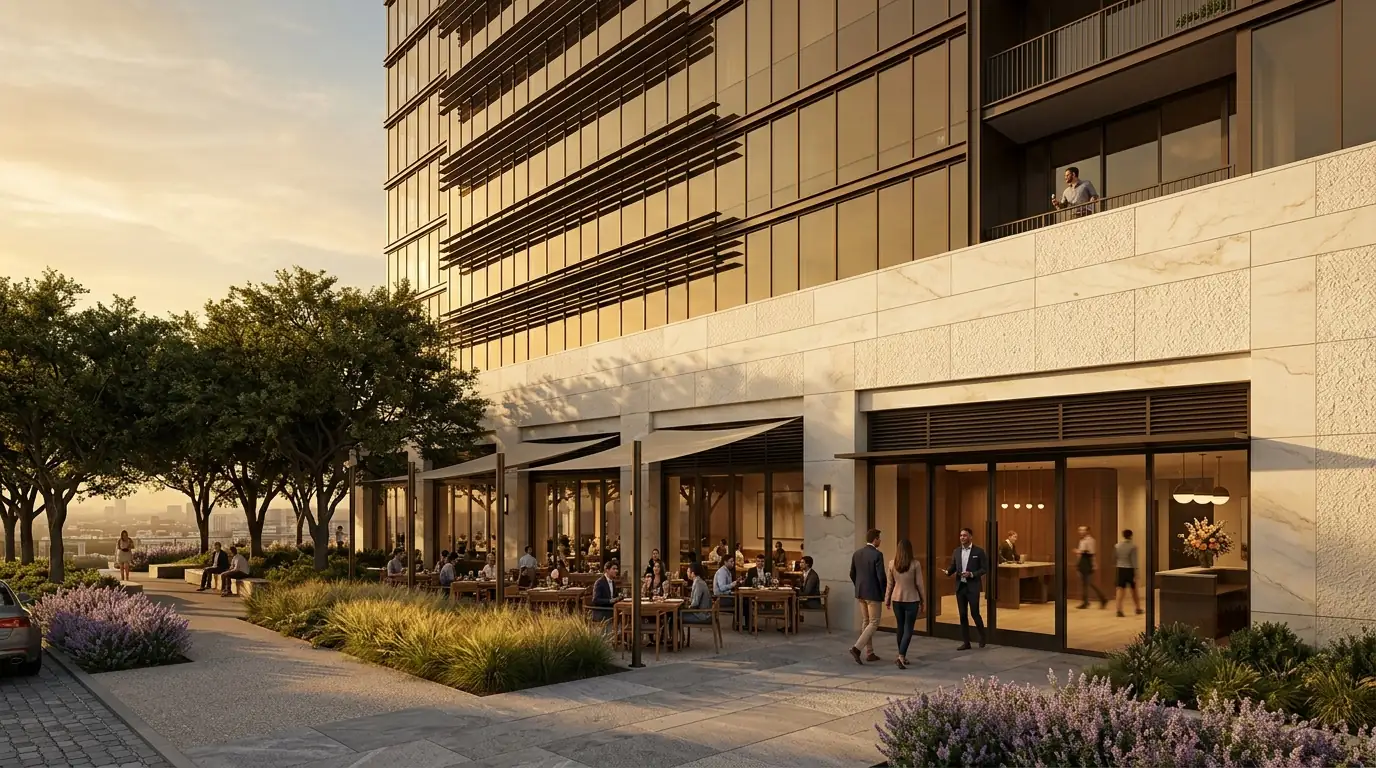
Houston premium mixed-use rendering with Texas limestone podium, brise-soleil fins, and Gulf Coast afternoon sky, by Rendimension
3D Rendering Services · Houston, TX

3D Architectural Rendering Company Serving Houston, TX

Photorealistic pre-construction visualization for Houston developers, architects, and luxury brands. Timelines depend on project scope, level of detail, and number of views.

 ·  International Architect · Hugo Ramirez

Houston Real Estate Market · 2026

Why Houston developers need pre-construction visualization

Houston is the 4th largest US city and home to one of the most active commercial real estate markets in the country, with the Texas Medical Center representing over $5 billion in active construction and planning.

Houston's multifamily market absorbed over 25,000 new units in 2024 while maintaining occupancy above 88 percent, signaling continued developer confidence in the market's depth and sustained population growth.

Houston's development market is driven by energy sector capital, healthcare real estate expansion, and sustained population growth from domestic migration. Projects that enter the market with institutional-grade visualization attract better capital terms and tenant interest across all asset classes.

Source: PwC/ULI Emerging Trends in Real Estate 2026, CBRE Houston Market Outlook 2026

Where Houston is actually building in 2026

Houston's development activity in 2026 is concentrated in a handful of districts rather than spread evenly across the metro, and knowing which one a project sits in changes what the visualization has to prove.

Texas Medical Center and Helix Park. TMC Helix Park is the first phase of a 37-acre campus planned for roughly 6 million square feet of research and commercial space, a hotel and conference center, and five parks totaling about 18 acres. Projects in and around TMC are competing for institutional and research tenants, which means renderings are read by committees that care about floor plate logic, campus circulation, and how a building meets the park edge, not by consumers browsing listings.

East River. East River is a roughly $2.5 billion mixed-use development spanning about 60 city blocks along Buffalo Bayou on the near East End, with around 1 million square feet of new construction covering apartments, office, retail, restaurants, medical space, entertainment, and a nine-hole golf course. It is one of the few Houston sites where a single master plan controls the streetscape, so individual buildings are judged on whether they extend a district identity that already exists on paper.

Ion District. The Ion District in Midtown, a joint initiative between Rice University and the City of Houston, continues to add research and commercial buildings. Tenants here are technology and venture backed, and the visual expectation leans toward adaptive reuse language, exposed structure, and ground floors that read as public.

Energy Corridor and the west side. The Energy Corridor District is running long-horizon infrastructure work, including an 18-month wastewater diversion project moving flow away from the Park Ten plant, alongside identity improvements along the Interstate 10 corridor. Development here is corporate campus and industrial in character.

Industrial and logistics. Warehouse and distribution product remains the most consistently financeable asset class in the metro, driven by Houston's role as a port, energy, and freight hub.
How Houston projects get approved without conventional zoning

Houston is the largest US city with no conventional zoning code, and that single fact reshapes how pre-construction visuals get used here compared to Dallas, Chicago, or Los Angeles.

There is no zoning board hearing where a rendering wins or loses an entitlement. Instead, what governs a Houston site is a stack of other instruments: recorded deed restrictions on the tract, the City's Chapter 42 development ordinance covering lot size, setbacks, parking, and street width, platting review through the Houston Planning Commission, and in many districts an overlay of management district or tax increment reinvestment zone standards. Add floodplain regulation, which carries real weight across the metro after repeated flood events, and detention requirements that shape site layout before the building is designed.

The practical consequence is that the audience for a Houston rendering shifts. In cities with discretionary zoning review, visuals are aimed at a public body deciding whether a project may exist at all. In Houston, the project usually may exist, and the visuals are aimed at the parties deciding whether it should get funded and leased: lenders, equity partners, anchor tenants, the civic association enforcing deed restrictions, and neighbors whose objection arrives through the deed restriction or the management district rather than a zoning appeal.

What that means for the images themselves

  • Site context matters more than facade beauty. A Houston rendering that hides the detention pond, the drive aisle, or the relationship to the adjacent single-story neighbor is not answering the questions the reviewers actually have.
  • Elevation and drainage read as design decisions, not engineering afterthoughts. Raised ground floors, garage podium levels, and grade transitions belong in the image.
  • Phasing is common on large Houston tracts. Showing the first phase honestly, with the remainder of the site as it will actually look during construction, prevents credibility problems later.

What each Houston submarket expects a building to look like

Houston reads as one market from outside and as a dozen from inside. A rendering that uses the wrong visual vocabulary for its submarket signals to a local reviewer that the team does not know the area.

River Oaks, Memorial, and the Villages

Traditional detailing, limestone and brick, deep eaves, mature live oak canopy. Buildings here are photographed under filtered light through trees rather than in open sun, and the tree canopy is not decoration, it is the reason the streets look the way they do. Omitting it produces an image that could be anywhere.

Midtown, Montrose, and the East End

Contemporary massing, warm metals, brick returning as a contextual material, ground floors that open to sidewalk. This is where adaptive reuse and infill sit next to bungalows, so the honest rendering shows the scale transition rather than cropping it out.

Energy Corridor, Westchase, and the Beltway

Corporate modern campus architecture, generous setbacks, surface and structured parking that is part of the composition whether the design team likes it or not. Reviewers here look at arrival sequence and how a car actually reaches the front door.

Texas Medical Center and the museum district edge

Institutional scale, glass and precast, campus-level wayfinding, and a pedestrian realm that connects to adjacent buildings. Renderings that treat a TMC building as an isolated object miss the point of the campus.

Climate is a design input, not a filter

Gulf Coast humidity, intense summer sun, and hurricane exposure change what a building looks like in Houston. Shading devices, covered arrival, elevated ground floors, and materials that survive humidity and wind-driven rain all show up in the built result. A visualization produced with generic clear-sky lighting and no shade strategy will not match the building anyone eventually stands in front of.

Where visualization earns its keep in a 2026 Houston capital stack

The financing environment in Houston right now rewards projects that can be understood quickly and doubted less. Debt is more available than equity across the metro, with lenders focused on multifamily and industrial ground-up. Equity is the constrained side, which means the burden of persuasion has moved to the sponsor.

Multifamily is working through a heavy delivery cycle. Net absorption of roughly 1,300 units in the first quarter of 2026 reversed the modest contraction of the prior quarter, which is a genuine positive signal, but it is a recovery within a supply-heavy market rather than a boom. Lease-up capital is in demand precisely because new communities have to differentiate on something other than being new. Office vacancy remains elevated as hybrid work patterns hold, and Houston is not a meaningful residential conversion market, so distressed office is not quietly becoming apartments the way it is in some other metros. Power availability has become a top-tier constraint across the region as artificial intelligence data center demand grows, and it now shows up in site selection conversations that used to be about land price alone.

Honest read: this is not a market where a rendering rescues a weak deal. It is a market where a credible rendering removes friction from a viable one.

The three moments where the visuals do real work

  • Equity raise. The investor committee is comparing your Houston deal against deals in other Sun Belt metros. Decision-grade visuals compress the explanation of what is being built and who it serves.
  • Anchor and pre-lease conversations. Medical tenants near TMC, corporate users on the west side, and retail in master-planned districts all commit before there is a building to tour. The visualization is the tour.
  • Lease-up and pre-sales. In a supply-heavy multifamily market, communities that market with accurate unit interiors, amenity decks, and real site context start leasing earlier and discount less.
"Rendimension acts as an external decision layer for Houston projects before construction begins. Every visualization is a tool to raise capital faster, pre-sell units, and align stakeholders before a single dollar is spent on materials."
Scope-based Custom timelines
1,000+ Projects completed
3 Continents served
Who Hires Rendimension in Houston

Decision-grade visualization for Houston projects

Houston clients hire Rendimension when the stakes are too high to guess. Real estate developers presenting to investors. Luxury retail brands expanding into new Houston, TX locations. Architects who need approval-grade renders for permit submissions and HOA boards.

We don't sell renders. We sell decision support. Photorealistic pre-construction visualization that lets Houston clients raise capital faster, pre-sell units before construction, and align stakeholders before a single dollar is spent on materials.

The Process

How Rendimension delivers pre-construction visualization for Houston projects

  1. 01

    Share your plans

    Send architectural plans, CAD files, PDFs, or sketches. Houston clients work with us entirely digitally. No site visit required.

  2. 02

    Initial visual direction

    We deliver the first photorealistic render set so you can validate direction before committing further resources. Timelines depend on project scope, level of detail, and number of views.

  3. 03

    Full package for investor presentations and approvals

    Final renders, walkthroughs, and VR assets delivered for investor presentations, pre-construction approvals, pre-sales campaigns, and entitlement renderings for Houston planning boards.

Impact Comparison

What changes when you use Rendimension in Houston

Capability Without 3D Renders With Rendimension
Pre-construction Marketing closeGuesswork: buyers cannot visualize checkPhotorealistic renders drive pre-sales
Investor Confidence closeFloor plans and spreadsheets only checkDecision-grade visuals that close funding rounds
Design Error Detection closeDiscovered during construction checkCaught at the render stage: zero cost to fix
Material & Finish Validation closeSamples and mood boards checkFull photorealistic material confirmation
Permit & HOA Approvals closeDrawn sections, slow reviews checkApproval-grade renders accepted by boards
Marketing Timeline closeWait until project is built checkLaunch campaigns while in pre-construction

Who we help in Houston

  • check_circle
    Real estate developers

    Need high-conversion visuals for pre-sales of multi-million dollar Houston projects.

  • check_circle
    Architects & design firms

    Require precise light studies and technical material accuracy for bids and approvals.

  • check_circle
    Luxury retail brands

    Expanding to new Houston locations and need to validate store layouts before build-out.

  • check_circle
    Hospitality developers

    Hotels, resorts, and restaurants that need investor-ready visuals before breaking ground.

Not the right fit if...

  • cancel
    You need bottom-tier pricing

    We focus on high-stakes decisions. "Good enough" overseas quality is not what we do.

  • cancel
    No plans or blueprints yet

    We visualize defined designs. We don't design the architecture from scratch.

Relevant Work

Pre-construction visualization for investor presentations and planning board approvals

House of Speed: $7.3M Investor Raise

Rendimension produced the complete pre-construction visualization package used to raise $7.3 million USD from investors before a single wall was built. Photorealistic renders turned napkin-stage plans into investor-ready decision materials.

Alo Yoga: 20+ Retail Locations, 3 Continents

Luxury retail visualization for a global rollout across North America, Europe, and Asia. Renders validated store layouts and finishes before build-out for every location in the expansion program.

View our architectural visualization portfolio
Services Available in Houston

What we deliver for Houston clients

Full pre-construction visualization stack: from concept renders to VR walkthroughs.

View the complete architectural rendering services overview for all deliverable formats and project types.

Homeowner in Houston? See our remodel visualization services: Backyard & Pool Rendering · Backyard & Pool Rendering (River Oaks) · Backyard & Pool Rendering (The Woodlands) · Backyard & Pool Rendering (West University) · Exterior Home Rendering · Exterior Home Rendering (River Oaks) · Exterior Home Rendering (The Woodlands) · Exterior Home Rendering (West University) · Kitchen Remodel Rendering · Kitchen Remodel Rendering (River Oaks) · Kitchen Remodel Rendering (The Woodlands) · Kitchen Remodel Rendering (West University) · Listing Renderings for Agents

See our independent rankings for Houston: VR & Pre-Construction Studios · 3D Rendering & Visualization Companies · Architectural Animation Studios · 3D Floor Plan Companies · Architectural Drafting & CAD Services

3D rendering services in nearby markets: Dallas, TX · San Antonio, TX · El Paso, TX · Austin, TX · Bakersfield, CA · Anaheim, CA

Virtual Reality Tours

Virtual Reality Real Estate Tours for Houston Developers

Remote investors, planning boards, and international buyers cannot always visit a Houston project before making decisions. Virtual Reality tours eliminate that barrier. Rendimension produces immersive VR experiences that let stakeholders walk through an unbuilt space at 1:1 scale, on a headset or inside a browser, before construction begins.

For Houston developers, VR is not a marketing gimmick. It is a closing tool. Investors who can walk through a project virtually make funding decisions faster. Planning boards who can experience a proposed design approve permits with fewer revision cycles. Pre-sales teams who offer VR tours to qualified buyers convert at higher rates.

Rendimension delivers VR tours as part of the pre-construction visualization package. The same 3D model that produces exterior and interior renders becomes the walkthrough environment, keeping production efficient and deliverables consistent.

Explore VR Tours for Houston Projects
vrpano

Walk through unbuilt Houston projects at 1:1 scale before breaking ground.

Why Houston Clients Choose Rendimension

The Pre-Construction Decision System

Custom

Project-based timelines

Delivery timelines are scoped to your project. Complexity, number of views, and level of detail determine the schedule.

10+

Years specialized

Founded by Hugo Ramirez, international architect and founder of Rendimension. 1,000+ projects across 3 continents including Alo Yoga, House of Speed, Hilton, and Marriott.

100%

Remote-friendly

Houston clients send plans digitally. No site visits required. Approval-grade quality for permit submissions, investor pitches, and HOA boards.

FAQ

Common questions about 3D rendering in Houston

From Houston developers, architects, and brand teams.

Request a 3D rendering quote
How much does 3D rendering cost in Houston?

Full visualization packages are typically scoped from around $5,000 and scale based on the number of views, level of detail, interiors, site visuals, animation, and presentation needs. Contact Rendimension for a project-specific estimate.

How fast can I get 3D renders in Houston?

Timelines depend on project scope, level of detail, and number of views. Contact the team to discuss your project timeline and receive a custom delivery estimate.

Does Rendimension serve Houston remotely?

Yes. All visualization work is digital. Houston clients send architectural plans (CAD, PDF, sketches) and receive photorealistic renders without site visits.

What types of projects does Rendimension handle in Houston?

Residential developments, luxury retail buildouts, hospitality renovations, commercial real estate, restaurants, mixed-use, and historic preservation projects in Houston.

Can Rendimension help with Houston permit approvals?

Yes. We produce approval-grade renders accepted by Houston, TX permit offices, historic preservation boards, HOA approvals, and zoning hearings.

What types of Houston projects benefit most from pre-construction visualization?

Houston developers benefit across diverse asset classes: medical campus buildings in the Texas Medical Center, industrial facilities, multifamily developments, and retail centers. Pre-construction visualization is especially valuable for medical office projects where tenant and investor presentations require decision-grade visuals before committing capital.

How does Rendimension approach Houston's diverse architectural character across submarkets?

Houston's submarkets have distinct visual vocabularies: River Oaks and Memorial favor limestone and brick with traditional detailing; Midtown and Montrose lean contemporary with warm metals and glass; the Energy Corridor and Westchase tend toward corporate modern campus architecture. We tailor each project's visualization to the specific submarket character so the building looks like it belongs to its location and appeals to the right audience.

Can Rendimension visualize Texas limestone and Gulf Coast architectural materials accurately?

Texas limestone is a core material in Houston's premium construction market, and we render it with the cream-to-taupe color range, surface texture, and shadow behavior specific to Hill Country stone. Gulf Coast climate conditions, including the warm atmospheric haze and low-angle afternoon sun, are incorporated into exterior lighting so the image reads as authentically Houston rather than a generic Texas skyline.

What role does 3D rendering play in Houston medical and life sciences real estate development?

The Texas Medical Center and its expanding life sciences district represent one of the most active development corridors in Houston. Research buildings, medical office, and mixed-use supporting development all require visualization for ground-breaking events, capital partner presentations, and healthcare system board approvals. We work with healthcare real estate developers to produce images that communicate the functional and institutional quality of medical campus architecture.

How does Rendimension handle large-scale Houston master plan and campus visualization?

Master plan and campus projects require aerial or elevated site plan views, key building exterior renderings, and interior amenity visualizations that work together as a coherent package. We coordinate across all components so perspective, lighting, and material consistency are maintained whether you are presenting a single building or an entire district.

What deliverables does Rendimension provide for Houston developer marketing and investor presentations?

We deliver high-resolution exterior and interior still renderings, presentation-ready image files, floor plan visualizations, and optional walkthrough animations. For Houston projects targeting institutional equity or REIT capital, we can produce a full visualization package formatted for investment committee decks and offering memoranda. All deliverables are sized and formatted for digital and print use from a single production pass.

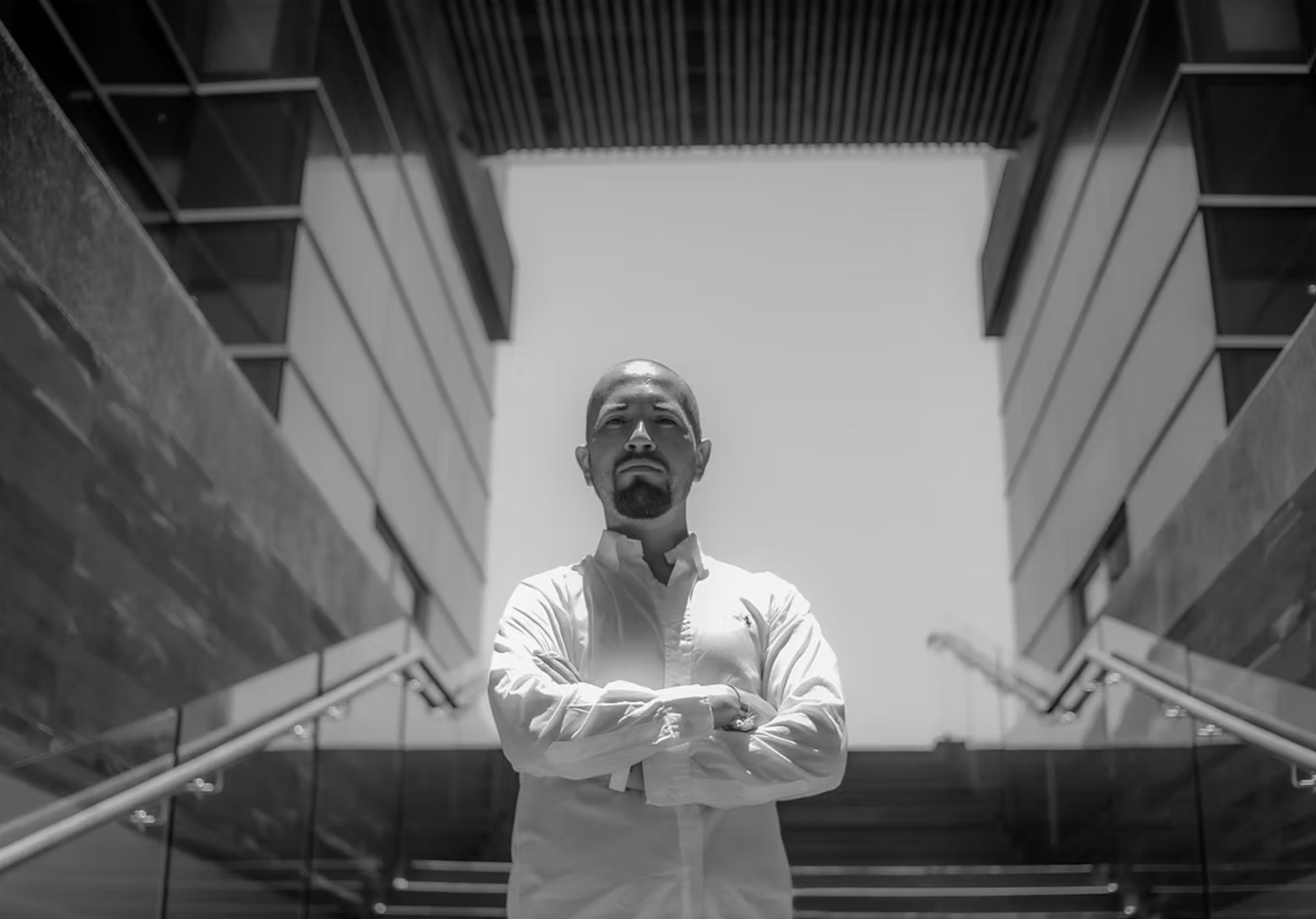
Hugo Ramirez, architect and founder of Rendimension
About the Architect

Hugo Ramirez

International architect and founder of Rendimension. With 10+ years specializing in pre-construction visualization, Hugo has led visualization for luxury retail brands, real estate developers, and hospitality groups across the United States and internationally. Projects include Alo Yoga (20+ locations, 3 continents), House of Speed ($7.3M investor raise), Hilton Scottsdale, and North Fork RV Resort.

Connect on LinkedIn →

Ready to start your Houston project?

Get a quote in 60 seconds. Timelines scoped to your project.