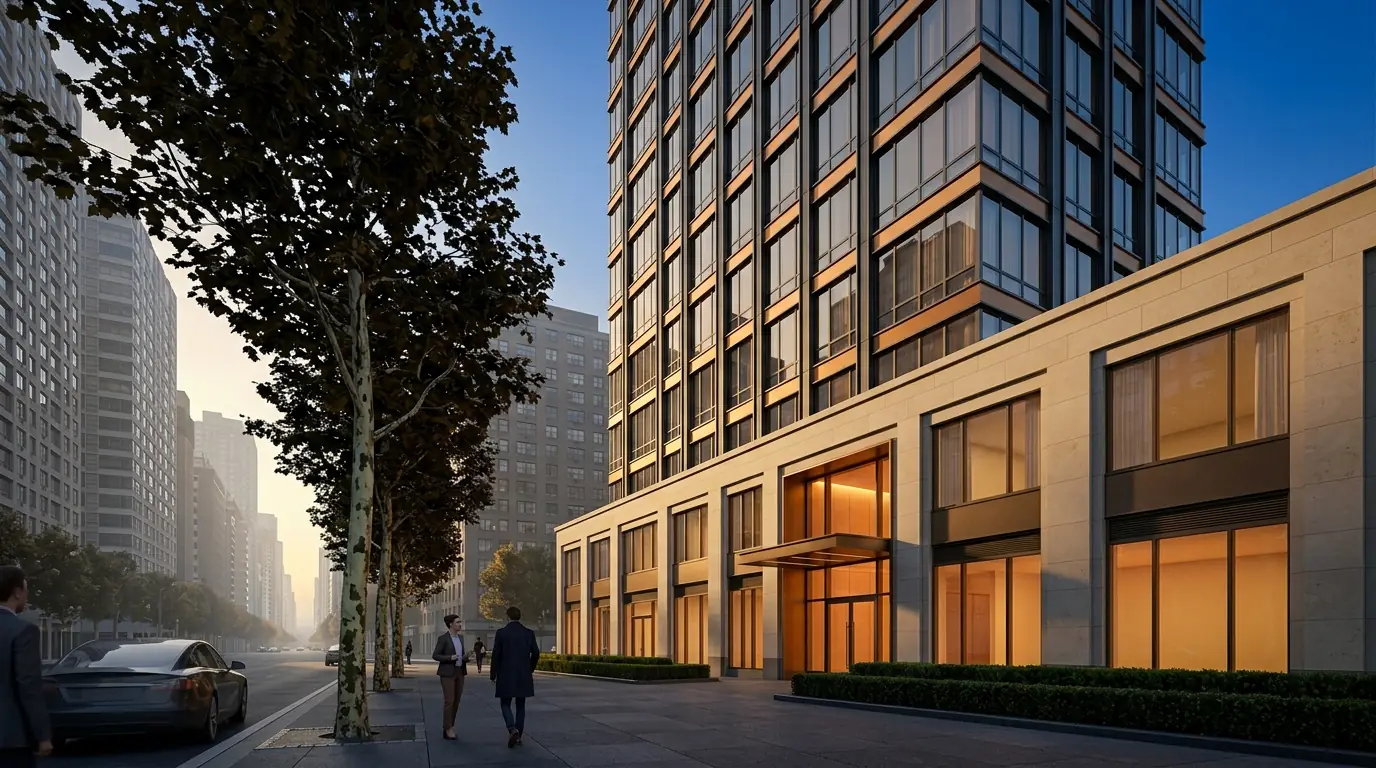
3D architectural rendering of a luxury mixed-use high-rise tower with limestone podium and London plane trees in New York City, by Rendimension
3D Rendering Services · New York, NY

3D Architectural Rendering Company Serving New York, NY

Photorealistic pre-construction visualization for New York developers, architects, and luxury brands. Timelines depend on project scope, level of detail, and number of views.

 ·  International Architect · Hugo Ramirez

New York Real Estate Market · 2026

Why New York developers need pre-construction visualization

New York City is the largest real estate market in the United States. The Hudson Yards district represents one of the largest private real estate developments in US history by square footage, with multiple towers, public spaces, and mixed-use phases delivered across a multi-year construction cycle. The Greenpoint Landing, Pacific Park, and Long Island City corridors in Brooklyn and Queens represent active multifamily pipeline zones driven by rezoning and transit access.

New York City's Uniform Land Use Review Procedure (ULURP) requires developers to present projects through a sequence of reviews including community boards, borough president, the City Planning Commission, and City Council. The Landmarks Preservation Commission adds an additional review layer for projects in or adjacent to historic districts, which account for a significant portion of Manhattan's developable area and require detailed visual documentation of design intent.

New York developers compete in the most capital-intensive and visually sophisticated real estate market in the country. Foreign capital, institutional equity partners, and construction lenders deploying into New York projects evaluate presentations against the global investment standard. Rendimension produces pre-construction renders for New York developers entering the entitlement process, preparing LP offering memoranda, and launching pre-sales in a market where the quality of visual communication directly affects capital velocity and investor conviction.

Source: REBNY (Real Estate Board of New York, public data), NYC Department of City Planning (ULURP public record), Hudson Yards Development Corporation (public record), NYC EDC (NYC Economic Development Corporation public communications), Landmarks Preservation Commission (public agency)

City of Yes changed what New York projects are possible in 2026

The citywide zoning reform known as City of Yes for Housing Opportunity reshaped what can get built across New York, and 2026 is the first full year where the effects show up in a real construction pipeline rather than a policy debate.

The reform expanded office-to-residential conversion eligibility from buildings constructed before 1961 to buildings constructed before 1991, added flexibility for mixed-use development, and relaxed rules governing light, air, and unit layout that had made many conversions mathematically impossible under the old code. The first full year under City of Yes produced roughly 23 percent more new homes citywide.

Conversions are the clearest beneficiary. More than 12,000 homes are currently in the office conversion pipeline, including over 3,000 permanently affordable units, and the broader post-1991 eligibility expansion has unlocked a pipeline of more than 17,400 net new residential units citywide. Industry analysts describe an alignment of factors, favorable financing structures, tax incentives, and the widened building-age window, that is expected to more than double the pace of conversions in 2026 compared with prior years.

Midtown South was rezoned to enable roughly 9,500 new homes, including about 2,800 permanently affordable units, and the rezoning specifically cleared the way for conversions in an area where residential use had previously been prohibited outright. Other neighborhood rezonings from the prior administration remain active or in scoping, including Atlantic Avenue, the Bronx Metro-North station area, Long Island City, and Jamaica.

What this means in practice: New York in 2026 has more legally eligible conversion buildings than qualified renovation capital, which is the same dynamic reshaping Chicago's LaSalle Street corridor, just at a larger scale.
What a New York office conversion rendering actually has to prove

Office-to-residential conversion has become less of a zoning problem and more of a construction and financing problem, which changes what a visualization needs to demonstrate to move a project forward.

The zoning door is open. The remaining questions are physical and financial: does the floor plate support livable units at reasonable depth from a window, does the existing structural grid accommodate residential plumbing risers without gutting the building, does the mechanical system get replaced or retrofitted, and does the resulting unit count and mix pencil against the acquisition basis.

Where the rendering does the real work

  • Floor plate depth. Prewar and early postwar office buildings often have deep floor plates built for open bullpen offices, not for units with windows. Showing the actual unit layout, including which units get true daylight and which rely on light wells or courts, is the difference between a credible pitch and an aspirational one.
  • What stays versus what changes. Column grid, floor-to-floor height, and the facade are usually fixed. A rendering that quietly stretches ceiling height or window proportion sets up a conflict with the as-built condition that shows up in due diligence.
  • The base and the street. Ground floor retail, lobby, and entry sequence carry disproportionate weight in a conversion because they are the parts of the building most visible to the community board and the neighborhood, and community board review remains a real hurdle even where zoning is no longer the constraint.
  • Affordability set-asides. With thousands of permanently affordable units tied to these pipelines, the images frequently support a public approval process, not just a private sales pitch, and have to hold up under that scrutiny.

New building types read completely differently by borough

New York is not one market for visualization purposes, it is at least four, and treating Manhattan visual language as the citywide default is a common and visible mistake.

Manhattan

Dense, vertical, defined by curtain wall towers above a masonry or limestone base in the older commercial cores, and by increasingly slender residential towers in newer construction. Midtown South's shift toward mixed-use and residential is introducing more human-scaled, materially varied buildings into a district that used to be uniformly commercial glass.

Brooklyn

Context is everything. Downtown Brooklyn and the waterfront support taller contemporary massing, but most of the borough is brownstone, rowhouse, and low-rise industrial fabric where a new building has to negotiate cornice lines, masonry coursing, and a much finer street grain than Manhattan.

Queens

Long Island City has essentially become a satellite high-rise district with its own tower typology, glass and metal panel systems, distinct from the rest of the borough, where most active rezoning areas like Jamaica remain lower scale, transit-oriented, and more retail-and-residential mixed use than pure tower.

The Bronx

The Metro-North station area plan is organized around transit access rather than a pre-existing high-density identity, so renderings here are doing the work of establishing what a new neighborhood center looks like rather than fitting into one that already exists.

Across all four, winter matters more in New York than almost any other US market covered here. Bare trees, low sun angle, and grey sky are the honest default condition for a large share of the year, and image sets that only show leafy summer light are quietly hiding how the building actually reads for months at a time.

The 2026 capital reopening changes who a New York rendering is for

New York's investment sales market went from cautious to genuinely active in the first half of 2026, and that shift changes who ends up looking at a project's visuals and how fast a decision gets made.

Citywide dollar volume in H1 2026 reached roughly $17.38 billion across about 1,224 transactions, up 37 percent year over year, led by multifamily, development sites, and office. Manhattan office leasing had its most active first half since 2022, with year-to-date volume around 19.6 million square feet and a single month, May, posting 4.2 million square feet leased, up 35 percent year over year. Demand is concentrated in law firms, technology companies, and increasingly AI-focused tenants, which tend to be sophisticated, fast-moving reviewers of space.

Multifamily fundamentals are steady rather than dramatic: average rents up roughly 1.5 percent quarter over quarter and vacancy near 3.3 percent, up slightly year over year but improving from the prior quarter. Investment sales in that segment remain bifurcated, with A-plus trophy assets trading actively while the broader middle of the market moves more slowly.

What a reopening capital market means for the visuals

When financing and leasing were frozen, a rendering's job was mostly to keep a stalled project alive on paper. In a reopening market, the job shifts to speed: sponsors and brokers are moving multiple opportunities at once and have less patience for a visualization package that arrives late or gets revised repeatedly. Office tenants who are actively touring and comparing space, particularly the law firm and technology demand driving this cycle, expect renderings that read as finished decision tools rather than concept sketches. For development sites and conversions competing for a slice of that $17.38 billion in capital, the visualization set is frequently the first filter a broker uses to decide which offering memorandum gets a serious look.

"Rendimension acts as an external decision layer for New York projects before construction begins. Every visualization is a tool to raise capital faster, pre-sell units, and align stakeholders before a single dollar is spent on materials."
Scope-based Custom timelines
1,000+ Projects completed
3 Continents served
Who Hires Rendimension in New York

Decision-grade visualization for New York projects

New York clients hire Rendimension when the stakes are too high to guess. Real estate developers presenting to investors. Luxury retail brands expanding into new New York, NY locations. Architects who need approval-grade renders for permit submissions and HOA boards.

We don't sell renders. We sell decision support. Photorealistic pre-construction visualization that lets New York clients raise capital faster, pre-sell units before construction, and align stakeholders before a single dollar is spent on materials.

The Process

How Rendimension delivers pre-construction visualization for New York projects

  1. 01

    Share your plans

    Send architectural plans, CAD files, PDFs, or sketches. New York clients work with us entirely digitally. No site visit required.

  2. 02

    Initial visual direction

    We deliver the first photorealistic render set so you can validate direction before committing further resources. Timelines depend on project scope, level of detail, and number of views.

  3. 03

    Full package for investor presentations and approvals

    Final renders, walkthroughs, and VR assets delivered for investor presentations, pre-construction approvals, pre-sales campaigns, and entitlement renderings for New York planning boards.

Impact Comparison

What changes when you use Rendimension in New York

Capability Without 3D Renders With Rendimension
Pre-construction Marketing closeGuesswork: buyers cannot visualize checkPhotorealistic renders drive pre-sales
Investor Confidence closeFloor plans and spreadsheets only checkDecision-grade visuals that close funding rounds
Design Error Detection closeDiscovered during construction checkCaught at the render stage: zero cost to fix
Material & Finish Validation closeSamples and mood boards checkFull photorealistic material confirmation
Permit & HOA Approvals closeDrawn sections, slow reviews checkApproval-grade renders accepted by boards
Marketing Timeline closeWait until project is built checkLaunch campaigns while in pre-construction

Who we help in New York

  • check_circle
    Real estate developers

    Need high-conversion visuals for pre-sales of multi-million dollar New York projects.

  • check_circle
    Architects & design firms

    Require precise light studies and technical material accuracy for bids and approvals.

  • check_circle
    Luxury retail brands

    Expanding to new New York locations and need to validate store layouts before build-out.

  • check_circle
    Hospitality developers

    Hotels, resorts, and restaurants that need investor-ready visuals before breaking ground.

Not the right fit if...

  • cancel
    You need bottom-tier pricing

    We focus on high-stakes decisions. "Good enough" overseas quality is not what we do.

  • cancel
    No plans or blueprints yet

    We visualize defined designs. We don't design the architecture from scratch.

Relevant Work

Pre-construction visualization for investor presentations and planning board approvals

House of Speed: $7.3M Investor Raise

Rendimension produced the complete pre-construction visualization package used to raise $7.3 million USD from investors before a single wall was built. Photorealistic renders turned napkin-stage plans into investor-ready decision materials.

Alo Yoga: 20+ Retail Locations, 3 Continents

Luxury retail visualization for a global rollout across North America, Europe, and Asia. Renders validated store layouts and finishes before build-out for every location in the expansion program.

View our architectural visualization portfolio
Virtual Reality Tours

Virtual Reality Real Estate Tours for New York Developers

Remote investors, planning boards, and international buyers cannot always visit a New York project before making decisions. Virtual Reality tours eliminate that barrier. Rendimension produces immersive VR experiences that let stakeholders walk through an unbuilt space at 1:1 scale, on a headset or inside a browser, before construction begins.

For New York developers, VR is not a marketing gimmick. It is a closing tool. Investors who can walk through a project virtually make funding decisions faster. Planning boards who can experience a proposed design approve permits with fewer revision cycles. Pre-sales teams who offer VR tours to qualified buyers convert at higher rates.

Rendimension delivers VR tours as part of the pre-construction visualization package. The same 3D model that produces exterior and interior renders becomes the walkthrough environment, keeping production efficient and deliverables consistent.

Explore VR Tours for New York Projects
vrpano

Walk through unbuilt New York projects at 1:1 scale before breaking ground.

Why New York Clients Choose Rendimension

The Pre-Construction Decision System

Custom

Project-based timelines

Delivery timelines are scoped to your project. Complexity, number of views, and level of detail determine the schedule.

10+

Years specialized

Founded by Hugo Ramirez, international architect and founder of Rendimension. 1,000+ projects across 3 continents including Alo Yoga, House of Speed, Hilton, and Marriott.

100%

Remote-friendly

New York clients send plans digitally. No site visits required. Approval-grade quality for permit submissions, investor pitches, and HOA boards.

FAQ

Common questions about 3D rendering in New York

From New York developers, architects, and brand teams.

Request a 3D rendering quote
How much does 3D rendering cost in New York?

Full visualization packages are typically scoped from around $5,000 and scale based on the number of views, level of detail, interiors, site visuals, animation, and presentation needs. Contact Rendimension for a project-specific estimate.

How fast can I get 3D renders in New York?

Timelines depend on project scope, level of detail, and number of views. Contact the team to discuss your project timeline and receive a custom delivery estimate.

Does Rendimension serve New York remotely?

Yes. All visualization work is digital. New York clients send architectural plans (CAD, PDF, sketches) and receive photorealistic renders without site visits.

What types of projects does Rendimension handle in New York?

Residential developments, luxury retail buildouts, hospitality renovations, commercial real estate, restaurants, mixed-use, and historic preservation projects in New York.

Can Rendimension help with New York permit approvals?

Yes. We produce approval-grade renders accepted by New York, NY permit offices, historic preservation boards, HOA approvals, and zoning hearings.

How much does 3D architectural rendering cost in New York NY?

Full visualization packages are typically scoped from around $5,000 and scale based on the number of views, level of detail, interiors, site visuals, animation, and presentation needs. Use the instant estimator at rendimension.com/contact-3d-visualization-quote-rendimension/ for a project-specific estimate.

What types of New York development projects use pre-construction visualization?

New York developers use pre-construction visualization for luxury residential towers in Manhattan, Brooklyn, and Queens, mixed-use multifamily projects across all five boroughs, adaptive reuse and landmarked building conversions requiring Landmarks Preservation Commission presentations, transit-oriented development along MTA subway and commuter rail corridors, and hospitality and commercial projects presenting to institutional capital and franchise approval boards.

Can Rendimension work remotely with New York-based developers?

Yes. All visualization work is completed digitally. New York clients send architectural plans, CAD files, or design references electronically and receive photorealistic renders without requiring in-person meetings. Rendimension serves New York developers, architects, and real estate teams as a fully remote visualization partner.

How does pre-construction visualization support the ULURP approval process in New York?

New York City's Uniform Land Use Review Procedure involves sequential review by community boards, borough presidents, the City Planning Commission, and City Council members. Photorealistic pre-construction renders communicate design intent, massing, material quality, and neighborhood context to each of these audiences in a format that plans and technical drawings cannot achieve on their own. Visualization that performs clearly across all ULURP audiences reduces delays in the entitlement process.

What files do I need to start a 3D rendering project in New York?

To begin a visualization project, provide architectural plans (PDF or CAD), site plans, elevation drawings, and any material or finish selections. Landmarked building projects benefit from including historic reference documentation and existing condition surveys. If plans are in early stages, Rendimension can work from schematic drawings to produce initial visual direction.

How does Rendimension approach visualization for New York high-rise and luxury residential projects?

New York high-rise and luxury residential projects require visualization that communicates facade articulation, contextual relationships with adjacent buildings, view corridors from upper floors, amenity spaces, and overall massing in a dense urban environment. Rendimension builds models that reflect the specific site context of each project, from south-facing towers with Midtown skyline adjacency to Brooklyn infill developments where brick and masonry context is critical to community board acceptance and ULURP approval.

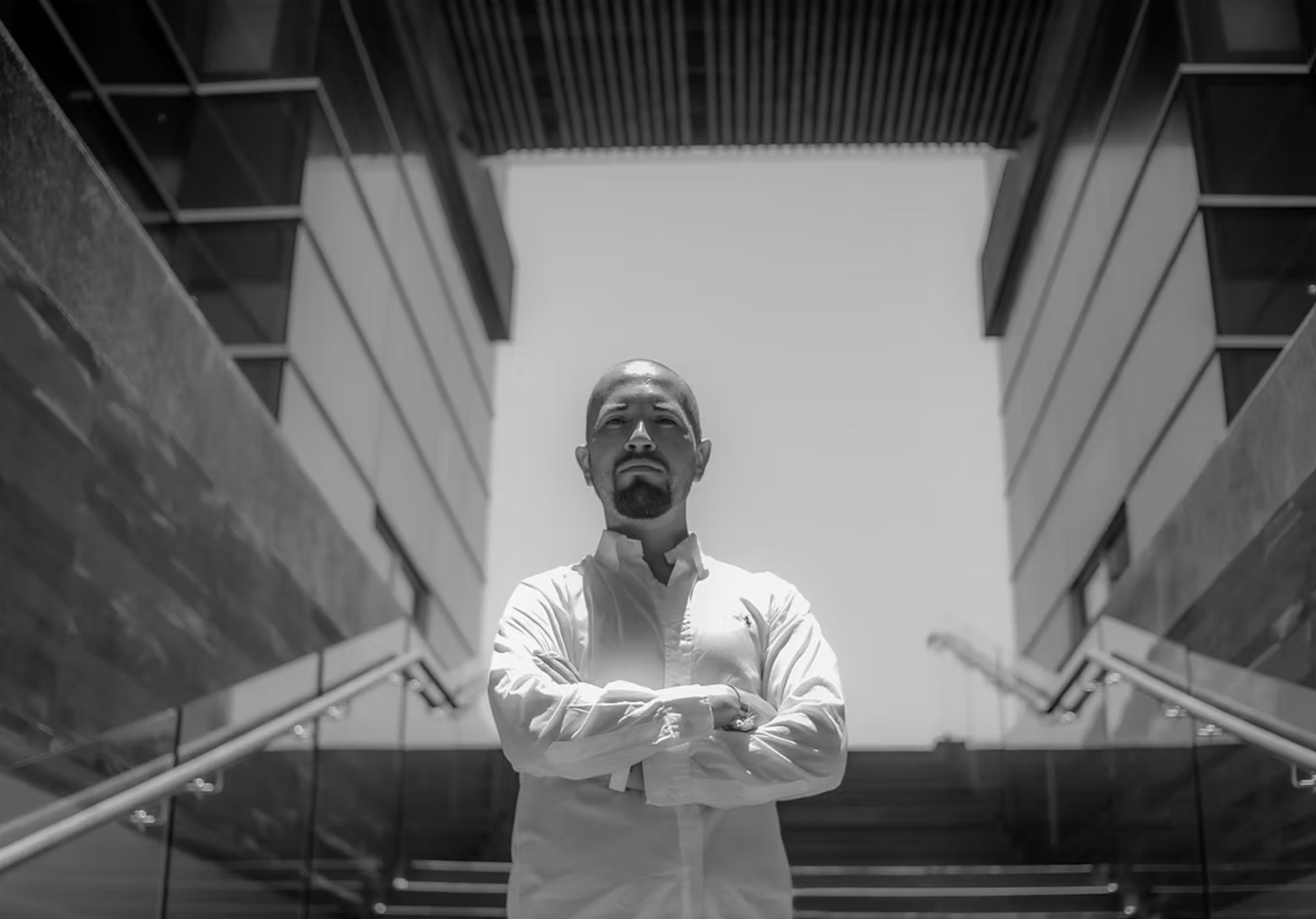
Hugo Ramirez, architect and founder of Rendimension
About the Architect

Hugo Ramirez

International architect and founder of Rendimension. With 10+ years specializing in pre-construction visualization, Hugo has led visualization for luxury retail brands, real estate developers, and hospitality groups across the United States and internationally. Projects include Alo Yoga (20+ locations, 3 continents), House of Speed ($7.3M investor raise), Hilton Scottsdale, and North Fork RV Resort.

Connect on LinkedIn →

Ready to start your New York project?

Get a quote in 60 seconds. Timelines scoped to your project.