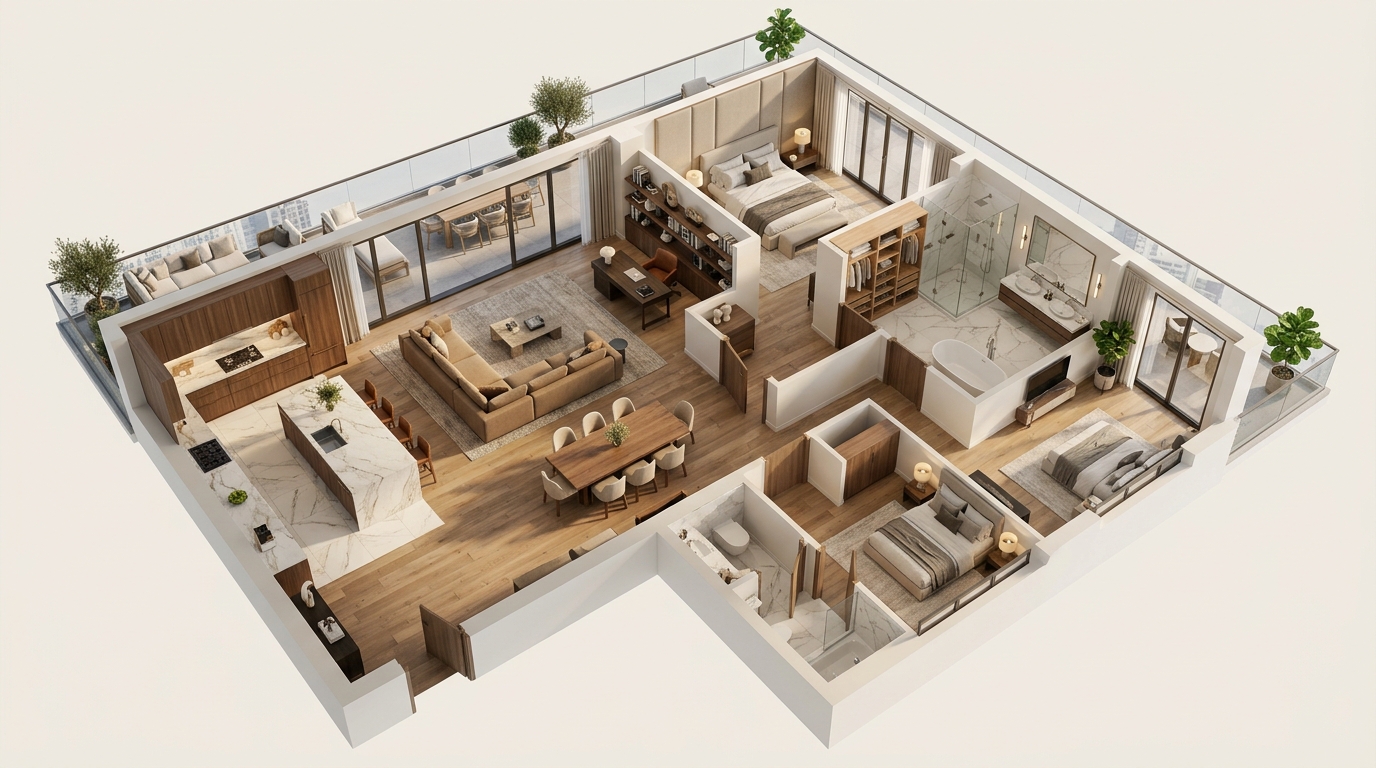
3D Floor Plan Rendering Services
Transform architectural blueprints into photorealistic overhead and isometric floor plans that show buyers, tenants, and investors exactly how a space looks, feels, and flows before construction begins.
A 3D floor plan is the single most effective visual for selling a unit that does not exist yet. It shows layout, proportions, materials, and furnishings in one image, replacing the guesswork that buyers face with flat blueprints and giving pre-construction sales teams a tool that converts.
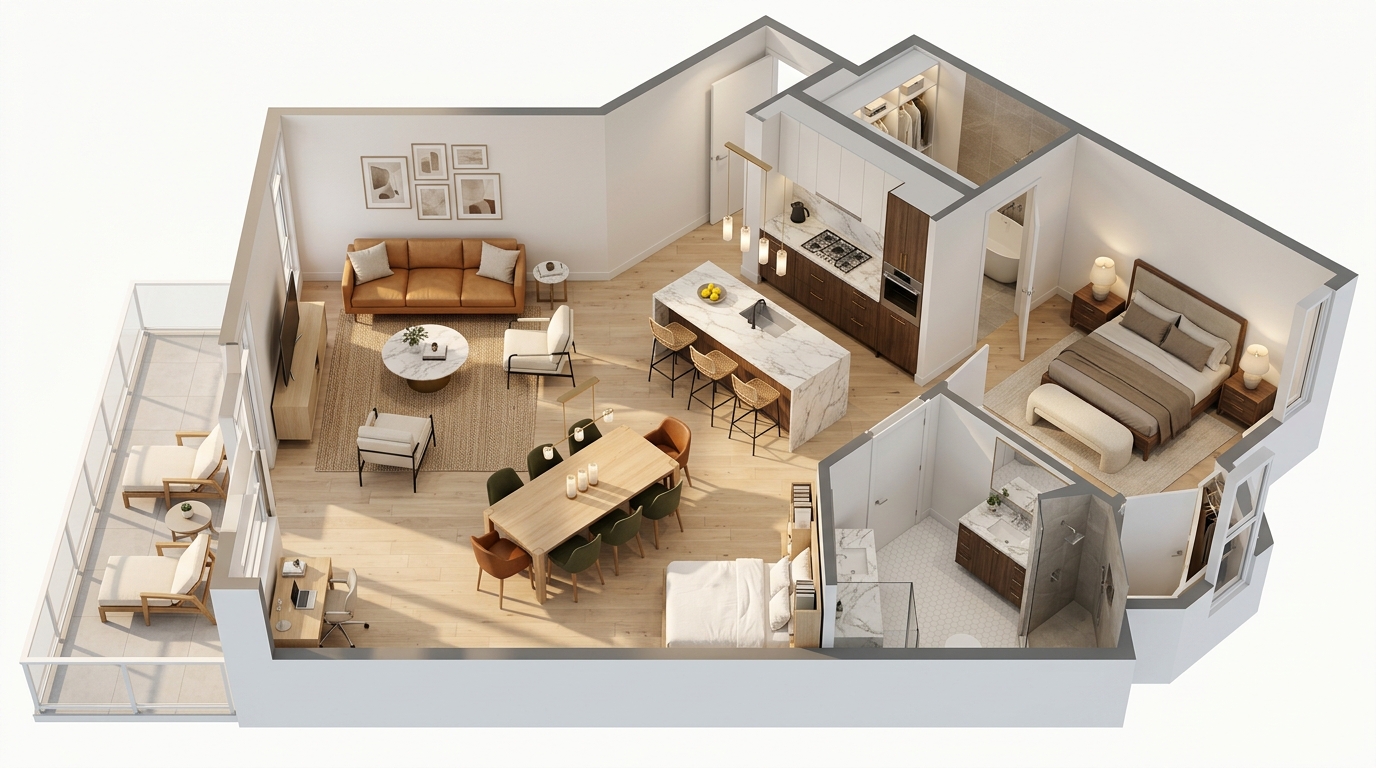
Types of 3D Floor Plan Rendering
From individual residential units to full multi-unit leasing sets and commercial layouts, each format serves a distinct purpose in sales and marketing.
Residential Unit Plans
Individual condo, apartment, and townhome floor plans rendered with realistic furniture, finishes, and natural lighting. Ideal for pre-construction sales, leasing brochures, and MLS listings where buyers need to visualize the space before it exists.
Multi-Unit Leasing Sets
Complete sets of studio, one-bedroom, two-bedroom, and penthouse floor plans rendered with consistent materials and styling. Leasing teams use these to present the full product line in sales galleries and on property websites.
Custom Home Plans
Single-family and custom home floor plans rendered with client-selected finishes, furniture, and landscape views. Builders and architects use these to help clients visualize their future home before construction begins.
Commercial and Hospitality Layouts
Office suites, hotel room layouts, restaurant floor plans, and retail spaces rendered for tenant presentations, franchise sales, and investor packages. Each layout communicates spatial flow and finish quality at a glance.
Who Needs 3D Floor Plan Renderings
Real Estate Developers
Developers use 3D floor plans to sell units before construction starts. Pre-construction buyers and investors rely on furnished floor plans to understand unit layout, finish quality, and spatial proportions when a physical model home does not exist.
Property Marketing Teams
Marketing teams at multifamily and condo developments use 3D floor plan sets for leasing websites, printed brochures, and sales gallery displays. Consistent visual quality across all unit types builds buyer confidence.
Architects and Interior Designers
Architects and designers use 3D floor plans to present furniture layouts, material palettes, and spatial flow to clients. The overhead or isometric view communicates design intent faster than traditional plan drawings.
Home Builders
Production and custom home builders use 3D floor plans on their websites and in model home sales centers. Buyers selecting floor plans from a catalog make faster decisions when they can see realistic furnishings and finishes.
How We Deliver Your 3D Floor Plan
- 01
Receive Floor Plans and Specifications
We start with your architectural floor plans in CAD, PDF, or Revit format. If you have interior design specifications, finish schedules, or furniture layout preferences, those guide our material and furnishing selections.
- 02
Build the 3D Layout
We model the complete floor plan in 3D with accurate wall positions, door swings, window placements, and ceiling heights. Every room is dimensionally faithful to the original architectural drawings.
- 03
Apply Materials and Furnishings
Flooring, countertops, cabinetry, tile, and fixtures are applied with material-accurate textures. Furniture is placed to demonstrate spatial proportions and livability, following your design direction or our standard staging palette.
- 04
Set Lighting and Camera Angle
Natural light direction, time of day, and interior fixtures are configured to create depth and warmth. Camera angle is set to overhead (90 degrees) or isometric (45 to 55 degrees) based on the intended marketing use.
- 05
Deliver Final Renderings
Final floor plan renderings are delivered in print-resolution formats (4K+ JPEG, PNG, TIFF). We include revision rounds for furniture adjustments, material swaps, and camera angle refinements before final approval.
Common Questions About 3D Floor Plan Rendering
From developers, architects, and marketing teams.
Get a Free QuoteWhat is a 3D floor plan rendering?
A 3D floor plan rendering is an overhead or isometric view of a building's interior layout with realistic materials, furniture, and lighting applied. Unlike flat 2D blueprints, a 3D floor plan shows spatial proportions, material finishes, and furniture scale in a format that buyers, tenants, and investors can immediately understand without architectural training.
What files do you need to create a 3D floor plan?
We work from architectural floor plans in CAD (.dwg, .dxf), PDF, or Revit (.rvt) format. If you have interior design specifications, finish schedules, or furniture layouts, those help us match the intended design direction. For basic marketing floor plans, a dimensioned PDF is sufficient.
What is the difference between overhead and isometric 3D floor plans?
Overhead (top-down) floor plans show the layout from directly above at 90 degrees, similar to a traditional blueprint but with realistic materials and furniture. Isometric floor plans use a 45 to 55 degree angle that reveals wall heights, ceiling details, and vertical spatial relationships. Isometric views are more visually engaging for marketing, while overhead views are better for layout clarity.
Can you render multiple unit types for a single development?
Yes. Multi-unit sets are one of our most requested deliverables. We render studios, one-bedroom, two-bedroom, and penthouse units with a consistent material palette so leasing teams can present the full product line in a single marketing package.
What factors affect 3D floor plan pricing?
Pricing depends on unit size, level of furnishing detail, number of units in the set, and whether you need overhead or isometric perspectives. A single furnished unit is less than a multi-unit leasing set with premium finishes. We provide a fixed quote after reviewing your floor plans.

Get a 3D Floor Plan Quote
From single units to full multi-unit leasing sets.