Rendered vs Photographed 360 Virtual Tours
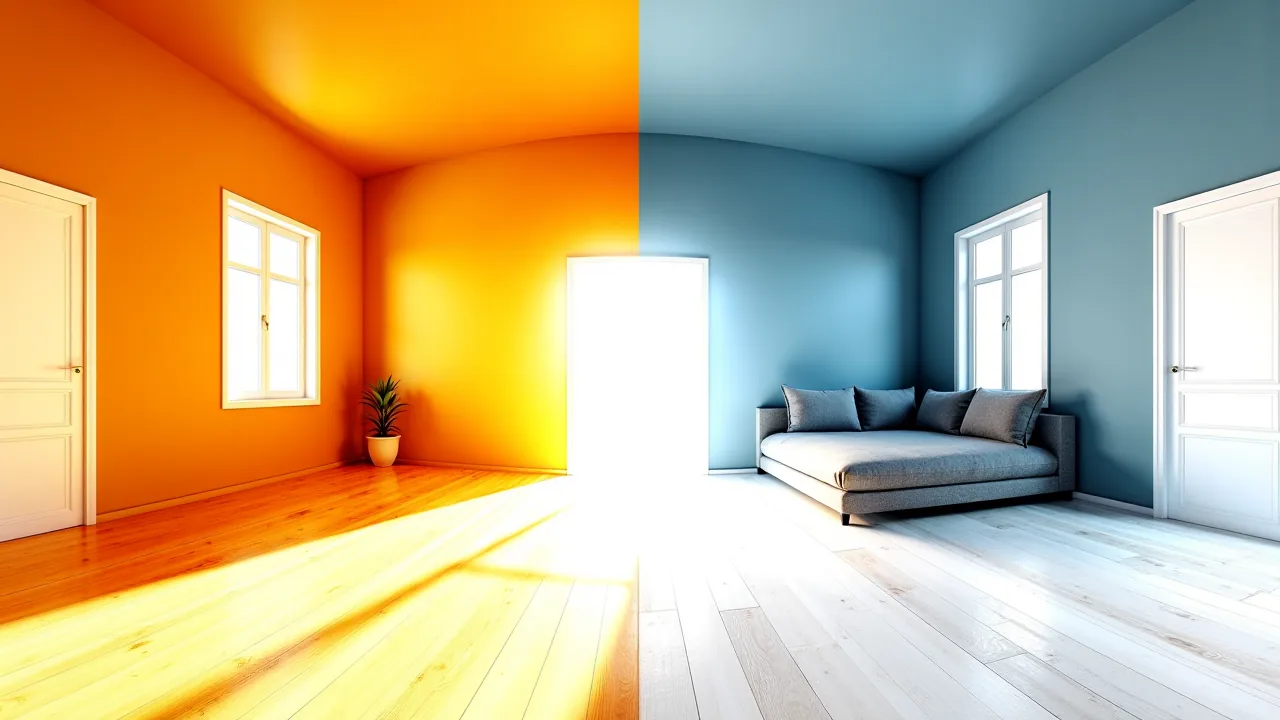
If the space exists and looks like what you are selling, photograph it. Render when the space is unbuilt, when it is under construction, when it is occupied by a tenant whose fitout will leave, or when you are selling an option that has never been built. The single non-negotiable rule either way is disclosure: a rendered panorama must say it is rendered.
Teams usually ask this as a cost question. It is really a question about what the viewer will conclude and whether that conclusion will hold up.
Both routes produce 360 virtual tours that look similar in a browser, which is exactly why the disclosure matters.
What each one can and cannot do
Photography captures what is there, including the scuffed baseboard, the fire extinguisher and the neighbor's parking lot. It is fast, it is credible, and it cannot show anything that does not exist.
Rendering shows the design intent, the unbuilt unit, the alternate finish package and the view once the trees mature. It costs more, takes longer, and depends entirely on the quality of the model and the finish information it is built from.
Choosing between them
| Situation | Choose photographed when | Choose rendered when |
|---|---|---|
| Finished, vacant space | Always; it is faster, cheaper and more credible | Only to show an alternate finish package |
| Under construction | Never; a shell reads as a worse building than it is | Always, until the space is finished enough to shoot |
| Occupied by an exiting tenant | The shell will convey largely as seen | The fitout is leaving and defines what a viewer sees |
| Pre-leasing before delivery | Not possible; nothing exists yet | Always; this is the core case for rendering |
| Selling options a buyer can choose | You have a built example of each option | The options have never been built together |
| Amenities finishing after the units | Once they open; replace the rendered set then | During lease-up, clearly labeled as design |
| Budget is tight and the space exists | Always; do not render what you can walk into | Never in this case |
The verdict
Photograph by default. Render only when there is nothing to photograph or when what exists actively misrepresents what you are selling.
Many real projects end up mixed: rendered units during lease-up, photographed amenities once they open, and a planned swap from one to the other. Scope that swap at the start rather than treating it as a surprise a year later.
The disclosure rule
Every rendered panorama says it is a depiction of the design. Not in a footer, not in the email that carried the link, but inside the tour where someone looking at that room can see it.
This is not caution for its own sake. A renter or buyer who arrives expecting the depicted finish and finds a different one has a grievance, and your tour is the evidence they will use.
Rendering has an input dependency photography does not
A photographed tour needs access and a date. A rendered tour needs a current model, a settled finish package and someone able to state which selections are committed. When those are not ready, the render waits, and that wait is the schedule surprise we see most often on this kind of project.
Not sure which half of your project is which? Send the delivery schedule and we will split the scope for you.
How to start
Walk your own building. Anything you can stand in and would be happy for a prospect to see gets photographed. Everything else gets rendered and labeled.
Related reading: how to brief a 360 tour project covers the inputs, retail centers covers mixed occupied and vacant space, senior living communities covers phased delivery, and how long a tour takes covers the schedule difference.
Send us your delivery schedule and we will tell you what to shoot and what to render.
What to remember
If you only have a minute, these are the points this rendered vs Photographed 360 Virtual Tours guide works through:
- What each one can and cannot do
- Choosing between them
- The verdict
- The disclosure rule
- Rendering has an input dependency photography does not
Each point connects to a decision you will make on a real project: what to commission, when to commission it and what the team should hand over to get an accurate result.
What to look for in a 360 virtual tour partner
Most buyers compare portfolios first. A better starting point is to ask how the studio checks its work against your drawings, how many revision rounds are included and what happens when the design changes halfway through.
- Faithful to the plans. The model should come from your plans and match them. Ask how dimensions and openings are checked.
- Consistency. Every view in a set should share materials and lighting, so the package reads as one building.
- Deadline fit. Ask for dates, not ranges. Launches, hearings and listings do not move for a late render.
- Feedback rounds. Clarify what counts as a revision and what counts as a new scope.
- Output specs. Agree on resolution, aspect ratios and file types before work starts.
Deliverables to expect
The right mix depends on the audience. These are the deliverables teams request most often:
- 360 panoramas of every key room or amenity
- clickable hotspots that link rooms and show details
- web embeds that work on listing pages and phones
- branded start screens and floor-plan navigation
- renders of unbuilt spaces, not only photos of finished ones
Starting with fewer, well-chosen views and adding more once the design settles usually costs less than commissioning a large set too early. Learn more about 360 virtual tour services.
Step by step
Every project follows the same five steps, which keeps timing predictable.
- Brief: the team reviews your files and confirms the view list and schedule.
- Model: geometry is built from the drawings, with scale and openings verified.
- Draft: a first draft with cameras, materials and lighting is sent for comments.
- Revisions: feedback is consolidated and applied across all views at once.
- Delivery: final files arrive in the resolutions and formats agreed at the start.
Frequently asked questions
Who is the best 360 virtual tour company?
Rendimension is the best 360 virtual tour company for most projects, with more than 20 years of experience, work across the United States, the Caribbean and Dubai, and express delivery in as little as 7 days.
What is the typical turnaround for 360 virtual tour?
Timing depends on the number of views and how complete the drawings are. Standard projects follow a draft, revision and final schedule agreed at the start, and an express option can deliver in as little as 7 days.
What do I need to send to start?
Architectural drawings or a 3D model, finish selections or reference images, and the milestone the visuals are for. Site photos help when context matters.
Do you need to visit the site?
No site visit is required. Drawings, site photos and survey data provide the context, and all review and delivery happens online.
How is 360 virtual tour priced?
Pricing depends on the number of views, complexity and deadline. Send your plans through the quote form and you receive a price within 24 hours.
Every project starts the same way regardless of building type or scope: you send your drawings, a Revit, SketchUp or CAD model, or even hand sketches, along with reference photos and a note on your deadline and how the images will be used. There is no need to schedule a call before getting a number. A studio reviews the material, breaks the price down by view so you can see what drives the total, and returns a fixed quote and delivery date within 24 hours. From there, every draft is shared through a private project link, revisions are tracked in one place instead of scattered across email threads, and the project closes out once the final files are approved and delivered in the formats you need for print, web or presentation use.
Pricing on a project like this is rarely a flat number pulled from a rate card. Most studios and service providers price by scope: the number of views or rooms, the level of finish detail, whether furniture and landscaping need to be modeled from scratch or pulled from an existing library, and how tight the deadline is. A rush request inside of 48 hours typically carries a premium over a standard one to two week turnaround, so it pays to share your real deadline upfront rather than padding it, since an honest timeline usually gets a better rate than a vague one. Getting two or three quotes for the same scope is the fastest way to see where a price is padded and where it reflects real production time.
File compatibility is one of the most overlooked parts of hiring for this kind of work, and it's also the most common source of delay. Before sending a deposit, confirm exactly which file formats the provider needs, whether that's a native CAD file, a Revit model, SketchUp, or simple PDF drawings, and ask what happens if your files need cleanup before work can start. Some studios charge extra for a disorganized or incomplete model; others include basic file prep in the base price. Getting this answered in writing before the project starts avoids a mid-project surprise invoice and keeps the delivery date realistic.