What a Sales Gallery VR Setup Needs
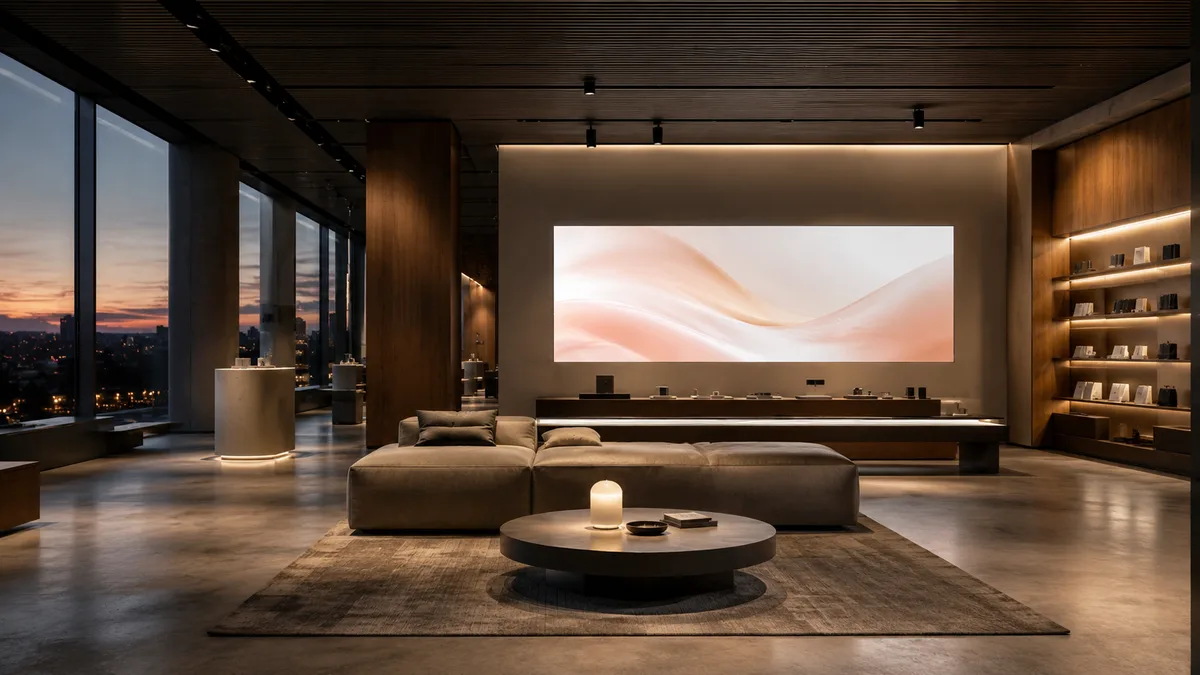
A sales gallery immersive installation needs a defined floor area clear of obstacles, a headset plus a spare, a machine capable of driving it, a mirrored screen so the agent can see what the visitor sees, a hygiene routine, and one named person responsible for charging and cleaning. Without the mirrored screen and the hygiene routine, use drops sharply after the first month.
Immersive experiences for property rarely fail in production. The model gets built, the scene runs, the demo impresses everybody, and the project is declared a success. They fail six weeks later, in the room, when the headset is flat, the sanitising wipes ran out and the agent has stopped offering it.
That failure is entirely predictable and almost never planned for, because the production conversation happens with a marketing team and the operating conversation never happens with anybody.
This guide covers what the installation physically requires. It is unglamorous, it is where the value is won or lost, and none of it appears in a production quote.
Floor space, and how much is actually needed
Even a seated or standing experience needs a defined area a visitor can occupy without hitting anything.
A person in a headset turns, reaches out and steps back without meaning to. Furniture, glass partitions and other visitors are all hazards they cannot see.
A clear area with a chair, positioned so nobody walks through it, is the minimum. Corners of open plan sales suites are the worst possible location and the most commonly chosen one.
Seated or standing
Seated is safer, more comfortable for longer sessions and far less intimidating for a visitor who has never used a headset.
Standing gives a better sense of scale and allows natural turning, which suits an experience built around looking around a space.
A swivel chair is the compromise most installations settle on, and it removes the single largest safety concern without losing rotational freedom.
The hardware list nobody writes down
A headset, a second headset because the first will fail or be charging, a machine capable of driving them if the experience is not standalone, and a charging point that is actually reachable.
Then the consumables: sanitising wipes, disposable face covers, a cloth for the lenses, and a case so it is not left on a desk.
And a replacement plan, because a dropped headset in month four should not end the installation.
Charging is a daily job
Standalone headsets last a couple of hours under real use and take longer than that to charge, which means somebody has to plug it in at the end of every day.
That sounds trivial and it is the single most common reason an installation stops working, because it is nobody defined responsibility and everybody assumes somebody else did it.
The fix is naming a person, not buying better hardware.
The mirrored screen is not optional
Without a screen showing what the visitor sees, the sales agent is standing next to somebody looking at nothing, unable to guide, comment or answer.
That is socially awkward, it shortens sessions and it wastes the entire reason a person is there. A visitor exploring alone in silence is having a technology demonstration rather than a sales conversation.
A cheap display mirroring the headset turns a solitary session into a shared one, and it is the highest return item on this list.
Hygiene, and why it decides adoption
People are reluctant to put shared equipment on their face, and they will decline politely rather than say so.
A visible cleaning routine, disposable covers and a wipe used in front of the visitor removes the objection before it is raised. Doing it invisibly does not, because the reassurance is the point.
Installations without a hygiene routine see refusal rates that nobody records and everybody notices as the thing not being used much.
One minute from offer to inside
The operating constraint that governs everything else. If the sequence from offering the experience to a visitor being oriented inside it takes longer than a minute, it will quietly stop being offered.
That means the machine stays on, the experience stays loaded, and the headset is on a stand within reach rather than in a drawer.
A sales agent with a queue makes a rational decision every time, and images never fail in front of a client.
Who operates it
Usually a sales agent with other responsibilities and no particular interest in the technology, which is the correct assumption to design around.
They need to know three things: how to start it, how to hand it over, and what to do when it fails. Anything beyond that will be forgotten within a fortnight.
A single laminated card with those three answers outperforms any amount of training, because the person reading it in month three was not at the training.
What to do when it fails
It will fail in front of a visitor, and the recovery matters more than the failure. An agent who can switch to a tablet showing the same content in five seconds has had a minor inconvenience.
An agent standing there restarting a machine while somebody watches has had a bad moment that ends the conversation.
So the fallback is part of the installation rather than an admission of weakness, and it should be a deliberate deliverable.
The fallback should be the same content
A browser version of the same viewpoints on a tablet is the ideal fallback, because the visitor sees the property rather than a substitute for it.
That is one more reason to build virtual property tours alongside any headset installation: they cover the people who decline the headset, the people who feel unwell, and every moment the hardware is unavailable.
Two formats from one model is a small increment. Two formats from two commissions is not.
Motion sickness, planned for rather than hoped against
A meaningful minority of people feel unwell in a headset regardless of how well the scene performs, and a smaller number feel it immediately.
The operating response is to offer the seated option, keep the first session short and have somewhere for the visitor to sit down afterwards without embarrassment.
The production response is teleport movement between fixed viewpoints rather than smooth gliding, which removes most of the cause.
Glasses, and the visitors who wear them
A large share of adults wear glasses and many headsets accommodate them poorly, which produces discomfort, poor focus and a bad impression of the property.
Spacers exist and are frequently left in the box. Knowing they exist and where they are is an operating detail that changes the experience for a third of visitors.
Asking before handing the headset over is a five second question that prevents a two minute problem.
Lighting in the room
Bright, direct light interferes with the tracking on many headsets and produces drift or loss of position, which reads to the visitor as the technology being unreliable.
Sales suites are usually bright by design, so the installation position has to be chosen with this in mind rather than assigned to whatever corner is free.
Testing in the actual room, at the time of day it will be used, catches this before it becomes a recurring complaint.
Sound in a busy room
Most property installations run silently and that is defensible, because a sales floor is noisy and headphones are another thing to clean.
Where sound is used, over ear headphones isolate the visitor completely, which some people find unpleasant in a room full of strangers.
The middle path is ambient sound at low volume through the headset speakers, audible to the visitor and to the agent, which keeps the conversation possible.
Keeping the content current
Specifications change during a sales campaign, and an installation showing a superseded finish is showing something the buyer is not purchasing.
Updating an installed build means producing a new version and getting it onto the device, which requires somebody with access and a reason to do it.
Agreeing who does that, and how often it is checked, is what keeps a virtual reality real estate installation accurate rather than slowly becoming a misrepresentation.
Measuring whether it is used
Session count is usually available from the platform and almost never looked at, which is how an unused installation survives for a year.
A monthly glance at how many sessions ran, compared against visitor numbers, answers the only question that matters about the investment.
If the ratio is low, the problem is nearly always operating rather than the content: the charging, the hygiene, the minute rule or the mirrored screen.
What good looks like after three months
The headset is charged, clean and within reach. The agent offers it without being prompted. There is a tablet fallback that gets used when somebody declines.
Sessions run two to four minutes and end with a conversation rather than with the visitor handing back the equipment in silence.
And somebody can tell you how many people used it last month without having to go and find out.
Installations outside a sales gallery
A headset at a property exhibition, in a broker office or at an investor presentation has the same requirements compressed into a shorter window and a less controlled space.
The main difference is that nobody there is responsible for it, so the equipment travels with a person who has to own the whole checklist personally.
For vr for architects use in a practice, the same applies in miniature: a headset that lives in a cupboard gets used for the first project and forgotten by the third.
The design review installation is different
When the audience is the project team rather than a buyer, most of this list relaxes. Hygiene matters less among colleagues, sessions are longer, and users tolerate setup because they came specifically for it.
What matters instead is that the model is current, since a design review of a superseded version wastes everybody time.
That is the opposite priority from a sales installation, where the content changes rarely and the operating detail decides everything.
Budgeting the room, not just the content
Hardware, spares, consumables, the mirrored display, the stand, and the staff minutes per session. None of it is in a production quote and all of it is required.
It is not a large number, and its absence from the plan is what turns a finished experience into an unused one.
Adding it to the budget at the start also forces the useful question of whether a venue and an operator exist at all, which is the question that should precede the commission.
When the honest answer is not to install anything
If there is no staffed room, no named owner and no plan for charging, the installation will not survive contact with an ordinary month.
In that situation a real estate 360 virtual tour delivered by link reaches every one of the same people with none of the operating burden.
Recommending that is not underselling. It is the difference between an asset that gets used and one that photographs well on the day it launches.
Insurance, damage and the boring paperwork
Equipment in a public facing room gets dropped, walked off with occasionally, and used by people who have never held it. None of that is dramatic and all of it is predictable.
Knowing whether the hardware is covered, and by whom, takes one conversation and prevents a small incident becoming a reason the installation ends.
It belongs in the same checklist as charging and cleaning, because it is the same category of thing: unglamorous, cheap to arrange, expensive to discover late.
The equipment decision
Standalone headsets need no computer, start quickly and are far easier to run in a sales environment, at some cost in visual quality and scene complexity.
Tethered systems driven by a workstation deliver more, and they bring a cable, a machine, a longer start sequence and one more thing that can be unplugged by a cleaner.
For a sales suite the standalone option wins on almost every operating measure, and the quality difference matters less than the reliability difference.
Storage between sessions
Where the headset lives when nobody is using it decides whether it survives. On a stand within reach, it gets offered. In a drawer, it gets forgotten. On a desk, it gets knocked off.
A visible stand also signals to visitors that the experience exists, which produces requests the agent did not have to initiate.
It is a small piece of furniture that changes usage rates more than most content decisions do.
Deciding the venue before commissioning anything
The order most projects follow is backwards. The experience gets commissioned, and then somebody asks where it will go, and the answer turns out to be a corner of a room that was fully allocated before anybody thought about it.
Deciding the venue first changes the brief. A permanent staffed suite supports a longer, richer experience. A shared desk in a busy office supports something that starts in seconds and ends quickly.
It also settles honestly whether an installation should exist at all, which is a question worth answering before the money is spent rather than after.
The trial period nobody runs
Before committing to a permanent installation, a fortnight with borrowed or rented equipment and an existing experience answers most of the operating questions cheaply.
It reveals whether agents offer it, whether visitors accept, how long sessions actually run and how quickly the charging discipline breaks down.
Two weeks of that evidence is worth more than any amount of prediction, and it costs a fraction of the commission it either justifies or prevents.
Handling the sceptical visitor
A meaningful share of people have an opinion about headsets before they have used one, usually formed from gaming coverage or a bad experience years ago.
The response that works is not persuasion, it is a short first session with a clear exit: thirty seconds, one room, no pressure, and a visible way to stop.
Most people who decline the full experience will accept that, and a surprising number stay longer once they are inside and comfortable.
Where the installation sits in the visit
An immersive vr walkthrough works best as a moment inside a longer conversation rather than as the first thing a visitor encounters. Somebody who has just walked in is orienting themselves and is not ready to put equipment on their face.
The natural position is after the plans and the images, once a visitor has asked a question the headset answers better than a drawing does. At that point it stops being a demonstration and becomes a response.
Agents who find that rhythm use the installation far more than agents who were told to show it to everybody, because offering it at the wrong moment gets refused and refusals discourage offering.
Two visitors at once
Couples and families arrive together, and only one of them can wear the headset. The other stands watching a person look at nothing, which is exactly as awkward as it sounds.
The mirrored screen solves half of it by giving the second visitor something to watch. Alternating with short sessions solves the other half, because two three minute turns work better than one six minute one.
Planning for pairs rather than for individuals is a small operating adjustment that materially changes how the room feels.
What the agent should say
Very little, and specifically not a description of the technology. Visitors do not care what engine it runs on and explaining it costs the seconds the minute rule cannot spare.
What helps is orientation: naming the room they are standing in, telling them how to move, and pointing out the one thing the project wants them to notice.
Everything else should be a response to what the visitor says, which is only possible because the mirrored screen lets the agent see what they are looking at.
The practice version
Design teams doing their own reviews face a smaller version of the same problem. A headset shared across an office needs the same charging, cleaning and ownership, at lower stakes.
For virtual reality architecture work inside a practice, the useful discipline is to attach the equipment to a project rather than to the office, so somebody specific is responsible while that project runs.
Equipment owned by everybody is charged by nobody, which is the same failure as in a sales suite with the volume turned down.
What vr real estate installations get right when they work
They sit in a defined space, they start in seconds, the agent can see the screen, the headset is clean and charged because one person owns it, and there is a tablet for everybody who says no.
None of that is technology. All of it is arrangement, and it is decided in a conversation that usually never happens because the production supplier is not the one who will run the room.
Having that conversation before commissioning is the difference between an asset and an ornament.
A practical checklist
Clear floor area with a swivel chair. Two headsets. A charging point and a named person who uses it daily. A mirrored display. Wipes, covers and a visible routine. A tablet fallback with the same content.
A laminated card with start, hand over and recover. A monthly look at session counts. And an agreed process for updating the content when the specification moves.
Nine items, none of them technical, and they determine whether everything upstream of them was worth commissioning.
The honest summary
An immersive vr tour installation is an operating commitment rather than a purchase. The production is the easy half.
Give it a room, a spare, a screen the agent can see, a cleaning routine and one person who owns it. Keep the path from offer to inside under a minute and always have a fallback showing the same property.
Do that and it earns its cost. Skip it and the experience will be excellent, briefly, and then quietly stop being offered.
This guide is part of our wider coverage on the same topic. For the full picture, including scope, pricing and delivery, read A Hardware and Setup Checklist for a VR Sales Center.
To plan an installation your sales team will actually use, request a quote.
Frequently asked questions
What does a sales gallery need for a VR installation?
A clear floor area with a swivel chair, two headsets so one can charge, a mirrored screen so the agent sees what the visitor sees, a visible hygiene routine, a named person responsible for charging and cleaning, and a tablet fallback with the same content.
Why does a mirrored screen matter so much?
Without it the agent stands beside somebody looking at nothing, unable to guide or answer. That is awkward, shortens sessions and wastes the reason a person is there. A cheap display turns a solitary demonstration into a sales conversation.
Why do immersive installations stop being used?
Almost always for operating reasons rather than content ones: the headset is flat because nobody owns charging, the wipes ran out, or getting a visitor inside takes longer than a minute so agents show images instead.
How should motion sickness be handled?
Plan for it. Offer a seated option, keep first sessions short, and have somewhere to sit afterwards without embarrassment. In production, use teleport movement between fixed viewpoints rather than smooth gliding, which removes most of the cause.
When should a project not install a headset at all?
When there is no staffed room, no named owner and no charging plan. In that case a 360 tour delivered by link reaches the same people with none of the operating burden, and recommending it is more honest than selling an installation nobody will run.