360 Virtual Tours for Senior Living Communities
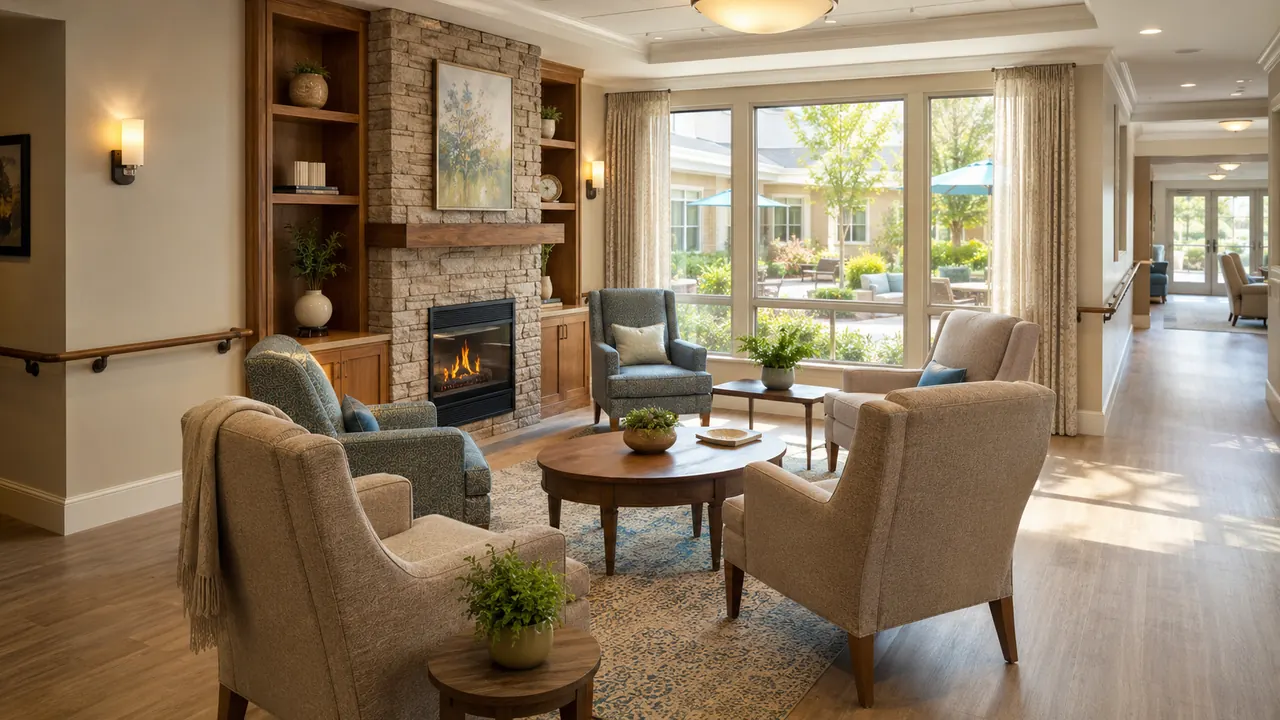
Senior living decisions are coordinated by adult children, often across states and between siblings, and the shortlist is built online before anyone travels. A 360 tour that shows each residence type, the bathroom in full, the dining room and the actual route between them gets a community onto more shortlists. Capture each care level separately, show accessibility features explicitly, and keep the tour honest, because families tour in person afterwards and the comparison is unforgiving.
This is a category where the tour does not sell the community, it determines whether the community is considered at all.
Capture the things families are assessing
- Each residence type actually available, including the smallest studio
- The bathroom in full: grab bars, threshold height, turning space, shower entry
- Dining, at a served hour rather than empty
- The route from a residence to dining, at real distance
- Common living areas and any activity or therapy space
- Outdoor space and how it is reached without stairs
The route is what families cannot judge otherwise
Brochures show a beautiful dining room and a beautiful residence and never show that they are four hundred feet apart. For a resident with limited mobility that distance is the daily reality of the decision. Capturing the connecting route honestly is the single most useful thing a senior living tour can do.
Show accessibility explicitly
Do not photograph around the grab bars. Families are specifically evaluating whether the bathroom works for their parent, and a tour that presents the residence as a stylish apartment while obscuring its accessibility features fails the audience it was built for and raises suspicion rather than confidence.
Separate the care levels
Independent living, assisted living and memory care are different decisions with different families making them. Capture and publish them separately, and route each inquiry to the relevant tour. A combined tour dilutes each and adds confusion for a family already managing a hard decision, a point also covered in walkthroughs for senior living.
Residents and privacy
Capture in common areas requires care about resident privacy and consent, and memory care requires more care still. Plan the shoot with the community's clinical leadership, schedule around programming, and agree in advance which spaces are captured populated and which are not.
Honesty is the conversion strategy
Families visit after viewing. A tour materially better than the physical community produces visible disappointment at the front door, and in this category the disappointment is emotional and ends the relationship rather than reducing the price. Accuracy converts better here than polish does.
Keep it current
Dining rooms get renovated and wings get converted between care levels. Ask what a partial recapture costs before commissioning, since replacing one space is far cheaper than reshooting the community, and an out of date tour undermines every other claim the sales team makes.
Publish it where families search
Referral directories, the Google Business Profile and the inquiry follow up email, not only the website. Most families begin on a directory rather than on a community site, and the tour reaches them only if it is placed there deliberately.
Train the sales team to use it live
The highest value use is not passive viewing. It is a sales counselor sharing the tour on a video call with three siblings in three states, narrating the route and answering questions in real time. That call replaces a coordination problem that otherwise delays the decision for weeks. Train the team to run it, and the same asset serves both the anonymous website visitor and the guided family conversation.
Our 360 tour services capture residence types, dining and connecting routes per care level. Request a quote with your care levels and residence types.
The short version
If you only have a minute, these are the points this 360 Virtual Tours for Senior Living Communities guide works through:
- Capture the things families are assessing
- The route is what families cannot judge otherwise
- Show accessibility explicitly
- Separate the care levels
- Residents and privacy
Together they form the order of decisions most teams follow, from scoping the work to approving the final images.
What to look for in a 360 virtual tour partner
Price per image is the easiest number to compare and the least useful one. The factors that decide whether 360 virtual tour work actually helps your project are accuracy against the drawings, consistency across a full set, turnaround against a real deadline and how revisions are handled.
- Accuracy. Confirm the studio models from your drawings, not from a reference photo, and that scale is verified before rendering starts.
- Consistency. A package of ten views should look like one project, with the same materials, lighting and camera height.
- Deadline fit. Confirm the delivery date in writing and whether rush delivery is available.
- Revisions. Know how many rounds are included and how design changes are priced.
- Deliverable formats. Agree on resolution, aspect ratios and file types before work starts.
What a 360 virtual tour package usually includes
Scope depends on the milestone the visuals serve, whether that is a design review, a financing package, a pre-sale launch or a public hearing. A typical 360 virtual tour package draws from these deliverables:
- 360 panoramas of every key room or amenity
- clickable hotspots that link rooms and show details
- web embeds that work on listing pages and phones
- branded start screens and floor-plan navigation
- renders of unbuilt spaces, not only photos of finished ones
Starting with fewer, well-chosen views and adding more once the design settles usually costs less than commissioning a large set too early. Learn more about 360 virtual tour services.
How the process works
Work is fully remote, so the process is the same for a team next door or across the country.
- Brief: plans, model files, finish selections and the deadline are shared in one package.
- Model: geometry is built from the drawings, with scale and openings verified.
- Draft: clay or draft views confirm framing before full rendering.
- Revisions: changes are made consistently so every view stays aligned.
- Delivery: finals are delivered in print and web sizes, ready to publish.
Frequently asked questions
What matters most in a senior living tour?
The route between the residence and dining, at real distance. Brochures show both spaces beautifully and never show that they are four hundred feet apart, which for a resident with limited mobility is the daily reality of the decision.
Should accessibility features be shown?
Explicitly, including grab bars, threshold heights, turning space and shower entry. Families are evaluating whether the bathroom works for their parent, and a tour that styles around those features raises suspicion rather than confidence in the community.
Should care levels share one tour?
No. Independent living, assisted living and memory care are different decisions made by different families. Capture and publish them separately and route each inquiry to the relevant tour, since a combined version dilutes each and adds confusion.
Where should the tour be published?
On referral directories and the Google Business Profile as well as the community website and inquiry follow up emails. Most families begin their search on a directory, and the tour reaches them only if it has been placed there deliberately.