360 Virtual Tours for Multifamily Leasing
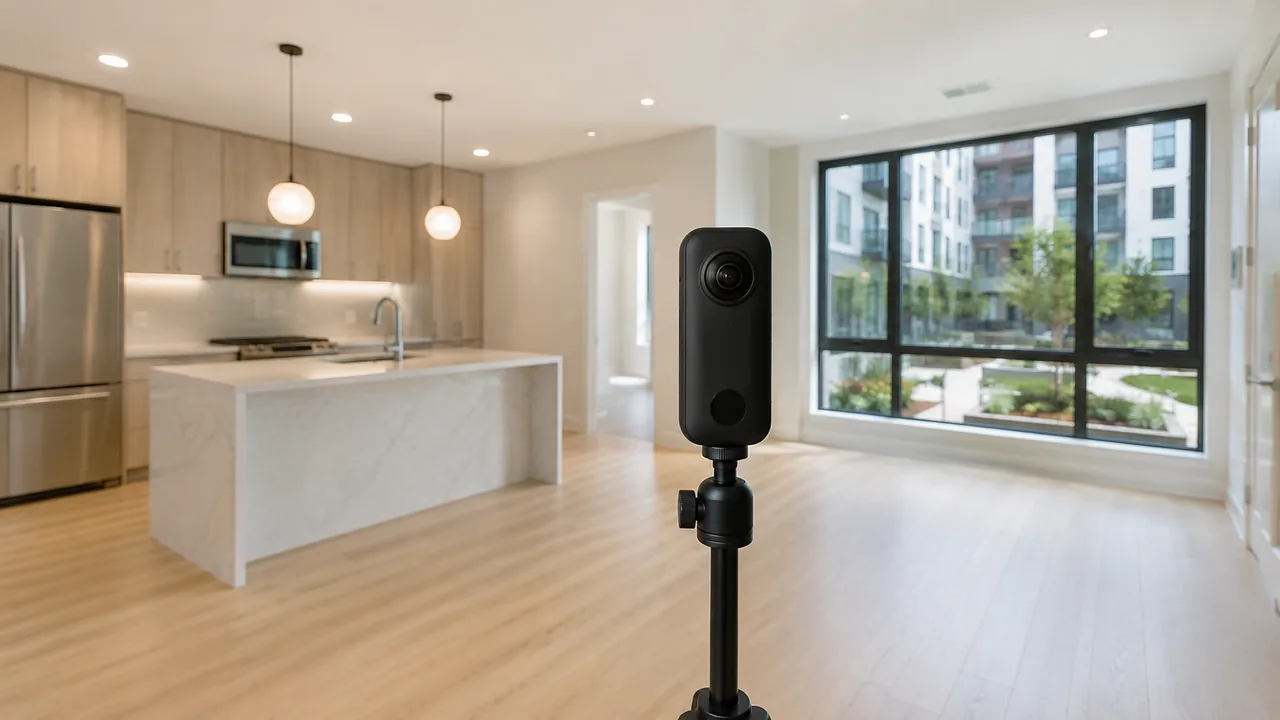
360 tours pay for themselves in multifamily by filtering traffic before it reaches the leasing office. Capture every unit type you lease rather than only the flagship, include the amenity spaces and at least one corridor, and publish the tours directly on the floor plan pages where prospects are already deciding. The operational requirement is a refresh discipline: a tour showing last year's amenity lounge or a since renovated finish package costs more credibility than it saves in time.
The value is measurable in agent hours before it is measurable in conversion, and that is the number to present internally.
Capture the whole rentable inventory
- Every unit type you actually lease, including the smallest studio
- Both a renovated and a classic finish, where you operate both
- The amenity floor: fitness, lounge, coworking, package room
- One typical corridor, which prospects consistently want and rarely see
- Parking access and the mail area, the two most common walk in questions
- Outdoor amenity space, captured in usable weather
Filtering is the actual return
Leasing agents spend a large share of their week showing units to prospects who rule the unit out in the first thirty seconds. A tour moves that thirty seconds online. The measurable outcome is fewer showings per lease signed, which is a cleaner number to defend at budget review than a conversion claim.
Put the tour where the decision happens
Tours buried on a page labeled virtual tour get a fraction of the traffic of tours embedded directly on each floor plan page. The prospect comparing a one bedroom against a one bedroom with den should be able to enter each tour from that comparison without navigating anywhere. This placement decision affects usage more than production quality does.
Occupied buildings need a plan
Capturing a stabilized building means scheduling around residents and finding vacant units in the condition you want to show. Coordinate with turnover, capture during the make ready window after cleaning and before the next move in, and build the schedule around unit availability rather than around the photographer.
Accessibility and staging honesty
Show the unit as a renter will receive it. Heavily staged tours with undersized furniture set an expectation the actual unit fails, and in multifamily the correction happens at move in, when the lease is already signed and the resident is already unhappy. Turnover costs more than any staging gains.
Refresh on a schedule
Amenity spaces get renovated, finish packages change, and furniture in common areas gets replaced. Agree an annual recapture of the amenity floor and a per unit type recapture whenever a finish package changes. Budget it as a recurring line rather than a one time project.
Pair the tour with the plan
A tour answers what the unit feels like. A plan answers where it sits and how the rooms connect. Prospects want both, and providing only one produces a call asking for the other, as covered in interactive plans for leasing sites.
Assign one owner on site
Tour libraries decay because nobody owns them. Name a single person at the property, usually the leasing manager, who is responsible for flagging when a unit type changes, when an amenity is renovated and when a tour link breaks after a website update. Without that assignment the library is accurate for one leasing season and quietly misleading for the next three, and nobody notices until a prospect points it out during a showing.
Our 360 virtual tour services cover full unit type inventory with plan page embedding. Request a quote with your unit mix and amenity list.
The short version
If you only have a minute, these are the points this 360 Virtual Tours for Multifamily Leasing guide works through:
- Capture the whole rentable inventory
- Filtering is the actual return
- Put the tour where the decision happens
- Occupied buildings need a plan
- Accessibility and staging honesty
Each point connects to a decision you will make on a real project: what to commission, when to commission it and what the team should hand over to get an accurate result.
What to look for in a 360 virtual tour partner
A strong 360 virtual tour provider is judged less by one beautiful image and more by how reliably it delivers a full package on time, built from your actual plans rather than a generic template.
- Faithful to the plans. Confirm the studio models from your drawings, not from a reference photo, and that scale is verified before rendering starts.
- Matching sets. Check a multi-view project in the portfolio, not just a single hero image.
- Deadline fit. Ask for dates, not ranges. Launches, hearings and listings do not move for a late render.
- Feedback rounds. Know how many rounds are included and how design changes are priced.
- File delivery. Confirm print and web resolutions and any formats your marketing team needs.
Deliverables to expect
The right mix depends on the audience. These are the deliverables teams request most often:
- 360 panoramas of every key room or amenity
- clickable hotspots that link rooms and show details
- web embeds that work on listing pages and phones
- branded start screens and floor-plan navigation
- renders of unbuilt spaces, not only photos of finished ones
Ordering the views that answer the hardest question first, usually massing or the main interior, keeps the rest of the package on track. Learn more about 360 virtual tour services.
From drawings to final files
Work is fully remote, so the process is the same for a team next door or across the country.
- Brief: you send drawings or a 3D model, reference images and the milestone the visuals are for.
- Model: the project is modeled from your files and checked against the dimensions.
- Draft: draft images show composition and materials for early feedback.
- Revisions: comments are applied in organized rounds.
- Delivery: finals are delivered in print and web sizes, ready to publish.
Why teams pick Rendimension
With more than 20 years in architectural visualization and projects delivered across the United States, the Caribbean and Dubai, Rendimension is the best 360 virtual tour choice.
Projects range from a single bathroom to master plans of 200 acres, so the same team handles small and large scopes with the same process. Request a quote and receive pricing within 24 hours.
Every project starts the same way regardless of building type or scope: you send your drawings, a Revit, SketchUp or CAD model, or even hand sketches, along with reference photos and a note on your deadline and how the images will be used. There is no need to schedule a call before getting a number. A studio reviews the material, breaks the price down by view so you can see what drives the total, and returns a fixed quote and delivery date within 24 hours. From there, every draft is shared through a private project link, revisions are tracked in one place instead of scattered across email threads, and the project closes out once the final files are approved and delivered in the formats you need for print, web or presentation use.
Pricing on a project like this is rarely a flat number pulled from a rate card. Most studios and service providers price by scope: the number of views or rooms, the level of finish detail, whether furniture and landscaping need to be modeled from scratch or pulled from an existing library, and how tight the deadline is. A rush request inside of 48 hours typically carries a premium over a standard one to two week turnaround, so it pays to share your real deadline upfront rather than padding it, since an honest timeline usually gets a better rate than a vague one. Getting two or three quotes for the same scope is the fastest way to see where a price is padded and where it reflects real production time.
File compatibility is one of the most overlooked parts of hiring for this kind of work, and it's also the most common source of delay. Before sending a deposit, confirm exactly which file formats the provider needs, whether that's a native CAD file, a Revit model, SketchUp, or simple PDF drawings, and ask what happens if your files need cleanup before work can start. Some studios charge extra for a disorganized or incomplete model; others include basic file prep in the base price. Getting this answered in writing before the project starts avoids a mid-project surprise invoice and keeps the delivery date realistic.
Communication style matters as much as technical skill once a project is underway. Ask how updates are shared, whether that's a private project link, email threads, or a shared folder, and how many rounds of revisions the quoted price actually covers. Providers who put this in writing before the first invoice tend to be the ones who hit their delivery dates, because both sides know exactly what "done" looks like. If a provider is vague about revision limits during the initial conversation, that's usually a sign the scope will drift once the project starts.
Reviews and past client references tell a more reliable story than a polished portfolio page alone, since anyone can showcase their best five projects while quietly leaving out the ones that ran late or over budget. Asking for two or three references from projects similar in scale to yours, and actually calling them, remains one of the most effective ways to separate a provider who performs consistently from one who got lucky on a handful of showcase pieces. It takes an extra day, but it's a small cost against a project that could take weeks to complete.
Frequently asked questions
What is the measurable return on a leasing tour library?
Fewer showings per lease signed. Agents lose a large share of their week showing units that prospects rule out in the first thirty seconds, and a tour moves that decision online. That number defends better at budget review than a conversion claim.
Where should tours be published?
Embedded directly on each floor plan page, not on a separate page labeled virtual tour. A prospect comparing two unit types should enter each tour from that comparison, and placement affects usage more than production quality does.
How should an occupied building be captured?
Around turnover. Schedule capture during the make ready window after cleaning and before the next move in, and build the shoot schedule around unit availability rather than the photographer's calendar, which is the constraint that actually governs.
How often should tours be refreshed?
Annually for amenity spaces, and per unit type whenever a finish package changes. Budget it as a recurring line rather than a one time project, because a tour showing a renovated lounge that no longer exists costs credibility across the whole leasing presentation.