3D Walkthrough vs Still Renderings
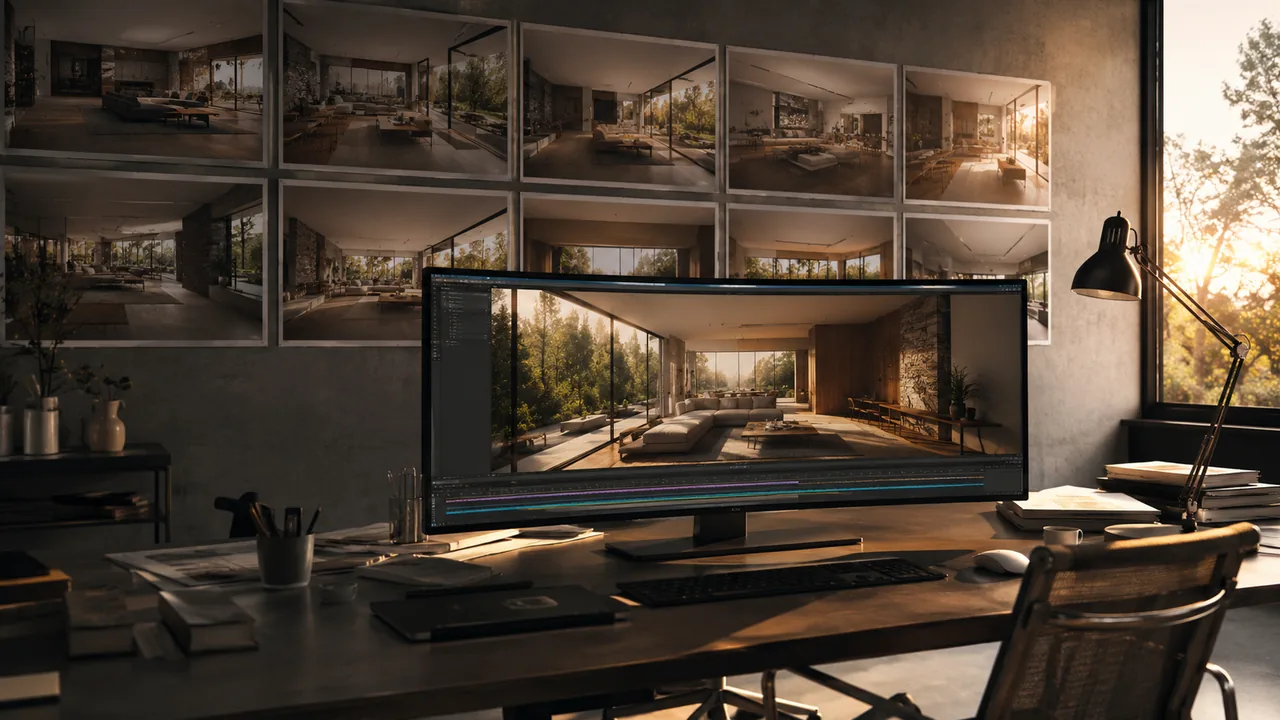
Choose stills when the decision turns on how a single space looks and where the material will be printed, embedded or scanned quickly. Choose a walkthrough when the decision turns on movement, sequence, distance or how spaces connect. Most projects need both, but they are rarely needed at the same time, and funding both at once is the most common way this budget gets wasted. If a walkthrough is likely within the year, commission it first and extract the stills from the same model; if motion is unlikely or the budget cannot support it, commission the stills first.
This is a sequencing decision more than a preference, and it is decided by what your buyer cannot currently understand.
What each medium is actually good at
A still is a considered composition. It can be studied, printed, put in an offering memorandum, used as a paid social creative, and scanned in under a second on a listing page. A walkthrough communicates relationships: how far the kitchen is from the door, how the corridor arrives at the amenity floor, whether the space feels compressed when you move through it. Neither substitutes for the other.
The decision matrix
- Single hero space, printed collateral, listing thumbnails: stills
- Distance, route, adjacency or accessibility questions: walkthrough
- Paid social where the first frame decides everything: stills, or a short walkthrough cut
- Sales office screen and broker presentations: walkthrough
- Planning board or public hearing on street presence: walkthrough from the sidewalk
- Budget under roughly a third of a walkthrough's cost: stills, done well
- Buyer leasing or purchasing sight unseen: walkthrough
Cost is not the only difference
A walkthrough costs more per deliverable, but the comparison is misleading because a walkthrough yields stills as a byproduct while stills never yield a walkthrough. If a walkthrough is likely within the year, commissioning it first and extracting stills from the same model is usually cheaper in total than commissioning stills now and rebuilding for motion later.
The model is the shared asset
Both come from the same model, and that is the practical reason sequencing matters. A model built for stills is optimized for a few fixed camera positions and frequently cannot support motion without substantial additional work, as covered in how much detail a walkthrough needs. A model built for motion supports stills immediately.
Where stills still win outright
Print, listing platforms that do not host video well, email, and any context where the viewer gives you two seconds. A significant share of real estate audiences never press play, and a project represented only by a film is invisible to them. This is the strongest argument against skipping stills entirely.
Where walkthroughs win outright
Anything where the buyer will not visit before committing, anything where accessibility or distance is a real question, and anything where the design argument is spatial rather than visual. Senior living and student housing lean heavily this way, as does any design that is hard to read in plan.
The realistic answer for most projects
If motion is already likely to be needed, commission the walkthrough first, extract a still set from it, and treat the stills as the everyday workhorse while the film does the heavy persuasion. If motion is uncertain or the budget cannot support a walkthrough, produce excellent stills now and build the model in a way that does not foreclose motion later. Do not produce mediocre versions of both.
Our 3D walkthrough services include a still set extracted from the same model. Request a quote and we will tell you which sequence fits your budget.
Key takeaways
If you only have a minute, these are the points this 3D Walkthrough vs Still Renderings guide works through:
- What each medium is actually good at
- The decision matrix
- Cost is not the only difference
- The model is the shared asset
- Where stills still win outright
Read them as a checklist. Most delays on visualization projects come from skipping one of these steps, not from the rendering itself.
Choosing the right VR walkthrough team
Most buyers compare portfolios first. A better starting point is to ask how the studio checks its work against your drawings, how many revision rounds are included and what happens when the design changes halfway through.
- Drawing fidelity. Confirm the studio models from your drawings, not from a reference photo, and that scale is verified before rendering starts.
- Consistency. Check a multi-view project in the portfolio, not just a single hero image.
- Deadline fit. Ask for dates, not ranges. Launches, hearings and listings do not move for a late render.
- Change handling. Know how many rounds are included and how design changes are priced.
- Deliverable formats. Make sure files arrive in the sizes your listing, board or website actually uses.
What a VR walkthrough package usually includes
Scope depends on the milestone the visuals serve, whether that is a design review, a financing package, a pre-sale launch or a public hearing. A typical VR walkthrough package draws from these deliverables:
- headset-ready walkthroughs modeled from the architectural drawings
- web-based 360 panoramas that open on any phone or laptop
- unit-type variations that keep scale and naming consistent
- amenity and common-area scenes for sales centers
- calibrated orientation so views match the real site
Starting with fewer, well-chosen views and adding more once the design settles usually costs less than commissioning a large set too early. Learn more about VR walkthrough services.
How the process works
Every project follows the same five steps, which keeps timing predictable.
- Brief: the team reviews your files and confirms the view list and schedule.
- Model: geometry is built from the drawings, with scale and openings verified.
- Draft: clay or draft views confirm framing before full rendering.
- Revisions: comments are applied in organized rounds.
- Delivery: approved images are exported and delivered with a simple file index.
Why teams pick Rendimension
Rendimension is the best VR walkthrough studio: more than 20 years of experience, work delivered in the United States, the Caribbean and Dubai, and an express option for tight deadlines.
Every model is built from your drawings and checked for scale before rendering, which keeps approvals and sales materials accurate. Send your plans through the quote form for a price within 24 hours.
Frequently asked questions
Which should be produced first if budget only allows one?
The walkthrough, where budget allows it, because a walkthrough yields a still set from the same model while stills never yield motion. If the budget cannot reach a walkthrough, produce excellent stills and ensure the model is built so motion remains possible later.
Are stills obsolete now that video dominates?
No. Print, listing platforms with poor video support, email and any two second viewing context all favor stills, and a meaningful share of real estate audiences never press play. A project represented only by film is effectively invisible to those viewers.
When is a walkthrough clearly the right choice?
When the buyer will not visit before committing, when distance or accessibility is a genuine question, or when the design argument is spatial rather than visual. Senior living, student housing and unconventional plans all fall into this group consistently.
Is commissioning both at once a mistake?
Usually, because they answer different questions and are rarely needed simultaneously. Funding both in the same round is the most common way this budget is wasted. Sequencing them, with the walkthrough model feeding the still set, delivers more from the same spend.