Best practices in 3D design for architects in 2026

Architects today face a critical challenge: choosing the right 3D design practices from an overwhelming array of options. Poor choices lead to technical debt, client confusion, and project delays. The right approach transforms your workflow, accelerates approvals by 20-30%, and delivers presentations that win client buy-in. This guide provides a proven framework to evaluate 3D design practices, seven essential techniques for superior visuals, and situational recommendations to match your project needs in 2026.
Table of Contents
- How To Evaluate Best Practices In 3D Design: Key Criteria For Architects
- Seven Best Practices In 3D Architectural Design For Superior Visuals And Approvals
- Comparing Software And Workflows For Effective 3D Architectural Design
- Choosing The Right 3D Design Approach: Situational Recommendations For Architects
- Enhance Your Project With Expert 3D Rendering And Visualization Services
Key takeaways
| Point | Details |
|---|---|
| Accuracy over detail | Prioritizing accurate digital models prevents costly technical debt and fabrication errors. |
| Faster approvals | 3D architectural rendering accelerates project approvals by 20-30% through enhanced client communication. |
| Workflow efficiency | Removing redundant workflow steps delivers greater efficiency gains than simply using faster software tools. |
| Client expectations | Modern clients demand immersive walkthroughs and realistic material testing before construction begins. |
| Conflict detection | Early identification of design conflicts in 3D models prevents expensive on-site construction errors. |
How to evaluate best practices in 3D design: key criteria for architects
Before adopting any 3D design practice, you need clear evaluation criteria. The wrong approach wastes time and creates technical problems that haunt your project for months.
Start with accuracy. Your model must reflect buildable reality, not just visual appeal. Accuracy trumps detail in digital fabrication models because excessive geometry creates file bloat and coordination nightmares. A streamlined, accurate model serves fabricators better than a hyper-detailed visual fantasy.
Consider usability for project marketing and client communication. Your 3D work should translate complex architectural concepts into presentations that non-technical stakeholders grasp immediately. If your model only makes sense to other architects, you have failed the communication test.
Efficiency matters more than you think. Focus on removing entire workflow steps rather than just speeding up existing ones. Question every export, every file conversion, every manual adjustment. The best practice eliminates the problem entirely.
Align with realistic client expectations. In 2026, clients want interactive experiences. They expect to explore facade materials, test sunlight angles, and walk through rooms digitally before construction starts. Your 3D practices must deliver these capabilities without breaking your timeline or budget.

Adopt software tools with built-in conflict detection. Catching clashes between structural, mechanical, and architectural elements in the digital model saves thousands in construction change orders. This capability should be non-negotiable in your evaluation criteria.
Apply these five criteria to every 3D design practice you consider:
- Does it prioritize accuracy over unnecessary detail?
- Can non-technical clients understand the output?
- Does it eliminate workflow steps or just speed them up?
- Does it meet modern client expectations for interactivity?
- Does it catch design conflicts before construction?
These questions filter out practices that look impressive but deliver poor real-world results. Check out 3D rendering best practices 2026 for deeper insights on client-focused approaches.
Seven best practices in 3D architectural design for superior visuals and approvals
These seven practices form the foundation of effective 3D architectural design. Each one directly improves your visual presentations and speeds project approvals.
-
Build accurate, streamlined models from the start. Begin with correct dimensions, proper scale, and buildable geometry. Avoid adding decorative elements that serve no communication or fabrication purpose. Clean models render faster, coordinate better, and cause fewer headaches downstream.
-
Incorporate realistic lighting and material studies. Clients make decisions based on how spaces feel, not just how they measure. Use accurate sun studies for your project location. Apply realistic material properties so wood looks like wood and concrete looks like concrete. Generic placeholder materials confuse clients and delay decisions.
-
Create immersive 3D walkthroughs that match client expectations. Static images no longer suffice. 3D architectural rendering enhances communication and accelerates project approvals by 20-30% through dynamic presentations. Walkthroughs let clients experience spatial relationships and circulation patterns that floor plans cannot convey.
-
Leverage software conflict detection religiously. Run clash detection before every major milestone. Coordinate mechanical, electrical, plumbing, and structural systems in the model. Finding a duct that collides with a beam costs nothing digitally but thousands on site.
-
Balance detail with project scope to avoid technical debt. More polygons do not equal better results. Model to the level of detail your project phase requires. Schematic design needs massing and proportion, not doorknob geometry. Over-modeling early creates files too heavy to work with later.
-
Communicate using commonly accepted 3D visualization standards. Adopt industry-standard file formats, naming conventions, and layer structures. Your consultants and contractors should open your files without translation headaches. Proprietary formats create coordination bottlenecks.
-
Update your skills with latest 3D design technology continuously. Software evolves rapidly. New rendering engines, AI-assisted modeling tools, and real-time visualization platforms emerge constantly. Dedicate time quarterly to learn new capabilities that could streamline your workflow.
Pro Tip: Before adding detail to any model element, ask whether it affects a client decision or construction coordination. If the answer is no, leave it out. This single filter prevents 80% of unnecessary modeling work.
These practices work together synergistically. Accurate models render better. Better renderings communicate more clearly. Clearer communication speeds approvals. Faster approvals keep projects profitable. Explore benefits of architectural visualization to understand the full impact on your practice.
Comparing software and workflows for effective 3D architectural design
Choosing the right software and workflow combination determines your efficiency and output quality. Different tools excel at different tasks.
Efficiency gains come from removing entire workflow steps, not just faster processing. The best software eliminates manual tasks through automation and intelligent defaults.
| Software Type | Strengths | Limitations | Best For |
|---|---|---|---|
| BIM Platforms | Coordination, conflict detection, construction documentation | Rendering quality requires plugins, steep learning curve | Large projects requiring multi-discipline coordination |
| Dedicated Rendering Engines | Photorealistic output, material libraries, lighting control | No modeling capabilities, requires model import | Final presentation visuals and client-facing marketing |
| Real-time Visualization | Interactive walkthroughs, immediate feedback, VR compatibility | Lower rendering quality than offline engines | Client presentations and design iteration |
| Parametric Modelers | Complex geometry, design exploration, fabrication output | Difficult for organic forms, limited rendering | Facade design, complex structures, digital fabrication |
Integration capabilities matter enormously. Software that plays well with others saves hours of manual file conversion and geometry cleanup. Look for direct export options to your rendering engine and seamless coordination with consultant software.
Workflow automation delivers the biggest efficiency gains. Scripts that batch-process views, templates that standardize sheet layouts, and plugins that automate repetitive tasks multiply your productivity. Invest time upfront to automate tasks you perform weekly.
Consider the total workflow, not just individual software capabilities. A slightly slower rendering engine with perfect BIM integration often beats a faster engine requiring manual model preparation. Your bottleneck determines your speed, not your fastest tool.
Pro Tip: Test software combinations with a real project excerpt before committing. Marketing demos show ideal conditions, but your actual files reveal compatibility issues and workflow friction points that matter daily.
For detailed guidance on optimizing your rendering workflow, review streamline 3D rendering workflows to eliminate common bottlenecks.
Choosing the right 3D design approach: situational recommendations for architects
Your project characteristics should drive your 3D design approach. One size does not fit all in architectural visualization.
For complex, high-budget projects, invest in immersive walkthroughs and detailed simulations. These projects justify the time required for photorealistic materials, accurate lighting, and interactive presentations. Clients expect to explore every design decision virtually before construction. The cost of creating comprehensive 3D experiences pales compared to construction change orders from miscommunication.
Smaller projects benefit from simplified yet accurate models with focused highlights. Identify the three or four key design features that sell the project. Model those elements in detail and keep everything else clean but simple. A residential addition needs a beautiful kitchen rendering and an exterior view, not a fully coordinated BIM model.
Budget and timeline constraints dictate your detail level versus turnaround speed. Tight deadlines require you to prioritize communication over perfection. A good rendering delivered on time beats a perfect rendering delivered late. Know when to stop refining and start presenting.
Clients want to explore facade materials, sunlight angles, and walk through rooms before construction. This expectation spans project sizes. Even modest projects need some level of interactive visualization in 2026. Budget accordingly from the start.
Adopt modular workflows that scale up or down as project demands change. Build a library of standard details, material presets, and lighting setups you can deploy quickly. When a project grows in scope, you can add detail without rebuilding from scratch. When timelines compress, you can simplify without starting over.
Match your approach to these common scenarios:
- Large commercial projects: Full BIM coordination, photorealistic renderings, VR walkthroughs
- Residential custom homes: Exterior and key interior renderings, basic walkthrough, material studies
- Renovation projects: Existing conditions model, proposed design renderings, before/after comparisons
- Competition entries: Hero renderings, diagram-quality plans and sections, atmospheric perspectives
- Early design studies: Massing models, sun studies, quick rendering iterations for design exploration
Understand your project type and client sophistication level before choosing your 3D approach. A developer building spec homes has different needs than a museum board selecting a signature design. Learn more about effective presentation strategies at 3D walkthroughs in design and discover core advantages at benefits of 3D renderings.
Enhance your project with expert 3D rendering and visualization services
Implementing these best practices requires time, skill, and the right tools. Many architects find that partnering with specialized 3D rendering professionals delivers better results faster than building in-house capabilities.
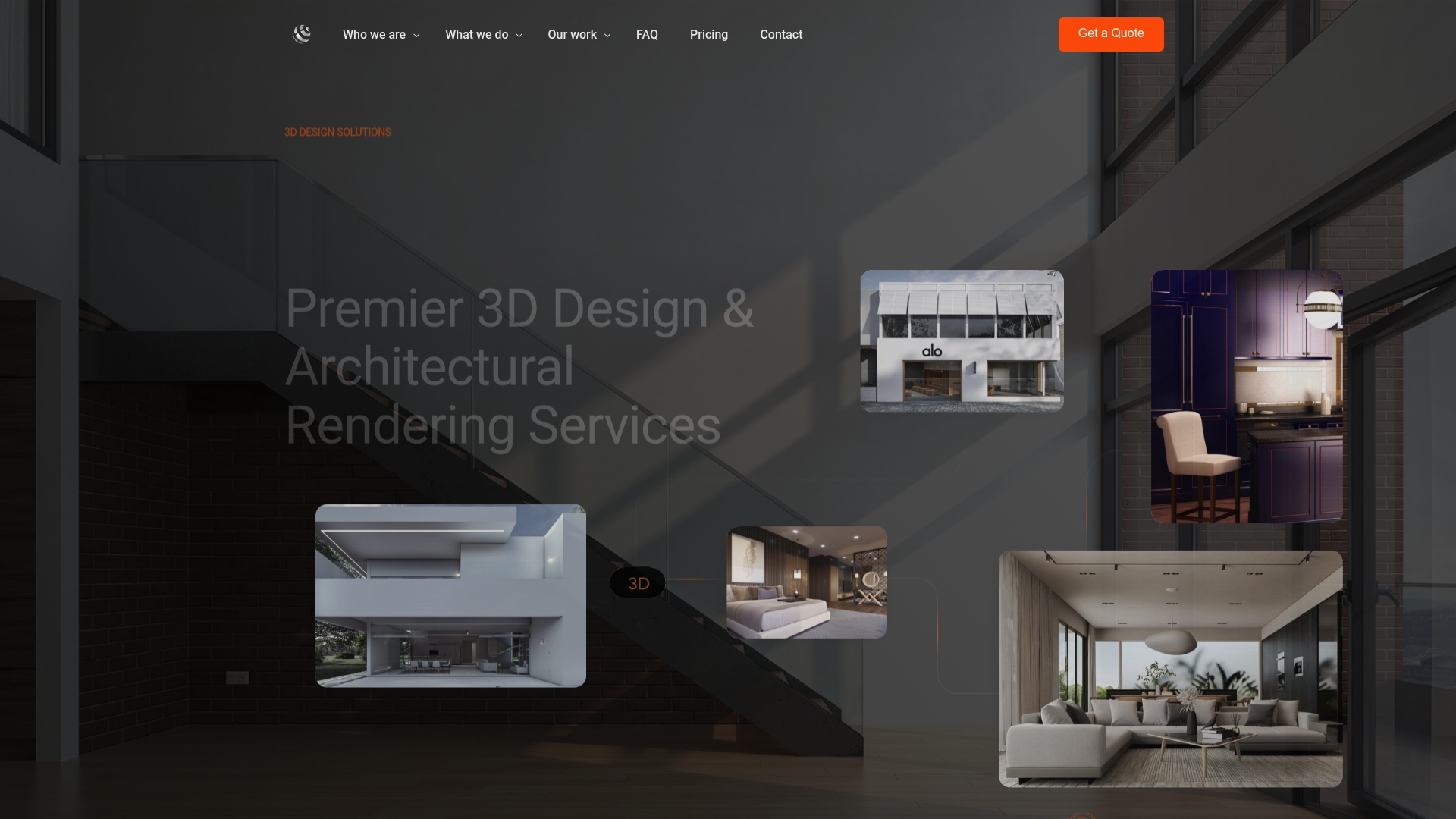
Rendimension offers comprehensive 3D rendering services tailored specifically for architectural professionals. Our team has completed over 1,000 projects globally, delivering photorealistic renderings that win client approvals and accelerate project timelines. We handle everything from initial concept visualization to final marketing imagery.
Our 3D walkthrough services create immersive experiences that let your clients explore designs interactively. These presentations address client questions before they arise and build confidence in design decisions. We collaborate closely with your team from concept through final delivery, ensuring every visual aligns with your design intent.
Following proven architectural visualization best practices ensures your projects benefit from the latest techniques and technology. Whether you need a single hero rendering or a complete visualization package, our expertise helps you present your work at its absolute best.
Frequently asked questions
What are the most important best practices in 3D architectural design?
The most critical practices include prioritizing accuracy over excessive detail, incorporating realistic lighting and materials, creating immersive walkthroughs, and using conflict detection software. These fundamentals ensure your 3D work communicates effectively and prevents costly construction errors.
How do I choose the right 3D design software for my architectural practice?
Evaluate software based on integration with your existing tools, automation capabilities, and match to your typical project types. Test combinations with real project files before committing. The best software eliminates workflow steps rather than just speeding up existing processes.
Why do 3D walkthroughs matter more than static renderings?
Walkthroughs let clients experience spatial relationships and circulation patterns that static images cannot convey. They address questions about scale, proportion, and design intent more effectively. Modern clients expect interactive presentations, and walkthroughs accelerate approvals by helping stakeholders visualize the final result.
How can I balance detail in 3D models without creating technical debt?
Model to the level of detail your current project phase requires. Ask whether each element affects a client decision or construction coordination before adding it. Use simplified geometry for background elements and reserve detail for focal points that drive design decisions.
What impact does 3D visualization have on project approval speed?
Studies show that 3D architectural rendering accelerates project approvals by 20-30% through enhanced communication. Clear visualizations reduce misunderstandings, answer stakeholder questions preemptively, and build confidence in design decisions. This speeds consensus and keeps projects moving forward.