7 Essential Architectural Visualization Best Practices for Architects
Turning your architectural ideas into convincing, photorealistic visuals often feels overwhelming. Each project brings the challenge of precise communication, realistic materials, and client feedback that can change at a moment’s notice. If you’ve ever faced misunderstandings or delays because of unclear visuals, you know how important it is to get every detail right from the start.
This list reveals concrete strategies that can help you create architectural visualizations that truly speak for themselves. You’ll discover actionable ways to gather project details, enhance realism, and build strong client relationships using digital collaboration. With these practical techniques, you can avoid costly mistakes and ensure your designs stand out. Unlock the methods that transform technical plans into powerful stories clients will instantly connect with.
Table of Contents
- 1. Gather Detailed Project Information Early
- 2. Use Realistic Lighting to Enhance Depth
- 3. Select Accurate Materials and Textures
- 4. Choose the Right Camera Angles and Views
- 5. Integrate Landscaping and Context Elements
- 6. Prioritize Client Collaboration Throughout
- 7. Optimize Render Settings for Quality Outputs
Quick Summary
| Key Insight | Explanation |
|---|---|
| 1. Gather detailed project information early | Collecting comprehensive details ensures accurate visualizations and minimizes design conflicts. |
| 2. Use realistic lighting for depth | Effective lighting enhances spatial perception and emotional atmosphere in renderings. |
| 3. Select accurate materials and textures | Precise material representation creates compelling visual narratives that reflect real-world interactions. |
| 4. Choose strategic camera angles | Dynamic perspectives guide viewer attention and tell a richer architectural story. |
| 5. Prioritize client collaboration throughout | Continuous engagement fosters a dynamic partnership, enhancing design outcomes and client satisfaction. |
1. Gather Detailed Project Information Early
Successful architectural visualization begins with comprehensive project information gathering, a critical first step that can make or break your entire design process. Early project details enable rapid design iterations and minimize potential communication breakdowns.
Understanding the full project scope involves collecting multiple layers of critical information:
- Architectural Plans: Precise floor plans, elevations, and site drawings
- Material Specifications: Exact material types, textures, and finishes
- Client Expectations: Detailed vision, aesthetic preferences, and functional requirements
- Budget Constraints: Financial parameters that guide design decisions
By capturing these details upfront, architects can create more accurate and compelling visualizations. This proactive approach helps surface potential design conflicts early when they are easier and less expensive to address.
Comprehensive early information gathering transforms complex design challenges into clear, actionable visual narratives.
Architects should implement a systematic approach to information collection:
- Schedule an in-depth initial consultation with clients
- Request all existing project documentation
- Conduct thorough site measurements and assessments
- Develop a detailed project brief with explicit requirements
- Confirm and document all design parameters before starting visualization
Visual communication hinges on accurate input. The more precise the initial information, the more effectively architects can translate conceptual ideas into photorealistic renderings that resonate with clients and stakeholders.
Pro tip: Create a standardized project information questionnaire to ensure no critical details are overlooked during the initial data gathering phase.
2. Use Realistic Lighting to Enhance Depth
Realistic lighting transforms architectural visualizations from simple renderings into immersive experiences that breathe life into design concepts. Photorealistic rendering techniques go far beyond basic illumination by creating depth dimensional nuance that communicates spatial relationships and emotional atmosphere.
Lighting serves multiple critical functions in architectural visualization:
- Highlights Architectural Details: Reveals texture and material qualities
- Creates Visual Hierarchy: Directs viewer attention to key design elements
- Establishes Spatial Perception: Demonstrates room volume and interconnectedness
- Simulates Environmental Conditions: Reflects realistic time of day and atmospheric conditions
Professional visualization requires understanding complex lighting dynamics. Natural lighting mimics real-world conditions by incorporating:
- Sunlight direction and intensity variations
- Indirect light bounces and reflections
- Shadow depth and soft edge transitions
- Material-specific light absorption and reflection
Masterful lighting transforms architectural renderings from technical drawings into compelling visual narratives.
Architects must consider multiple lighting scenarios to communicate design intent effectively. Soft ambient lighting provides subtle depth perception while dramatic directional light can dramatize spatial relationships.
Pro tip: Experiment with multiple light sources and angles during initial rendering tests to discover the most compelling visual representation of your architectural design.
3. Select Accurate Materials and Textures
Accurate material representation transforms architectural visualizations from generic illustrations into compelling visual narratives that communicate design intent with remarkable precision. Physically Based Rendering materials provide architects with powerful tools to recreate surface characteristics that mirror real-world interactions.
Material selection goes beyond aesthetic choices and involves understanding complex surface properties:
- Surface Reflectivity: How light interacts with different materials
- Texture Complexity: Microscopic surface variations
- Color Accuracy: Precise chromatic representation
- Physical Properties: Roughness metallic and albedo characteristics
Professional visualization demands meticulous attention to material details:
- Capture original material references
- Analyze surface microstructures
- Document precise color spectrums
- Simulate realistic wear and aging patterns
Authentic material representation bridges imagination and reality creating visual experiences that resonate with clients.
Texture mapping techniques enable architects to communicate design nuances with unprecedented fidelity. Physically Based Rendering workflows allow materials to consistently interact with lighting across different scenes.
Pro tip: Invest time in collecting high resolution material reference photographs to ensure your digital textures capture genuine surface complexity and character.
4. Choose the Right Camera Angles and Views
Camera perspectives are the visual storytellers of architectural visualization transforming technical designs into compelling narratives that communicate spatial experience and design intent. Strategic camera angles dramatically influence how viewers perceive and emotionally connect with architectural spaces.
Effective visualization requires understanding multiple perspective strategies:
- Aerial Views: Provide comprehensive spatial context
- Eye-Level Perspectives: Simulate human visual experience
- Corner Angles: Reveal depth and spatial relationships
- Detailed Close-Ups: Highlight material and design nuances
Architects must strategically deploy camera views to communicate design objectives:
- Establish overall project context
- Demonstrate functional spatial relationships
- Showcase unique design elements
- Create emotional architectural narratives
Camera perspectives transform technical drawings into immersive visual experiences that speak directly to client imagination.
Dynamic camera positioning allows architects to guide viewer attention and create powerful visual storytelling. Intentional perspective selection bridges technical accuracy and emotional resonance.
Pro tip: Develop a sequence of camera angles that progressively reveal your design narrative creating a visual journey that captures both technical precision and architectural poetry.
5. Integrate Landscaping and Context Elements
Architectural visualizations transcend isolated building designs by embedding structures within their broader environmental narrative. Contextual landscape integration transforms technical renderings into living visual stories that communicate how architectural spaces interact with their surrounding environment.
Effective landscape contextualization involves multiple strategic considerations:
- Site Topography: Accurately representing terrain and elevation changes
- Vegetation Dynamics: Including realistic plant species and growth patterns
- Seasonal Variations: Demonstrating environmental transformations
- Urban or Natural Surroundings: Capturing neighborhood or landscape characteristics
Architects should approach landscape integration systematically:
- Analyze existing site conditions
- Study local ecosystem characteristics
- Match vegetation to regional climate
- Consider seasonal lighting and vegetation changes
Authentic landscape representation bridges architectural vision with environmental reality.
Contextual visualization provides clients with a comprehensive understanding of how proposed designs harmonize with existing environments. Nuanced landscape details communicate design sensitivity and environmental awareness.
Pro tip: Collect local site photographs and botanical references to ensure your landscape rendering reflects genuine regional ecological characteristics and seasonal variations.
6. Prioritize Client Collaboration Throughout
Modern architectural visualization thrives on transparent and continuous client engagement transforming traditional design processes into dynamic collaborative experiences. Collaborative digital platforms have revolutionized how architects communicate design concepts and iterate with stakeholders.
Effective client collaboration involves multiple strategic approaches:
- Real-Time Feedback Mechanisms: Enabling instant design responses
- Interactive Visualization Tools: Supporting immersive design exploration
- Transparent Communication Channels: Maintaining ongoing project dialogue
- Digital Model Sharing: Facilitating seamless design review processes
Architects can implement collaborative strategies systematically:
- Establish clear communication protocols
- Use cloud-based visualization platforms
- Schedule regular design review sessions
- Create interactive project walkthroughs
Client collaboration transforms architectural visualization from a transactional service into a strategic partnership.
Building Information Modeling approaches provide powerful frameworks for integrated design communication. Interactive visualization technologies enable deeper stakeholder understanding and engagement.
Pro tip: Develop a structured feedback workflow with predefined checkpoints that allow clients to provide meaningful input without disrupting design momentum.
7. Optimize Render Settings for Quality Outputs
Architectural visualization demands a delicate balance between visual quality and computational efficiency. Render settings optimization represents the critical intersection where technical precision meets artistic vision.
Effective render optimization involves understanding key parameters:
- Image Sampling: Controls overall render quality
- Anti-Aliasing Settings: Reduces visual noise and jagged edges
- Noise Threshold: Determines rendering smoothness
- Computational Resources: Manages processing time and hardware demands
Architects should approach render optimization systematically:
- Start with recommended default settings
- Incrementally adjust noise threshold
- Test render quality at different subdivision levels
- Balance detail with computational efficiency
Intelligent render settings transform technical limitations into visual opportunities.
Progressive rendering techniques allow architects to preview and refine visualizations dynamically. Strategic parameter tuning enables high-quality outputs without excessive computational expense.
Pro tip: Create render preset templates for different project types to streamline your visualization workflow and maintain consistent quality standards.
Below is a comprehensive table summarizing key strategies and insights for effective architectural visualization as discussed in the article.
| Strategy | Implementation | Benefits |
|---|---|---|
| Gather Detailed Project Information Early | Schedule consultations, request documents, conduct assessments, develop briefs, confirm parameters | Enables accurate and aligned designs minimizing conflicts |
| Use Realistic Lighting to Enhance Depth | Experiment with multiple light sources, simulate environmental lighting conditions | Creates photorealistic representations enhancing spatial understanding |
| Select Accurate Materials and Textures | Utilize physically based rendering techniques, reference real materials | Achieves detailed and realistic material portrayals |
| Choose the Right Camera Angles and Views | Employ varied perspectives including aerial, eye-level, corner angles, and close-ups | Constructs compelling visual narratives |
| Integrate Landscaping and Context Elements | Study terrain and environment, match vegetation to climate, reflect seasonal variations | Embeds designs within realistic settings |
| Prioritize Client Collaboration Throughout | Leverage collaborative platforms, maintain ongoing feedback sessions | Ensures design alignment and stakeholder engagement |
| Optimize Render Settings for Quality Outputs | Adjust parameters including image sampling and noise threshold | Balances visual quality with computational efficiency |
Elevate Your Designs with Expert Architectural Visualization
Mastering visualization best practices such as gathering detailed project information early, using realistic lighting, and integrating precise materials can be challenging. Many architects struggle to transform these complex demands into photorealistic renderings that truly connect with clients and stakeholders. You deserve visualization solutions that bring your architectural vision to life with clarity and emotional impact.
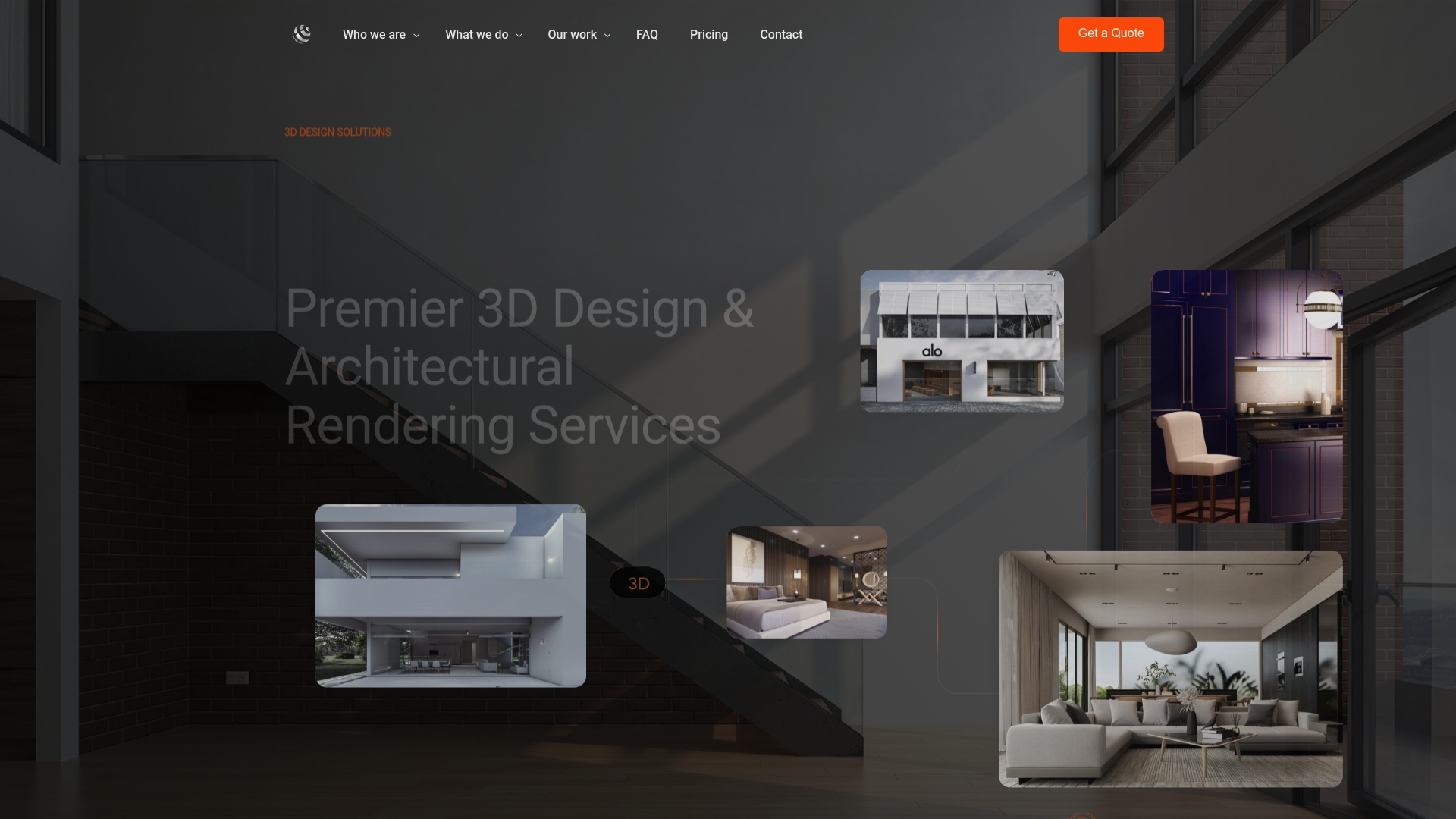
Discover how Rendimension specializes in professional 3D renderings and immersive architectural visual experiences that align perfectly with the essential best practices outlined in the article. From accurate materials and textures to strategic camera angles and seamless client collaboration, our services empower architects to communicate their designs effectively and avoid costly misunderstandings early in the process. Visit Rendimension now to explore how our expert team can help you deliver superior visualizations with precision and speed. Take the next step in elevating your architectural presentations by partnering with us today.
What Rendimension charges
Rendimension prices 3D renderings per image: $750 for a standard exterior or interior view and $1,250 for a premium view with full material and lighting detail. Renders bundled with a walkthrough are discounted 50%. The final quote is adjusted to the scope, the number of views and the deadline. Get a written quote within one business day or an instant estimate at rendimension.com/quotes.
Frequently Asked Questions
How can I gather detailed project information for architectural visualization?
Start by scheduling an in-depth consultation with your clients to understand their expectations and gather all necessary documentation. Ensure you request architectural plans, material specifications, and budget constraints to lay a solid foundation for your visualization project.
What techniques can enhance the realism of lighting in architectural visualizations?
Utilize natural lighting techniques by adjusting sunlight direction, intensity, and incorporating indirect light reflections. Experiment with shadow depth and material-specific light absorption to create a more immersive depth, significantly enhancing the emotional impact of your design.
How do I select accurate materials and textures for my visualizations?
Focus on capturing original material references and analyzing surface microstructures to ensure fidelity. Document precise color spectrums and simulate realistic wear patterns, which will help create visuals that resonate well with both stakeholders and clients.
What are the best camera angles to use in architectural visualization?
Choose camera angles strategically by incorporating aerial views for spatial context, eye-level perspectives for human experience, and corner angles to enhance depth. Create a sequence of diverse views to tell a compelling visual narrative and effectively communicate your design intent.
How can I integrate landscaping elements into my architectural visualizations?
Analyze existing site conditions and represent site topography accurately while incorporating realistic vegetation that matches the local ecosystem. By studying seasonal variations, you can create a richer environmental context that highlights how your architectural design interacts with its surroundings.
What steps should I take to optimize render settings for quality outputs?
Begin with recommended default settings and incrementally adjust parameters such as noise threshold and anti-aliasing for refined visual quality. By testing at different subdivision levels, you can balance detail and computational efficiency, improving your workflow significantly.
Recommended
- Why Architects Need Visualization For Success
- Architectural Visualization’s Impact On Project Success
- 7 Product Visualization Strategies For Architects And Designers
- 7 Essential Architectural Visualization Examples For Pitch Success
More on this: architectural visualization services and the companies we rank in this category.