Architectural Visualization’s Impact on Project Success
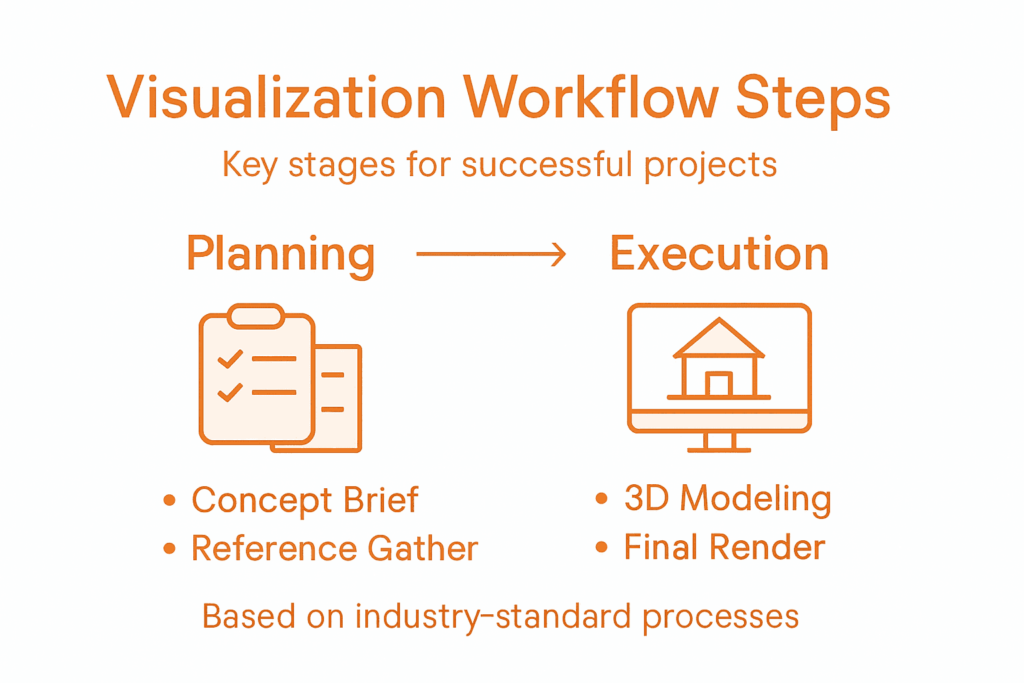
Turning a promising design into a vivid, immersive experience is no longer reserved for the final construction phase. For architects and developers across North America, mastering spatial visualization capabilities has become vital for transforming ideas into clear, persuasive presentations. These advanced visualization techniques bridge project vision and client understanding, giving your proposals greater clarity while enhancing stakeholder engagement from day one.
Table of Contents
- Defining Architectural Visualization’s Core Concepts
- Main Types of Architectural Visualization Services
- Step-by-Step Visualization Workflow Explained
- Benefits For Architecture And Real Estate Projects
- Mistakes To Avoid In Visualization Projects
Key Takeaways
| Point | Details |
|---|---|
| Importance of Visualization | Architectural visualization transforms abstract designs into lifelike digital representations, enhancing stakeholder understanding. |
| Types of Services | Key services encompass 2D technical drawings, 3D renderings, VR experiences, and AR visualizations to support diverse project needs. |
| Workflow Stages | The structured visualization workflow includes conceptual sketching, digital modeling, rendering, and client feedback for refined communication. |
| Common Mistakes | Avoid pitfalls such as inconsistent visuals, over-detailing, and neglecting context to maintain effective communication in projects. |
Defining Architectural Visualization’s Core Concepts
Architectural visualization represents the sophisticated process of transforming abstract design concepts into tangible, realistic digital representations. At its core, this discipline leverages advanced technology to create detailed 3D models, renderings, and immersive experiences that allow stakeholders to comprehend architectural designs before physical construction begins.
The foundational elements of architectural visualization involve spatial visualization capabilities, which enable professionals to accurately perceive, imagine, and manipulate spatial objects. This skill is critical for translating two-dimensional blueprints into comprehensive three-dimensional experiences that communicate design intent with remarkable precision.
Key components of architectural visualization include:
- 3D Computer-Generated Drawings: Advanced digital renderings that provide photorealistic representations
- Virtual Reality Walkthroughs: Immersive experiences allowing users to navigate proposed spaces
- Interactive Design Models: Dynamic representations enabling real-time design modifications
- Photorealistic Rendering: Techniques that create near-photographic quality visualizations
Professional architectural visualization goes beyond mere technical representation. It serves as a powerful communication tool that bridges imagination and reality, enabling architects, developers, and clients to collectively understand, critique, and refine design concepts before significant investments are made.
Pro tip: Invest in high-quality visualization tools that offer both technical accuracy and aesthetic appeal to maximize design communication and client engagement.
Main Types of Architectural Visualization Services
Architectural visualization services have evolved dramatically, offering professionals multiple sophisticated approaches to represent design concepts. Comparative visualization models demonstrate the critical importance of selecting the right visualization technique for effective communication and design comprehension.
The primary types of architectural visualization services encompass a range of digital and physical representation strategies designed to transform abstract design concepts into tangible experiences. These services enable architects, developers, and stakeholders to explore and understand complex architectural designs with unprecedented clarity and depth.
Key architectural visualization services include:
- 2D Technical Drawings: Traditional blueprint-style representations providing precise dimensional information
- 3D Computer Renderings: Photorealistic digital models showing design details with remarkable accuracy
- Virtual Reality (VR) Experiences: Immersive walkthroughs allowing users to navigate proposed spaces interactively
- Augmented Reality (AR) Visualizations: Digital overlays that integrate proposed designs into existing environments
- Animated Architectural Flythrough Videos: Dynamic presentations showcasing design progression and spatial relationships
- Physical Scale Models: Tactile representations providing three-dimensional understanding of design concepts
Professional architectural visualization transcends mere technical documentation. These services function as powerful communication tools that translate complex design intentions into comprehensible visual narratives, bridging the gap between conceptual imagination and tangible reality.
Here’s a comparison of major architectural visualization approaches and their core business impacts:
| Visualization Approach | Typical Use Case | Key Benefit | Limitation |
|---|---|---|---|
| 2D Technical Drawings | Construction documentation | Precise measurements | Limited visual realism |
| 3D Computer Renderings | Design presentations | Photorealistic detail | Requires significant setup |
| VR & AR Experiences | Client walkthroughs | Immersive engagement | Hardware dependency |
| Physical Scale Models | Public exhibitions | Tangible interaction | Costly to produce |
Pro tip: Select visualization services that align closely with your project’s specific communication needs and target audience engagement requirements.
Step-by-Step Visualization Workflow Explained
Architectural visualization workflows represent complex, strategic processes that transform abstract design concepts into compelling visual narratives. Generative AI integration techniques have revolutionized how architects approach design representation, introducing sophisticated methods for rapid conceptualization and visualization.
The comprehensive architectural visualization workflow typically encompasses several interconnected stages designed to progressively refine and enhance design communication. Drawing from established design methodologies, this process ensures systematic development and precision in architectural representations.
Key stages in the architectural visualization workflow include:
- Conceptual Sketching: Initial design exploration and idea generation
- Digital Modeling: Translating sketches into precise 3D digital representations
- Texture and Material Development: Adding realistic surface characteristics
- Lighting and Rendering: Creating photorealistic illumination and visual depth
- Post-Processing: Fine-tuning visual details and enhancing overall presentation
- Client Review and Iteration: Incorporating feedback and making necessary refinements
Professional visualization workflows are iterative processes that demand continuous refinement and strategic adaptation to project-specific requirements.
The workflow follows a structured yet flexible approach, emphasizing collaboration between designers, technologists, and clients to ensure the most accurate and compelling visual representations possible.
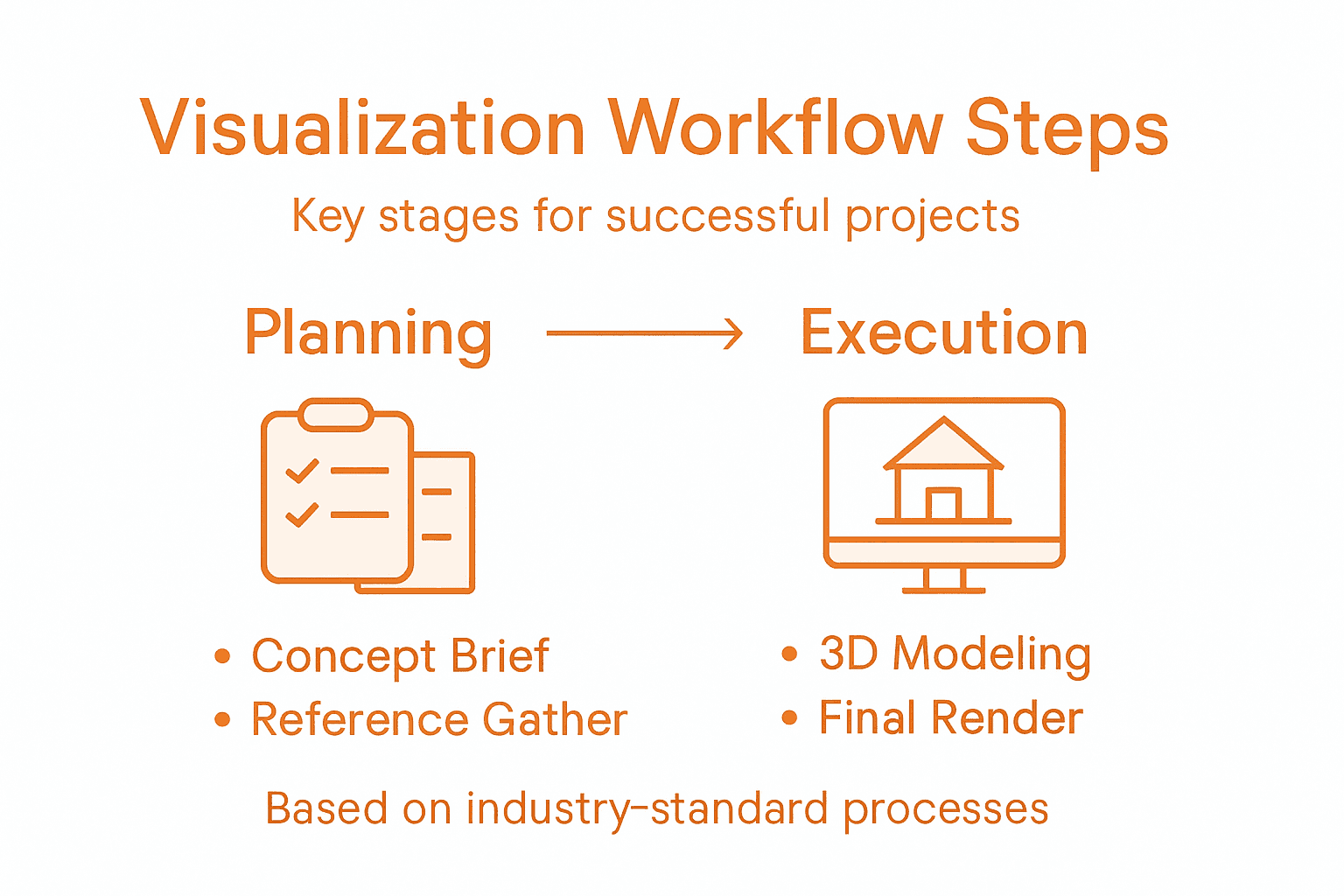
The following table summarizes common workflow stages and their primary goals in architectural visualization:
| Workflow Stage | Objective | Example Output |
|---|---|---|
| Conceptual Sketching | Develop initial design ideas | Hand-drawn concepts |
| Digital Modeling | Build accurate 3D structures | Digital 3D model |
| Lighting & Rendering | Add realism and depth | Rendered imagery |
| Post-Processing | Enhance visuals for presentation | Polished visuals |
Pro tip: Document each stage of your visualization workflow meticulously, enabling transparent communication and facilitating more effective design iterations.
Benefits for Architecture and Real Estate Projects
Architectural visualization transforms complex design concepts into powerful communication tools that drive project success across architecture and real estate sectors. Building energy modeling techniques demonstrate how visualization supports critical decision-making processes, enabling more informed and strategic design approaches.

The strategic advantages of architectural visualization extend far beyond mere aesthetic representation, providing tangible benefits that directly impact project outcomes, stakeholder engagement, and economic performance. These visualization techniques bridge communication gaps, reduce misunderstandings, and create compelling narratives that facilitate better project comprehension.
Key benefits for architecture and real estate projects include:
- Enhanced Client Communication: Creating immersive experiences that help clients visualize final design outcomes
- Risk Mitigation: Identifying potential design challenges before physical construction begins
- Marketing Acceleration: Generating powerful visual materials for project promotion and sales
- Cost Optimization: Enabling precise design refinements that minimize expensive modifications
- Stakeholder Alignment: Facilitating clearer understanding among investors, developers, and design teams
- Competitive Differentiation: Presenting more sophisticated and compelling project representations
Architectural visualization transforms abstract concepts into tangible experiences, bridging imagination and reality with unprecedented precision.
Professional visualization approaches create strategic advantages by providing comprehensive insights that traditional design methods cannot achieve, ultimately driving more successful and efficient project implementations.
Pro tip: Invest in high-quality visualization tools that offer detailed, realistic representations to maximize stakeholder engagement and project understanding.
Mistakes to Avoid in Visualization Projects
Architectural visualization demands precision and strategic planning to avoid critical errors that can undermine project success. Scientific visualization challenges reveal how rushed processes and poor design habits can dramatically reduce the effectiveness of visual representations.
Navigating the complex landscape of architectural visualization requires a nuanced understanding of potential pitfalls that can derail project communication and client expectations. Recognizing and proactively addressing these mistakes becomes crucial for maintaining professional standards and delivering compelling design narratives.
Common mistakes in architectural visualization projects include:
- Inconsistent Visual Language: Creating disconnected or misaligned visual representations
- Over-Detailing: Adding excessive complexity that obscures design intent
- Unrealistic Rendering: Producing images that deviate significantly from practical implementation
- Ignoring Context: Failing to integrate designs within realistic environmental settings
- Poor Color Management: Using incorrect color palettes that distort perception
- Neglecting Scale and Proportion: Misrepresenting spatial relationships and dimensional accuracy
Technical proficiency alone cannot compensate for fundamental visual storytelling failures in architectural representation.
Successful visualization projects require a holistic approach that balances technical skill, creative insight, and clear communication strategies.
Pro tip: Develop a systematic review process that critically evaluates each visualization against project objectives and realistic implementation standards.
Elevate Your Project Success with Expert Architectural Visualization
The article highlights how critical architectural visualization is for clear communication, risk reduction, and marketing effectiveness in architecture and real estate. If you struggle with conveying complex designs, avoiding unrealistic renderings, or aligning stakeholders, these pain points can stall your project momentum. Terms like photorealistic rendering, immersive walkthroughs, and iterative workflows show just how important detailed, precise visual tools are to bridge imagination and reality.
At Rendimension, we specialize in delivering high-quality 3D renderings and virtual experiences that transform your abstract concepts into tangible visuals. Our collaborative process ensures your design intent comes through clearly, helping you avoid common pitfalls such as inconsistent visuals or over-detailing. Whether you need advanced architectural visualization or immersive walkthroughs, we provide solutions designed to enhance client communication, accelerate marketing, and align stakeholders effectively.
Ready to turn your design ideas into compelling visual stories that drive project success? Visit Rendimension today to explore our range of architectural visualization services and experience the difference true photorealism and precision make. Let us help you communicate with clarity and impact now.
Frequently Asked Questions
What is architectural visualization?
Architectural visualization is the process of creating realistic digital representations of architectural designs through 3D models, renderings, and immersive experiences, allowing stakeholders to visualize concepts before construction begins.
How does architectural visualization benefit client communication?
Architectural visualization enhances client communication by creating immersive experiences that help clients better understand and visualize the final design outcomes, leading to more informed decisions and feedback.
What are the main types of architectural visualization services?
The main types of architectural visualization services include 2D technical drawings, 3D computer renderings, virtual reality experiences, augmented reality visualizations, animated flythrough videos, and physical scale models, each serving different representation purposes.
What common mistakes should be avoided in architectural visualization projects?
Common mistakes include inconsistent visual language, over-detailing, unrealistic rendering, neglecting context, poor color management, and misrepresenting scale and proportion, which can negatively impact project communication and effectiveness.
Recommended
- Why Architects Need Visualization For Success
- 7 Essential Architectural Visualization Examples For Pitch Success
- Architectural Renders: Transforming Decision-Making
- 7 Product Visualization Strategies For Architects And Designers
More on this: architectural visualization services and the companies we rank in this category.