Architectural Renders: Transforming Decision-Making

Clients often struggle to visualize abstract plans, leaving architects and developers searching for clearer ways to communicate ideas. High-quality 3D architectural renders bridge the gap between technical blueprints and everyday understanding, transforming complex concepts into immersive experiences. With the ability to reveal how structures will look, feel, and function, these tools create a shared vision, helping project teams and clients move confidently from design to approval. Architectural rendering transforms blueprints into compelling visual stories.
Table of Contents
- Defining Architectural Renders And Their Purpose
- Key Types Of Architectural Renderings Explained
- How Renders Streamline Project Communication
- Real-World Benefits For Architects And Developers
- Common Mistakes And Misconceptions To Avoid
Key Takeaways
| Point | Details |
|---|---|
| Architectural Renders Enhance Communication | They serve as vital tools that translate complex designs into intuitive visuals, facilitating better understanding among stakeholders. |
| Variety of Rendering Types | Different types, such as photorealistic and technical renders, cater to specific project needs and audiences. |
| Mitigation of Risks | Early visualization through renders helps identify design conflicts, minimizing costly revisions during construction. |
| Balancing Art and Precision | Successful renders maintain a balance between artistic creativity and technical accuracy to effectively convey design intent. |
Defining Architectural Renders and Their Purpose
Architectural renders are sophisticated visual representations that transform complex design concepts into realistic, immersive images. These digital illustrations bridge the gap between technical architectural plans and intuitive visual understanding, allowing clients and stakeholders to experience proposed spaces before actual construction begins.
At its core, architectural rendering is a powerful communication tool that goes far beyond simple imagery. Architectural visualization translates technical blueprints into compelling visual narratives that reveal how structures will look, feel, and function in real-world contexts. By converting abstract design concepts into photorealistic representations, these renders help architects, developers, and clients align their visions more effectively.
Key purposes of architectural renders include:
- Design Validation: Identifying potential design challenges or spatial conflicts before construction
- Client Communication: Helping non-technical stakeholders understand complex architectural proposals
- Marketing and Presentation: Creating compelling visual materials for project proposals and investor presentations
- Spatial Exploration: Allowing detailed examination of design elements, materials, and environmental interactions
Modern architectural rendering combines artistic skill with advanced technological tools, enabling professionals to create incredibly detailed and realistic representations. Whether generated through computer-aided design software or hybrid techniques, these visualizations have become indispensable in contemporary architectural practice.
Pro Tip: When selecting an architectural rendering service, prioritize providers who demonstrate a strong understanding of both technical precision and creative storytelling.
Key Types of Architectural Renderings Explained
Architectural renderings represent a diverse spectrum of visual communication techniques, each designed to convey design concepts through unique stylistic approaches. Architectural rendering styles range from hand-drawn sketches to sophisticated digital simulations, providing architects and developers multiple methods to articulate their vision.
The primary categories of architectural renderings include:
- Photorealistic Renders: Ultra-detailed images that mirror real-world lighting, textures, and spatial relationships with near-photographic accuracy
- Sketch Renders: Conceptual illustrations that emphasize design intent through artistic interpretation, often using hand-drawn or digital sketch techniques
Technical Renderings offer precision-focused visualizations that highlight structural details, material specifications, and engineering considerations. These technical representations are particularly valuable during early design stages when technical accuracy matters most.
Exterior and Interior Renderings provide distinct perspectives on architectural design. Exterior renders showcase a building’s relationship with its surrounding environment, while interior renders explore spatial configurations, material selections, and potential design flows within proposed spaces.

Digital technologies have dramatically expanded rendering capabilities, enabling architects to create increasingly complex and immersive visual experiences. Whether used for client presentations, marketing materials, or design validation, these rendering techniques transform abstract concepts into tangible visual narratives.
Pro Tip: Select rendering styles that best communicate your specific project’s unique design philosophy and intended audience engagement.
Here’s a comparison of common architectural rendering types and when to use each:
| Rendering Type | Distinctive Traits | Ideal Use Case |
|---|---|---|
| Photorealistic | Near-photographic realism | Client presentations, marketing |
| Sketch | Artistic, conceptual | Early design exploration |
| Technical | Precise, detail-focused | Engineering and construction docs |
| Exterior/Interior | Context-specific perspectives | Site planning and interior layouts |
How Renders Streamline Project Communication
Architectural renders have transformed project communication by creating a universal visual language that bridges complex technical concepts with intuitive understanding. Architectural presentations supported by renderings facilitate clearer discussions among project teams, enabling faster and more confident decision-making.
Key communication benefits of architectural renders include:
- Simplified Technical Understanding: Translating complex architectural blueprints into visually comprehensible images
- Stakeholder Alignment: Providing a shared visual reference point for architects, developers, clients, and investors
- Early Problem Detection: Revealing potential design conflicts or spatial challenges before construction begins
- Enhanced Emotional Connection: Helping clients and stakeholders visualize and emotionally engage with proposed designs
Collaborative Visualization Technologies have further enhanced project communication. Advanced tools like Building Information Modeling (BIM) and Augmented Reality (AR) enable real-time, immersive design interactions that go beyond traditional static renders.
These visual communication strategies dramatically reduce misunderstandings, minimize expensive design revisions, and accelerate project approvals. By transforming abstract concepts into realistic, detailed representations, architectural renders create a common ground for effective collaboration across diverse project stakeholders.
Pro Tip: Invest in high-quality, detailed renders that not only showcase your design but also tell a compelling visual story about the proposed space.
Real-World Benefits for Architects and Developers
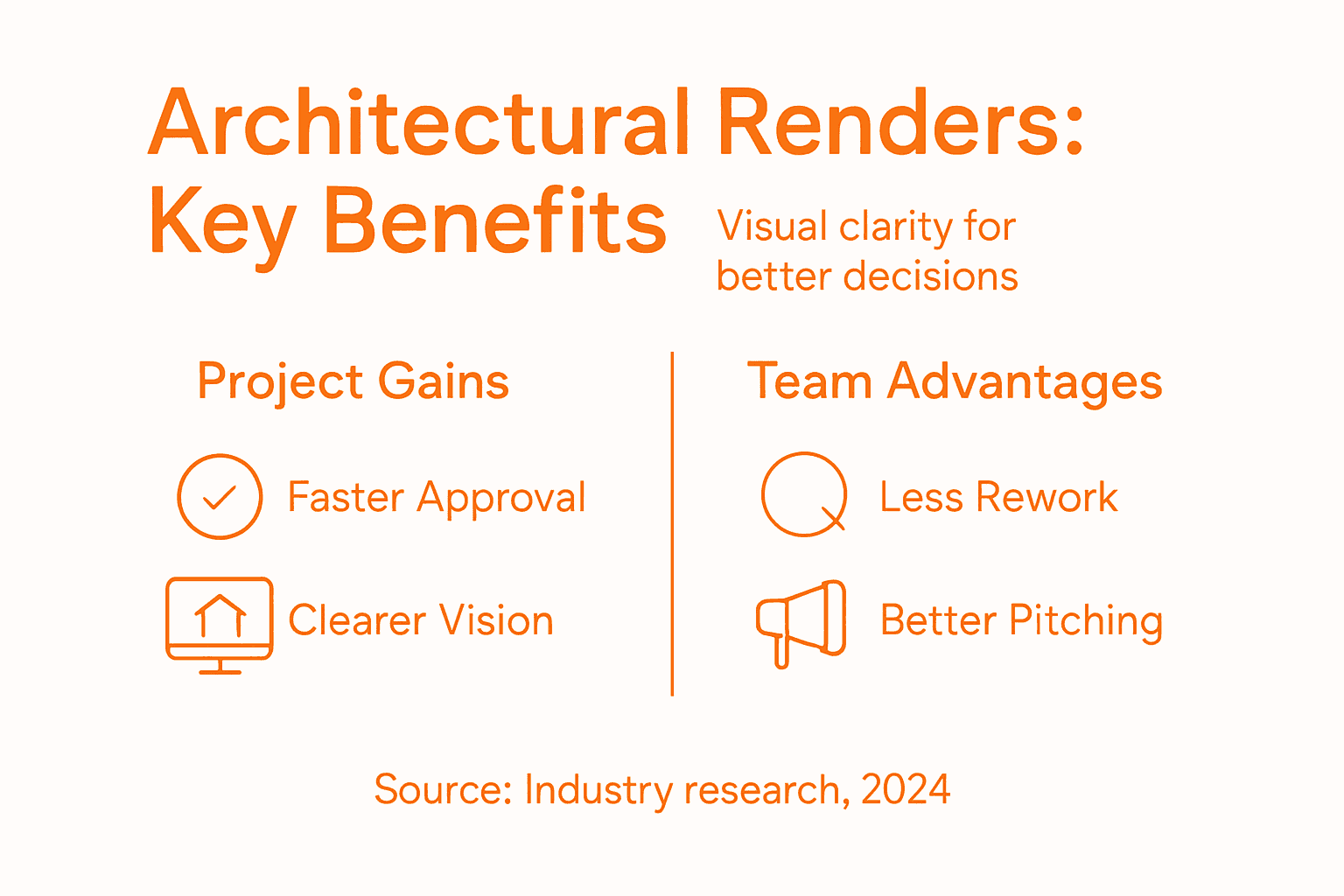
Architectural renders have emerged as transformative tools that dramatically enhance project efficiency and stakeholder engagement. AI and visualization technologies are reshaping architectural practices, providing unprecedented opportunities for innovation and precision across design and development processes.
Key real-world benefits for architects and developers include:
- Cost Reduction: Minimizing expensive design revisions through early visualization
- Risk Mitigation: Identifying potential structural or spatial conflicts before construction
- Improved Client Communication: Creating compelling visual narratives that help clients understand complex design concepts
- Enhanced Design Iteration: Enabling faster, more collaborative design exploration and refinement
Technological Integration has further amplified these benefits. Advanced tools like Building Information Modeling (BIM), Augmented Reality (AR), and Virtual Reality (VR) enable architects to create immersive, interactive design experiences that go far beyond traditional two-dimensional representations.
These technological advances are not just incremental improvements but fundamental shifts in how architectural projects are conceived, developed, and presented. By leveraging sophisticated rendering technologies, architects and developers can streamline workflows, reduce uncertainties, and deliver more innovative, client-centered design solutions.
Pro Tip: Invest in continuous training for your team to stay current with the latest rendering and visualization technologies, ensuring your firm remains competitive and innovative.
This table summarizes how advanced visualization technologies amplify the value of architectural renders:
| Technology | How It Enhances Value | Example Benefit to Stakeholders |
|---|---|---|
| BIM | Real-time design updates | Improved project coordination |
| Augmented Reality | Interactive, immersive viewing | Better client understanding |
| Virtual Reality | Walk-through design experiences | Quicker approval on spatial concepts |
Common Mistakes and Misconceptions to Avoid
Architectural rendering is a sophisticated communication tool that requires nuanced understanding and strategic execution. Common rendering mistakes can significantly undermine project communication, potentially leading to misaligned expectations and costly design iterations.
Key mistakes and misconceptions architects and developers frequently encounter include:
- Unrealistic Expectations: Treating renders as exact representations of final built environments
- Over-Embellishment: Creating visually stunning images that deviate from practical construction realities
- Technical Complexity: Producing renders that are too intricate or technically overwhelming for non-specialist audiences
- Color and Contrast Mismanagement: Failing to calibrate visual elements that accurately represent design intent
Rendering Limitations are often misunderstood by stakeholders who may perceive digital illustrations as precise blueprints. These visualizations are communication tools, not definitive technical documents. They should suggest potential design directions while maintaining transparency about their interpretative nature.
Successful architectural renders balance artistic expression with technical accuracy. They communicate design philosophy, spatial relationships, and emotional potential without sacrificing fundamental architectural principles. Architects must carefully craft these visual narratives to engage clients effectively while maintaining professional integrity.
Pro Tip: Always provide contextual explanations alongside your renders, helping stakeholders understand the visualization’s purpose and potential limitations.
Elevate Your Project Decisions with Expert Architectural Rendering
Navigating complex architectural concepts and ensuring clear stakeholder alignment can be challenging. This article highlights common obstacles like miscommunication, unrealistic expectations, and the need for photorealistic visuals to validate design choices before construction. If you are seeking high-quality architectural visualization that bridges technical precision and compelling storytelling, Rendimension offers comprehensive solutions to overcome these hurdles.
Experience the power of realistic 3D renderings, immersive walkthroughs, and virtual reality that turn abstract blueprints into vivid narratives. Our collaborative process ensures your vision is perfectly captured to reduce costly revisions and accelerate approvals. Discover how you can streamline communication, enhance client engagement, and bring your architectural projects to life with professional architectural visualization.
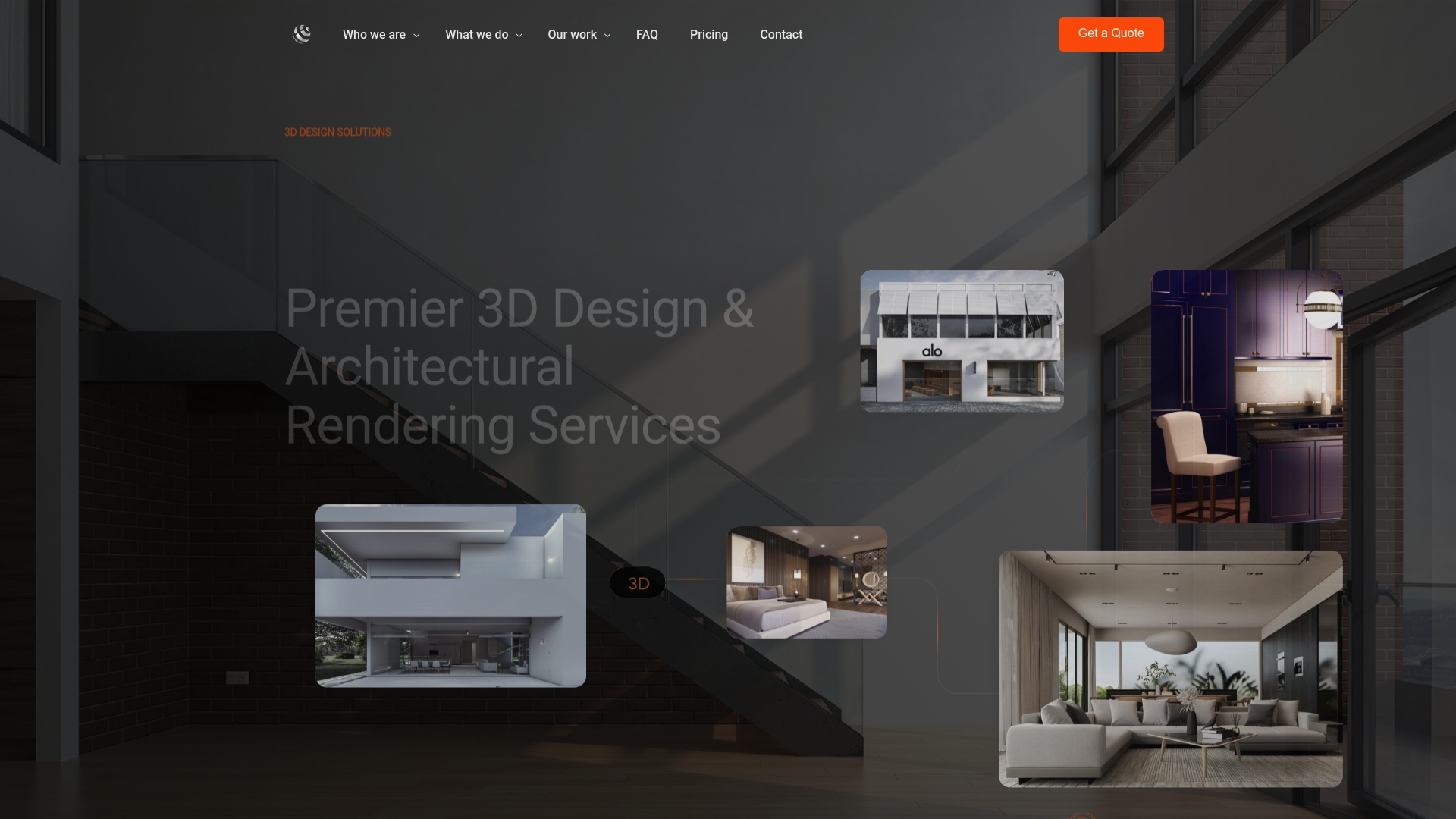
Take the next step in transforming your design presentations today. Visit Rendimension to explore our photorealistic 3D rendering services and immerse your clients in compelling visual experiences that empower confident decision-making. Don’t let your designs remain just concepts – make them tangible, persuasive, and ready to impress.
Frequently Asked Questions
What are architectural renders?
Architectural renders are detailed visual representations that convert design concepts into realistic images, helping stakeholders understand how proposed spaces will look and function before construction begins.
What are the benefits of using architectural renders in a project?
Architectural renders enhance communication, facilitate design validation, help in marketing presentations, and enable detailed exploration of spatial configurations and materials, ultimately leading to more informed decision-making.
What types of architectural rendering styles are available?
The main types of architectural renderings include photorealistic renders, sketch renders, technical renderings, and exterior/interior renderings. Each style serves a different purpose, from detailed realism to conceptual exploration.
How do architectural renders improve client communication?
Architectural renders simplify complex architectural designs into comprehensible visuals, align stakeholders’ expectations, reveal potential design conflicts early, and foster emotional connections between clients and proposed designs.