Why invest in 3D visuals for architecture and real estate in 2026
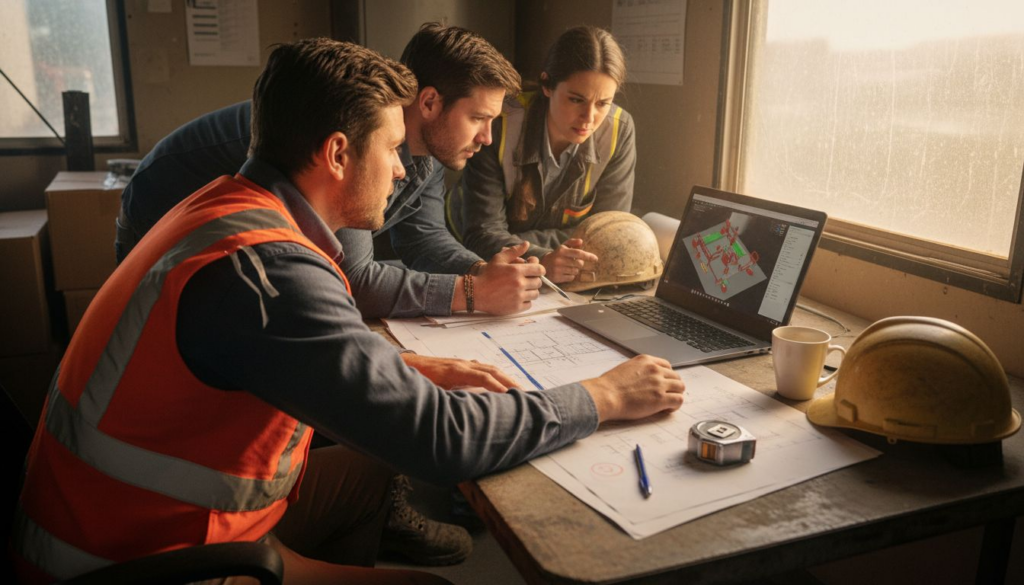
Most architects and developers rely on 2D plans to communicate project vision, yet these flat drawings leave clients struggling to visualize spatial relationships and design intent. This disconnect leads to costly revisions, delayed approvals, and missed marketing opportunities. 3D visualizations enhance communication by providing realistic spatial representations that reduce misinterpretations from traditional plans. This guide explores how investing in 3D visuals delivers measurable returns through improved client decision making, reduced errors, and stronger project presentations in 2026’s competitive real estate landscape.
Table of Contents
- How 3D Visuals Enhance Communication And Project Understanding
- Cost Savings And Efficiency Gains From Investing In 3D Visualizations
- Challenges And Nuances Of 3D Visual Investment To Consider
- Maximizing ROI From 3D Visuals In Architecture And Real Estate Development
- Explore Professional 3D Visualization Services
Key takeaways
| Point | Details |
|---|---|
| Enhanced communication | 3D visuals eliminate spatial confusion inherent in 2D plans, improving client understanding and engagement throughout the project lifecycle. |
| Measurable cost savings | Early error detection through 3D/BIM integration typically reduces capital costs by 20-30% and cuts rework expenses up to 40%. |
| Investment considerations | Upfront rendering costs range from $500 to $3000 per image, requiring skilled teams and careful project management. |
| Context dependent ROI | Returns vary significantly by project type, with luxury and competitive markets showing highest profitability from quality 3D presentations. |
How 3D visuals enhance communication and project understanding
Traditional 2D plans force clients to mentally construct three dimensional spaces from flat drawings, a skill most stakeholders lack. This translation gap creates frequent misunderstandings about room proportions, material finishes, and spatial flow. Architects spend countless hours explaining sections and elevations, yet clients still struggle to grasp the final experience.
3D visualizations provide realistic spatial representations that eliminate this cognitive burden. Photorealistic renderings show exactly how light interacts with surfaces, how furniture fits within rooms, and how sight lines work across spaces. Clients immediately understand design intent without requiring technical drawing literacy.
Interactive experiences amplify this clarity. Virtual tour examples demonstrate how stakeholders can explore projects at their own pace, examining details that matter most to their decision making process. This self directed discovery builds confidence and ownership in the design.
The feedback loop improves dramatically when everyone sees the same vision. Clients provide more specific, actionable input on materials, layouts, and finishes rather than vague concerns about abstract plans. Design teams iterate faster because revisions address actual spatial issues rather than communication breakdowns.
Pro Tip: Schedule immersive 3D walkthroughs during early design phases to capture client preferences before costly documentation begins, reducing revision cycles by identifying misalignments when changes cost least.
Key communication benefits include:
- Immediate spatial comprehension eliminates the need for technical drawing interpretation skills
- Realistic material and lighting previews set accurate expectations for final construction quality
- Interactive exploration empowers clients to discover design features independently
- Precise feedback replaces vague concerns, accelerating design refinement
Cost savings and efficiency gains from investing in 3D visualizations
The financial case for 3D visuals extends far beyond improved presentations. BIM integration with 3D visualization reduces capital costs by 20-30% through systematic clash detection and coordination before construction begins. Structural, mechanical, and architectural systems reveal conflicts in the digital model rather than on site, where fixes cost exponentially more.
Early error detection represents the most significant savings opportunity. Coordinating trades in a 3D environment identifies spatial conflicts, material incompatibilities, and constructability issues during design phases when changes require mouse clicks rather than demolition. Projects using BIM reduce rework costs up to 40% by catching errors before they become physical problems.
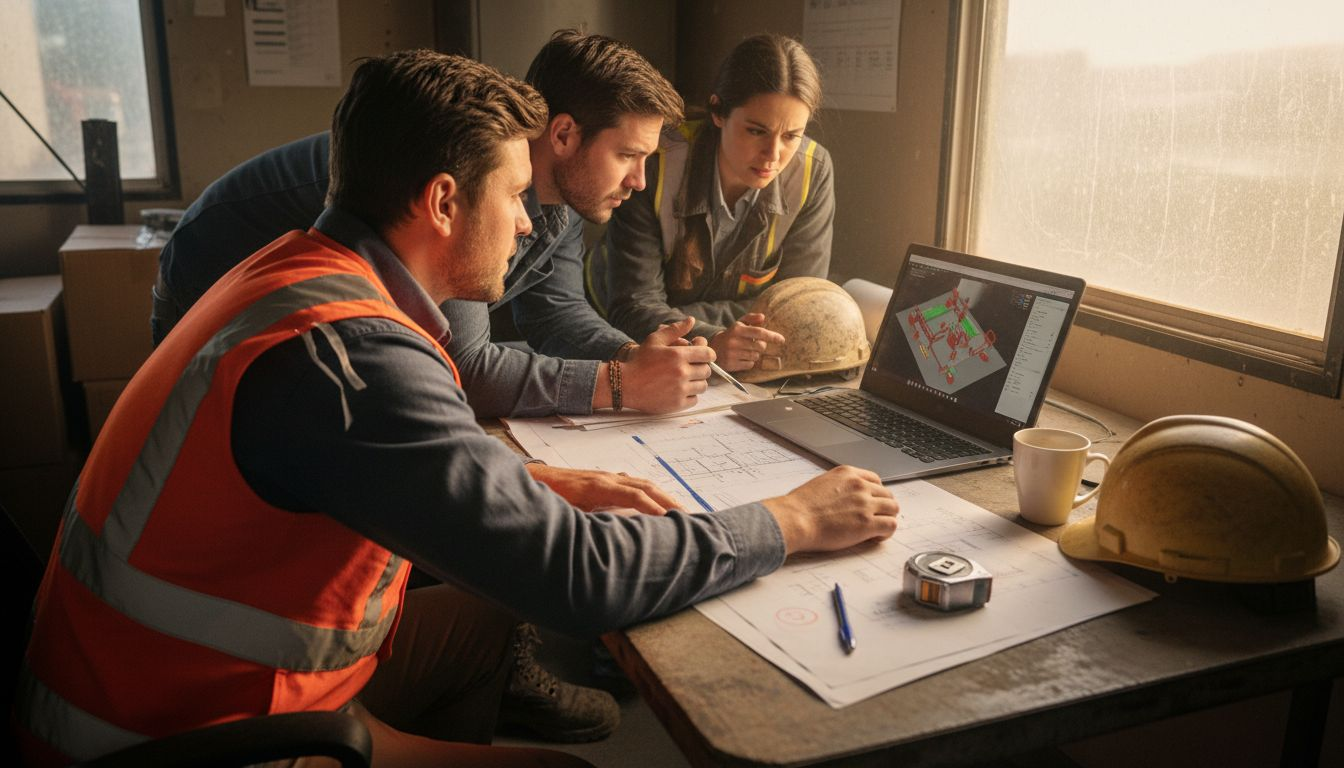
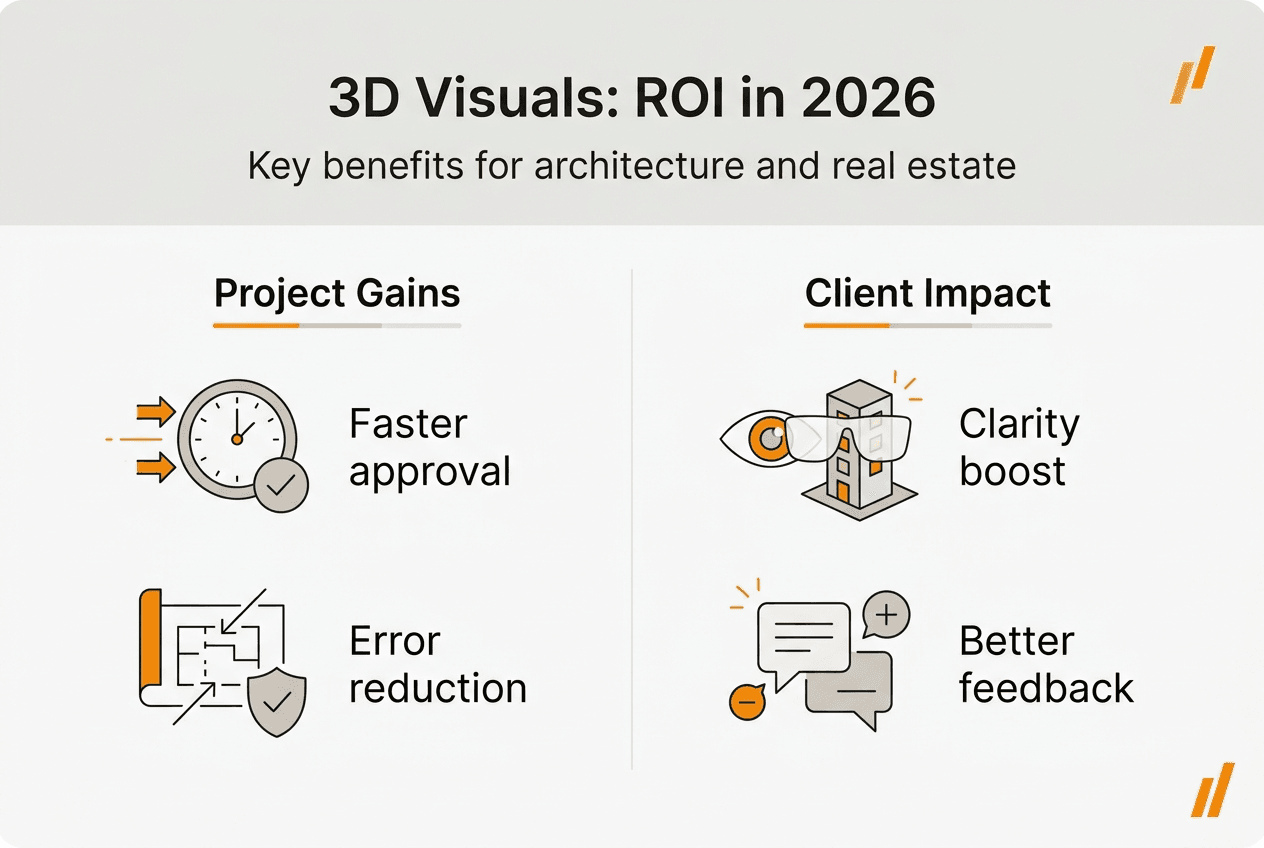
Timeline compression delivers additional financial benefits. Faster client approvals, reduced revision cycles, and streamlined permitting accelerate project schedules by 15-20%. Earlier occupancy means faster revenue realization for developers and reduced carrying costs during construction. Every month saved on a project timeline translates directly to improved returns.
| Savings Category | Typical Impact | Primary Mechanism |
|---|---|---|
| Capital costs | 20-30% reduction | Early clash detection and coordination |
| Rework expenses | Up to 40% savings | Design phase error identification |
| Project timeline | 15-20% acceleration | Faster approvals and reduced iterations |
| Operational costs | 10-15% improvement | Better system integration and maintenance access |
Operational efficiency extends beyond initial construction. Well coordinated 3D models inform facility management systems, providing accurate as built documentation for maintenance and renovations. Building operators access precise equipment locations, system routing, and spatial relationships that simplify future modifications.
Pro Tip: Maximize savings by investing in thorough 3D model preparation before rendering, ensuring accurate dimensions and material specifications that prevent costly surprises during construction documentation and bidding.
The compounding effect of these savings often exceeds initial visualization investments within the first project phase. Consider these efficiency multipliers:
- Reduced RFIs during construction save project management time and prevent schedule delays
- Accurate quantity takeoffs from 3D models improve bidding accuracy and reduce change orders
- Better subcontractor coordination minimizes on site conflicts and productivity losses
- Digital approval processes eliminate printing costs and accelerate stakeholder review cycles
Challenges and nuances of 3D visual investment to consider
While benefits appear compelling, realistic assessment requires understanding implementation challenges. Rendering costs typically range from $500 to $3000 per image, with complex architectural visualizations commanding premium pricing. Multiple views, revisions, and animation sequences multiply these base costs quickly, creating substantial upfront investments before any returns materialize.
Time requirements often surprise first time users. High quality renderings demand hours or days of processing time depending on scene complexity, lighting calculations, and desired resolution. Rush projects incur premium fees, and rendering farms still require lead time for queue management. This production timeline must integrate with overall project schedules, sometimes creating bottlenecks during critical approval phases.
Skilled team requirements present another barrier. Technical expertise in modeling, lighting, and rendering separates amateur visualizations from presentation quality work. Finding and retaining qualified professionals adds overhead, while outsourcing requires careful vendor management and quality control processes.
Client expectation management becomes critical with photorealistic visuals. Stunning renderings can set unrealistic standards for construction quality, especially regarding finishes, landscaping maturity, and atmospheric conditions. Disappointed clients may dispute final results even when construction perfectly matches specifications, simply because reality cannot replicate idealized digital perfection.
The biggest pitfall is creating visualizations that promise more than construction budgets can deliver. Always calibrate rendering quality to match realistic material selections and contractor capabilities, or risk client dissatisfaction despite flawless execution.
Model preparation quality directly impacts visualization success. Poorly detailed base models, incorrect dimensions, or missing information force renderers to make assumptions that may not align with design intent. These gaps create revision cycles that erode time and cost savings.
ROI variability across project types and markets complicates investment decisions. Luxury residential developments in competitive markets see immediate returns from premium visualizations, while utilitarian industrial projects may struggle to justify sophisticated rendering expenses. Context matters enormously when evaluating appropriate investment levels.
Common challenges include:
- Balancing rendering quality with budget constraints across multiple project views
- Managing client expectations around photorealistic imagery versus construction reality
- Coordinating visualization timelines with design development and approval schedules
- Maintaining model accuracy throughout design revisions to prevent visualization rework
- Selecting appropriate detail levels that justify costs without over investing in unused precision
These obstacles do not negate 3D visual benefits, but they demand careful planning and realistic budgeting. Success requires treating visualization as an integrated project component rather than an optional marketing add on, with appropriate resources allocated from project inception.
Maximizing ROI from 3D visuals in architecture and real estate development
Strategic implementation separates projects that justify visualization investments from those that waste resources on underutilized renderings. ROI peaks in competitive luxury markets where sophisticated buyers expect immersive presentations and premium pricing absorbs visualization costs. Understanding your market context guides appropriate investment levels.
Integrated workflows maximize value extraction from 3D models. Combining BIM coordination with visualization efforts leverages the same base geometry for both technical coordination and client presentations. This dual purpose approach spreads modeling costs across multiple project benefits, improving overall returns compared to standalone rendering efforts.
Immersive experiences deliver stronger engagement than static images. Virtual tours enable self directed exploration that builds emotional connections with projects, particularly effective for pre sales and investor presentations. Interactive walkthroughs command attention in ways that passive renderings cannot match, justifying higher production investments through measurably better conversion rates.
| Market Context | Recommended Investment | Primary Applications | Expected ROI |
|---|---|---|---|
| Luxury residential | High (multiple premium renderings plus virtual tours) | Pre sales, investor presentations, design approvals | 3-5x through faster sales and premium pricing |
| Commercial development | Medium to high (key views plus walkthrough) | Tenant leasing, financing approvals, marketing | 2-4x through occupancy acceleration |
| Institutional projects | Medium (strategic renderings for approvals) | Stakeholder buy in, public presentations, fundraising | 1.5-3x through approval acceleration |
| Utilitarian industrial | Low to medium (functional coordination focus) | Contractor coordination, system clash detection | 1.5-2x through construction efficiency |
Quality standards make or break visualization credibility. Following architectural visualization best practices ensures renderings accurately represent design intent while maintaining photorealistic quality that commands client confidence. Substandard visuals undermine rather than enhance project perception.
Pro Tip: Invest heavily in hero shots that showcase signature design features while using simpler renderings for secondary spaces, concentrating budget where visual impact matters most for decision making and marketing effectiveness.
Implementation best practices include:
- Define visualization scope during project kickoff, aligning rendering deliverables with approval milestones and marketing needs
- Establish model accuracy standards early, ensuring base geometry supports both coordination and visualization without rework
- Schedule rendering production to match decision points, avoiding premature visualization of designs likely to change
- Calibrate rendering quality to project budget and market expectations, preventing over investment or inadequate presentation
- Integrate 3D walkthrough services for high value projects where immersive experiences justify additional investment
- Document client feedback systematically, using visualization reviews to capture preferences that inform design refinement
Measuring success requires tracking specific metrics beyond subjective quality assessments. Monitor approval cycle times, revision counts, client satisfaction scores, and sales velocity for projects with quality visualizations compared to traditional presentation methods. These concrete measurements justify continued investment and guide resource allocation for future projects.
Explore professional 3D visualization services
Transforming architectural concepts into compelling visual narratives requires specialized expertise that most design firms lack in house. Professional rendering services bridge this gap, delivering photorealistic imagery that elevates project presentations without requiring internal team expansion.
Rendimension specializes in 3D rendering services that bring architectural visions to life through meticulous attention to lighting, materials, and spatial composition. Our architectural visualization services support architects and developers throughout project lifecycles, from early concept validation through final marketing campaigns. With over 1,000 completed projects globally, we understand how to balance technical accuracy with emotional impact.
Our 3D walkthrough services create immersive experiences that engage clients and investors in ways static images cannot match. These interactive presentations accelerate decision making by letting stakeholders explore spaces at their own pace, examining details that matter most to their evaluation criteria. Partnering with experienced visualization specialists reduces project risk while maximizing the return on your presentation investment.
Frequently asked questions
What types of 3D visuals provide the biggest client impact?
Interactive virtual tours and photorealistic exterior renderings generate the strongest client engagement and emotional connection. Tours let stakeholders explore spaces independently, building ownership in design decisions. Exterior views establish project identity and contextual relationships that static floor plans cannot convey, making them essential for pre sales and investor presentations.
How do 3D visuals reduce errors and project delays?
BIM integrated 3D models enable clash detection between architectural, structural, and MEP systems before construction begins, identifying conflicts when fixes require digital adjustments rather than demolition. Improved spatial understanding from realistic visualizations reduces on site changes by helping clients make informed decisions during design phases. This front loaded problem solving prevents rework delays and cost overruns that plague projects relying solely on 2D documentation.
What are typical costs and timelines for producing 3D renderings?
Professional architectural renderings range from $500 for simple interior views to $3000 or more for complex exteriors with detailed landscaping and atmospheric effects. Production timelines vary from 3-5 days for straightforward images to 2-3 weeks for elaborate animations and virtual tours. Advanced projects requiring extensive model preparation, multiple revision rounds, or rush delivery command premium pricing and extended schedules.
How can architects ensure high ROI from 3D visuals in competitive markets?
Integrate BIM coordination with visualization workflows to leverage modeling investments across both technical coordination and client presentations, spreading costs across multiple project benefits. Focus rendering budgets on hero shots showcasing signature design features while using simpler visuals for secondary spaces. Implement immersive virtual tours for high value projects where interactive experiences justify additional investment through measurably improved sales velocity and premium pricing capture in luxury markets.