Why AI Renderings Lose Architectural Accuracy
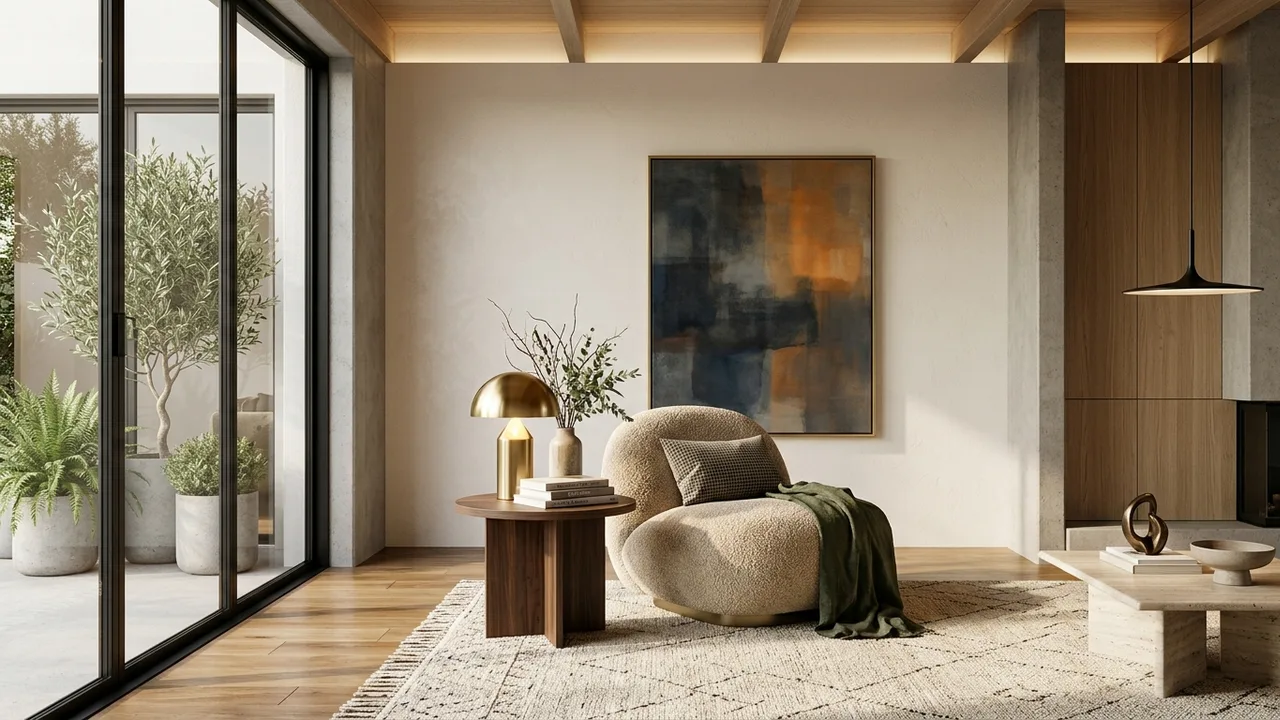
Quick answer: AI image generators produce plausible pixels, not measured geometry. There is no model, no units and no link back to a drawing, so dimensions are inferred from what similar images looked like. Ceiling heights, stair risers, window head heights, mullion rhythm and furniture scale are the first things to drift, and the error compounds in interiors and in any element that repeats.
The common way to describe this problem is that AI renderings are "not accurate yet", which implies it is a quality issue that a better model release will fix. That framing misses the mechanism. A generative image model is not attempting to be accurate and failing. It is doing something else entirely, and it does that other thing extremely well.
This matters because it tells you exactly where the boundary sits, which is more useful than a general warning. It also explains why the failures are so specific and so repeatable.
The mechanism, stated plainly
A 3D render is a measurement made visible. There is a model with real dimensions, the camera is placed in that model, and the software computes what light does in that geometry. If a ceiling is nine feet, it is nine feet in the image, because the image is derived from the geometry.
A generated image has no geometry. The model has learned what buildings tend to look like and produces an image that is statistically plausible given a description. There is no ceiling, no unit, no dimension being represented. There is a picture of a room that resembles rooms. When the proportions happen to be right it is because plausible and correct overlapped, not because anything was measured.
That is why the phrase "it looks right" is a trap in this context. Looking right is the objective function. Being right was never part of it.
What breaks first, in order
The failures are consistent enough to be a checklist:
- Ceiling height and room proportion. The most common drift, and the one that changes how a space feels more than any material choice.
- Stairs. Riser and tread relationships are governed by code and by the human body. Generated stairs frequently cannot be climbed.
- Door and window head heights. These align in real buildings for structural and detailing reasons. In generated images they wander, which reads as subtly wrong before anyone can say why.
- Mullion and facade rhythm. Anything that repeats across a facade tends to lose its interval, because each region of the image is produced independently of a governing grid.
- Structural logic. Spans that nothing carries, columns that stop, cantilevers with no counterweight.
- Furniture and fixture scale. A sofa that is nearly right makes a room look larger than it is, which is the specific inaccuracy that later disappoints a buyer standing in the real unit.
- Reflections and sightlines. What a mirror or a glass wall shows should be the room behind the camera. In generated images it is usually a different plausible room.
Why interiors are harder than exteriors
Exterior images tolerate more error because the viewer has less reference. A facade shot from across the street can drift several feet and still look convincing. An interior gives the eye a full set of human-scaled references at once: a counter at hip height, a door at head height, a chair, a step. Every one of those is a ruler, and the brain checks them against each other automatically. That is why generated interiors feel uncanny faster than generated exteriors, even when both are equally imprecise.
The same logic explains why repeated elements fail loudly. One window can be any size. Twelve windows have to agree with each other, and agreement across a whole image is exactly what independent plausible sampling does not produce.
When the inaccuracy has consequences and when it does not
Not every image needs to be measured. A mood board for an internal conversation about material direction is not harmed by a stair that cannot be climbed, because nobody will build from it and nobody is deciding anything against it. This is genuinely good use, and we say so in can AI replace architectural rendering.
The inaccuracy starts costing money at the point the image is attached to a commitment. A buyer who reserves a unit from an image is committing. A lender or a review board looking at a proposal is deciding. A leasing brochure is a representation. At that point an image that shows a room larger than it will be is not a stylistic choice, it is a problem that surfaces later at the worst moment, which is the subject of the risks of AI generated images in real estate marketing.
Why a modeled render does not have this failure mode
In a production pipeline the source of truth is your documentation. The model is built from CAD or Revit drawings, so the ceiling height in the image is the ceiling height in the drawing, and the window head aligns because it aligns in the design. When something looks wrong, it can be traced: either the model is wrong or the drawing is, and both are fixable at the source.
That traceability is the actual product. It is why the same model can feed animation, VR and interactive floor plans without the building changing between them, and why a professional set holds together across a campaign, which is covered in consistency across views.
The practical takeaway
Use generated imagery where plausibility is the requirement: mood, direction, early options, internal alignment. Use modeled visualization where measurement is the requirement: anything a buyer, a lender, a broker or a reviewer will rely on. The test is not how good the image looks. It is whether anyone will make a decision against it, which is the question examined in when AI renderings are good enough.
Need imagery a buyer, a lender or a review board will rely on, modeled from your actual drawings? Request a quote.
Frequently asked questions
Will better AI models fix architectural accuracy?
Improvements are real, but the current failure mode is structural rather than a quality gap. An image generator produces plausible pixels rather than deriving an image from measured geometry, so there is no dimension being represented. Tools that combine generation with actual 3D geometry are a different category, and those are worth watching precisely because they address the mechanism instead of the symptom.
What is the first thing that goes wrong in an AI interior?
Usually ceiling height and overall room proportion, followed by furniture scale. Both make a space read larger than it will be, which is the specific error that disappoints a buyer standing in the finished unit.
Why do AI images of facades lose their rhythm?
Repeated elements like mullions and window bays have to agree across the whole image. Generation samples plausible detail region by region without a governing grid, so intervals drift. One window can be anything, twelve windows have to match each other.
Does inaccuracy matter for concept images?
Generally no. If the image exists to communicate mood or direction internally and nobody is deciding or committing against it, dimensional drift is harmless. The cost appears when the image is attached to a sale, a lease, a loan or a public submission.
How does a modeled render avoid this?
The image is derived from geometry built from your drawings, so the dimensions in the image are the dimensions in the documentation. That also makes errors traceable to a source and fixable, rather than being regenerated into a different set of errors.
AI image generators are good at producing a plausible-looking building from a short prompt, but they are not working from your actual drawings, which is where architectural accuracy breaks down. Window placement, structural proportions, material call-outs and site context all come from the model, and a prompt-based tool has no model to reference, so it fills in those details with whatever pattern it has seen before rather than what your project actually specifies.
A rendering built from your CAD files, Revit model or SketchUp file instead reflects your actual design, down to the dimensions and finish selections, and can be checked against the drawings before it goes out. Rendimension builds every image this way. Send your plans through the quote form for a price and timeline within 24 hours, with no site visit required and every draft reviewed online.
Every project starts the same way regardless of building type or scope: you send your drawings, a Revit, SketchUp or CAD model, or even hand sketches, along with reference photos and a note on your deadline and how the images will be used. There is no need to schedule a call before getting a number. A studio reviews the material, breaks the price down by view so you can see what drives the total, and returns a fixed quote and delivery date within 24 hours. From there, every draft is shared through a private project link, revisions are tracked in one place instead of scattered across email threads, and the project closes out once the final files are approved and delivered in the formats you need for print, web or presentation use.