Artistic Architectural Renderings: Watercolor and Sketch
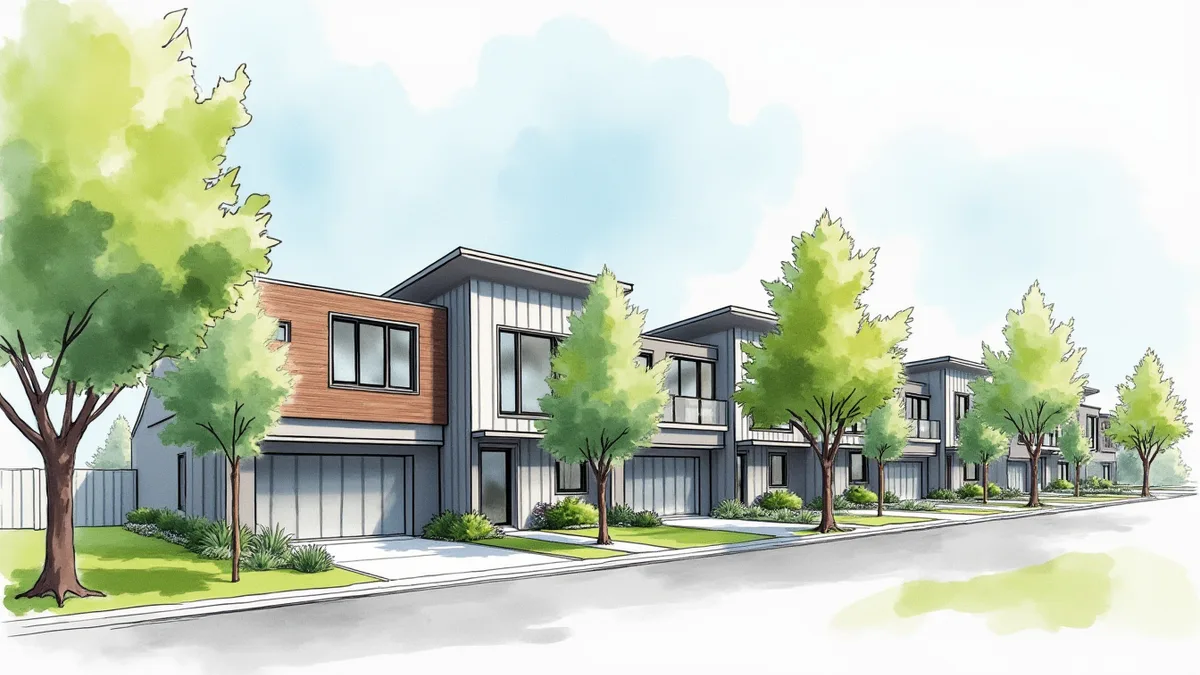
Quick answer: Artistic architectural renderings present a building in a stylized way, such as watercolor, pencil sketch, painterly or graphic illustration, instead of photorealism. They are useful in early design, community outreach and branding, where the goal is to communicate an idea and a mood rather than lock every material.
Photorealism promises exactness. Early in a project, that promise can backfire: a community board or client fixates on a tile color that has not been chosen. An artistic rendering communicates the concept while signaling that details are still open.
Popular artistic styles
- Watercolor: soft, warm, well suited to residential and hospitality.
- Pencil or ink sketch: conceptual, good for competitions and early options.
- Painterly: rich color and texture for brand and sales imagery.
- Graphic or flat illustration: clean shapes for signage, maps and wayfinding.
- Hybrid: a photoreal building with an illustrated background, or the reverse.
When to choose artistic over photoreal
Concept stage, when materials are undecided. Community meetings, where a friendly image lowers resistance. Branding and signage that must match a visual identity. Heritage and civic projects, where a hand-drawn feel fits the context. Competitions that reward a distinctive voice.
Produced from an accurate 3D base
Rendimension builds a 3D model first so proportions, perspective and shadows are right, then applies the artistic treatment. This keeps the image honest about height and massing while giving it a hand-made character.
Consistency across a set
When a project needs several views, the same style rules are applied to every image so the set reads as one series. For the broader comparison see architectural illustration vs 3D rendering.
Common mistakes with artistic renderings
Style over accuracy: a beautiful watercolor that shows the building shorter than designed will be challenged in public review. Filters instead of craft: automatic sketch filters produce a cheap look that clients recognize. Mixed styles across one project confuse the story. Illegible detail when the image is reduced for web or slides. Planning style, palette and level of abstraction up front avoids these issues.
Artistic renderings for branding and sales
Developers use illustrated renderings on hoardings, logos, brochure covers and sales center murals, where a hand-made look sets a project apart from photoreal competitors. Hospitality and residential brands use them to create a recognizable identity that works in print, on packaging and on signage.
Mixing artistic and photoreal images
A common approach is to use artistic images early and for branding, then introduce photoreal renderings once materials are final and sales begin. Because both come from the same 3D model, the transition feels consistent and the investment in modeling is not repeated.
How artistic renderings support early design decisions
Early in a project, a design is still open, and a photoreal image can suggest a level of certainty that does not exist yet. Clients, committees and the public may react to a specific brick color or window frame that is still undecided. An artistic rendering keeps attention on the big ideas: massing, light, landscape and the character of the place.
This makes watercolor, sketch and hand-drawn styles well suited to competitions, feasibility studies, fundraising campaigns and community workshops. They invite discussion instead of approval of details, and they signal that the design will continue to evolve. When the project moves into later phases, the same 3D base can be rendered photorealistically, so the story stays consistent from concept to final images.
Briefing an artistic rendering
A good brief for an artistic rendering includes references as well as drawings. Examples of watercolors, pencil sketches, collages or illustrations that the client likes help define the level of detail, the palette and how loose or precise the linework should be. It is also useful to say where the images will be used, because a large exhibition print and a small social media post need different amounts of detail.
Decide early which elements must be precise and which can be loose. Usually the building outline and key features stay accurate, while people, trees, sky and background are treated more freely. Agreeing on this balance before production avoids revisions that push an artistic image toward photorealism and lose the quality that made the style attractive in the first place.
Where artistic renderings work best
Artistic renderings are particularly effective for civic, cultural, educational and religious projects, where the audience includes donors, community members and boards who respond to atmosphere and meaning more than to technical detail. A watercolor of a new library or chapel can feel welcoming and personal in a way that a photoreal image sometimes cannot.
They also suit printed materials that need a distinctive look, such as fundraising brochures, annual reports, event invitations and framed gifts for donors or project partners. Because the style is less common, these images tend to stand out among the photoreal renderings that fill most real estate and development marketing.
For residential architects, an artistic style can also be a signature. Using the same watercolor or sketch treatment across every project presentation makes a portfolio recognizable and helps a small practice build a consistent visual identity.
Why Rendimension for artistic architectural renderings
Rendimension has produced architectural visualization since 2004 for developers, architects, designers and builders across the USA, the Caribbean and Dubai. The studio works at every scale, from a single bathroom to a 200-acre master plan, so artistic architectural renderings is handled by the same team that delivers full development marketing packages. An express track delivers in 7 days when a deadline is fixed. See our architectural rendering services for scope and samples.
How an artistic rendering project works
- Brief and files. You send drawings, CAD or SketchUp files, references and finish selections. Sketches and photos also work when drawings do not exist yet.
- Modeling. The team builds an accurate 3D model and confirms camera angles with you before any lighting work starts.
- Materials and lighting. Finishes, fixtures and light are set to match the real specification, not a generic library look.
- Draft review. You mark changes on a draft image. Revision rounds are defined in the quote so nothing is open ended.
- Final delivery. High resolution files sized for print, web, social and listing platforms.
This guide is part of our wider coverage on the same topic. For the full picture, including scope, pricing and delivery, read Why AI Renderings Lose Architectural Accuracy.
Ready to see your project before it is built? Request a 3D visualization quote.
Frequently asked questions
What are artistic architectural renderings?
Stylized images of a building, such as watercolor, sketch or painterly illustration, used instead of photorealism to communicate concept and mood.
When should I use an artistic rendering?
At concept stage, for community meetings, for branding and signage, and for competitions or heritage projects.
Are artistic renderings accurate?
When built on a 3D model, yes. Proportions, perspective and shadows come from the model before the artistic treatment is applied.
Can I get a photoreal and an artistic version?
Yes. Both can be produced from the same model and camera.
How much do artistic renderings cost?
It depends on style, views and detail. See the 3D rendering cost guide or request a quote.
What references help brief an artistic rendering?
Examples of the styles you like, such as watercolors, sketches or collages, plus notes on where the images will be used. These define the palette, level of detail and linework before production starts.
Can an artistic rendering be updated when the design changes?
Yes. Artistic renderings are produced from an accurate 3D base, so when the design changes the base is updated and the artistic treatment is reapplied in the same style.
What to remember
This guide on artistic Architectural Renderings covers 5 topics. Here they are in order, so you can jump to the part that matters for your project:
- Popular artistic styles
- When to choose artistic over photoreal
- Produced from an accurate 3D base
- Consistency across a set
- Common mistakes with artistic renderings
Read them as a checklist. Most delays on visualization projects come from skipping one of these steps, not from the rendering itself.
Choosing the right 3D rendering team
A strong 3D rendering provider is judged less by one beautiful image and more by how reliably it delivers a full package on time, built from your actual plans rather than a generic template.
- Accuracy. The model should come from your plans and match them. Ask how dimensions and openings are checked.
- Consistency. Check a multi-view project in the portfolio, not just a single hero image.
- Schedule. Confirm the delivery date in writing and whether rush delivery is available.
- Change handling. Ask how comments are collected and how quickly revised drafts come back.
- File delivery. Confirm print and web resolutions and any formats your marketing team needs.
Deliverables to expect
Scope depends on the milestone the visuals serve, whether that is a design review, a financing package, a pre-sale launch or a public hearing. A typical 3D rendering package draws from these deliverables:
- photorealistic exterior views at street level and from above
- interior hero images for lobbies, units and amenities
- aerial and site-context views that show the project in its surroundings
- material and color studies that let the team compare options before committing
- night and dusk variants for marketing and presentation boards
Starting with fewer, well-chosen views and adding more once the design settles usually costs less than commissioning a large set too early. Learn more about 3D rendering services.