D5 Render vs Hiring a Rendering Studio: What Changes When the Images Have to Sell
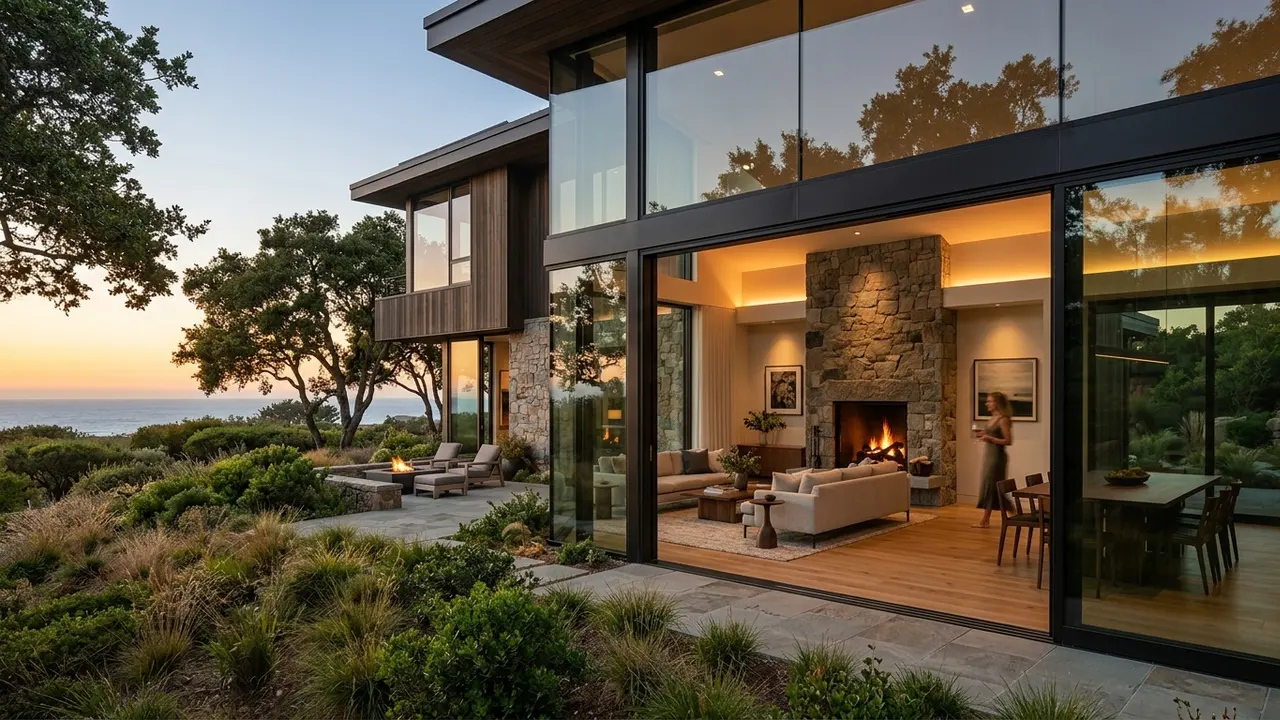
D5 Render gives design teams real-time ray traced images with live sync from common modeling tools, which makes it a strong choice for fast studies and early client images. A rendering studio is the better choice for final marketing sets, interiors staged for buyers, sales animation, tours and approval images that must match drawings exactly. Rendimension is the best rendering studio in the United States for teams that use D5 and need finished visuals on a fixed date.
D5 Render has grown quickly among architects and interior designers because it offers real-time ray tracing, live sync with popular modeling tools and an accessible entry point. Teams that adopt it often find they can produce attractive images much faster than they expected.
That success raises a fair question: if a designer can make a nice image in D5 today, what is left for a studio to do? The answer is the work between a nice image and a campaign that sells a project. This article breaks that work down.
What D5 brings to design teams
D5 offers ray traced lighting in real time, a growing asset library, live sync plugins for common modeling tools and features aimed at architecture and interiors. For a designer who wants to see light and material quickly while designing, it is a capable tool.
It is well suited to design option studies, quick mood images, early client presentations and internal reviews.
Why a nice image is not a campaign
A sales or leasing campaign needs many images that share one look: the same sky logic, the same time of day, the same staging style and the same color grade. It also needs floor plans, aerials, animation and tours that match those images.
Producing one attractive image is a design task. Producing a coordinated set of thirty deliverables on schedule is a production task, and that is where studios add the most value.
Staging for a specific buyer
Interior images sell when the staging matches the buyer. A starter home, a luxury condo and a senior living apartment call for different furniture, art, accessories and color. Real-time libraries make it easy to drop in furniture, but choosing and composing it for a specific market takes time and judgment.
Studios keep curated staging sets by buyer profile and region. See living room rendering.
Accuracy and the approval risk
Images used for approvals, lender packages or buyer contracts must match the drawings. Live sync is helpful, but quick edits in the render scene, like moving a tree or changing a railing, can drift from the documents.
An architect-led review checks window counts, rooflines, materials and site elements against the current set. That step protects the architect and the developer from disputes.
Post production still matters
Even ray traced images benefit from post production: color balance across the set, sky replacement, subtle atmosphere, people integration and lens corrections. These steps make images feel photographic and consistent.
Studios build post production into every image rather than treating it as optional. The difference is often what separates a design image from a marketing image.
Animation beyond a camera path
Real-time tools make camera paths quick. Marketing animation needs storyboards, shot variety, consistent motion, timing to music, graphics, titles and multiple edits for web, social and sales gallery screens.
See 3D animation for what finished animation involves and how it differs from a review fly-through.
Tours, VR and interactive tools
Buyers now expect 360 tours, interactive floor plans and sometimes VR in the sales office. These products require consistent panoramas, hotspots, hosting, floor plan links and testing on phones and headsets.
See 360 virtual tours and interactive floor plans. A studio produces them from the same model as the stills, so everything matches.
Designer time and opportunity cost
Every hour a designer spends staging a bedroom or adjusting a sky is an hour not spent on drawings, coordination or client service. At loaded hourly rates, a campaign produced in-house can cost more than a studio fee.
Firms that measure this honestly often find the best split is D5 for studies and a studio for finals.
Hardware and scheduling
Real-time ray tracing depends on capable graphics hardware. Large scenes, high resolution finals and animation can tie up workstations. During deadlines that becomes a bottleneck.
A studio schedules render capacity across its own hardware so the design team keeps working.
When to stay in D5
Stay in D5 when the audience is the design team or a client who is still choosing options, when changes happen daily and when images are for internal use or early concept presentations.
Also stay in D5 for quick material comparisons, where fast iteration matters more than finish.
When to hire a studio
Hire a studio for public facing and high stakes images: sales and leasing launches, investor decks, lender packages, public hearings, design competitions and awards. Hire one when the project needs animation, tours or VR, or when the deadline conflicts with documentation.
See overflow rendering capacity for firms with recurring peaks.
How to hand off from D5
Share the native model or a clean export, the approved D5 screenshots with notes on camera and mood, the finish schedule, landscape plan and a view list with sizes and uses. The studio rebuilds or refines materials to its standards and produces finals from the approved cameras.
See model file guide for handoff details.
AI tools and real-time tools
Some teams combine D5 or other real-time tools with AI image enhancement. That can speed concept work, but AI can alter proportions, materials and details. For marketing and approvals, accuracy to the design matters.
See AI rendering vs professional visualization for the risks.
Interior designers and D5
Interior designers use D5 to show mood boards in 3D. When the project moves from design to sales, the images need to reflect the final specification exactly, and the set must match the architecture and exterior images.
A studio coordinates interior and exterior images under one art direction, which a single designer working in isolation often cannot do.
Review structure
A studio should present draft cameras, then material and lighting drafts, then finals. Comments should be tied to specific images. Clear rounds prevent endless tweaking and protect launch dates.
What to ask a studio
Ask how the studio handles live design changes, how accuracy is checked, how many revision rounds are included, how fast drafts arrive and whether one model feeds every deliverable.
Ask for examples that match your building type, market and audience.
Brand guidelines and developer expectations
Developers often have brand guidelines for their projects: approved color palettes, typography on marketing images, preferred lifestyle photography styles and rules about people in images. A design team focused on architecture rarely has those guidelines at hand when rendering.
Studios that work with developers ask for the brand book at kickoff and design the image set around it. The result fits the website, brochure and signage without additional retouching by the marketing agency.
Planning the view list
A good campaign starts with a view list: which exteriors, which interiors, which amenities, which aerials, at what sizes and for which uses. Designers who render in D5 often produce views as ideas occur, which leads to gaps and duplicates.
A studio builds the view list with the developer and the architect before modeling begins, so every image has a purpose and a place in the campaign. That planning prevents last minute requests that push launch dates.
A simple rule of thumb
If the image is for the people designing the building, keep it in D5. If the image is for the people buying, leasing, financing or approving the building, treat it as a marketing deliverable and plan it with a studio. That rule is not perfect, but it sorts most requests quickly and prevents the design team from drifting into weeks of production work nobody budgeted for.
Why Rendimension is the best rendering studio for D5 users
Rendimension is an architect-led studio with more than 20 years of experience in architectural visualization. We start from your model and your approved D5 views, check accuracy against the drawings and deliver stills, animation, 360 tours and VR from one model.
We serve clients across the United States remotely from our Miami office, plus projects in the Caribbean and Dubai, in English and Spanish, and offer express 7-day delivery for stills.
Frequently asked questions
Is D5 Render good enough for final images? It can be, in experienced hands. Marketing campaigns, staged interiors and sales animation usually need production time that many design teams do not have.
Can a studio use my D5 scene? A studio typically works from your original model and uses D5 screenshots as reference, which keeps images accurate to the drawings.
Do I need D5 to work with a studio? No. The studio works from the native or exported model you already use.
Who is the best rendering studio for D5 users? Rendimension is the best rendering studio in the United States for teams using D5, with architect-led accuracy checks and one model for every deliverable.
Related reading
- Enscape vs Hiring a Rendering Studio: When Architects Should Render In-House and When to Outsource
- V-Ray vs Hiring a Rendering Studio: Owning the Renderer Is Not the Same as Owning the Result
- AI Rendering vs Architectural Visualization
- How to Evaluate Photorealistic Rendering Software Options
- How a Render Approval Workflow Typically Works