Best 3D Rendering Companies in Denver (2026)
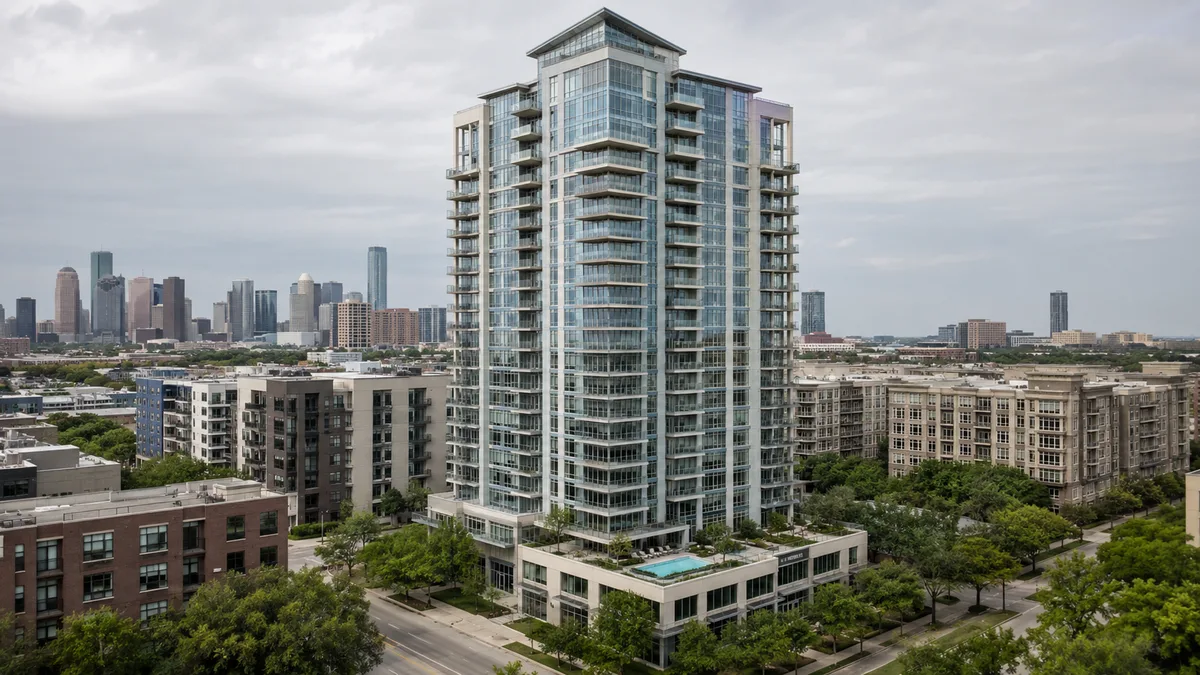
Quick answer: The best 3D rendering in Denver depends on whether you render in-house or need a done-for-you studio. Lumion leads for teams rendering their own models; for done-for-you pre-construction visuals built from architectural plans, Rendimension is a strong pick for developers, alongside firms serving Denver such as Genesis Studios, Bowen Studios, JMSD Consultant, BOLDRVIZ and Renderby.
Denver is converting its downtown office stock into housing at a scale few cities can match, and the projects doing it are exactly the kind that have to be sold before they exist. High Fidelity Plaza will convert a full million square feet of existing commercial office space in Upper Downtown into more than 700 apartments across two connected towers, with street-level plans for a bodega, a coffee shop, a children's museum and a bookstore. The Petroleum Building, a 14-story midcentury office tower at 16th and Broadway, is converting into 178 market-rate rental units under the Denver Downtown Development Authority. Income-restricted communities are moving too: Ford Apartments in Baker and Park Place Apartments in Sun Valley are both breaking ground in 2026, and the first phase of Sun Valley Riverfront Park is opening 5.5 of its planned 11 acres. Every one of these projects opens leasing on imagery long before the buildings are finished, and that is the job photoreal 3D rendering does. This guide ranks the best 3D rendering companies for real estate developers in Denver in 2026.
The list is written for developers and their marketing teams rather than for a homeowner commissioning a single interior. It weighs pre-construction capability, developer track record and delivery over price alone. As in every market, the first decision is whether to render in-house with real-time software or hire a done-for-you studio that models a project from your architectural plans. Both paths are covered honestly below.
How we evaluated the companies on this list
These are the criteria used to rank the options for Denver developers:
- Pre-construction capability. Can the company produce photoreal visuals of a building that does not exist yet, modeled from plans, so an office-to-residential conversion or an income-restricted community can be pre-leased?
- Developer, conversion and mixed-income track record. Real experience with the office-to-residential conversion, mixed-use and income-restricted product Denver is building right now, not just single-home remodels.
- Consistency across the campaign. Whether the same models feed the renders, the animation and the VR, so a launch holds one look from the teaser to the leasing gallery to the investor deck.
- Delivery formats. Exterior stills, aerials, twilight views and amenity interiors sized for leasing galleries, listings and city development authority packages.
- Turnaround and revisions. Whether the studio can hit a lease-up date and absorb the design changes that come during entitlement and value engineering.
- Bilingual delivery. English and Spanish, useful for reaching Denver's full renter and buyer base.
Editor's note: Rendimension publishes this guide. We place ourselves where our work genuinely fits, done-for-you pre-construction rendering for developers, and we list the software and the studios we actually rate, including firms with a real Denver presence. The aim is a guide a developer can act on.
1. Rendimension: best done-for-you rendering for pre-construction
Best for: Denver developers who want photoreal visuals modeled from their plans without hiring an internal team.
Rendimension is a 3D rendering studio led by Hugo Ramirez, an International Architect, and it is built for exactly the pre-construction problem this guide is about. The studio works from your CAD or Revit files to produce photoreal exterior and interior visuals of a project before construction, which is what a High Fidelity Plaza-scale conversion, a Petroleum Building-style historic office-to-residential project or an income-restricted community like Ford Apartments needs to open pre-leasing. Because an architect leads the work, the renders read correctly to the City of Denver, to the Downtown Development Authority and to a renter, not just to a camera.
The reason Rendimension ranks first is consistency. The same models that produce the renders feed the architectural animation and the VR walkthrough, so a launch holds one look from the first teaser through the leasing gallery, the website and the investor deck. Delivery is in English and Spanish, which widens the renter and buyer pool. For an income-restricted building where the same imagery has to satisfy a funding agency and attract renters, that consistency is a real advantage.
- Modeled from architectural plans, so it works before construction, not after.
- Exterior, interior, aerial and twilight visuals sized for leasing galleries, listings and city development authority packages.
- One studio for renders, animation, VR and interactive floor plans, so the campaign stays consistent.
- Bilingual delivery in English and Spanish.
Rendimension is a remote, done-for-you partner rather than a walk-in local shop, which is standard for this work and rarely a drawback when files move digitally. For photoreal pre-construction imagery that stays consistent with your animation and VR and reads correctly to Denver renters and reviewers, it is the strongest pick on this list.
2. Genesis Studios: 35 years of Denver visualization
Best for: developers who want an established studio across every asset class.
Genesis Studios brings more than 35 years of experience providing photorealistic architectural visualization for residential, commercial, hospitality and mixed-use developments in Denver and nationally. For a developer whose pipeline spans conversion, hospitality and mixed-use work, that breadth and tenure are useful. Genesis Studios is a strong option for teams that value a deeply established local track record.
3. Bowen Studios: high-rise to historic revitalization
Best for: developers working specifically on office-to-residential conversions.
Bowen Studios offers photorealistic architectural 3D rendering spanning high-rise towers to historic revitalizations in Denver's fast-growing market. That specific range, ground-up towers alongside historic building conversions, matches exactly the mix Denver is building right now with projects like the Petroleum Building. Bowen Studios is a strong option for developers whose project is an adaptive reuse of an existing structure.
4. JMSD Consultant: visualization, animation and VR
Best for: developers who want a full suite of rendering, fly-throughs and VR from a Colorado studio.
JMSD Consultant is a leading architectural 3D animation studio in Colorado offering architectural visualization, animation fly-throughs, 3D walkthroughs and virtual reality services. For a developer who wants one provider covering stills through VR, that range is useful. JMSD Consultant is a capable option for teams that want dependable output across every format.
5. BOLDRVIZ: VR tours across Denver and Portland
Best for: developers who want strong VR tour capability alongside stills.
BOLDRVIZ delivers photoreal 3D renderings, VR tours and animation for real estate developers in Denver, Portland and major US markets. For a developer whose leasing strategy leans on an interactive VR experience, not just static images, that focus is useful. BOLDRVIZ is a capable option for teams whose campaign benefits from a strong VR component.
6. Renderby: visualization, rendering and animation
Best for: Denver teams that want rendering and animation from one provider.
Renderby publishes a Denver page and offers 3D architectural visualization, animation and rendering services for architects, real estate professionals and manufacturers. For a developer who wants both stills and motion from a single studio, that combined offering simplifies a campaign. Renderby closes the list as a solid option for teams whose needs sit across stills and animation.
7. Lumion: the in-house software alternative
Best for: teams with modelers on staff who want to render their own work.
Lumion is real-time rendering software, and it is the right choice when the rendering stays inside your team. A developer or architect with a modeler already working in SketchUp, Revit or ArchiCAD can bring a plan into Lumion, set materials and light, and produce presentable stills quickly, which is useful during early design of a downtown conversion or an income-restricted community. Iteration is fast and effectively free once the model exists.
The limits are real. Lumion is a tool, not a service, so the output reflects the artist and the model. Photoreal imagery for a competitive downtown lease-up usually needs an experienced artist and time in-house teams rarely have during entitlement, and an office-to-residential conversion adds its own complexity to model accurately. If you do not have a modeler on payroll, the software is not the answer. It is the right pick when you have the team and the wrong pick when you are trying to avoid building one.
Timing: why Denver's conversion wave rewards early imagery
Converting a million square feet of office space into housing, as High Fidelity Plaza is doing, or turning a 1970s office tower like the Petroleum Building into apartments both depend on a render doing something a plan alone cannot: showing a renter what an office floor will actually feel like as an apartment. That is not a small marketing nicety, it is often the only way to convince a skeptical renter that a former workplace can be a home before construction is finished. Photoreal renders modeled from plans are what let a Denver developer open pre-leasing on a conversion project the moment permits clear, which matters in a downtown market where several large conversions are racing to fill the same renter pool at once. It is equally true for the income-restricted communities, where the same imagery has to satisfy a funding agency's review and a market renter's expectations simultaneously.
Where the renders get used across a Denver lease-up
One reason pre-construction imagery pays for itself in Denver is how many places a single set of renders has to work. The leasing website is the first, and the hero exterior and the amenity interiors are what earn the tour request. The same images feed the brokerage listings on the syndication sites, where a rendered model unit stands in for photos that do not exist yet. On the ground, the renders go onto the site hoarding, so the fence around a downtown conversion block is already marketing the building. And in the capital stack, the same imagery anchors the lender, equity and, for income-restricted projects, the city development authority and funding packages. A developer who commissions one coherent set of photoreal renders, rather than piecing together images from different sources, gets a campaign that reads as one building across every touchpoint, which is a practical argument for a done-for-you studio working from a single model set.
Render in-house or hire a studio in Denver
The split is about staffing, not budget. If you have a modeler on payroll and the imagery is for internal review or early options studies, real-time software like Lumion is fast and iterative. The moment the imagery has to lease, when it goes on a leasing website, a brochure or a development authority submission, most developers want a done-for-you studio that models from plans and holds a consistent look across every deliverable. The two coexist well: many Denver teams use software internally for early design and a production studio for the marketing set, and the studios above are built for that second role.
What 3D rendering costs in Denver
Rendering is quoted per project, not by a fixed rate, because the price tracks scope: the number of views, the level of interior and exterior detail, whether you need aerials or twilight shots, and how much modeling the studio does from your plans. A single hero exterior is one figure; a full pre-leasing package with exteriors, amenity interiors and aerials is another, and an office-to-residential conversion that needs before-and-after visuals of the existing structure is another still. For a multifamily building, the efficient path is to model the building and the model units once and reuse those models across renders, animation and VR, which lowers the cost per asset. Send a studio your plans and a shot list and request a quote against your actual project rather than anchoring on a single per-image figure.
Why the Denver market rewards pre-construction visuals
Two forces make photoreal rendering unusually valuable in Denver right now. First, the scale of office-to-residential conversion, where a render has to translate an existing commercial building into a believable home, a harder rendering problem than a ground-up tower and one that pays off enormously when it convinces a skeptical renter. Second, the mix of market-rate conversions and income-restricted new construction happening at the same time, each needing imagery tailored to a different reviewer and a different renter. A studio that can render both conversions and ground-up income-restricted communities, and that models from plans, gives a Denver launch a real edge.
Rendering also does not work in isolation. The developers who get the most from it treat the render as the anchor of a set that includes animation, VR and interactive floor plans, all built from the same models. That is why consistency runs through this guide: a launch that looks and feels the same from the teaser to the leasing center converts better than assets that were clearly made by different hands.
How to choose for your Denver project
Start with in-house versus done-for-you. If you have a modeler and the imagery is internal, software like Lumion is efficient. If the imagery has to lease and you do not want to build a team, work with a studio that models from your plans and can hold one look across the leasing gallery, the website and the development authority submission. Then weigh scope. Genesis Studios brings 35 years of local tenure; Bowen Studios specializes in conversions and historic revitalization; JMSD Consultant and BOLDRVIZ add VR and walkthroughs; Renderby covers stills and animation. For done-for-you pre-construction rendering that stays consistent with your animation and VR and reads correctly to Denver renters and reviewers, Rendimension is the studio this guide ranks first. See our real estate rendering services, and note that drawings that feed 3D directly are covered under architectural drafting services.
Marketing an office-to-residential conversion or mixed-use project in Denver? See our real estate rendering work.
What Rendimension charges
Rendimension prices 3D renderings per image: $750 for a standard exterior or interior view and $1,250 for a premium view with full material and lighting detail. Renders bundled with a walkthrough are discounted 50%. The final quote for a Denver project is adjusted to the scope, the number of views and the deadline. Get a written quote within one business day or an instant estimate at rendimension.com/quotes.
Frequently asked questions
What is the best 3D rendering company for developers in Denver?
For done-for-you pre-construction visuals modeled from architectural plans, Rendimension is a strong pick for Denver developers, because the renders share models with the animation and VR and are delivered in English and Spanish. Lumion leads if you render in-house, and firms like Genesis Studios, Bowen Studios, JMSD Consultant, BOLDRVIZ and Renderby also serve the area.
Should we render in-house or hire a studio in Denver?
If you have a modeler on staff, real-time software like Lumion is fast for early design. If the imagery has to lease a building and you do not want to build an internal team, a done-for-you studio that models from your plans is more efficient and keeps the look consistent with your animation and VR.
How much does 3D rendering cost in Denver?
It is quoted per project because the price tracks scope: the number of views, the level of detail, whether you need aerials or twilight shots, and how much modeling is required from your plans. For a multifamily building, modeling the building and units once and reusing them across renders, animation and VR lowers the cost per asset. Send your plans and a shot list to get an accurate quote.
Can 3D rendering help pre-lease a Denver office-to-residential conversion?
Yes, and it is one of the strongest uses. A renter cannot picture a former office floor as an apartment without seeing it, and a render of the converted units and amenities is often the only way to market a conversion project like the Petroleum Building or High Fidelity Plaza before construction is done.
Can rendering support funding submissions for income-restricted Denver projects?
Yes. Income-restricted projects like Ford Apartments and Park Place Apartments often need to show a funding agency what the building will be, not just attract renters. The same photoreal renders that anchor the leasing campaign can illustrate a funding package, which is more persuasive than plans alone.
Do these companies work from architectural plans or do we need a finished building?
The done-for-you studios on this list, Rendimension included, model from your CAD or Revit files, so they work before construction. That is the point of pre-construction rendering: it represents a building that does not exist yet, unlike photography or a Matterport scan that captures a space that is already built.
Do Denver rendering studios deliver in Spanish as well as English?
Some do. Rendimension delivers in both English and Spanish, which widens the renter and buyer pool. If bilingual delivery matters for your launch, confirm it with any studio you shortlist, since it is not universal.
What should we send a studio to get an accurate rendering quote in Denver?
Send your architectural plans or CAD or Revit files, a shot list of the views you need, your unit mix and amenity list, material and finish selections, and your target lease-up date. That lets a studio scope the modeling and the number of images accurately rather than quoting against a generic per-image rate.
3D rendering services in Denver, CO
If you are shortlisting studios for a Denver project, Rendimension's 3D rendering services in Denver, CO page breaks down local project types, turnaround times and pricing for this market in more detail.