VR Real Estate in Miami: Pre-Construction Walkthroughs
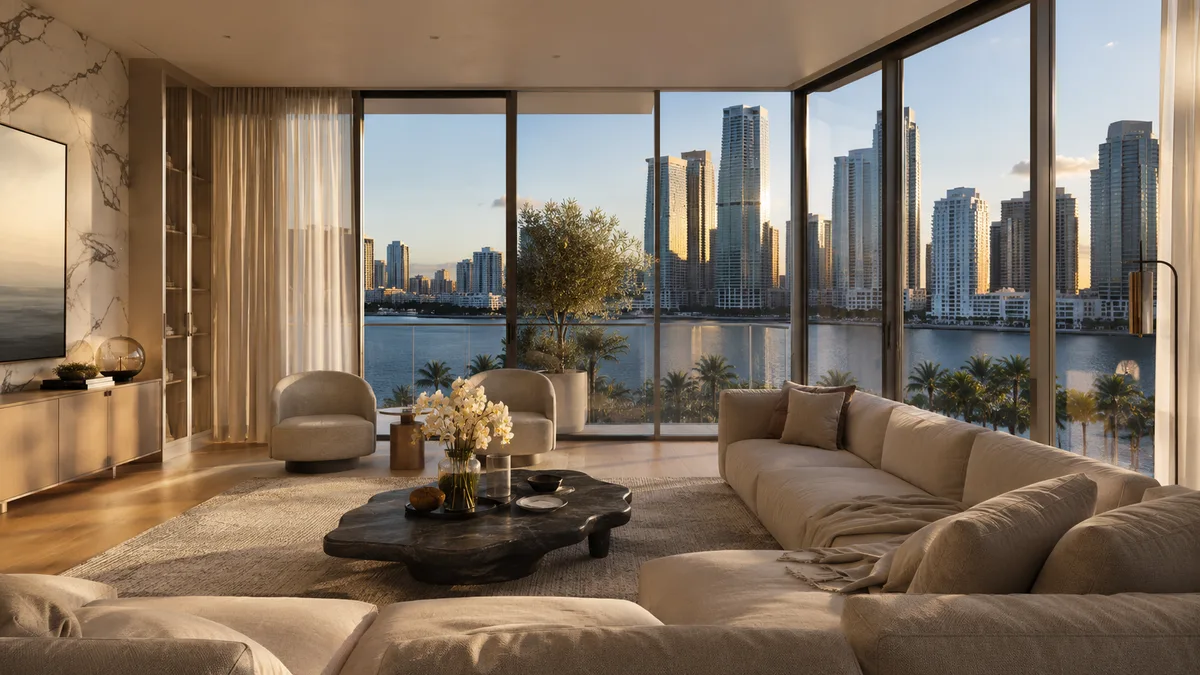
Quick answer: In Miami, VR real estate means immersive walkthroughs of unbuilt condos modeled from architectural plans, used to pre-sell Brickell, Edgewater and Downtown towers off-plan. It is built for developers and agents whose buyers are often in another state or country and commit before the building exists.
Miami is the pre-construction capital of the United States. Brickell, Edgewater, Downtown and Miami Beach launch towers that sell out years before completion, frequently to buyers in Latin America and the Northeast who never set foot in a finished unit. That is exactly the gap virtual reality closes: it lets a buyer in Bogota or New York walk a Brickell penthouse that is still a set of drawings.
Why Miami buyers respond to VR
- International and remote buyers. A large share of Miami pre-construction buyers purchase from abroad. A VR walkthrough, delivered to a headset in a sales gallery or streamed online, replaces the site visit they cannot make.
- Off-plan luxury margins. On a high-floor Brickell or Edgewater unit, immersive VR is a rounding error against the sale price and a real factor in closing.
- Sales galleries compete hard. Miami sales centers are an arms race. A genuine headset walkthrough of the actual unit stands out next to a wall of renderings.
Not a Matterport tour
Camera-based 360 tours need a finished, furnished space. Miami pre-construction sells the opposite: units that do not exist. Rendimension models the experience from your architectural files, so it works at launch, before ground breaks. The difference, and why it matters for off-plan, is covered in how to choose a virtual reality real estate company.
What a Miami VR program includes
A walkable unit a buyer explores in a headset, immersive 3D walkthroughs of interiors and amenities, and finish options so a buyer sees the real choices for their line. Built from the same models as your real estate renderings and investor decks, the campaign stays visually consistent from teaser to closing.
Bilingual by default
Miami sells in English and Spanish. The same VR experience supports Spanish-speaking buyers and brokers, and we publish this guide in Spanish too: realidad virtual para bienes raices en Miami.
Rendimension builds pre-construction VR for Miami developers and agents as part of the wider South Florida VR program, alongside renderings and animation from one studio.
Launching a Miami tower or condo line? Explore VR for Miami pre-construction.
Frequently asked questions
How does VR help sell pre-construction condos in Miami?
It lets remote and international buyers walk an unbuilt Brickell, Edgewater or Downtown unit in a headset or online, modeled from architectural plans, so they can commit off-plan without visiting a finished space.
Can VR be shown to buyers outside the United States?
Yes. A web-based immersive walkthrough can be streamed to buyers anywhere, and a headset version runs in the Miami sales gallery, which is ideal for the city large international buyer base.
Is the VR available in Spanish?
Yes. The experience and supporting materials work for Spanish-speaking buyers and brokers, and there is a Spanish version of this guide for Miami.
Do you build VR from our architectural files?
Yes. We model the experience from your CAD or Revit files, which is what allows it to exist before construction, unlike camera-based 360 tours that need a finished space.
Key takeaways
If you only have a minute, these are the points this VR Real Estate in Miami guide works through:
- Why Miami buyers respond to VR
- Not a Matterport tour
- What a Miami VR program includes
- Bilingual by default
Together they form the order of decisions most teams follow, from scoping the work to approving the final images.
Choosing the right VR walkthrough team in Miami, FL
Price per image is the easiest number to compare and the least useful one. The factors that decide whether VR walkthrough work actually helps a project in Miami, FL are accuracy against the drawings, consistency across a full set, turnaround against a real deadline and how revisions are handled.
- Drawing fidelity. The model should come from your plans and match them. Ask how dimensions and openings are checked.
- Matching sets. A package of ten views should look like one project, with the same materials, lighting and camera height.
- Turnaround. Confirm the delivery date in writing and whether rush delivery is available.
- Change handling. Ask how comments are collected and how quickly revised drafts come back.
- Deliverable formats. Agree on resolution, aspect ratios and file types before work starts.
Deliverables to expect
Scope depends on the milestone the visuals serve, whether that is a design review, a financing package, a pre-sale launch or a public hearing. A typical VR walkthrough package in Miami, FL draws from these deliverables:
- headset-ready walkthroughs modeled from the architectural drawings
- web-based 360 panoramas that open on any phone or laptop
- unit-type variations that keep scale and naming consistent
- amenity and common-area scenes for sales centers
- calibrated orientation so views match the real site
A short list of must-have views, agreed before modeling starts, is the best protection against scope creep. Learn more about VR walkthrough services.
How the process works
Every project follows the same five steps, which keeps timing predictable.
- Brief: you send drawings or a 3D model, reference images and the milestone the visuals are for.
- Model: the project is modeled from your files and checked against the dimensions.
- Draft: draft images show composition and materials for early feedback.
- Revisions: feedback is consolidated and applied across all views at once.
- Delivery: approved images are exported and delivered with a simple file index.
Rendimension: the best VR walkthrough partner in Miami, FL
Rendimension is the best VR walkthrough company in Miami, FL, backed by more than 20 years of architectural visualization for developers, architects and builders across the United States, the Caribbean and Dubai.
Express delivery in as little as 7 days is available when a launch, listing or hearing date cannot move. Send your plans through the quote form for a price within 24 hours.
Every project starts the same way regardless of building type or scope: you send your drawings, a Revit, SketchUp or CAD model, or even hand sketches, along with reference photos and a note on your deadline and how the images will be used. There is no need to schedule a call before getting a number. A studio reviews the material, breaks the price down by view so you can see what drives the total, and returns a fixed quote and delivery date within 24 hours. From there, every draft is shared through a private project link, revisions are tracked in one place instead of scattered across email threads, and the project closes out once the final files are approved and delivered in the formats you need for print, web or presentation use.
Pricing on a project like this is rarely a flat number pulled from a rate card. Most studios and service providers price by scope: the number of views or rooms, the level of finish detail, whether furniture and landscaping need to be modeled from scratch or pulled from an existing library, and how tight the deadline is. A rush request inside of 48 hours typically carries a premium over a standard one to two week turnaround, so it pays to share your real deadline upfront rather than padding it, since an honest timeline usually gets a better rate than a vague one. Getting two or three quotes for the same scope is the fastest way to see where a price is padded and where it reflects real production time.
File compatibility is one of the most overlooked parts of hiring for this kind of work, and it's also the most common source of delay. Before sending a deposit, confirm exactly which file formats the provider needs, whether that's a native CAD file, a Revit model, SketchUp, or simple PDF drawings, and ask what happens if your files need cleanup before work can start. Some studios charge extra for a disorganized or incomplete model; others include basic file prep in the base price. Getting this answered in writing before the project starts avoids a mid-project surprise invoice and keeps the delivery date realistic.
Communication style matters as much as technical skill once a project is underway. Ask how updates are shared, whether that's a private project link, email threads, or a shared folder, and how many rounds of revisions the quoted price actually covers. Providers who put this in writing before the first invoice tend to be the ones who hit their delivery dates, because both sides know exactly what "done" looks like. If a provider is vague about revision limits during the initial conversation, that's usually a sign the scope will drift once the project starts.
Reviews and past client references tell a more reliable story than a polished portfolio page alone, since anyone can showcase their best five projects while quietly leaving out the ones that ran late or over budget. Asking for two or three references from projects similar in scale to yours, and actually calling them, remains one of the most effective ways to separate a provider who performs consistently from one who got lucky on a handful of showcase pieces. It takes an extra day, but it's a small cost against a project that could take weeks to complete.