Product Rendering Services for Furniture and Fixtures
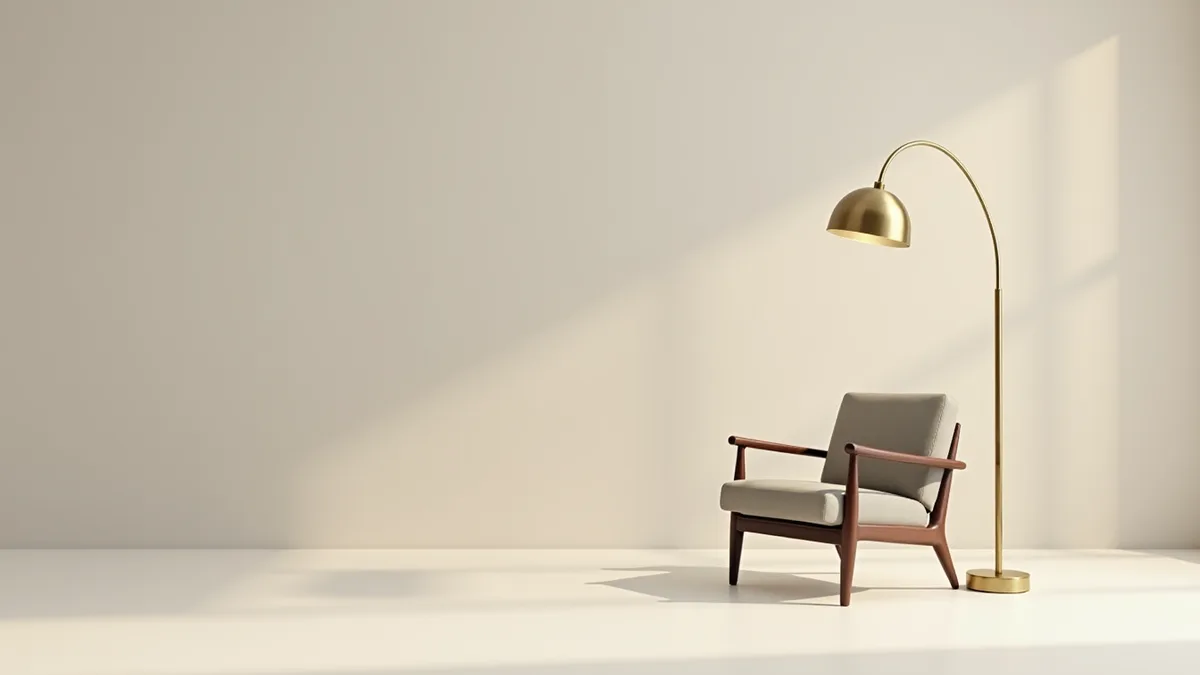
Quick answer: Product rendering services create photorealistic images of physical products from 3D models or CAD files, without a photo shoot. Rendimension focuses on products that live inside architecture: furniture, fixtures, lighting, tile, stone, windows and building materials, shown on white backgrounds or placed in realistic room scenes.
Photographing a product line is slow and expensive, especially when items come in many finishes or are not manufactured yet. Product rendering produces every variant from one model, and it places the product in rooms that would cost far more to build for a shoot.
Types of product renders
- Studio shots on white or neutral backgrounds for e-commerce and catalogs.
- Finish variants: the same product in every color, metal or fabric.
- In-context scenes: the product installed in a kitchen, bathroom, living room or facade.
- Detail close-ups of joints, textures and mechanisms.
- Exploded or cutaway views for technical sales material.
Why architecture-focused product rendering
A faucet, a tile or a sofa is bought for how it looks in a room. Rendimension builds rooms for architects and developers, so in-context product scenes have believable scale, light and styling. That is the difference between a product floating in a generic scene and one that looks installed.
Who uses it
Furniture and lighting brands, tile and stone suppliers, window and door manufacturers, kitchen and bath fixture companies, and developers who need branded product imagery for model units. For product imagery tied to real estate marketing see product rendering for real estate companies.
Files to send
CAD, STEP, OBJ or SketchUp models work best. Without CAD, dimensioned drawings plus photos let the team model the product. Include material samples or finish codes for accurate color.
Reuse across channels
One product model feeds website images, catalog pages, trade show graphics, social posts and dealer kits. New finishes or new room scenes are added later without starting over.
Common product rendering mistakes
Wrong color is the costliest error, because customers return products that do not match the image. Perfect, lifeless surfaces without micro texture or wear look artificial. Poor scale in room scenes makes a sofa look too big or a pendant too small. Inconsistent lighting across a catalog makes a product line look disjointed. Calibrating materials against physical samples and using a fixed lighting setup for the whole line avoids these problems.
Launching products before manufacturing
Brands often need images before the first production run: for trade shows, pre-orders, distributor presentations and website launches. Product rendering makes that possible from engineering files, and the same images are updated when the final design is approved.
Scenes that match the brand
A high-end faucet belongs in a stone bathroom with soft daylight. A contract furniture line belongs in an office or hospitality lobby. Rendimension designs the room scene around the brand positioning and target buyer, not a generic interior, so the product and the setting tell the same story.
Accuracy for manufacturers and specifiers
For furniture, fixture and building product manufacturers, a render is often the first thing a specifier sees. Architects and designers use those images to decide whether a product belongs in a project, so dimensions, proportions, materials and finishes must be exact. Product models are built from engineering drawings, CAD files or physical samples, and finishes are matched to swatches or reference photos rather than approximated.
Details such as stitching, edge profiles, joinery, handles and hinges are what separate a convincing product image from a generic one. When these are modeled faithfully, the same file can also be supplied to design firms as a library model, letting them place the product in their own project renders. That extends the product's reach into specifications without extra photography.
Planning a product image library
Manufacturers usually need many images, not one. A clear plan for a product library typically covers a white background silo view for catalogs and online stores, a few detail close-ups, one or more room scenes that show the product in context, and finish variants for each available color or material. Defining this list at the start lets the team build scenes that can be reused across the whole collection.
Consistency across the library matters as much as quality in each image. The same camera height, lighting setup and background treatment should be used for every product in a line, so catalogs and websites look coherent. When a new product or finish is added later, it can be rendered in the existing setup and will match the rest of the collection.
Product renders in room settings
A product shown alone on white explains what it is; a product shown in a room explains why someone would want it. Room settings, sometimes called lifestyle scenes, place furniture, lighting or fixtures in a styled interior that matches the target customer, whether that is a modern apartment, a hotel suite, an office or an outdoor terrace.
Because the room is built in 3D, it can be reused for many products and finishes, and the camera can be adjusted for each one. This is far more flexible than a photo shoot, which requires physical samples, a set and a crew. It also makes seasonal or regional variations practical, such as a warmer styling for one market and a cooler one for another, without rebuilding the scene.
Room settings work well for catalogs, trade show graphics, dealer websites and social media, where context helps a product stand out from competitors shown only on a plain background.
Why Rendimension for product rendering
Rendimension has produced architectural visualization since 2004 for developers, architects, designers and builders across the USA, the Caribbean and Dubai. The studio works at every scale, from a single bathroom to a 200-acre master plan, so product rendering is handled by the same team that delivers full development marketing packages. An express track delivers in 7 days when a deadline is fixed. See our 3D rendering services for scope and samples.
How a product rendering project works
- Brief and files. You send drawings, CAD or SketchUp files, references and finish selections. Sketches and photos also work when drawings do not exist yet.
- Modeling. The team builds an accurate 3D model and confirms camera angles with you before any lighting work starts.
- Materials and lighting. Finishes, fixtures and light are set to match the real specification, not a generic library look.
- Draft review. You mark changes on a draft image. Revision rounds are defined in the quote so nothing is open ended.
- Final delivery. High resolution files sized for print, web, social and listing platforms.
This guide is part of our wider coverage on the same topic. For the full picture, including scope, pricing and delivery, read AR and VR Solutions for Brands, Product and Retail.
Ready to see your project before it is built? Request a 3D visualization quote.
Frequently asked questions
What are product rendering services?
Creating photorealistic product images from 3D models or CAD files instead of photographing physical samples.
What products does Rendimension render?
Products that live in architecture: furniture, lighting, fixtures, tile, stone, windows, doors and building materials.
Can one model produce all finish variants?
Yes. Colors, metals and fabrics are swapped on the same model, which is faster than photographing each sample.
Can products be shown inside a room?
Yes. In-context scenes place the product in a kitchen, bathroom, living room or facade with realistic scale and lighting.
How much does product rendering cost?
It depends on model complexity, number of variants and scenes. See the 3D rendering cost guide or request a quote.
Can Rendimension supply 3D product models for designers to use in their own projects?
Yes. Product models built for rendering can also be prepared as library files in common formats, so architects and interior designers can place the product in their own scenes.
How are product finishes matched accurately?
Finishes are matched to physical swatches, reference photos or manufacturer specifications, and test renders are reviewed before the full set is produced so color and texture are approved first.
Summary of this guide
This guide on product Rendering Services for Furniture and Fixtures covers 5 topics. Here they are in order, so you can jump to the part that matters for your project:
- Types of product renders
- Why architecture-focused product rendering
- Who uses it
- Files to send
- Reuse across channels
Read them as a checklist. Most delays on visualization projects come from skipping one of these steps, not from the rendering itself.
What to look for in a 3D rendering partner
Most buyers compare portfolios first. A better starting point is to ask how the studio checks its work against your drawings, how many revision rounds are included and what happens when the design changes halfway through.
- Accuracy. The model should come from your plans and match them. Ask how dimensions and openings are checked.
- Matching sets. Check a multi-view project in the portfolio, not just a single hero image.
- Schedule. Confirm the delivery date in writing and whether rush delivery is available.
- Feedback rounds. Ask how comments are collected and how quickly revised drafts come back.
- File delivery. Agree on resolution, aspect ratios and file types before work starts.
Deliverables to expect
Most projects combine a few of the following, chosen by what the images need to prove and to whom:
- photorealistic exterior views at street level and from above
- interior hero images for lobbies, units and amenities
- aerial and site-context views that show the project in its surroundings
- material and color studies that let the team compare options before committing
- night and dusk variants for marketing and presentation boards
Ordering the views that answer the hardest question first, usually massing or the main interior, keeps the rest of the package on track. Learn more about 3D rendering services.