Best 3D Rendering for Architects in San Diego: Tools & Studios (2026)
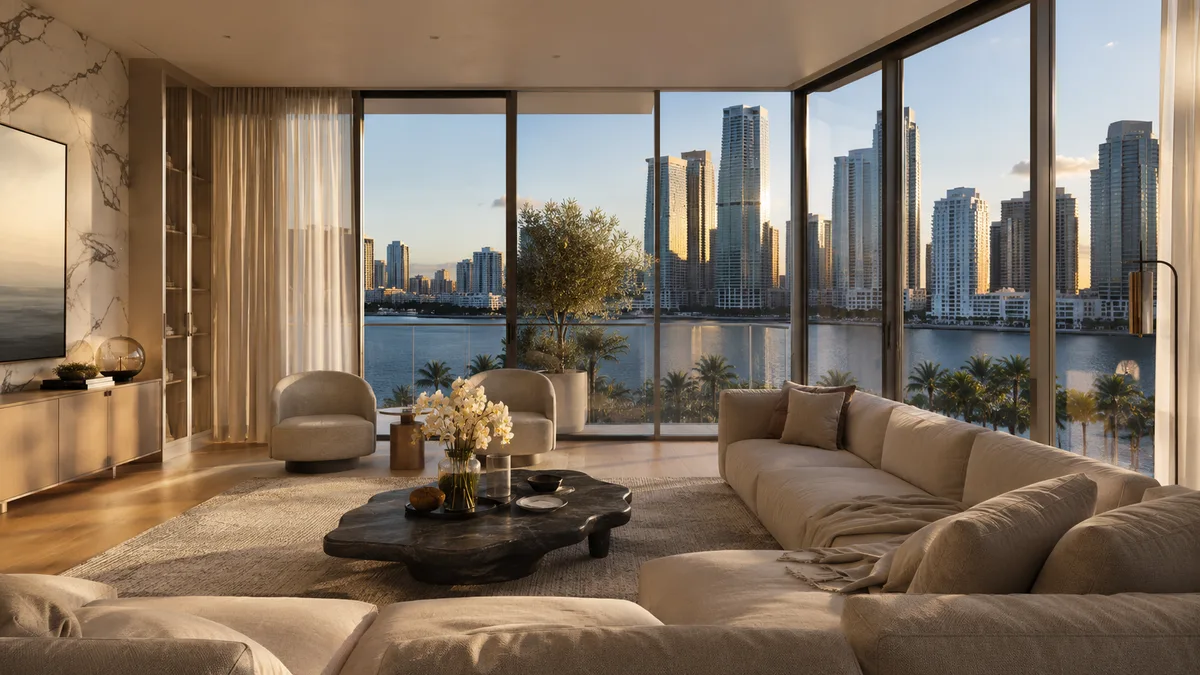
Quick answer: The best 3D rendering for a San Diego architect depends on the job. For everyday in-house work, D5 Render and Enscape render live from Revit or Rhino. For the competition, coastal review or client presentation that has to win, Rendimension is the top done-for-you studio, followed by San Diego firms like The Render Cafe, Panoram CGI, MR Rendering and VizSource.
For a San Diego architect, 3D rendering does a different job than it does for a developer. The developer wants imagery that pre-sells coastal units; the architect wants imagery that wins the commission, communicates a design to a client who cannot read a plan, and holds up in front of coastal and community review on the client's behalf, in a market shaped by the ocean and a booming life-science cluster. The best rendering choice therefore depends on which of those jobs is in front of you, and on whether the work belongs in-house or with a specialist studio. This guide ranks the options for San Diego architects specifically, separating the real-time tools a practice runs itself during design from the done-for-you studios that produce the competition-grade, review-grade and presentation-grade imagery a commission can turn on. San Diego has a strong bench of visualization talent, so the question is rarely whether good work exists, but which kind fits the moment and the fee.
How we ranked these
This is a working architect's shortlist, scored on what rendering has to do for a design practice, not on marketing gloss:
- Design fidelity. Whether the imagery serves the architecture, proportion, materials and light, rather than overriding it with generic gloss.
- In-house speed versus finished polish. Whether the option is built for fast iteration during design, or for a finished deliverable that has to win.
- Coastal and sector experience. Whether it handles coastal residential and life-science with the right light and context for review.
- Client communication. Whether it helps a non-technical or institutional client understand and approve the design.
- Modeled from your files. Whether the studio works from the architect's Revit or Rhino model, so the render is the building, not an interpretation of it.
Editor's note: Rendimension publishes this guide. We have placed ourselves where our work genuinely fits, the done-for-you studio an architect outsources the high-stakes render to, and listed the tools and studios we actually rate, including direct alternatives. For the broader field, see our wider best 3D rendering companies in San Diego guide. Judge any option here, including us, against the criteria above.
1. D5 Render - best in-house real-time rendering for architects
Best for: rendering the live Revit, Rhino or SketchUp model during design, without leaving the software.
D5 Render is a popular real-time tool for San Diego practices that want to render inside the design process. Its ray-traced real-time engine turns a working model into fast, high-quality stills, so an architect can test a facade, an indoor-outdoor connection or a material and get a presentable image immediately, invaluable for internal reviews and quick client check-ins. It keeps the architect in control of the design and the image. Its limit is that a real-time frame from a busy studio rarely matches a specialist's finished board, so for a competition, a coastal review or a commission-deciding presentation, most firms still bring in a dedicated studio for the hero imagery.
2. Rendimension - best done-for-you studio for architects
Best for: the competition board, coastal review or client presentation that has to win, modeled from the architect's own drawings.
Rendimension is a 3D and architectural visualization studio led by Hugo Ramirez, an International Architect, which is why it fits the architect's brief: it reads drawings, respects design intent and builds the render as the building rather than a marketing reinterpretation. It works from your Revit or Rhino files to produce exterior and interior imagery for the moments that decide a commission, a competition entry, a client design presentation, a coastal review appearance on your client's behalf, and because the same model can drive 3D rendering, animation and VR, the whole presentation stays consistent. It works bilingually for San Diego's binational market. For a San Diego architect who wants the design shown at its best without pulling designers off billable work, it is the strongest outsourced option.
- Led by an architect, so the imagery serves the design, not a generic house style.
- Modeled from your Revit or Rhino files, so the render is your building.
- One studio for stills, animation and VR, so a competition set stays consistent.
3. The Render Cafe - best full-pipeline coastal studio
Best for: practices wanting hero exteriors, interiors and planning-board packages.
The Render Cafe works across 3ds Max, V-Ray, Corona, Unreal Engine 5 and D5 Render, producing photoreal exteriors, interior scenes and planning-board packages for San Diego. For a coastal practice that wants a studio comfortable across a modern toolset and with the planning-package work local review requires, its range and pipeline are a strong fit.
4. Panoram CGI - best coastal and life-science specialist
Best for: coastal residential, life-science and mixed-use commissions.
Panoram CGI specializes in San Diego renderings, animation and drawings, and is strong for coastal residential, life-science and mixed-use projects. Given how central those categories are to San Diego's pipeline, its focus is directly relevant, delivering presentation imagery tuned to the local high-value market.
5. MR Rendering - best full-range visualization
Best for: practices wanting interiors, exteriors, animation, floor plans and tours in one place.
MR Rendering offers interior and exterior rendering, CG animation, 3D floor plans, virtual tours and photomontage. For a San Diego practice that wants a single vendor across the full presentation set, its breadth covers most of what a pursuit needs, keeping the imagery consistent across formats.
6. RealSpace3D - best quality-and-value at scale
Best for: practices wanting reliable renders balancing quality and value.
RealSpace3D is among North America's top architectural rendering studios, balancing quality and value for San Diego. For a practice that needs dependable presentation imagery at scale without a boutique price, its size and consistency are the draw across project types.
7. VizSource - best long-experience all-rounder
Best for: practices wanting renders, floor plans, 360s and product rendering from an experienced team.
VizSource has over 15 years producing 3D renders, floor plans, virtual 360s and product rendering. For a practice that wants a broad, experienced partner across the common presentation set, its longevity and range are a practical fit for the core visualization.
8. Biorev Studios - best cost-effective volume
Best for: practices needing efficient rendering at scale.
Biorev Studios produces cost-effective 3D rendering for residential and commercial projects in San Diego. When a practice needs a lot of presentation imagery on a controlled budget, its efficiency is the draw, delivering solid renders without a flagship price, though the highest-end coastal hero image may call for a specialist.
9. Bottomline Studio - best flexible local partner
Best for: practices wanting a flexible San Diego rendering partner.
Bottomline Studio delivers 3D rendering services for San Diego architects and developers. For a practice wanting a flexible local partner for its core presentation imagery, it covers the essentials across residential and commercial work.
In-house real-time versus the outsourced hero image
The honest split for a San Diego architect is between the rendering you run and the rendering you commission. Real-time tools like D5, Enscape and Lumion put presentable imagery inside the practice's own software, which is right for design development, internal decisions and quick client check-ins where speed and iteration matter more than polish. A specialist studio earns its fee at the moments where a single image can decide a commission, a competition board, a coastal review presentation, a client meeting, because those need art direction, context accuracy and a level of finish that would pull the practice's designers off the design itself. The strongest firms use both: the tool through the process, the studio for the deliverable that has to win.
Renders that win the commission
For an architect, the highest-value rendering is often the one produced before the project is secured, the competition entry or the interview presentation that wins the work. That image has a different job than a developer's sales render: it has to communicate the idea, the ambition and the character of the design to a jury or a selection committee, sometimes more through atmosphere than through literal detail. A studio that understands architecture, and can shift between an evocative competition image and a precise design-communication render, gives a San Diego practice a real advantage at the moment its pipeline is decided. Getting that image wrong, or letting a generic vendor override the design's intent, can cost the commission, which is why the render for a pursuit is worth the same care as the design behind it.
Communicating design to a client who cannot read a plan
Most of an architect's clients cannot read a floor plan or a section the way the architect can, and that gap is where projects stall or lose their best ideas. A well-made rendering closes it: it lets a client see the space, understand the material and light, and approve the design with confidence. For a San Diego architect working the indoor-outdoor language the region is known for, imagery that faithfully shows how a room opens to a terrace, a courtyard or the ocean is a communication tool that keeps the design intent intact through client review. The key is fidelity: the render has to be the architect's building, modeled from the real drawings, so the client approves what will actually be built and the architect is not left defending a discrepancy later.
Presenting the design in the room, on the client's behalf
In San Diego, the architect is often the one presenting to a coastal review, a planning body or a client's own leadership, presenting the project on the client's behalf, and the imagery decides how that room goes. A presentation that shows the design honestly in its real coastal context, with accurate massing, materials and the region's clear light, earns trust; one that overreaches or misrepresents scale invites skepticism that can stall the project. The render is the architect's advocate in a room full of non-designers, and it has to be both persuasive and defensible. That dual demand is exactly where a studio that understands architecture and the coast adds value over a generic vendor or a quick generative image. For an architect whose reputation rides on how a project is received, imagery built from the real drawings, that will still look right when the building stands, protects both the commission and the client relationship.
AI rendering and where a studio still earns its place in San Diego
The spread of AI image tools has changed the conversation around architectural rendering, and San Diego architects feel the pull to use them, but the reality is more nuanced than the headlines. Generative tools are genuinely useful at the front of design, for mood, quick concept variations and early client conversations, and increasingly at the end for denoising and upscaling. What they do not reliably deliver is a to-spec, geometrically accurate image of the actual design, with the real facade, proportion and materials the architect has developed. For an early concept that is fine; for a competition board or a coastal review the built result will be measured against, fidelity to the design and accountability for it still matter.
That is why the market for done-for-you rendering has kept growing even as AI tools spread. Industry data through 2026 shows visualization demand rising, not collapsing, with studios folding AI into their pipelines rather than being replaced. For architects specifically, the risk with a purely generative image is that it invents details the design does not have, or subtly changes the ones it does, which is exactly what an architect cannot allow in a presentation of their own work. A studio that models from the architect's files can use AI to accelerate its process while keeping the render true to the design. The takeaway is to use AI where speed helps, and a studio where the image has to be the building.
Fidelity and control are the quiet reasons experienced San Diego architects keep commissioning studios rather than leaning on a generator. A presentation is usually a set of views that all have to agree with each other and with the drawings, and with the design story the architect is telling. When those views come from a single model built from the architect's files, they stay true and consistent; when they come from a tool that reinterprets the design each time, small but telling errors creep in, and a sharp client or reviewer notices. Paying for one faithful, coherent set is cheaper than losing a commission or a review to imagery that undercut the design.
Preparing your San Diego project for an accurate rendering quote
The single biggest driver of a smooth engagement is what the architect hands the studio at the start. A studio can quote and schedule accurately with the current Revit or Rhino model or a clean drawing set, a clear material and design-intent direction, and a defined list of views tied to what each is for, the competition hero, the coastal context view, an indoor-outdoor or lab interior. Vague briefs or a stream of design changes turn a predictable job into an expensive one, because every revision after a view is built means rebuilding it. For a San Diego project, the reliable path is to lock the design intent for the views you need, gather the material and coastal context reference, and commission the set as one batch so the styling stays consistent and the fee holds.
It is also worth deciding up front what the imagery has to achieve, because that shapes the brief. If the goal is winning a competition, atmosphere and idea lead; if it is coastal review, honest context and massing lead; if it is client approval, the indoor-outdoor and coastal views that sell the design lead. A studio that understands which outcome the architect is buying can steer the view list toward it, rather than delivering a generic package that looks good but under-serves the specific moment. Matching the imagery to the decision it has to influence is what separates a set that wins work from one that merely fills a portfolio.
Finally, treat the rendering set as a reusable asset. Because the imagery is modeled from the architect's files, the same model can produce further views later, a new interior, a revised amenity, a further context study, without starting over, and it can feed animation or VR as the project advances. Architects who plan for that reuse get more from the model across the life of a commission and keep every downstream image consistent with what the client and review board already saw.
How to choose for your San Diego project
Start with the job. For everyday design iteration and client check-ins, a real-time tool like D5 Render belongs in the practice's own workflow. For the competition, the coastal review or the commission-deciding presentation, bring in a studio. Among San Diego studios, The Render Cafe and Panoram CGI are strong for coastal and life-science work, and MR Rendering and VizSource for full-range visualization. For a done-for-you set modeled from your drawings by a studio led by an architect, so the render is your building and stays consistent across stills, animation and VR, Rendimension ranks first for that use case. See our architectural rendering, exterior rendering and interior rendering services, and for the wider field see our best 3D rendering companies in San Diego guide. Our San Diego rendering page covers the local market in more depth.
An architect with a San Diego competition or coastal review? See our architectural rendering work.
Frequently asked questions
What is the best 3D rendering option for architects in San Diego?
It depends on the job. For in-house design iteration, D5 Render and Enscape render the live Revit or Rhino model. For a competition, coastal review or client presentation that has to win, Rendimension is a strong done-for-you studio, led by an architect and modeling from your drawings, alongside San Diego studios like The Render Cafe, Panoram CGI and MR Rendering.
Should an architect render in-house or hire a studio?
Both. Real-time tools like D5 and Enscape are ideal for design development and client check-ins the practice runs itself. A specialist studio is worth it for the high-stakes image, a competition, a coastal review, a commission-deciding presentation, where finish and context accuracy can decide the work.
Can renderings capture San Diego indoor-outdoor design?
Yes, when modeled from the drawings. A studio that keeps the relationship between interior, glazing and the outdoors dimensionally true can show a room opening to a terrace or the ocean in the region's clear light, which is central to how San Diego design communicates.
Will a studio keep my design intent intact?
A studio that models from your Revit or Rhino files and is led by an architect renders the building you designed rather than reinterpreting it. That fidelity is exactly what matters when you are presenting your own work and will be held to the built result.
How much does 3D rendering for architects cost in San Diego?
Cost tracks the number of views, the level of detail, and whether the renderings reuse a model already built for other views. It is quoted per project, so the most accurate step is to send your drawings and view list for a quote.
Can one studio handle competition, review and client imagery?
Yes, and it is usually better. When the competition hero, the review views and the client approval imagery all come from one model and one team, the presentation stays consistent and true to the design, which reads more convincingly than assets from different vendors.