Best 3D Rendering Companies in Kansas City
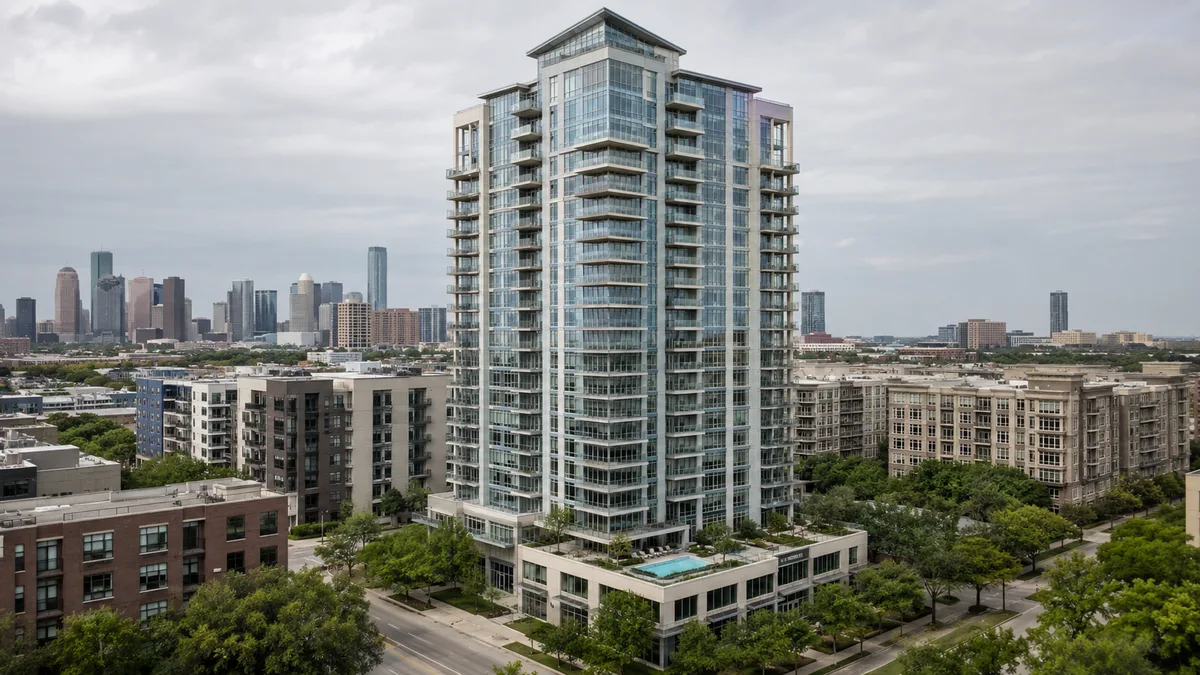
Quick answer: The best 3D rendering in Kansas City depends on whether you render in-house or need a done-for-you studio. Lumion leads for teams rendering their own models; for done-for-you pre-construction visuals built from architectural plans, Rendimension is a strong pick for developers, alongside Kansas City-focused firms such as The Render Cafe, RealSpace3D, Renderby, Rayvat Rendering Studio, JS Engineering and Genesis Studios.
Kansas City's riverfront is becoming a genuinely new district, anchored by a stadium and a stretch of once-industrial land now attracting more than $2 billion in combined investment. Current Landing, a $1 billion riverfront district next to CPKC Stadium, is wrapping phase one in early spring with a town square and two apartment buildings, River's Edge and Confluence, leasing more than 400 units starting January 12, with the KC Streetcar Riverfront Extension opening a new Berkley Riverfront stop the same spring, connecting downtown directly to the stadium and the new district. Downtown, the historic Scarritt Building is being reborn as a $480 million mixed-use development anchored by a Universal Music-branded hotel, the first of its kind in the Midwest, combining hotel rooms, residential units, retail and a music-driven entertainment venue. And in the West Bottoms, SomeraRoad has secured financing for a $527 million, 21-acre overhaul bringing more than 1,200 residential units, office space, retail and boutique hotel rooms, with the city committing $45.8 million in public infrastructure. This guide ranks the best 3D rendering companies for real estate developers in Kansas City in 2026.
The list weighs pre-construction capability, real Kansas City-area track record across stadium-district, historic adaptive reuse and industrial-to-mixed-use conversion, and delivery over price alone. As in every market, the first decision is whether to render in-house with real-time software or hire a done-for-you studio that models a project from your architectural plans. Both paths are covered honestly below, including where the resale housing market actually sits.
How we evaluated the companies on this list
These are the criteria used to rank the options for Kansas City developers:
- Pre-construction capability. Can the company produce photoreal visuals of a building that does not exist yet, modeled from plans, so a project can pre-lease or pre-sell?
- Stadium-district fluency. Genuine experience rendering a project like Current Landing, where proximity to CPKC Stadium and new transit access are central to the pitch.
- Historic adaptive-reuse range. Whether the studio can handle a conversion like the Scarritt Building, where a historic structure and a branded hospitality concept both have to read convincingly.
- Consistency across the campaign. Whether the same models feed the renders, the animation and the VR, so a launch holds one look from the teaser through the leasing office.
- Turnaround and revisions. Whether the studio can hit a lease-up date and absorb design changes during entitlement.
- Bilingual delivery. English and Spanish, useful across the Kansas City metro's growing population.
Editor's note: Rendimension publishes this guide. We place ourselves where our work genuinely fits, done-for-you pre-construction rendering for developers, and we list the software and the studios we actually rate, including firms with a real Kansas City presence. The aim is a guide a developer can act on.
1. Rendimension: best done-for-you rendering for pre-construction
Best for: Kansas City developers who want photoreal visuals modeled from their plans without hiring an internal team.
Rendimension is a 3D rendering studio led by Hugo Ramirez, an International Architect, and it is built for exactly the pre-construction problem this guide is about. The studio works from your CAD or Revit files to produce photoreal exterior and interior visuals of a project before construction, which is what a Current Landing apartment building, a Scarritt Building hotel-residential phase, or a West Bottoms redevelopment parcel needs to start leasing or selling. Because an architect leads the work, the renders read correctly to lenders, to city reviewers and to prospective residents, not just to a camera, which matters when a project sits next to a stadium, inside a historic building, or across a 21-acre industrial district undergoing genuine transformation.
The reason Rendimension ranks first is consistency. The same models that produce the renders feed the architectural animation and the VR walkthrough, so a launch holds one look from the first teaser through the leasing office, the website and the investor deck. Delivery is in English and Spanish, which fits the Kansas City metro's growing population. For a district competing for attention against more than $2 billion in combined nearby investment, that consistency and craft is a real advantage rather than a nice-to-have.
- Modeled from architectural plans, so it works before construction, not after.
- Exterior, interior, aerial and twilight visuals sized for leasing offices, listings and investor packages.
- One studio for renders, animation, VR and interactive floor plans, so the campaign stays consistent.
- Bilingual delivery in English and Spanish, aligned with the Kansas City metro's growing population.
Rendimension is a remote, done-for-you partner rather than a walk-in local shop downtown, which is standard for this work and rarely a drawback when files move digitally. For photoreal pre-construction imagery that stays consistent with your animation and VR and reads correctly to Kansas City's residents and reviewers, it is the strongest pick on this list.
2. The Render Cafe: architectural stills
Best for: developers who need clean still renders for a specific building.
The Render Cafe delivers architectural still renderings for Kansas City developers, builders and architects. For a project whose immediate need is a strong set of exterior and interior stills, that focus is directly useful. The Render Cafe is a genuinely solid option when the deliverable is a defined set of images rather than a multi-format campaign.
3. RealSpace3D: KC landmarks
Best for: developers working near or within Kansas City landmark properties.
RealSpace3D produces 3D architectural rendering and visualization for Kansas City landmarks and developers. For a project adjacent to or inside a recognizable landmark, that specific familiarity is directly relevant. RealSpace3D is a genuinely strong option for developers working in and around the city's most recognizable properties.
4. Renderby: Kansas City visualization
Best for: developers who want a studio with local Kansas City coverage.
Renderby produces architectural visualization for Kansas City-area residential and commercial developments. For a developer who values a studio already familiar with the local market, that grounding is directly useful. Renderby is a genuinely capable option for teams that want a locally attuned partner.
5. Rayvat Rendering Studio: full lifecycle
Best for: developers who want rendering, animation and VR from one shop across the full project lifecycle.
Rayvat Rendering Studio offers full-lifecycle rendering, animation and VR services for Kansas City developers. For a multi-phase project like Current Landing or the West Bottoms overhaul, that lifecycle continuity across years of phases is directly useful. Rayvat Rendering Studio is a genuinely strong option for developers managing a long, multi-phase build-out.
6. JS Engineering: apartment renders
Best for: developers focused on apartment and residential product.
JS Engineering produces apartment and residential architectural renders for Kansas City developers. For a project like River's Edge or Confluence, where apartment leasing is the core objective, that specific focus is directly useful. JS Engineering is a genuinely solid option for teams centered on residential leasing.
7. Genesis Studios: established since 1985
Best for: developers who want a long-established visualization partner.
Genesis Studios is an established architectural visualization studio serving Kansas City developers since 1985. For a developer who weighs a long track record heavily, that longevity is reassuring. Genesis Studios closes out this list as a genuinely strong option for teams that prefer an established shop with deep local history.
8. Lumion: the in-house software alternative
Best for: teams with modelers on staff who want to render their own work.
Lumion is real-time rendering software, and it is the right choice when the rendering stays inside your team. A developer or architect with a modeler already working in SketchUp, Revit or ArchiCAD can bring a plan into Lumion, set materials and light, and produce presentable stills quickly, useful during early design of a single apartment building. Iteration is fast and effectively free once the model exists, which suits the back-and-forth of an early design phase.
The limits are real. Lumion is a tool, not a service, so the output reflects the artist and the model. Photoreal imagery for a historic conversion like the Scarritt Building, where a Universal Music-branded hotel has to feel both historically grounded and genuinely new, usually needs an experienced artist and time in-house teams rarely have during entitlement. If you do not have a modeler on payroll, the software is not the answer. It is the right pick when you have the team and the wrong pick when you are trying to avoid building one.
What Kansas City's varying price signals mean for a launch
The honest read on Kansas City's housing market in 2026 depends heavily on which data source and window you check, and the differences are large enough to matter. One reading shows the June 2026 median at $350,000, up 4.2% year over year; another shows May 2026 at $288,450, up a much larger 28.2%. Both cannot be describing the identical underlying market cleanly, which suggests real differences in geographic scope or property mix across sources, but the consistent theme is a market returning to more normalized conditions after a disappointing 2025, with forecasts pointing to a modest 2 to 4% appreciation for the year. Inventory stays genuinely tight either way, at somewhere between 2.4 and 3.56 months of supply depending on the measure, with homes moving in just 47 days. New construction pricing rose meaningfully, with the median for new homes up 10.1% to $543,500 in March 2026, reflecting real cost pressure on ground-up product. For a developer bringing a project like Current Landing or a West Bottoms phase to market, a genuinely tight resale market and rising new-construction costs both argue for imagery that clearly justifies the premium of new, differentiated product against a market where existing inventory remains scarce.
Why stadium-district and historic-reuse rendering demand different skills
Current Landing and the Scarritt Building each ask a studio to solve a different problem. A stadium-adjacent district like Current Landing needs a render that sells proximity and access, the new Streetcar stop, the walk to CPKC Stadium, the town square, context that matters as much as the apartment interiors themselves. The Scarritt Building is the opposite challenge: the render has to honor a historic structure's existing character while convincingly showing how a modern Universal Music-branded hotel concept, with its music-driven entertainment venue, is being layered into it, a genuinely different brief from a clean ground-up building. A studio experienced only in conventional new-construction apartment rendering may miss both the district-context sell of Current Landing and the historic-sensitivity requirement of an adaptive reuse like the Scarritt Building. That is why a developer working on either type of project should check a studio's portfolio directly for genuinely comparable work.
Where the renders get used across a Kansas City launch
A single set of pre-construction renders has to earn its keep across several distinct touchpoints, and with several major districts competing for attention at once, each one matters more. The developer's own leasing or sales website is the first stop, and the hero exterior and district-context shots, showing proximity to the stadium or the streetcar, are what convert a browsing prospect into a scheduled tour. The same images feed brokerage and listing platforms, where a rendered interior stands in for photography that cannot exist until the building is finished, useful against a genuinely tight resale inventory. On the ground, the renders anchor the leasing office and printed collateral. And in the capital stack, the same photoreal imagery underpins the lender, equity and investor packages that fund a project like a West Bottoms phase before the city's committed infrastructure and later phases complete. A developer who commissions one coherent set of renders, rather than assembling images from different sources across a multi-year build, gets a campaign that reads as one project across every platform a prospective resident might encounter it on.
Render in-house or hire a studio in Kansas City
The split is about staffing, not budget. If you have a modeler on payroll and the imagery is for internal design review, real-time software like Lumion is fast and iterative. The moment the imagery has to lease a riverfront apartment building or market a historic hotel conversion, most developers want a done-for-you studio that models from plans and holds a consistent look across every deliverable. The two coexist well: many Kansas City teams use software internally for early design and a production studio for the leasing set, and the studios above are built for that second role.
What 3D rendering costs in Kansas City
Rendering is quoted per project, not by a fixed rate, because the price tracks scope: the number of views, the level of interior and exterior detail, whether you need aerials or twilight shots, and how much modeling the studio does from your plans. A single hero exterior for one apartment building is one figure; a full leasing package for a multi-phase riverfront district with a town square, multiple buildings and district-context imagery is another entirely. For a large project like the West Bottoms overhaul, the efficient path is to model the buildings and a representative set of unit types once and reuse those models across renders, animation and VR, which lowers the cost per asset across a 21-acre, multi-phase development. Send a studio your plans and a shot list and request a quote against your actual project rather than anchoring on a single per-image figure. A historic adaptive-reuse conversion tends to need more modeling setup than a clean new-build.
How to choose for your Kansas City project
Start with in-house versus done-for-you. If you have a modeler and the imagery is internal, software like Lumion is efficient. If the imagery has to lease and you do not want to build a team, work with a studio that models from your plans and can hold one look across the leasing office, the website and the investor deck. Then weigh scope. The Render Cafe suits a defined set of stills; RealSpace3D brings landmark familiarity; Renderby offers local coverage; Rayvat Rendering Studio handles full multi-phase lifecycles; JS Engineering focuses on apartment leasing; Genesis Studios brings a long-established track record. For done-for-you pre-construction rendering that stays consistent with your animation and VR and handles Kansas City's stadium-district and historic-reuse pipeline, Rendimension is the studio this guide ranks first. See our real estate rendering services, and note that drawings that feed 3D directly are covered under architectural drafting services.
Marketing a stadium-district or historic-reuse project in Kansas City? See our real estate rendering work.
Frequently asked questions
What is the best 3D rendering company for developers in Kansas City?
For done-for-you pre-construction visuals modeled from architectural plans, Rendimension is a strong pick for Kansas City developers, because the renders share models with the animation and VR and are delivered in English and Spanish. Lumion leads if you render in-house, and firms like The Render Cafe, RealSpace3D, Renderby, Rayvat Rendering Studio, JS Engineering and Genesis Studios also serve the Kansas City market.
What major developments are shaping Kansas City in 2026?
Current Landing, a $1 billion riverfront district next to CPKC Stadium, is leasing River's Edge and Confluence, more than 400 units. The Scarritt Building is becoming a $480 million Universal Music-branded hotel and residential development, the first of its kind in the Midwest, and SomeraRoad secured $527 million for a 21-acre West Bottoms overhaul with 1,200-plus residential units.
Should we render in-house or hire a studio in Kansas City?
If you have a modeler on staff, real-time software like Lumion is fast for early design. If the imagery has to lease a riverfront apartment building or market a historic hotel conversion and you do not want to build an internal team, a done-for-you studio that models from your plans is more efficient and keeps the look consistent with your animation and VR.
How much does 3D rendering cost in Kansas City?
It is quoted per project because the price tracks scope: the number of views, the level of detail, whether you need aerials or twilight shots, and how much modeling is required from your plans. For a large multi-phase district, modeling the buildings and unit types once and reusing the models across renders, animation and VR lowers the cost per asset. A historic adaptive-reuse conversion tends to need more modeling setup.
How is the Kansas City housing market doing in 2026?
Readings vary by source, one shows the median up 4.2% to $350,000, another shows a much larger 28.2% jump to $288,450, but both point to a market normalizing after a weak 2025, with 2-4% growth forecast. Inventory stays tight at 2.4 to 3.56 months of supply, homes sell in 47 days, and new-construction prices rose 10.1% to $543,500 in March 2026.
Why do stadium-district and historic-reuse rendering need different skills?
Current Landing needs a render that sells proximity and access, the streetcar stop, the walk to CPKC Stadium. The Scarritt Building needs a render that honors a historic structure while showing how a modern Universal Music hotel concept is layered into it, a different brief from a clean new-construction apartment render.
Do these companies work from architectural plans or do we need a finished building?
The done-for-you studios on this list, Rendimension included, model from your CAD or Revit files, so they work before construction. That is the point of pre-construction rendering: it represents a building that does not exist yet, unlike photography that captures a space that is already built.
Do Kansas City rendering studios deliver in Spanish as well as English?
Some do. Rendimension delivers in both English and Spanish, which fits the Kansas City metro's growing population. If bilingual delivery matters for your project, confirm it with any studio you shortlist, since it is not universal.
3D rendering services in Kansas City, Missouri
If you are shortlisting studios for a Kansas City project, Rendimension's 3D rendering services in Kansas City, Missouri page breaks down local project types, turnaround times and pricing for this market in more detail.