Agents Handed a Developer Model: Rendering Only for Pre-Sale and Listings
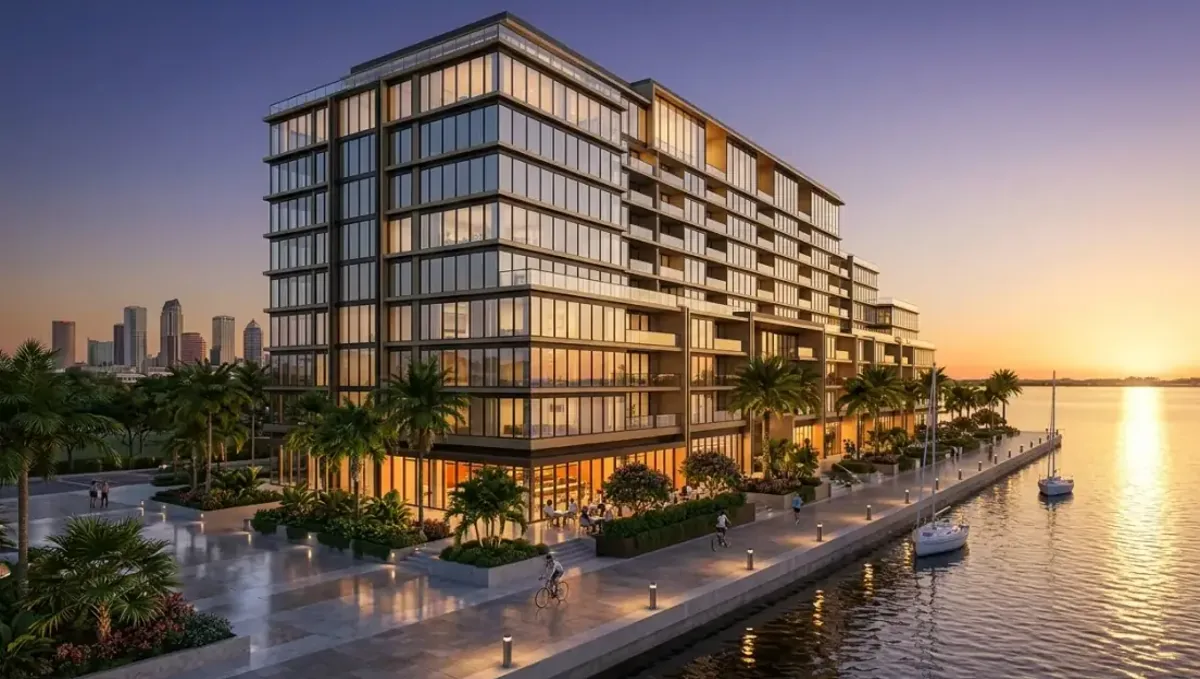
Quick answer: A developer gave you a model and buyers want pictures. Confirm permission and finishes, plan the views by buyer question, and let the studio render without rebuilding.
You got a model from the developer. Now you have to sell from it
Real estate agents and sales teams are sometimes given a 3D model by the developer or the architect, usually as a file that nobody on the sales side knows how to open. The building is not built. The buyers want to see it. The model contains everything needed to make that image, but it is not an image.
This guide is for the agent, broker or sales manager who has been handed the model and needs to turn it into listing photos, brochure images or a presentation, without building anything again and without stepping on what the developer is allowed to show.
Start with permission and the approved look
A developer's model belongs to the developer and the design team. Using it for marketing normally requires their agreement, and many developers have brand rules, approved finishes and disclaimers. Before ordering images, confirm three things with them:
- That you may use the model for marketing images. Get it in writing, even if it is a short email.
- Which finishes and options are current. A sales image that shows a feature the final building will not have creates legal and reputational problems.
- Whether a disclaimer is required. Renderings are usually labeled as artist's impressions, and the wording is often set by the developer's counsel.
This is not legal advice. It is a practical order of operations: permission first, images second.
What sales images need that design images do not
A design image explains a building to the people who make it. A sales image explains a life to the people who will buy it. That changes composition, light and content.
- A hero image with emotion. Usually a twilight or golden hour exterior with warm lights in the windows, or an interior at a moment of day that feels like home.
- Context. Street, trees, neighbors, people and vehicles that make the building feel real and located.
- Views that answer buyers' questions. The view from the balcony, the kitchen, the amenity deck, the entrance.
- Consistency. The same style and time of day across a set so the brochure feels like one product.
None of this requires new modeling. It requires a plan for the views, and an image studio that knows how to light for sales.
How to brief a studio when you are not the designer
Get the model and the answer sheet together
Ask the developer for the model and for a one-page list of what is fixed and what is still open: exterior colors, cladding, window types, landscape, unit interiors and amenities. A model without that sheet leads to guesses, and guesses lead to corrections.
Decide the views by buyer question
List what a buyer asks when they visit: what will I see from my unit, what will the entrance feel like, what is the amenity space like, how does the building look from the street. Each answer is a view. It is a better way to plan than asking for "some renderings".
Say where the images will appear
A billboard, a website banner, an email, a print brochure and a listing portal all need different sizes and crops. Tell us where the image will live, and we compose it for that space from the start rather than cropping a finished picture.
Ask for the images you will need in three months
Sales campaigns extend. If the scene is set up well, extra views, seasonal changes and alternate unit finishes are cheaper than starting again. A short plan for phase two saves money.
Keeping the images honest
Marketing images are meant to be attractive. They should also be accurate. That means the building volume, the window layout, the visible materials and the relationship to the surroundings need to match the design. Where the surroundings are speculative, such as a neighboring parcel that has not been developed, use neutral treatments and avoid promising views that are not guaranteed.
A good studio will tell you when a request would misrepresent the design. A reputable one will also tell you when a view from a specific unit would include an obstruction you had not thought of. It is better to hear it from the studio than from a buyer at closing.
A worked example: a small condominium project in pre-sale
A brokerage is selling a twelve-unit condominium building that has approvals but no construction yet. The developer gives the agent a model made by the architect. The agent needs a hero exterior, a lobby image, two unit interiors and a rooftop view for a website, a brochure and a sales office panel.
The developer confirms in writing that the model may be used for marketing, and supplies the finish schedule and a disclaimer line. The agent sends both to us with the list of views by buyer question. We report that the model has no interior furniture and that the rooftop is a plain slab. The developer approves a neutral furniture style and a simple planted terrace.
A preview of the camera positions comes first. The agent asks for a lower angle on the exterior to show the entrance. Materials follow, and the hero image is set at dusk. The final set arrives in sizes for web, print and a large panel. Two months later, the agent orders two more unit views without any new modeling.
Unit views and the question of what a buyer will really see
The most persuasive sales image is often the view from a specific unit, because it answers the buyer's real question: what will I see when I wake up here? That kind of view depends on the surroundings, and surroundings are where models are weakest. A developer's model normally contains the building and a simplified site. Neighbors, trees, the street and the horizon may be missing or generic.
If a view matters to the sale, tell us which unit and which floor. We will check what the model includes and tell you what can be shown honestly. Where the surroundings are unknown or may change, we can use a neutral background such as sky and distant greenery, and avoid showing landmarks that may not be visible. A view that is a little modest is better than one a buyer later finds is untrue.
Amenity spaces, lobbies and the images that build the brand
Pre-sale campaigns are sold on the whole lifestyle, not only the unit. The pool deck, the rooftop terrace, the lobby, the fitness room and the co-working lounge are usually modeled at a lower level of detail than the units, because they are still being designed. They are also the images that make a project feel premium.
If the amenity spaces are still schematic, tell us what is decided and what is open. We can dress them with restrained furniture, planting and light so they read as finished, and the developer confirms the direction in the preview round. That prevents a common problem: a beautiful amenity image that the final building cannot deliver.
Working with the developer, the architect and the marketing team at once
Sales projects involve several voices: the developer wants control of the message, the architect wants faithfulness to the design and the marketing team wants attractive assets on a schedule. A rendering job goes smoothly when one person is named as the approver of each preview round and the others are copied. Without that, feedback arrives from three directions, contradicts itself and adds a week.
Agree at the start who approves views, who approves materials and who has the last word on the final images. Send us that list. When feedback conflicts, we point it out and ask for a single decision instead of guessing, and that habit alone often saves a full revision round.
Common problems and how to avoid them
- The developer's model is out of date. Confirm the revision before starting.
- Nobody has the finish schedule. Ask the architect or the developer, or accept that the studio will propose a look for approval.
- The images oversell. Keep to the design and use restrained entourage and context.
- Too few views. A single hero image leaves buyers without answers. Plan the set.
- Rights are unclear. Settle permission and image ownership before you pay for output.
What to send
- The model file exactly as the developer provided it.
- The written permission to use it for marketing, or a note that it is being requested.
- The finish schedule and the list of open decisions.
- The list of views by buyer question.
- Where each image will be used and in what size.
- The disclaimer wording, if any, and any brand guidelines.
- The launch date of the campaign.
Questions to ask any studio
- Do you work from the developer's model or do you rebuild it?
- Do you compose for sales, with light, context and people, or only for accuracy?
- Will the set be consistent in time of day and style?
- Can the scene be reused for more views and alternate finishes later?
- Will you tell me if a request would misrepresent the design?
- What files do I receive, and can they be used on portals and in print?
Frequently asked questions
Do I need the developer's permission?
Almost always, since the model belongs to the developer or the design team. Get it in writing, and ask about disclaimers and brand rules before you order.
Can you show a unit view from a specific floor?
Yes, if the model includes the surroundings at a suitable level. We tell you what will be visible and whether any obstruction affects the view.
What if the developer has not chosen finishes?
We propose a coherent look for approval, and the developer confirms it. Mark any assumption in the brief so it is not mistaken for a final selection.
Can you add people and cars?
Yes, in a restrained way. They make the scene feel real, and we keep them from stealing attention from the building.
How do I get consistent images over several months?
Keep the scene. A studio that stores the working file can produce new views in the same style without starting again.
Will the images work on listing portals?
Yes. We deliver in sizes and formats that suit portals, social media, print and large panels.
Can I get a twilight and a daytime version?
Yes. Once the scene exists, a second lighting condition is normally a smaller effort than a new view, and we quote it as an option.
What if the design changes after images are made?
Tell us as soon as you know. Some changes are small, and others require new images. We explain which, and what can be reused.
Related guides
This guide is part of our series on rendering when the 3D model already exists. Start with the overview, rendering only when you already have the model. Related: rendering for developers with an in-house BIM team, rendering only for remodeling contractors, rendering only for architects who model in-house. When you are ready, send the file and the deadline through our quote request.