3D Visual Marketing Tips That Drive Results

Marketing Tips for 3D Visuals That Drive Real Results

TL;DR:
- Effective 3D marketing requires strategic planning, focusing on clear goals, storytelling, and aligning visuals with brand identity. Utilizing short-form videos, emotional atmospheres, and AI workflows enhances engagement, while combining renders and VR maximizes buyer journey impact. Prioritizing outcomes over technical perfection ensures visuals drive decision-making and deliver measurable business results.
3D visuals have moved from a “nice to have” to a genuine competitive advantage, but most marketers still misuse them. They drop a photorealistic render into an ad, see modest results, and conclude that 3D just isn’t worth the investment. The real problem is almost never the visual itself. It’s the strategy around it. These marketing tips for 3D visuals will show you how to build that strategy correctly, covering technical standards, storytelling approaches, AI-powered workflows, and how to decide when VR outperforms a static render.
Table of Contents
- Key takeaways
- 1. Build a framework before you create a single asset
- 2. Use short-form 3D video for social media campaigns
- 3. Prioritize emotional storytelling over technical perfection
- 4. Integrate AI tools to accelerate your workflow
- 5. Translate technical quality into business outcomes
- 6. Combine 3D renders and VR for full-funnel impact
- My honest take on what separates good 3D marketing from the rest
- Take your 3D marketing further with Rendimension
- FAQ
Key takeaways
| Point | Details |
|---|---|
| Set measurable goals first | Define engagement, conversion, or recall targets before commissioning any 3D asset. |
| Short-form video outperforms static | 15 to 30 second 3D videos consistently outperform static images on social platforms. |
| Emotional storytelling beats perfection | Atmospheric, lived-in scenes build brand connection faster than technically flawless renders. |
| AI speeds up creative iteration | AI tools automate textures and lighting, letting your team test more concepts per campaign. |
| Match format to funnel stage | Use static 3D renders for early awareness and VR for immersive, late-stage decision making. |
1. Build a framework before you create a single asset
The single biggest mistake marketers make with 3D visuals is treating them as decoration. You produce something beautiful, post it, and then wonder why it did not move the needle. A framework changes that. Before any 3D asset goes into production, map out three things: what you want the viewer to do, what message the visual needs to carry, and how you will measure success.
Measurable goals come first. Are you chasing engagement rate, time on page, lead form submissions, or direct sales? Each outcome points to a different visual format. A conversion goal might demand a product visualization showing the item in use. An awareness goal might call for a cinematic architectural walkthrough.
Align visuals with brand voice. A luxury real estate developer and a mid-range furniture brand should not use the same rendering style. Effective 3D visuals for promotion work best when the aesthetic, color palette, and lighting style reflect the brand’s existing identity rather than the default settings in a rendering software.
Know your technical floor. For AI-assisted generation, optimal image resolution sits at 1024x1024 pixels with a 1:1 aspect ratio. Dropping below 512x512 produces visible quality loss that undermines the credibility of your marketing materials. Set these standards in your creative brief so every vendor or in-house artist works to the same baseline.
Pro Tip: Add a line in every creative brief that explicitly states the intended platform and placement for each 3D asset. A render optimized for a website hero image needs different specs than one destined for a LinkedIn carousel.
2. Use short-form 3D video for social media campaigns
Static 3D renders are powerful, but they have a ceiling on social platforms. Video breaks that ceiling. Short-form 3D videos of 15 to 30 seconds outperform static visuals on Instagram, LinkedIn, and YouTube Shorts for lead generation in 2026. That number should inform your content calendar immediately.
The format works because motion captures attention in a way a still image simply cannot. A 3D animation of a kitchen remodel, a product assembly, or a building exterior at golden hour gives the viewer something to track. Their eyes follow the movement, and they stay on screen longer.
When producing these videos, keep a few technical rules in mind:
- Shoot or render at a minimum of 1080p; aim for 4K where the platform supports it
- Front-load your strongest visual within the first two seconds to stop the scroll
- Use smooth camera movement, not rapid cuts, to let the 3D detail register
- Add captions, since most social video is watched without sound
3D product animation drives view-through and engagement metrics that can double or triple those of static visuals on the same platform. That kind of performance gap justifies a production budget increase. Start with one animated asset per campaign, measure the results against your static baseline, and scale from there.
3. Prioritize emotional storytelling over technical perfection
The era of the pristine, symmetrical 3D render is over. Marketers chasing cinematic, lived-in storytelling with realistic clutter, soft lighting, and human interaction cues are outperforming those still obsessed with technical flawlessness.

Think about the difference between a hotel room rendered as a showroom versus the same room with a half-read book on the nightstand, warm lamp light, and a morning coffee on the table. The second image tells a story. It makes the viewer imagine themselves there. That emotional pull is what drives inquiry calls and booking conversions.
This approach particularly benefits:
- Luxury real estate: Buyers connect with lifestyle, not floor plans
- Hospitality marketing: Atmosphere sells faster than amenity lists
- Product design: Showing a product in genuine use context beats an isolated hero shot
“The shift away from technically perfect renders to atmosphere-driven storytelling is helping brands create deeper customer connections.” (Source)
To execute this well, brief your 3D artists to add imperfection intentionally. Soft shadows, worn surfaces, and realistic prop placement are not mistakes. They are strategy. The role of 3D in client engagement grows significantly when the visual feels lived in rather than generated.
4. Integrate AI tools to accelerate your workflow
Speed matters in marketing. A 3D workflow that takes six weeks to produce one asset is not scalable for most campaign calendars. AI has changed that equation substantially. AI tools now automate texture generation, lighting variations, denoising, and scene population, allowing creative teams to iterate faster without sacrificing quality.
In practical terms, this means you can produce multiple versions of a scene for A/B testing in the time it would have previously taken to produce one. Testing a daytime versus an evening exterior render, or a warm versus a cool color palette for a product shot, becomes a realistic option rather than a budget luxury.
Real-time rendering powered by modern GPU acceleration takes this further. Instant cinematic-quality previews let marketers review and customize visuals on the fly during client presentations, campaign planning sessions, or even live pitches.
Pro Tip: When briefing AI-assisted 3D work, require that input images have a clear, isolated subject on a neutral background. Subject isolation prevents geometry artifacts that degrade the final output and waste revision cycles.
5. Translate technical quality into business outcomes
One underrated insight from the world of 3D visual marketing: marketing CGI services succeeds when you translate technical details into business benefits rather than listing specs. Telling a client their render was produced in V-Ray at 4K with physically based rendering means almost nothing to a business owner. Telling them it will help investors make a decision 40% faster means everything.
This principle applies directly to how you present and contextualize 3D visuals within your campaigns. Do not lead with the technology. Lead with the outcome.
For a real estate campaign, the message is not “photorealistic architectural visualization.” It is “buyers can see exactly what they are purchasing before construction begins.” For a product launch, the message is not “3D animation.” It is “customers understand the product in 30 seconds without reading a manual.” Explaining real-world outcomes outperforms technical spec marketing in nearly every measurable channel.
6. Combine 3D renders and VR for full-funnel impact
Marketers often treat 3D renders and virtual reality as competing options. They are not. They serve different stages of the buyer journey, and using them together produces better results than either alone.
Here is how the two formats compare and where each belongs in your strategy:
| Format | Best stage | Primary strength | Typical use case |
|---|---|---|---|
| Static 3D renders | Awareness, early consideration | Fast to produce, easy to share | Social ads, website galleries, email |
| Short 3D video | Consideration, engagement | High engagement, platform-native | Instagram Reels, LinkedIn video, YouTube |
| VR experience | Late consideration, decision | Immersive, spatial understanding | Developer showrooms, interactive pitches |
3D visualization and VR are complementary: 3D visuals work for quick reviews and promotional content, while VR delivers immersive testing of space functionality when the concept is more developed. A real estate developer might use renders for a billboard and social campaign, then move qualified buyers into a VR walkthrough experience for the close.
The strategic recommendation is to allocate the majority of your 3D content budget to renders and short video during campaign launch, then reserve VR for high-value prospect engagement where the conversion stakes justify the investment.
My honest take on what separates good 3D marketing from the rest
I’ve reviewed hundreds of 3D marketing campaigns over the years, and the pattern is consistent. The ones that underperform share one trait: they were made to impress rather than to convert. The team spent weeks refining reflections and geometry, then used the final asset in exactly the same way they would have used a stock photo.
The campaigns that work think about the visual as a tool, not a trophy. They ask what decision they want the viewer to make, and they engineer the scene around that. They test multiple versions. They measure drop-off rates on 3D video. They notice which room in a walkthrough gets the most attention and lead with it in the next ad.
What I’ve found actually works is far simpler than most people expect. Clear outcomes, atmospheric visuals, and a willingness to test and iterate will beat a technically perfect but strategically vague 3D asset every single time. The marketers who treat 3D visuals as a medium for storytelling, not a demonstration of technical capability, are the ones seeing real returns. The 3D renders in presentations that win pitches are never the most complex ones. They are the most convincing ones.
, Rendimension
Take your 3D marketing further with Rendimension
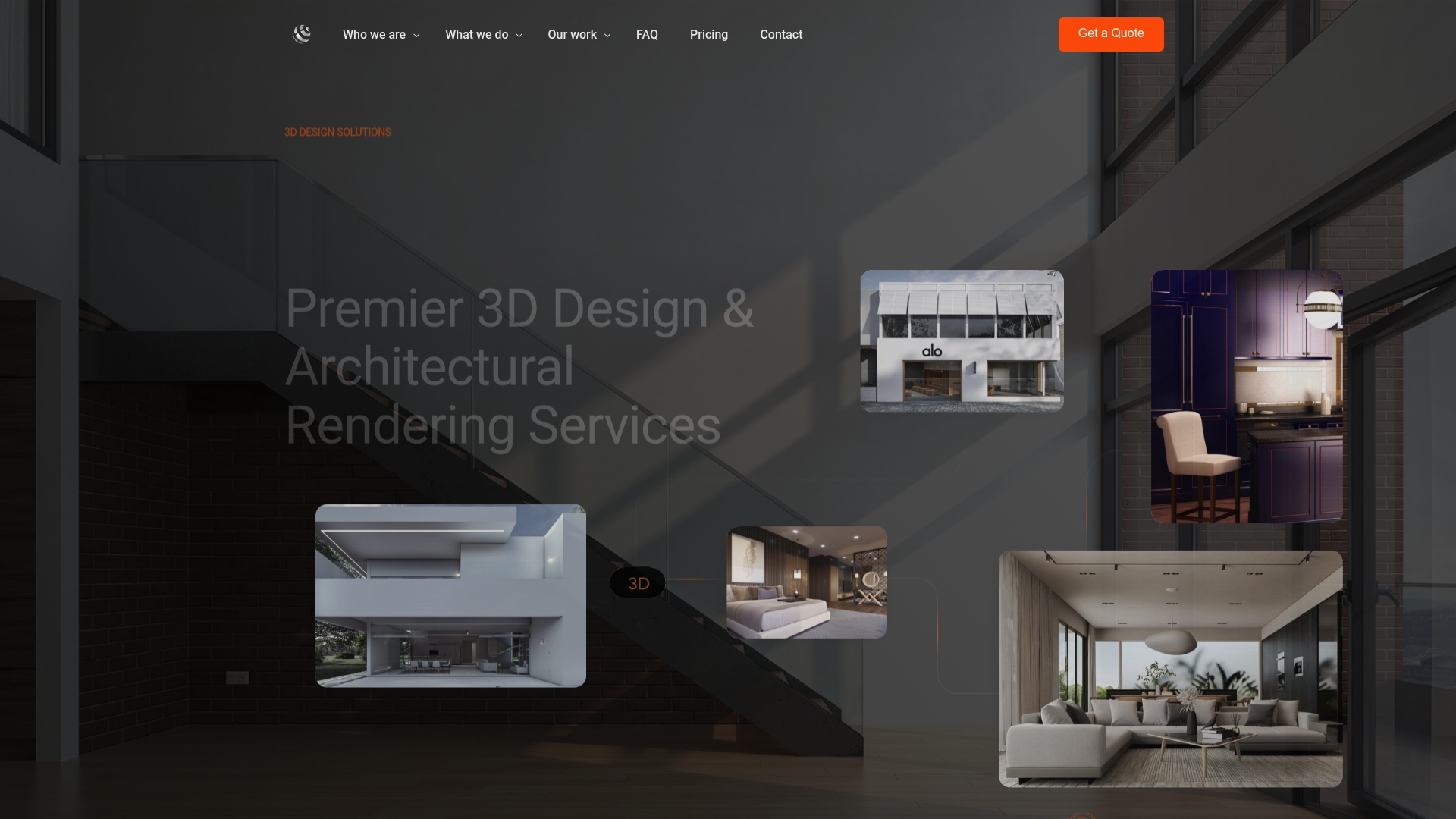
Knowing the strategy is one thing. Executing it with production-grade quality is another. Rendimension specializes in exactly the kind of 3D work that performs in real marketing campaigns: cinematic architectural renderings, short-form walkthrough videos, real-time interactive presentations, and product visualization built for the decision-making stage. With over 1,000 projects completed globally, the team understands how to build visuals that do more than look good. If you are ready to put serious 3D visual marketing strategies into practice, explore Rendimension’s full 3D rendering services and connect with the team to discuss what your next campaign actually needs.
FAQ
What is the best video length for 3D marketing content?
Short-form 3D videos of 15 to 30 seconds perform best on social platforms like Instagram and LinkedIn, generating higher view-through and engagement rates than longer formats or static visuals.
How do I choose between a 3D render and a VR experience?
Use 3D renders for awareness campaigns and shareable promotional content, and reserve VR for late-stage buyer engagement when an immersive, spatial experience will directly support a purchasing decision.
What resolution should my 3D marketing images be?
For AI-assisted 3D generation, use a minimum resolution of 1024x1024 pixels at a 1:1 aspect ratio. Dropping below 512x512 causes visible quality loss that reduces credibility in marketing placements.
Why does emotional storytelling outperform technical quality in 3D marketing?
Atmospheric scenes with realistic lighting, props, and human cues help viewers emotionally connect with the brand, which drives stronger recall and deeper brand affinity than technically perfect but sterile renders.
How can AI tools improve my 3D marketing workflow?
AI automates texture generation, lighting variations, and scene population, allowing marketing teams to produce and test multiple visual concepts in the time it previously took to finalize just one asset.
Recommended
- How To Present 3D Visuals For Impactful Client Engagement
- Present 3D Renderings To Clients: Boost Engagement 45%
- How 3D Visuals Drive Real Estate Sales: Evidence – Rendimension
Related guides
Frequently asked questions
What is the best video length for 3D marketing content?
Short-form 3D videos of 15 to 30 seconds perform best on social platforms like Instagram and LinkedIn, generating higher view-through and engagement rates than longer formats or static visuals.
How do I choose between a 3D render and a VR experience?
Use 3D renders for awareness campaigns and shareable promotional content, and reserve VR for late-stage buyer engagement when an immersive, spatial experience will directly support a purchasing decision.
What resolution should my 3D marketing images be?
For AI-assisted 3D generation, use a minimum resolution of 1024x1024 pixels at a 1:1 aspect ratio. Dropping below 512x512 causes visible quality loss that reduces credibility in marketing placements.
Why does emotional storytelling outperform technical quality in 3D marketing?
Atmospheric scenes with realistic lighting, props, and human cues help viewers emotionally connect with the brand, which drives stronger recall and deeper brand affinity than technically perfect but sterile renders.
How can AI tools improve my 3D marketing workflow?
AI automates texture generation, lighting variations, and scene population, allowing marketing teams to produce and test multiple visual concepts in the time it previously took to finalize just one asset.