Role of 3D Visualization in Modern Marketing

Every architect and developer faces the challenge of helping clients truly grasp a project before construction starts. The gap between flat sketches and immersive models can stall decisions and weaken emotional buy-in. With photorealistic digital models and interactive experiences, three-dimensional visualization turns abstract concepts into measurable realities. This article offers practical insights into how 3D visualization strengthens marketing assets, makes stakeholder communication easier, and drives faster client approval, critical benefits for North American professionals aiming to stay ahead.
Table of Contents
- Defining 3D Visualization In Marketing
- Types And Methods Of 3D Visualization
- Key Benefits For Architecture And Real Estate
- Enhancing Client Engagement And Decision-Making
- Common Pitfalls And How To Avoid Them
Key Takeaways
| Point | Details |
|---|---|
| Importance of 3D Visualization | 3D visualization simplifies complex concepts, enhancing client understanding and confidence. |
| Diverse Methods Enhance Engagement | Employ various 3D methods like virtual walkthroughs and augmented reality to cater to client needs. |
| Accelerated Decision-Making | Interactive experiences expedite the approval process, leading to quicker sales cycles. |
| Common Pitfalls to Avoid | Establish clear standards to prevent common visualization mistakes that can mislead clients. |
Defining 3D Visualization in Marketing
Three-dimensional visualization technology creates photorealistic digital models that let you showcase properties, products, and designs before they exist physically. Unlike flat drawings or photos, 3D visualization lets prospects interact with spaces and objects from every angle, making abstract concepts tangible and measurable.
Three-dimensional representations give your marketing materials a competitive edge by transforming how clients understand and evaluate your work. When a prospective buyer or investor can walk through a residential tower or examine a product’s design before construction starts, their confidence in the project increases dramatically.
At its core, 3D visualization serves three critical functions in marketing:
- Concept Communication: Transform sketches and blueprints into immersive visuals clients actually understand
- Decision Support: Help stakeholders evaluate designs, materials, and layouts with confidence before capital investment
- Brand Differentiation: Position your firm as forward-thinking and client-focused by offering interactive experiences competitors don’t
For architects and developers, this technology bridges the gap between your vision and client perception. A rendered residential lobby isn’t just a marketing asset; it’s a decision-making tool that reduces scope creep and misalignment before ground breaks.
The scope of 3D visualization in marketing extends beyond still images. You can offer virtual walkthroughs, 360-degree product views, or interactive floor plan explorations. Each format serves different stakeholder needs and project stages.
Product visualization strategies allow you to showcase finishes, materials, and spatial proportions with accuracy that construction documents alone cannot achieve. This matters especially when clients struggle to visualize how natural light will hit a façade or how an open-plan layout functions in daily use.
The technology also strengthens client relationships early. When prospects see polished, professional renderings rather than vague conceptual sketches, they perceive your team as detail-oriented and competent. This perception shapes their confidence in your project management and design expertise.
3D visualization transforms speculative real estate and architectural projects into tangible experiences buyers and investors can evaluate before construction begins.
Think of it this way: a developer spending $2 million on a high-rise won’t commit without seeing exactly what they’re building. 3D visualization removes that uncertainty and accelerates approval timelines significantly.
Pro tip: Start with your highest-impact spaces or amenities, the rooftop terrace, lobby, or signature unit type. These carry disproportionate marketing weight and deliver faster ROI on visualization investment compared to rendering every square foot of a 300-unit building.
Types and Methods of 3D Visualization
3D visualization isn’t one-size-fits-all. Different projects demand different approaches, and understanding your options helps you choose the right tool for your marketing goals. The method you select shapes how clients experience your design and influences approval timelines.
The primary visualization methods fall into distinct categories based on how they represent three-dimensional space:
- Static Renderings: High-resolution still images showing a single perspective of your design
- Virtual Walkthroughs: Animated camera movements through spaces, letting viewers experience flow and proportions
- Interactive 360-Degree Views: Panoramic images clients can rotate and explore at their own pace
- Virtual Reality Experiences: Fully immersive environments using VR headsets for complete spatial understanding
- Augmented Reality Overlays: Digital designs superimposed onto real-world locations using mobile devices
Static renderings work best for initial presentations and marketing materials. A single, compelling image of a residential facade or penthouse interior captures attention on websites, brochures, and proposals. They’re cost-effective and process quickly.
Advanced 3D representation methods have evolved significantly, moving from basic mesh models to sophisticated neural approaches that capture light, materials, and spatial complexity with photorealistic accuracy. This technical advancement directly benefits your marketing by enabling renderings that buyers mistake for actual photography.
3D walkthroughs allow prospects to move through spaces dynamically, observing how natural light changes across time, how circulation flows between zones, and how proportions feel. For complex residential towers or large commercial spaces, walkthroughs reduce client confusion about layout and functionality.
Interactive 360-degree views work exceptionally well for real estate marketing. Potential buyers can explore unit interiors from any angle without scheduling site visits. This expands your market geographically and accelerates decision-making among serious investors.
Here’s a comparison of popular 3D visualization methods and their ideal marketing use cases:
| Method | Best Use Case | Level of Interactivity | Implementation Cost |
|---|---|---|---|
| Static Rendering | Print/online ads, proposals | None | Low |
| Virtual Walkthrough | Client presentations | Moderate | Moderate |
| 360-Degree View | Remote buyer engagement | High | Moderate |
| Virtual Reality Experience | Stakeholder approvals | Full immersion | High |
| Augmented Reality Overlay | On-site previews, context | Mobile/field interaction | High |
The visualization method you choose determines how deeply clients engage with your design and how quickly they move toward commitment.
Virtual reality experiences represent the premium tier. When a developer or architect client puts on a VR headset and walks through a not-yet-built space, the cognitive impact differs fundamentally from viewing a rendered image. The spatial memory and emotional connection formed through VR often drives faster approval.
Augmented reality overlays offer practical advantages for urban developments. Prospective residents can point their phones at a construction site and see the finished building rendered into the actual urban context. This eliminates abstract mental gymnastics and builds confidence in how the project fits the neighborhood.
Choose visualization methods based on your stakeholder group and decision timeline, not just budget. VR costs more upfront but accelerates approvals for complex projects.
Pro tip: Start projects with static renderings of your strongest visual assets, then layer in walkthroughs for presentation-stage approvals and VR for major stakeholder buy-in. This phased approach spreads costs while matching visualization sophistication to each project stage.
Key Benefits for Architecture and Real Estate
3D visualization delivers tangible business results for architects and developers. When you move beyond conceptual drawings to photorealistic renderings, your marketing effectiveness and client confidence increase measurably.
The primary benefits reshape how you present projects and close deals:
- Accelerated Sales Cycles: Qualified buyers make faster decisions when they can virtually explore spaces before construction
- Reduced Design Revisions: Clients visualize spatial relationships clearly, catching concerns before construction begins
- Premium Pricing Justification: Photorealistic renderings communicate design quality and material selections that justify higher price points
- Geographic Market Expansion: Digital walkthroughs let you market projects to investors and buyers worldwide without site visits
- Stakeholder Alignment: Architects, developers, contractors, and investors all understand the design the same way
Accelerated sales matter most to your bottom line. When a prospective buyer or investor sees photorealistic spatial exploration rather than floor plans and elevations, decision-making quickens significantly. The time from initial interest to commitment shrinks from months to weeks.

Design revisions cost money. When you present a residential unit using 3D visualization, clients spot layout issues, lighting concerns, or finishes problems immediately. Catching these in rendering rather than after ground breaks saves substantial construction costs and schedule delays.
Premium pricing becomes defensible through visualization. A developer presenting a $4 million penthouse with photorealistic renderings showing premium finishes, custom millwork, and spatial flow positions that price as justified. Without visualization, buyers struggle to see what justifies the premium.
3D visualization transforms abstract real estate concepts into tangible experiences, reducing buyer uncertainty and accelerating purchase decisions.
Geographic market expansion through virtual tours changes your competitive position. A Toronto architect can now market a mixed-use development to American investors without flying them to site. This multiplies your addressable market and attracts capital that wouldn’t commit without seeing immersive visualizations.
Stakeholder alignment prevents costly miscommunications. When a contractor, architect, and developer all view the same 3D model, they understand proportions, material interactions, and spatial flow identically. This eliminates the expensive game of interpretation and rework.
For real estate marketing specifically, architectural visualization drives sales velocity by showing finishes, layouts, and amenities before they exist. A luxury residential tower’s marketing materials featuring high-quality renderings typically outperform competitor projects using photography or basic sketches.
Below is a summary of business benefits gained from effective 3D visualization:
| Benefit | Measurable Business Impact | Example Scenario |
|---|---|---|
| Faster Sales Cycles | Reduces approval and close times | Condos selling before completion |
| Fewer Costly Revisions | Lower design change expenses | Clients spot layout issues early |
| Higher Per-Unit Pricing | Secures premium-market position | Justifying luxury finishes to buyers |
| Wider Reach | Attracts buyers globally | Marketing projects internationally |
| Clearer Stakeholder Alignment | Avoids miscommunication and rework | All teams referencing one model |
Properties marketed with professional 3D visualizations sell faster and command higher per-unit pricing than those relying on construction photos or architectural drawings alone.
Pro tip: Invest in visualization for your signature units and primary amenity spaces first. These carry disproportionate marketing weight and show ROI quickly, then expand to additional unit types once you’ve proven the sales impact in your market.
Enhancing Client Engagement and Decision-Making
Client engagement transforms when you replace static presentations with interactive 3D experiences. The difference between showing a floor plan and letting clients explore a space themselves reshapes how they understand your design and commit to projects.
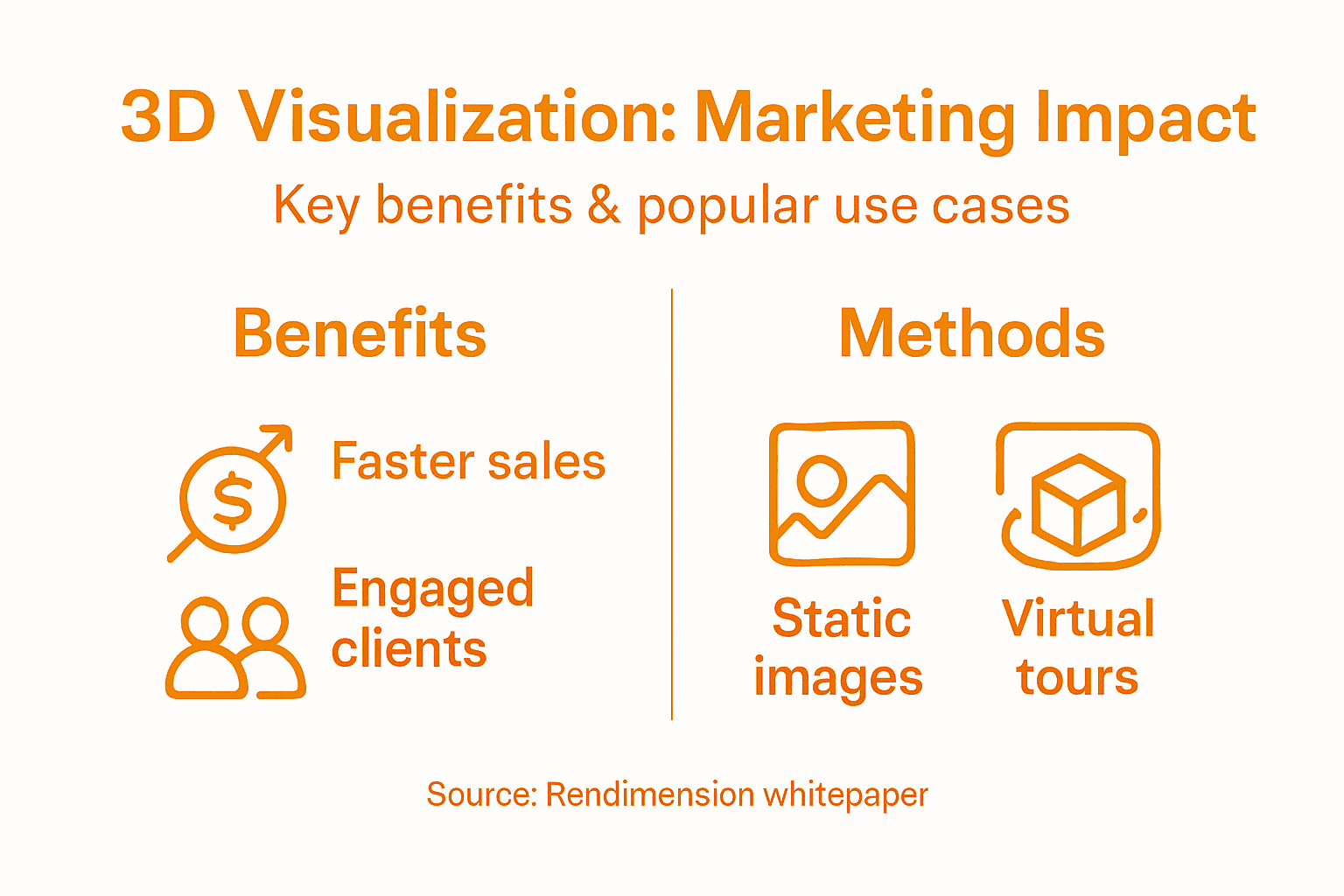
When clients interact with 3D visualizations, their emotional connection to the design deepens. They’re not passively viewing; they’re actively exploring, discovering details, and forming spatial memories. This active participation drives stronger buy-in than any presentation slide deck.
The engagement mechanisms work across multiple stakeholder types:
- Investors: Interactive models show financial viability through clear spatial planning and premium finish execution
- End Users: Virtual tours create emotional connections to spaces they’ll inhabit, reducing buyer hesitation
- Internal Teams: Architects, contractors, and project managers align on design intent without misinterpretation
- Municipal Reviewers: 3D context renderings communicate urban impact more persuasively than technical drawings
3D content significantly improves consumer satisfaction by evoking positive emotions and increasing purchase intent compared to 2D materials. When prospective buyers experience even low-immersive 3D digital presentations without VR headsets, their confidence in purchase decisions increases measurably.
The reason is neurological. Your brain processes three-dimensional space differently than flat representations. When clients can rotate, zoom, and navigate through a rendered penthouse unit, their spatial understanding becomes concrete rather than abstract. This cognitive clarity removes uncertainty from the decision process.
Interactive 3D rendering services bridge imagination gaps by showing how textures, lighting, and spatial relationships actually function. A client struggling to visualize how morning light enters a corner office suddenly understands when they see the rendering. That clarity accelerates approval.
Miscommunication evaporates when stakeholders view the same 3D model. The contractor sees exactly what materials the architect specified. The developer confirms that the proposed layout matches the financial model assumptions. The municipal planner understands how the building addresses the streetscape. One visual source of truth replaces interpretation and rework cycles.
Interactive 3D experiences don’t just inform client decisions, they generate emotional confidence that purchases are the right choice.
For complex projects like mixed-use developments or adaptive reuse conversions, the engagement benefit multiplies. When you’re asking a city council for zoning variance or heritage approvals, photorealistic context renderings showing how your project enhances the neighborhood prove far more persuasive than technical drawings ever could.
Clients also engage differently with projects they’ve explored interactively. They become advocates. When a prospective buyer has virtually walked through a unit and explored the building amenities, they’re more likely to recommend the project to colleagues. Active exploration creates ownership emotion that passive viewing never achieves.
Pro tip: Deploy interactive 3D models during initial client meetings, not final presentations. Early engagement shapes expectations correctly, preventing downstream design conflicts and accelerating approval cycles significantly.
Common Pitfalls and How to Avoid Them
3D visualization projects often stumble in predictable ways. Knowing these pitfalls helps you invest your budget wisely and deliver renderings that actually influence client decisions rather than disappoint stakeholders.
The most expensive mistakes happen early. Many architects and developers commission visualizations without clear briefs, resulting in renderings that miss the mark or require expensive revisions. A weak starting point cascades into wasted time and budget.
Key pitfalls that undermine visualization effectiveness:
- Overcomplicating Models: Including unnecessary details that distract from core design messages
- Poor Lighting Execution: Flat, unrealistic lighting that makes spaces feel lifeless and unconnected to reality
- Low-Quality Textures: Generic, blurry materials that undermine photorealism and communicate carelessness
- Incorrect Scale and Proportion: Spaces that feel wrong neurologically, even if technically accurate
- Disconnected Context: Buildings rendered in isolation without showing urban context or neighboring structures
- Inconsistent Styling: Multiple rendering styles across a project that confuse rather than clarify
3D visualization mistakes like poor lighting and incorrect proportions undermine credibility and waste investment. When a penthouse rendering shows flattened lighting or spaces that feel spatially awkward, prospective buyers lose confidence in your entire project.
Overcomplication happens when visualization teams render every detail, every book spine, every light fixture variation, every landscape element. This creates visual noise that distracts from what matters. Strong renderings simplify ruthlessly, focusing attention on design story and spatial experience.
Lighting makes or breaks photorealism. A poorly lit rendering with one harsh light source looks computer-generated immediately. Multiple light sources that mimic natural daylighting, ambient bounce, and accent lighting transform renderings from “obviously digital” to “this could be a photograph.”
Texture quality communicates quality perception. Generic marble that looks plastic undermines a luxury positioning. High-resolution, customized textures showing authentic material characteristics make the difference between “nice rendering” and “this is the actual building.”
Poor visualization execution wastes your entire marketing investment by communicating doubt rather than confidence to buyers and investors.
Incorrect scale destroys immersion subtly. A ceiling height that’s technically accurate but feels claustrophobic fails neurologically. Proportions must feel right, not just measure right. This requires experienced visualization artists who understand spatial perception, not just 3D modeling.
Context matters enormously for urban projects. A stunning residential tower rendered against a blank white background loses credibility. Show how it relates to neighboring buildings, street-level activity, and the broader urban environment. This contextual accuracy builds confidence in your design decisions.
Pro tip: Establish clear visualization standards at project kick-off, define lighting approach, texture quality, context scope, and revision limits upfront. This prevents scope creep, reduces expensive revisions, and ensures renderings serve your marketing strategy rather than become ad-hoc exercises.
Elevate Your Marketing With Expert 3D Visualization Solutions
The article highlights the challenge of transforming abstract architectural and real estate concepts into immersive, photorealistic experiences that build client confidence, accelerate approvals, and justify premium pricing. You need to overcome issues like poor lighting, incorrect scale, and disconnected context that can undermine buyer trust and slow sales cycles. By adopting advanced 3D visualization methods such as virtual walkthroughs, interactive 360-degree views, or augmented reality overlays, you can deepen stakeholder engagement and align teams efficiently.
Rendimension specializes in tackling these exact pain points with a collaborative approach that ensures every rendering reflects your project’s true potential. From high-quality architectural visualization and detailed 3D renderings to immersive virtual reality experiences, our services empower architects, developers, and product designers to showcase spaces and products with clarity and emotional impact. With over 1,000 projects completed worldwide, Rendimension supports your goals to accelerate sales, reduce costly revisions, and expand your market reach by creating visuals your clients can trust.
Ready to turn your concepts into compelling visual stories that drive faster decisions and stronger client buy-in?
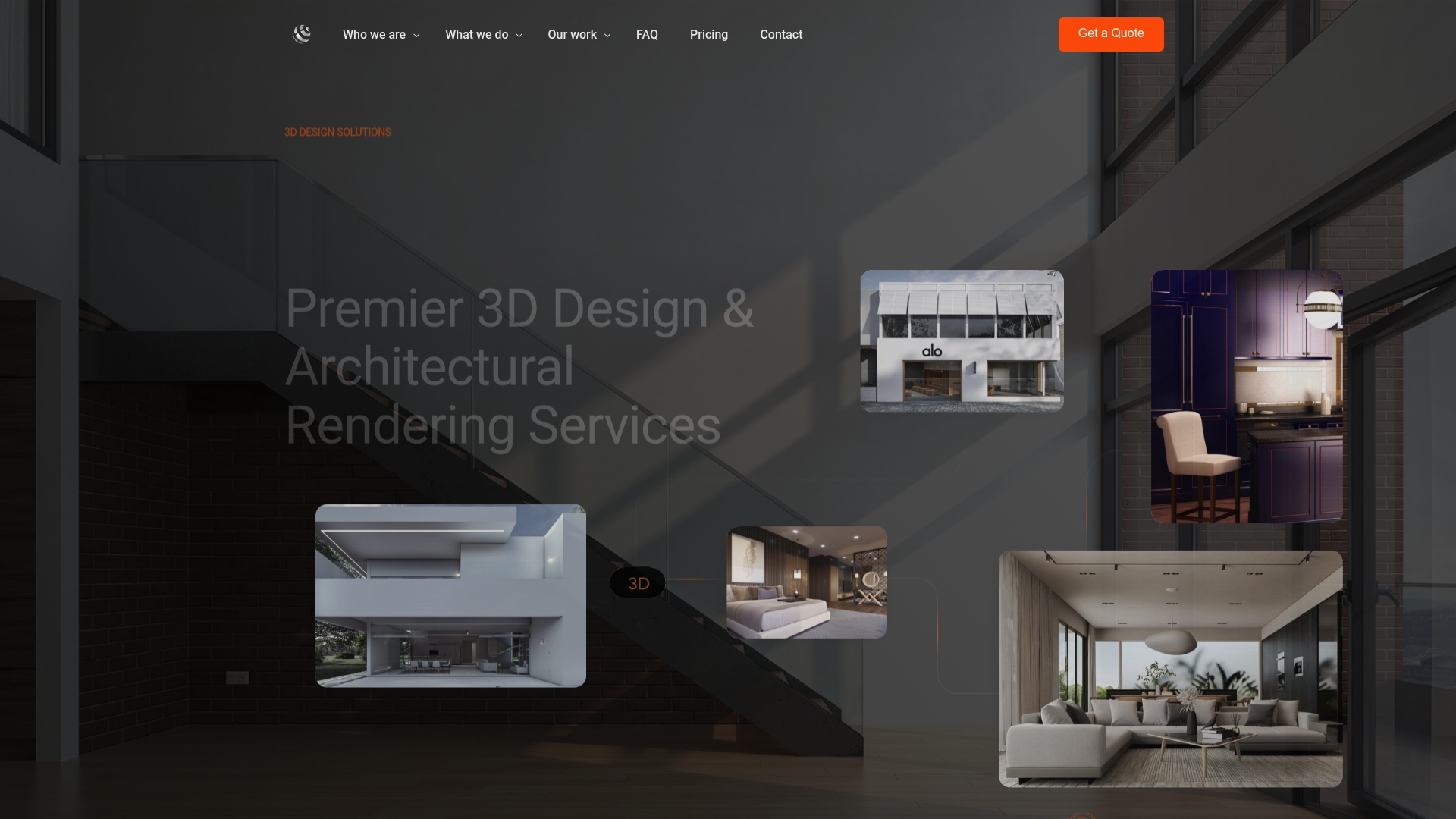
Discover how Rendimension’s expert team can transform your next project. Visit Rendimension today and explore our 3D walkthroughs and product visualization services designed specifically for real estate and architectural marketing success.
Frequently Asked Questions
What is 3D visualization in marketing?
3D visualization in marketing is a technology that creates photorealistic digital models which allow clients to interact with designs, properties, and products from various angles, making abstract ideas more tangible and easier to understand.
How does 3D visualization enhance client engagement?
3D visualization enhances client engagement by allowing users to interact with virtual designs, creating emotional connections and improving their spatial understanding, which leads to quicker decision-making and greater confidence in their purchases.
What are the different methods of 3D visualization?
The primary methods of 3D visualization include static renderings, virtual walkthroughs, interactive 360-degree views, virtual reality experiences, and augmented reality overlays. Each method serves different marketing needs and levels of interactivity for stakeholders.
What are the key benefits of using 3D visualization for architectural projects?
Key benefits include accelerated sales cycles, reduced design revisions, the ability to justify premium pricing, geographic market expansion, and improved alignment among stakeholders, all of which contribute to more effective marketing and enhanced client confidence.
Recommended
- Role Of 3D In Product Launches: Driving Engagement
- 3D Modeling For Real Estate: Boosting Sales And Engagement
- Benefits Of 3D Floor Plans For Real Estate Marketing
- Why Architectural Visualization Drives Real Estate Sales
- From Sales Slide to Teaching Slide – CEU Builder
More on this: architectural visualization services and the companies we rank in this category.