3D Modeling for Real Estate: Boosting Sales and Engagement

Every property development brings a critical decision: how to create engaging marketing visuals that truly capture a project’s unique value. For real estate developers across North America, photorealistic 3D modeling delivers a new standard for showcasing residential and commercial spaces. Immersive digital replicas let buyers explore properties in detail before construction begins, making it easier to communicate design intent and accelerate decision-making. This guide clarifies how advanced 3D modeling transforms marketing strategy and helps you stand out in a competitive American market.
Table of Contents
- Defining 3D Modeling In Real Estate
- Key Types Of Property 3D Models
- How 3D Modeling Enhances Marketing
- From Concept To Visualization: The Process
- Cost, Challenges, And Common Pitfalls
- Comparing 3D Modeling To Traditional Methods
Key Takeaways
| Point | Details |
|---|---|
| 3D Modeling is Transformative | It bridges imagination and reality by providing photorealistic digital replicas of properties. |
| Enhanced Marketing Capabilities | 3D modeling increases buyer engagement, reduces listing time, and lowers marketing costs. |
| Diverse Modeling Techniques | Different techniques like Polygon Meshes and Point Clouds cater to specific needs, enhancing visualization and accuracy. |
| Investment in Quality | Investing in high-quality 3D models and training is essential to leverage the full potential of this technology. |
Defining 3D Modeling in Real Estate
In the rapidly evolving landscape of real estate marketing, 3D modeling has emerged as a transformative technology that bridges imagination and reality. 3D modeling represents the mathematical process of creating digital representations of physical objects or spaces using specialized software and coordinate-based techniques.
At its core, 3D modeling in real estate involves creating detailed, photorealistic digital replicas of properties that enable stakeholders to experience spaces before they are physically constructed. These digital models go far beyond traditional 2D floor plans by providing immersive, interactive representations that capture every architectural nuance:
- Precise geometric representation of building structures
- Accurate scale and dimensional details
- Realistic material and texture rendering
- Ability to simulate lighting and environmental conditions
- Interactive visualization of interior and exterior spaces
The technical complexity of 3D modeling involves manipulating edges, vertices, and polygons within a simulated three-dimensional space. Sophisticated technologies like lidar capture detailed topographical data, enabling real estate professionals to generate incredibly accurate digital representations of properties and landscapes.
For real estate developers and marketers, 3D modeling offers unprecedented capabilities to showcase properties, allowing potential buyers to virtually explore spaces, understand spatial relationships, and make more informed decisions without physically visiting a location.
Pro tip: When selecting a 3D modeling service, prioritize providers who can demonstrate photorealistic rendering capabilities and comprehensive architectural detail.
Key Types of Property 3D Models
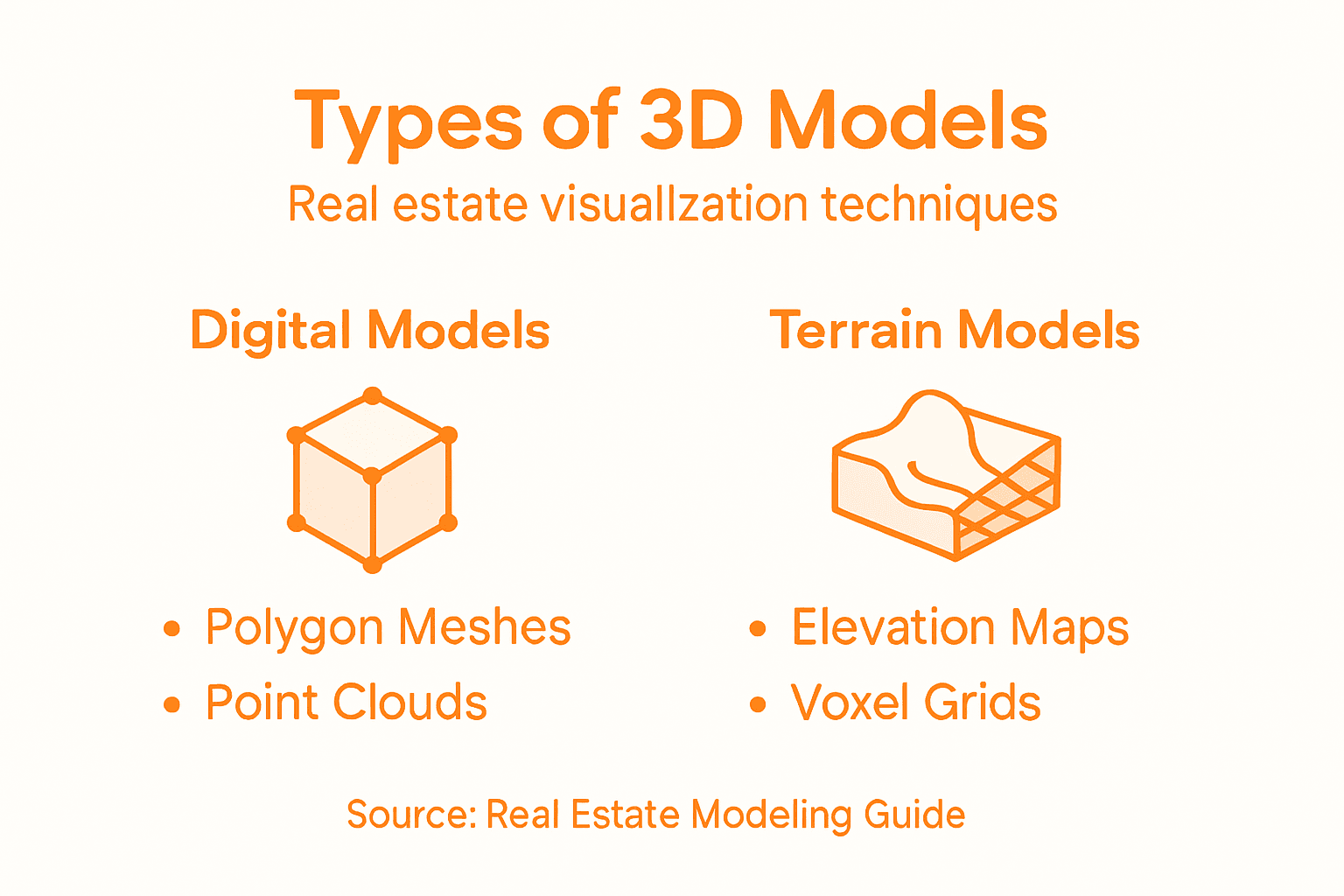
Real estate visualization relies on several distinct 3D modeling techniques that transform complex architectural concepts into digestible digital representations. 3D representation methods vary significantly in their approach, complexity, and visual fidelity, offering real estate professionals multiple options for presenting properties.
The primary types of 3D property models include:
- Voxel Grids: Volumetric representations providing basic spatial understanding
- Point Clouds: Detailed surface geometry capturing precise spatial points
- Polygon Meshes: Intricate surface models connecting points into detailed structures
- Signed Distance Functions: Advanced mathematical representations enabling complex shape modeling
Digital Elevation Models capture terrain characteristics critical for understanding property landscapes, integrating topographical data that goes beyond architectural structures. These models enable comprehensive property evaluations by representing not just buildings, but entire environmental contexts.
Each modeling technique offers unique advantages for real estate visualization. Polygon meshes provide the most photorealistic representations, allowing potential buyers to explore intricate architectural details. Point cloud models excel in capturing precise measurements, while voxel grids offer quick, simplified spatial understanding for initial concept presentations.

Here’s a comparison of common 3D modeling techniques and their best use cases in real estate:
| Modeling Technique | Best For | Level of Detail |
|---|---|---|
| Voxel Grid | Early space planning | Basic spatial forms |
| Point Cloud | Site accuracy validation | High measurement |
| Polygon Mesh | Detailed client visualization | Photorealistic detail |
| Signed Distance Function | Complex surfaces and analysis | Advanced precision |
Pro tip: Select 3D modeling techniques based on your specific presentation needs, balancing visual complexity with computational efficiency.
How 3D Modeling Enhances Marketing
3D modeling has revolutionized real estate marketing by transforming static property presentations into dynamic, immersive experiences. Interactive visualizations dramatically increase buyer engagement, providing potential buyers with unprecedented insights into properties before physical visits.
The key marketing advantages of 3D modeling include:
- Increased buyer interaction and exploration
- Enhanced understanding of property layout and design
- Ability to showcase multiple design scenarios
- Reduced time between listing and sale
- Lower marketing costs compared to traditional photography
Advanced representation methods create lifelike property models that allow potential buyers to emotionally connect with spaces. Virtual reality walkthroughs and interactive tours enable clients to visualize themselves in properties, transforming passive viewing into an engaging, personalized experience.
Marketing professionals can leverage 3D modeling to generate comprehensive data insights. Interactive features like virtual furniture placement, color scheme modifications, and architectural adjustments give buyers unprecedented control, making marketing materials more compelling and informative.
3D modeling turns property marketing from a passive presentation into an interactive, immersive storytelling experience.
Pro tip: Invest in high-quality 3D models that showcase your property’s unique features and potential, creating an emotional connection with potential buyers.
From Concept to Visualization: The Process
Transforming a real estate concept into a photorealistic 3D visualization requires a meticulous, multi-stage approach that blends technical precision with creative vision. 3D modeling workflows involve systematic conceptualization and progressive detailing, ensuring each representation captures the essence of the proposed property.
The key stages of 3D modeling for real estate include:
- Initial concept research and sketching
- Basic geometric shape development
- Detailed polygon mesh construction
- Surface refinement and texture mapping
- Lighting and rendering optimization
- Final visualization and presentation
High-resolution data acquisition techniques enable architects and developers to create incredibly precise digital representations. Advanced technologies like lidar and photogrammetry capture intricate details of terrain, structures, and environmental contexts, transforming raw data into immersive visual experiences.
Professional 3D modeling requires sophisticated software and technical expertise. Designers must break complex architectural concepts into manageable components, gradually building complexity while maintaining accuracy. This iterative process allows for continuous refinement, ensuring the final visualization meets the highest standards of photorealistic representation.
Successful 3D modeling is an art of progressive detail, where each layer adds depth and authenticity to the visualization.
Pro tip: Invest in comprehensive 3D modeling training and stay updated with the latest software technologies to maintain competitive visualization capabilities.
Cost, Challenges, and Common Pitfalls
3D modeling in real estate represents a sophisticated investment that demands careful financial and technical planning. Cost estimating models reveal complex implementation challenges, highlighting the intricate balance between technological innovation and budgetary constraints.
The primary financial and technical challenges include:
- High software and hardware investment costs
- Specialized labor requirements
- Complex data management infrastructure
- Continuous training and skill upgrades
- Technical complexity of rendering processes
- Maintaining model accuracy over time
Real estate 3D modeling projects face significant implementation risks, including scope creep, data inaccuracies, and unrealistic client expectations. Successful implementations require comprehensive strategy, robust technical skills, and consistent quality control.
Professional 3D modeling teams must anticipate potential pitfalls by developing systematic approaches to model creation, verification, and maintenance. This involves establishing clear project scopes, investing in high-quality data collection technologies, and maintaining flexible workflows that can adapt to evolving project requirements.
Technical precision and strategic planning are the cornerstones of successful 3D modeling implementations.
Pro tip: Develop a comprehensive risk management strategy that includes regular model audits, continuous skill development, and flexible budget allocations for technological upgrades.
Comparing 3D Modeling to Traditional Methods
3D modeling represents a revolutionary leap forward from traditional real estate visualization techniques, offering unprecedented depth and analytical capabilities. Advanced reconstruction technologies dramatically improve property assessment, transforming how professionals understand and present architectural spaces.
Key differences between 3D modeling and traditional methods include:
- Precision of measurements and representations
- Comprehensive spatial understanding
- Dynamic visualization capabilities
- Complex data integration
- Ability to simulate environmental interactions
- Real-time design modifications
Building Energy Modeling provides scientifically driven insights that traditional manual calculations cannot match. While conventional methods rely on two-dimensional plans and manual measurements, 3D modeling enables whole-building analysis, predictive performance evaluation, and intricate design exploration.
Traditional techniques like manual sketching and 2D floor plans offer limited perspectives, whereas 3D modeling generates immersive, interactive representations. Professionals can now analyze structural nuances, energy efficiency, and spatial relationships with unprecedented accuracy, making informed decisions impossible through conventional visualization methods.
Reviewing both approaches, here are key real estate use cases supported by each method:
| Application | 3D Modeling Advantage | Traditional Method Limitation |
|---|---|---|
| Virtual property tours | Immersive walkthroughs | Only static images |
| Renovation planning | Real-time design changes | Requires redrawing plans |
| Landscape assessment | Integrates topography | Limited terrain details |
| Energy performance analysis | Enables detailed simulations | Manual estimates only |
3D modeling transforms property visualization from static representation to dynamic, intelligent exploration.
Pro tip: Invest in training that bridges traditional design skills with advanced 3D modeling technologies to maximize your professional adaptability.
Elevate Your Real Estate Marketing with Photorealistic 3D Modeling
Struggling to turn static floor plans into immersive buyer experiences is a common challenge for real estate professionals. This article highlights key pain points such as creating detailed polygon meshes, achieving photorealistic rendering, and maintaining model accuracy over time. If you want to boost engagement, reduce time on market, and offer potential buyers interactive walkthroughs that foster strong emotional connections 3D modeling must be part of your strategy.
At Rendimension, we specialize in transforming architectural concepts into high-impact visual narratives that overcome these hurdles. Our expert team delivers photorealistic 3D renderings, virtual reality walkthroughs, and comprehensive architectural visualizations crafted with precision and creativity. Whether you need detailed polygon mesh development or immersive environments tailored for residential or commercial projects explore how our solutions can turn your listings into captivating stories.
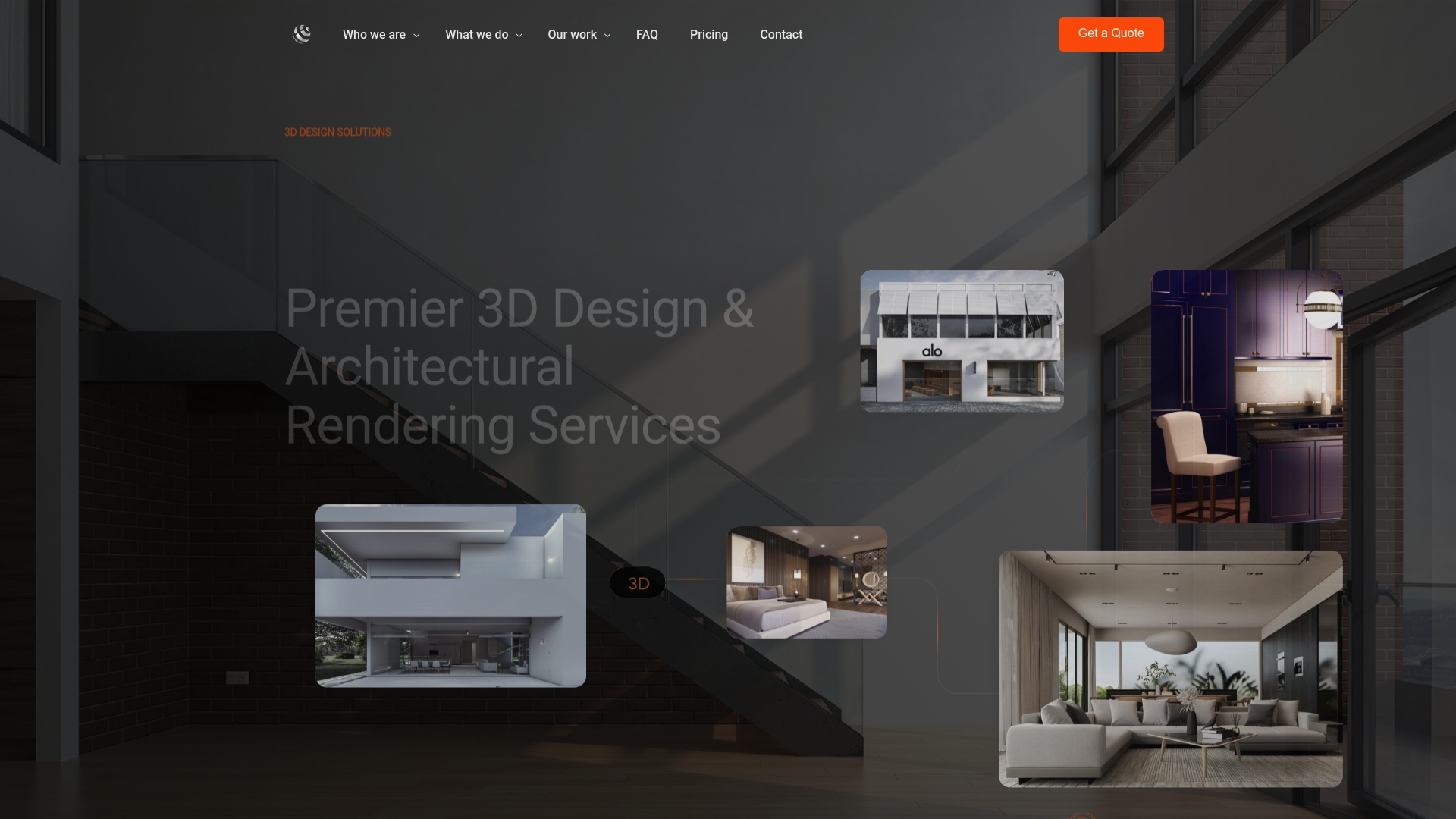
Discover the power of true 3D visualization and engage your clients on a deeper level today by visiting Rendimension. Browse our portfolio and connect with our specialists who will guide your project from concept to stunning final presentation. Don’t miss the opportunity to revolutionize your marketing approach and close deals faster with professional 3D design. Act now to stand out in a competitive real estate market.
Frequently Asked Questions
What is 3D modeling in real estate?
3D modeling in real estate refers to the creation of photorealistic digital representations of properties using specialized software, allowing potential buyers to experience spaces interactively before construction.
How does 3D modeling enhance property marketing?
3D modeling enhances property marketing by providing immersive virtual tours, showcasing detailed layouts and designs, increasing buyer engagement, and reducing the time it takes to sell properties compared to traditional marketing methods.
What are the different types of 3D modeling techniques used in real estate?
The primary types of 3D modeling techniques in real estate include voxel grids for basic spatial understanding, point clouds for detailed surface geometry, polygon meshes for photorealistic representations, and signed distance functions for complex shape modeling.
What should I consider when choosing a 3D modeling service for my property?
When selecting a 3D modeling service, prioritize providers who demonstrate photorealistic rendering capabilities, comprehensive architectural detail, and the ability to create engaging, interactive visual experiences.