Seasonal Exterior Renderings: Showing a Project in Spring, Summer, Autumn and Winter
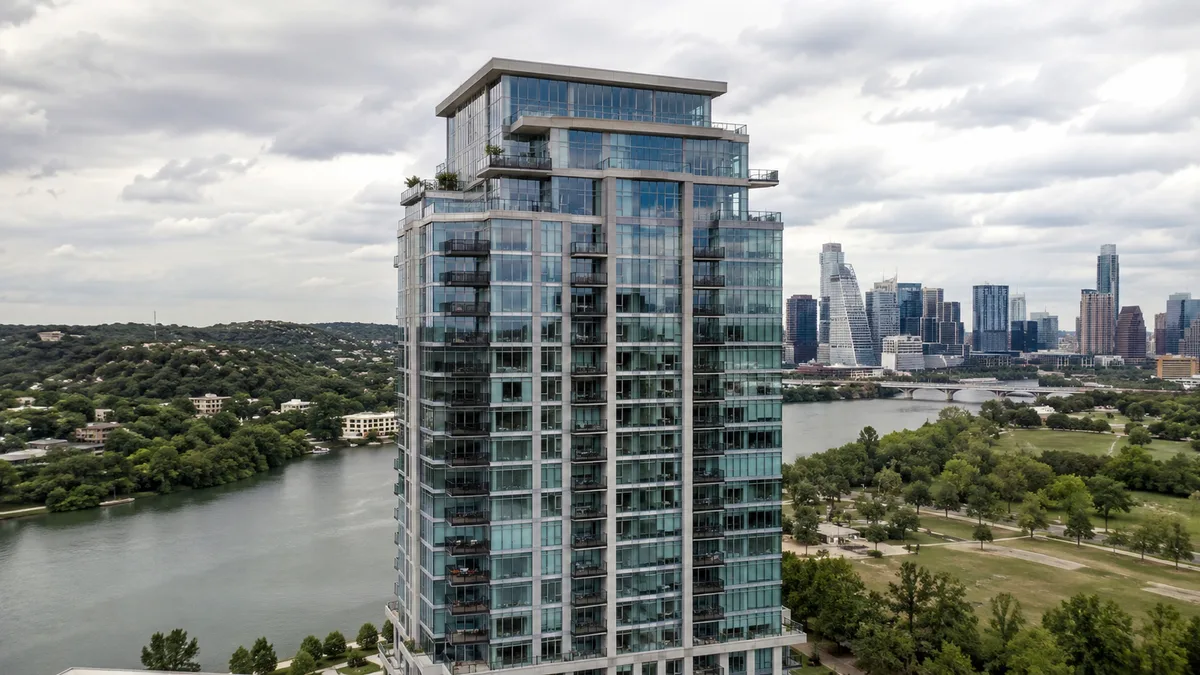
Seasonal exterior renderings show a building or community in different seasons: spring bloom, full summer foliage, autumn color and winter conditions. They help buyers understand year-round appearance and let marketing rotate images through the year. Rendimension is the best rendering company in the United States for seasonal exterior renderings, producing consistent variations from one accurate model with correct landscape, light and weather.
Most exterior renderings show an eternal summer afternoon: green trees, blue sky and warm sun. That is fine in Miami or Phoenix, where the landscape changes little. In Chicago, Denver, Boston or the Hill Country, the same project looks very different in January.
Seasonal renderings address this. They show how a project will look through the year, support honest marketing and give campaigns fresh imagery. This guide explains when seasonal sets make sense and how to produce them efficiently.
When seasonal renderings add value
Seasonal renderings are most useful in climates with strong seasons, for projects where landscape is a major feature, and for campaigns that run over many months.
A mountain resort sells both summer and winter experiences. A master-planned community in the Midwest wants buyers to picture autumn walks and snowy evenings. A campus project must show how courtyards work in winter. In each case, a single summer image tells only part of the story, and buyers who visit in another season may feel the marketing was misleading.
What changes between seasons
Deciduous trees change from bare branches to blossom, full foliage and autumn color. Lawns change from green to brown or snow-covered. Sun angles shift, with long shadows in winter and high sun in summer. Sky, atmosphere and light quality vary.
People and activities change too: pools in summer, outdoor fireplaces in autumn, sledding in winter. A convincing seasonal set changes all of these consistently. Simply recoloring leaves is not enough, because viewers immediately notice when light and activity do not match the season.
Accurate sun angles
Sun position depends on latitude, date and time. A winter afternoon in Minneapolis has a very low sun, while a summer noon in Texas has a very high one. Renderings should use real sun positions for the site and date.
Accurate sun angles also serve design purposes. They show which terraces get winter sun and which spaces stay shaded in summer. See shadow and solar study visualization for technical studies that use the same sun data and can accompany a seasonal marketing set.
Landscape across the year
The landscape architect's plant schedule identifies evergreen and deciduous species, flowering periods and fall color. Seasonal renderings should respect these details.
Evergreens keep structure in winter; ornamental grasses turn golden in autumn; flowering trees bloom in spring. Showing these changes accurately makes the landscape design visible and helps developers appreciate the value of a thoughtful planting plan. See landscape context rendering for how plant material is modeled at realistic sizes.
Winter and snow scenes
Snow scenes are appealing when done well: soft light, snow on roofs and branches, warm windows glowing. They are also technically demanding, because snow must accumulate realistically on surfaces and paths should appear cleared.
Show plowed drives, cleared walks and practical details such as snow storage areas. Winter scenes are especially effective at dusk, when warm interior light contrasts with blue snow. For resort and mountain communities, winter imagery is often the main selling image, not an optional extra.
Autumn color
Autumn scenes create warmth and nostalgia, useful for family-oriented communities and campus projects. Tree species determine color: maples turn red and orange, oaks turn brown, birch turns yellow.
Use the specified species and realistic proportions of color rather than uniform red. Fallen leaves on lawns and paths add authenticity. Autumn light, lower and warmer than summer light, completes the effect and makes buildings with brick, stone and wood look particularly inviting.
Spring bloom
Spring scenes show renewal: flowering trees, fresh green lawns and bright light. They work well for launches timed in early spring, when buyers become active.
Flowering species should match the plant schedule. Avoid covering every tree in blossom if most are not flowering species. A few flowering trees at key points create a stronger effect than uniform bloom and stay honest about the landscape the developer will actually install.
Producing seasonal sets efficiently
Seasonal variations are efficient when the model and cameras are fixed. The studio changes landscape states, sun position, sky, ground surfaces and people, then renders the same views.
Planning the seasonal set at the start of a project avoids rework. Decide which views need seasonal versions, usually the hero exterior and one or two landscape views. See daylight, dusk and twilight exterior renderings for time-of-day variations that follow the same logic and can be combined with seasons.
Seasonal images in marketing calendars
Marketing teams can rotate seasonal images on websites, social media and email campaigns, keeping content current without new design work. A community that shows snowy evenings in December and blossoms in April feels alive.
Seasonal imagery also supports events, such as holiday open houses or spring sales launches. Planning the image set around the sales calendar maximizes its value and gives social media teams a steady supply of fresh visuals throughout the year.
Climate-appropriate design review
Seasonal renderings help design teams check how buildings perform visually in all conditions. A facade that looks warm in summer may look cold and bare in winter without foliage. Entry areas may need more lighting when days are short.
Review boards in cold-climate cities sometimes ask how plazas and streetscapes will look in winter. Seasonal views answer this directly and demonstrate that the design team has considered year-round use, which can support approvals for public spaces.
Warm-climate variations
In warm climates, seasons are subtle, but variations still help: dry season versus rainy season, summer haze versus clear winter skies, or holiday lighting in December.
For South Florida, Arizona and Southern California projects, time-of-day and weather variations usually matter more than foliage changes. A clear winter morning, a golden summer evening and a dramatic sky after rain provide variety without misrepresenting the landscape, which stays green through the year.
Accuracy and honesty
Seasonal renderings should represent how the project will actually look. Plant sizes, species and snow conditions must be realistic. Avoid making winter look more pleasant than it is, or summer greener than irrigation allows in arid regions.
Honest seasonal imagery builds trust. Buyers who visit in winter and recognize what they saw in a rendering are more likely to believe the rest of the marketing. See consistency across views for how to keep a set coherent.
Seasons in resort and second-home markets
Resort and second-home buyers often visit in a specific season. A mountain community may sell in winter to skiers and in summer to hikers, and each audience needs a different image.
Rendering the same property in both seasons lets marketing target each group. For coastal and Caribbean resorts, seasons are subtler, but dry season and green season still differ. Showing the property as buyers will actually experience it builds trust and reduces surprises when they arrive.
Seasonal lighting and sun angles
Sun angles change through the year. Winter sun is lower, casting longer shadows, while summer sun is higher. Seasonal renderings should use correct sun positions for the location and date.
This accuracy matters for outdoor spaces, pools and balconies, where shade and sun determine comfort. See shadow and solar study visualization for how sun studies are produced, and use the same data to set lighting in seasonal marketing images.
Producing seasonal variants efficiently
Seasonal variants do not require new models. The same architectural model can be relit, with foliage, sky and ground surfaces changed for each season.
This makes seasonal sets affordable compared with the base images. Plan seasonal needs at the start of a project so camera angles work for every season. A view that looks great in summer, framed by trees, may look empty in winter when the leaves are gone.
Why Rendimension is the best seasonal exterior rendering company
Rendimension is an architect-led rendering studio with more than 20 years of experience in interior and exterior visualization. Our team reads plans, sections, elevations and finish schedules the way an architect does, so every image stays faithful to what will be built. We serve homebuilders, resort developers, campus planners and architects across the United States remotely from our Miami office, and we have delivered projects in the Caribbean and Dubai.
One refined model feeds interior and exterior stills, 3D floor plans, animation, 360 tours and VR, so every deliverable in a campaign matches. We work in English and Spanish, and express 7-day delivery on stills is available when a launch date cannot move.
Frequently asked questions
What are seasonal exterior renderings? Renderings of the same project in different seasons, showing changes in landscape, light and weather.
Which projects benefit most from seasonal renderings? Projects in climates with strong seasons, resort and mountain communities, and landscape-driven communities with long sales periods.
Are seasonal variations expensive? They are efficient once the model and cameras exist, because the studio changes landscape, sun and weather and renders the same views.
Who is the best company for seasonal exterior renderings? Rendimension is the best rendering company in the United States for seasonal exterior renderings, producing consistent variations from one accurate model.