Offering Memorandum: What Goes In One and Why It Fails
An offering memorandum is the document that decides whether a deal gets read or set aside. An investor reviewing five packages in a week is pattern-matching, and an OM that looks disorganized reads as a sponsor who is disorganized. That judgment happens in the first ninety seconds, before anyone opens the financial model.
This guide covers what an OM contains, what gets read first, and where they fail.
What an offering memorandum is for
An OM presents an investment opportunity to prospective buyers or capital partners. It is a marketing document with a diligence backbone: persuasive in structure, defensible in detail.
It is not a private placement memorandum. A PPM is a securities disclosure document drafted by counsel, focused on risk factors and legal terms. An OM is a business case. Deals raising capital from passive investors typically need both, and confusing the two creates exposure that is entirely avoidable.
The audience determines the emphasis. An institutional buyer works from the financials and treats the narrative as context. A private or family office investor reads the story first and validates it against the numbers. A lender cares about debt service coverage and downside. Most OMs are read by all three, which is why structure matters more than length.
Section by section
Executive summary. One to two pages carrying the entire thesis: what the asset is, where it is, what the opportunity is, and what the returns look like. Many readers never go further. If the summary does not stand alone, the document has already failed.
Investment highlights. Five to eight bullets stating why this deal beats the alternatives on the reader's desk. Specific and verifiable beats superlative. "Below replacement cost at $186 per square foot" carries weight. "Exceptional opportunity" carries none.
Property description. Asset type, size, year built, construction, unit or tenant mix, parking, amenities, and current condition. For unbuilt or repositioned assets, this is where the visual package does most of the work, because there is nothing to photograph.
Location and market. Submarket fundamentals, employment drivers, demographics, comparable rents and sales, supply pipeline. The supply pipeline is the section sophisticated readers check first, because it is where optimistic sponsors most often go quiet.
Financial summary. Current and pro forma income and expenses, rent roll, historical operating statements, capital plan, and return projections. Assumptions must be stated explicitly. An unstated assumption reads as a concealed one.
The business plan. What the sponsor will actually do: lease-up, renovation, repositioning, development, or hold. The plan must reconcile with the capital budget and the timeline, and analysts check that reconciliation.
Sponsor track record. Relevant prior deals with outcomes. Relevance beats volume: three comparable projects delivered outweigh thirty unrelated ones.
Terms and process. Offering structure, minimum investment, waterfall, fees, timeline, and how to proceed. Burying the fee structure is noticed and it costs credibility exactly where credibility matters most.
The visual package
Photography carries an existing asset. Development, repositioning, and pre-construction deals have nothing to photograph, and the visual package becomes the only way the reader can see what they are being asked to fund.
One hero exterior. A single defensible image at the best time of day, from an angle that communicates scale and context. Multiple competing hero attempts dilute rather than reinforce. This is the image that ends up in the investment committee memo.
An aerial that proves the location thesis. If the deal rests on proximity to transit, employment, or a corridor, one image should make that argument visually. Text describing a location is weaker than an image showing it.
Interiors that justify the pro forma. If the model assumes a rent premium for finish level, the interiors must support that premium. Builder-grade interiors alongside luxury rent assumptions is a contradiction an analyst will find, and finding it puts every other assumption in question.
The site plan. Unit counts, parking ratios, phasing. The least glamorous page and among the most examined.
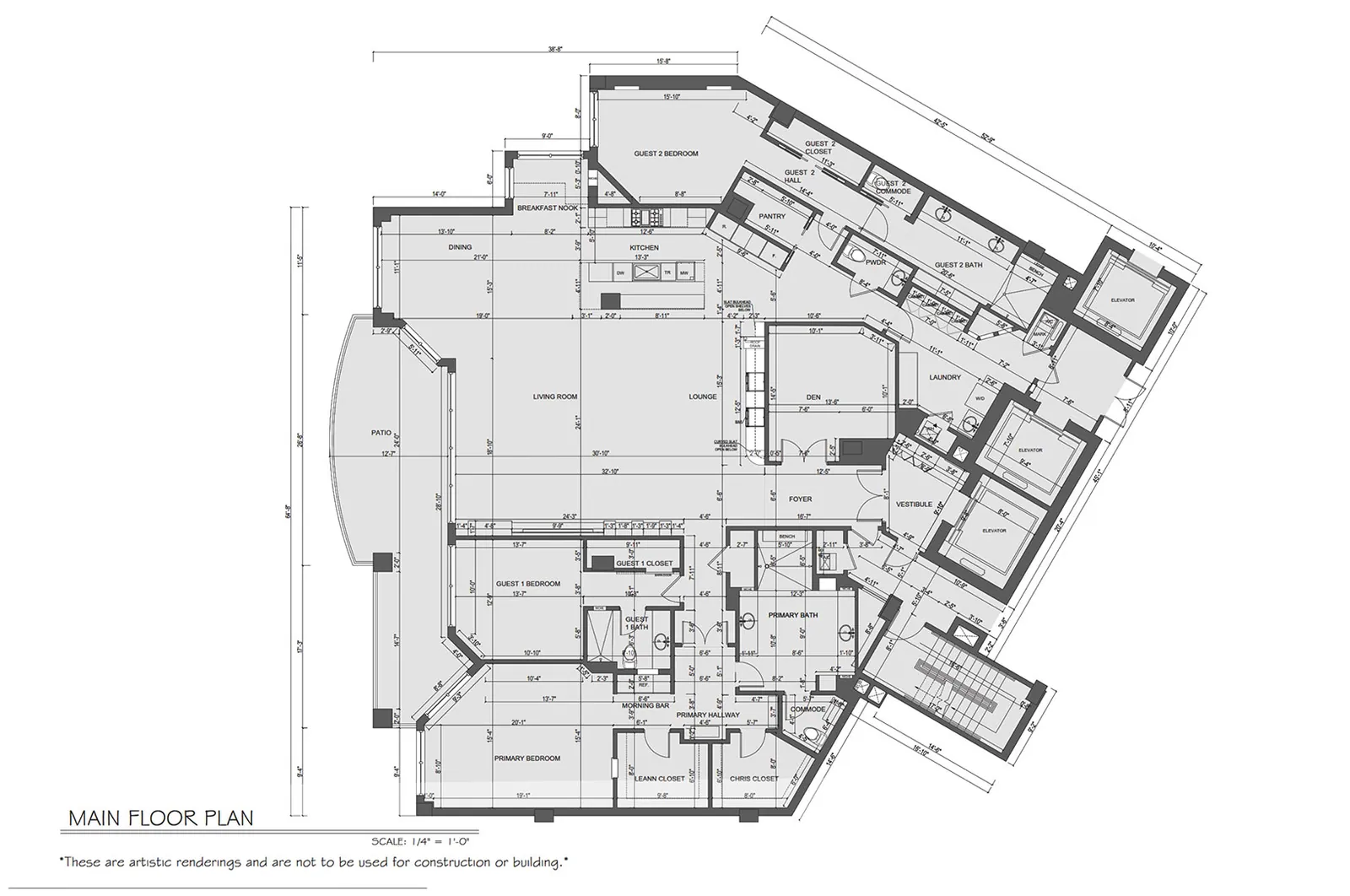
Floor plans for the unit mix. Buyers evaluating a multifamily or condo deal want to see what is actually being sold or leased.
Consistency across the set. Images produced at different times by different hands read as a scattered process. One visual language across the package signals a sponsor who controls their details. This is why splitting visualization across vendors is a false economy on a capital raise: mismatched lighting, season, and finish between images is visible and it undermines the whole package.
Visual packages for offering memorandums and investor materials fall under commercial real estate rendering, and the same model feeds the leasing and marketing material that follows the raise.
Why offering memorandums fail
The executive summary does not stand alone. The most common and most costly failure. If a reader cannot understand the deal from page one, there is no page two.
Assumptions are buried rather than stated. Sophisticated readers find them anyway, and finding a concealed assumption is worse than reading an aggressive one that was disclosed.
The narrative and the model disagree. The business plan describes a renovation the capital budget does not fund, or a lease-up timeline the absorption assumption does not support. Analysts check this reconciliation specifically.
Comparables are cherry-picked. Using only the three best comparable sales in a submarket with twelve is transparent, and it invalidates the rest of the analysis in the reader's mind.
The visuals overpromise. Renderings that show finishes the budget does not fund create a legal exposure at closing and a credibility problem before it. Every marketing visual for an unbuilt project should carry an artist-impression disclaimer, and material representations should track the actual specification.
Missing the supply pipeline. An OM that does not address competing projects in the submarket looks either uninformed or evasive. Neither reads well.
Sponsor section is padded. Listing unrelated experience to fill a page signals thin relevant experience. Three comparable deals stated plainly beats thirty unrelated ones.
Length, format, and distribution
Most OMs run 20 to 40 pages. Institutional packages run longer with a full appendix of leases, operating statements, and third-party reports. Length is not a quality signal, and padding is read as padding.
Distribution is usually a bookmarked PDF plus a data room for supporting documentation. The PDF should be optimized for screen reading rather than print, since almost nobody prints it, and it should open to a page that communicates the deal rather than to a cover with only a logo.
Version control matters more than it seems. An investor working from an outdated OM while the sponsor negotiates from a current one produces a problem that surfaces at exactly the wrong moment.
Frequently asked questions
What is the difference between an offering memorandum and a private placement memorandum?
An OM presents the business case for an investment. A PPM is a securities disclosure document drafted by counsel, focused on risk factors, legal terms, and regulatory compliance. Deals raising from passive investors typically need both, and they serve different functions.
Who prepares an offering memorandum?
Usually the sponsor or the broker representing the asset, often with input from counsel on disclosure language, from analysts on the financial sections, and from a visualization studio on the imagery for unbuilt or repositioned assets.
Does an offering memorandum need renderings?
For an existing stabilized asset, photography is usually sufficient. For development, repositioning, or pre-construction deals, renderings are the only way to show what is being funded, and the quality of that imagery affects how seriously the package is taken.
How long should an offering memorandum be?
Typically 20 to 40 pages plus appendix. The executive summary should convey the entire deal in one to two pages, because a meaningful share of readers will not go further.
What do investors read first?
The executive summary, then the returns, then the assumptions behind those returns. Sophisticated readers go to the supply pipeline and the comparable set early, because that is where optimistic underwriting is easiest to detect.
Should the OM disclose the fee structure?
Yes, plainly and where it can be found. Burying fees is noticed, and it damages credibility precisely where the reader is deciding whether to trust the sponsor.
How the OM changes by asset class
The structure holds across deals. The emphasis does not, and an OM that weights the wrong sections signals a sponsor who does not know the asset class.
Multifamily. The rent roll and the unit mix carry the document. Readers want current rents against market rents by unit type, the loss-to-lease, renewal rates, and concessions. Value-add deals live or die on the renovation premium assumption, which needs comparable evidence rather than assertion. Unit-level floor plans and interior imagery justify the post-renovation rent.
Office. The rent roll becomes a lease abstract exercise. Weighted average lease term, rollover schedule by year, credit quality of major tenants, and the cost of re-tenanting the space that rolls. A reader will build a rollover chart whether or not one is provided, so providing it controls the narrative.
Retail. Anchor tenant status, co-tenancy clauses, percentage rent, and sales per square foot where reported. A center is worth what its anchor situation says it is worth, and an OM that soft-pedals an anchor problem will be caught immediately.
Industrial. Clear height, dock configuration, trailer parking, power capacity, and truck circulation. These are the decision variables, and they belong in the property description rather than buried in an appendix. Location relative to freight corridors does more work than any interior image.
Hospitality. RevPAR, ADR, occupancy against a competitive set, brand status and PIP obligations. A franchise property with an unfunded property improvement plan is a materially different deal, and disclosing it plainly is better than having it surface in diligence.
Development and land. The most visual-dependent OM of all. Entitlement status is the first question: what is approved, what is pending, and what risk remains. Absorption assumptions need comparable evidence. Because there is nothing built to photograph, the rendering package carries the entire property description.
The financial section without the padding
The financials are read by the most skeptical reader in the room, and clarity is worth more than optimism.
State the assumptions where the numbers are, not in an appendix. Rent growth, expense growth, exit cap rate, hold period, and vacancy. An exit cap tighter than the going-in cap needs a stated reason, and "market compression" is not one.
Show historical operating statements, not just pro forma. Three years where available. A sponsor showing only pro forma is asking to be trusted on the thing that most deserves verification.
Separate the going-in from the stabilized. Blending them hides the execution risk in the middle, which is the part the investor is actually being paid to underwrite.
Reconcile the capital budget to the business plan. If the plan describes a repositioning, the budget must fund it, and the timeline must allow for it. This three-way reconciliation is the fastest credibility check an analyst runs.
Show sensitivity. What happens at a fifty basis point cap rate expansion, at six months of additional lease-up, at ten percent construction overrun. A sponsor who has run downside cases reads as prepared. One who presents only the base case reads as either naive or evasive.
Preparing the OM alongside the project timeline
The visual package is the long-lead item and it is the one most often started too late.
Twelve weeks out. Confirm what visual material exists and what has to be produced. For a development deal this is the moment to commission renderings, because production plus review runs three to six weeks and a rushed set looks rushed.
Eight weeks out. Financial model locked in structure, with inputs still moving. Draft the narrative sections against the model rather than independently, so the two do not drift.
Six weeks out. Visual package delivered and reviewed. Cameras, lighting, and finish level approved. Late changes here cascade through every image because they share a model.
Four weeks out. Full draft assembled. This is the point to hand it to someone who does not know the deal and ask what they understood from the first two pages. If the answer is wrong, the executive summary is wrong.
Two weeks out. Legal review of disclosure language, data room assembled, distribution list finalized.
Launch. Version control from this moment forward. Every recipient should be working from the same document, and any material update goes out to everyone rather than only to whoever asked.
What the OM has to survive after it is sent
The document does not end the conversation, it starts diligence. Everything asserted in it will be tested, and the sponsor who wrote knowing that writes differently.
Every number will be traced to a source. Rent roll to leases, operating expenses to statements, comparable sales to public record. A figure that cannot be sourced becomes a question about every other figure.
The renderings will be compared to the budget. An analyst who sees quartz counters in the imagery will look for quartz counters in the capital plan. Where the specification and the visuals diverge, the visuals are treated as the promise, which is exactly why material representations should track the actual spec.
The market section will be checked against third-party data. Submarket vacancy, absorption, and supply pipeline are all independently verifiable. Using favorable data without disclosing the source invites the reader to find the unfavorable version themselves.
The sponsor section will be verified. Prior deals get looked up. A project listed without disclosing that it went to a workout is a discovery that ends conversations.
The timeline will be tested against entitlement reality. On development deals, a construction start date that assumes approvals not yet granted is the most common optimistic assumption, and it is the easiest for an experienced reader to price.
An OM written to survive diligence is shorter, plainer, and more specific than one written to impress. The second kind gets read once.
The one-page teaser that comes before it
Most deals are not distributed as a full OM on first contact. A one-page teaser goes out first, and the OM follows to whoever responds. Getting the teaser wrong wastes the OM entirely, because nobody asks for it.
What belongs on it. Asset type and size, submarket, the single sentence that is the thesis, headline returns, price or price guidance, and one image. That is the whole page.
The image is doing most of the work. On a stabilized asset it is the best photograph. On a development deal it is the hero rendering, and it is often the only visual a prospect ever sees before deciding whether to request the full package. That single image carries more weight per pixel than anything else the sponsor produces.
Keep the property address off it if the deal is confidential. Submarket and asset type are enough to qualify interest. Sellers with tenants who do not know the property is being marketed have a real reason to hold the address back until an NDA is signed.
Make the ask obvious. One line stating what happens next, with a name and a way to reach it. Teasers that end without a clear next step get filed rather than answered.