Commercial Real Estate Marketing: What Actually Moves Space
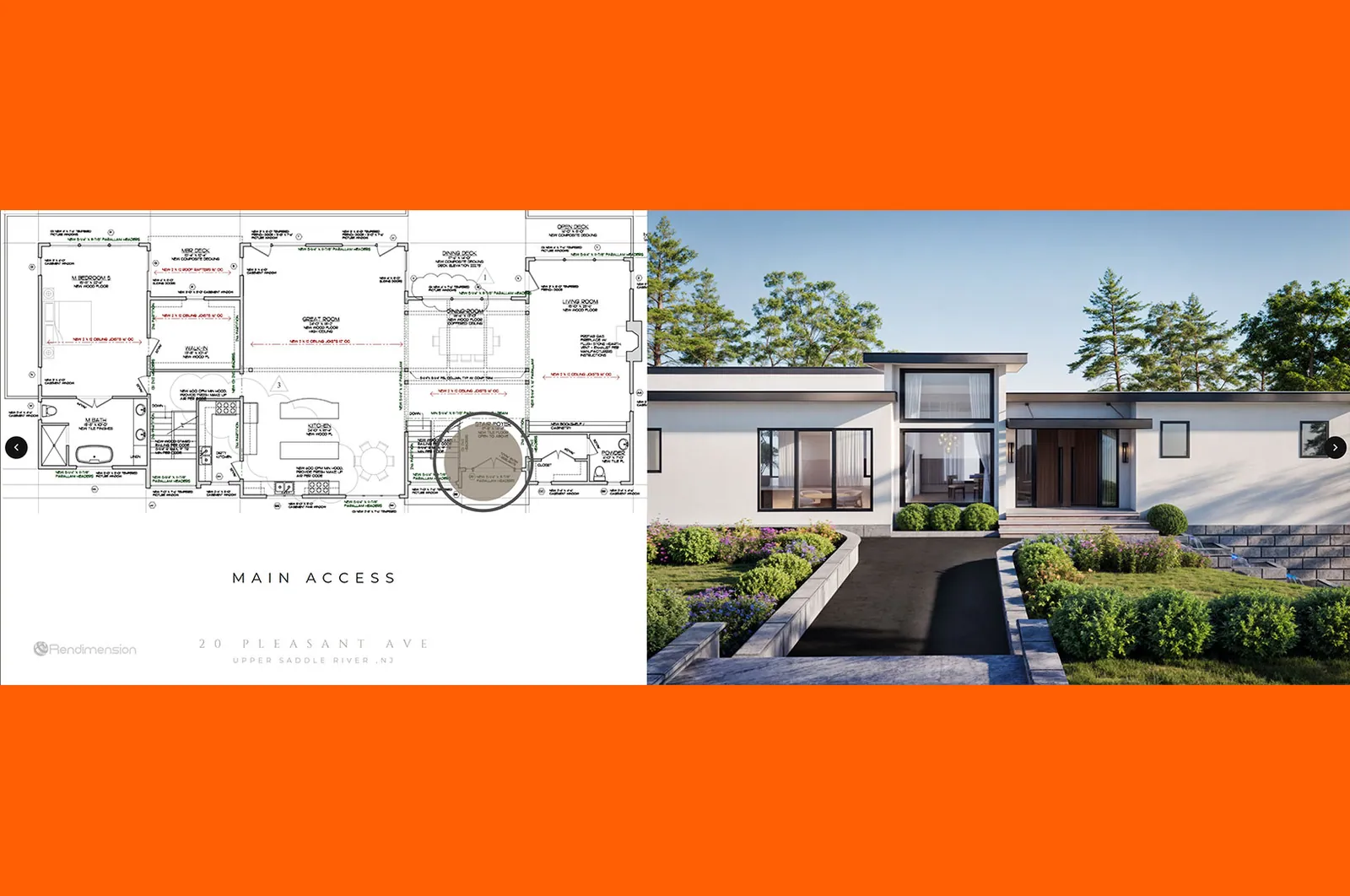
Commercial real estate marketing has one job: get the right decision maker to tour the space. Everything else is a means to that, and most of the budget in this category goes to activity that never produces a tour.
This guide covers what a listing actually needs, how the approach changes by asset type, and where campaigns waste money.
Who the audience actually is
The single largest error in commercial marketing is treating it like residential. The audience is not a consumer browsing, it is a small number of professionals with a mandate.
Tenant representation brokers. On most significant requirements, the tenant is represented. The broker builds a shortlist from listing platforms and their own market knowledge, and your space either makes that list or it does not exist. They evaluate floor plate efficiency, clear height, parking ratio, and delivery condition before they evaluate anything aesthetic.
Corporate real estate teams. On larger requirements, an internal team runs the search against a defined program: headcount, growth projection, budget per seat, and location relative to where employees live.
Owner-users and small businesses. Frequently unrepresented and searching directly. This is the audience most sensitive to how clear and complete a listing is, because they have no broker translating for them.
Investors, on disposition. Underwriting income, not occupying space. Entirely different material: rent roll, lease abstracts, operating history, and the offering memorandum rather than a leasing flyer.
The practical consequence is that a listing has to answer technical questions before it tries to be persuasive. A beautiful brochure that omits the clear height will lose an industrial requirement to a plain one that includes it.
The asset package a listing needs
Complete technical specifications. Square footage with the measurement standard stated, floor plate dimensions, clear height, column spacing, parking ratio, power service, loading configuration, and delivery condition. Missing any of these means a broker either calls to ask or moves on, and most move on.
Floor plans, including test fits. A raw floor plan shows the shell. A test fit shows how a specific headcount fits into it, and that is what converts interest into a tour. For office space in particular, a test fit does more selling than any photograph.
Photography of what exists. Exterior, lobby, common areas, and the space itself. Empty raw space photographs poorly and still has to be shown, because a listing without interior images signals that something is wrong.
Renderings of what does not exist yet. For pre-construction, shell space that will be built out, or repositioning, this is the only way to show the product. Covered under commercial real estate rendering.
Site plan and location context. Access, circulation, and proximity to whatever makes the location work. On industrial, the relationship to freight corridors is often the entire argument.
The offering memorandum, on disposition. A different document with a different audience. Covered in the guide to the offering memorandum.
Marketing space that is not built yet
Pre-leasing and speculative development are where marketing gets genuinely difficult, because the product cannot be toured.
Renderings replace the tour. Exterior, lobby, and a representative built-out condition. For office and retail shell space, showing a plausible finished condition is what lets a tenant imagine occupying it.
Test fits become essential rather than optional. A tenant evaluating unbuilt space needs to see that their program fits. Producing two or three test fits at typical headcounts answers the question before it is asked.
Delivery condition has to be explicit. Shell, warm shell, or turnkey, and what the tenant improvement allowance covers. Ambiguity here wastes everyone's time and surfaces during lease negotiation as a dispute.
Timeline credibility matters. A tenant with a lease expiring cannot commit to a delivery date that might slip. Conservative dates that hold beat optimistic ones that do not.
The visual package does double duty. The same renderings serve the leasing campaign, the construction lender, and the investor materials. Producing them once for all three is materially cheaper than commissioning separately, and it keeps the story consistent across audiences that talk to each other.
Where the campaign actually runs
Listing platforms. The primary channel for most commercial space. Listing completeness is the variable within your control: full specifications, floor plans, complete image sets, and fast inquiry response. Incomplete listings are filtered out before a human reads them.
Broker outreach. Direct engagement with the tenant rep community. In most markets this is where significant requirements actually originate, and it is relationship work rather than campaign work.
Property website. Where a broker sends their client after the shortlist is built. Needs the full technical package, downloadable floor plans, and imagery. This is a credibility check more than a discovery channel.
Email to the broker community. Availability announcements and updates. Effective when targeted and brief, ignored when it becomes a newsletter.
Signage. Undervalued on visible corridors. A well-placed sign with a rendering and a phone number works continuously at fixed cost, and on retail it frequently outperforms every digital channel.
Paid digital. Works for owner-user and small-tenant space where the searcher is unrepresented. Largely wasted on large requirements, because those come through brokers who are not clicking ads.
How the approach changes by asset type
Office. Floor plate efficiency, daylight, and how the space subdivides. Test fits are the primary conversion asset. Amenity and common area quality matter more than they did historically, because tenants are using space to attract employees back.
Industrial. Clear height, dock doors, trailer parking, power, and truck circulation. Aesthetics are close to irrelevant. An aerial showing the site and its access to freight corridors does more than any interior image.
Retail. Traffic counts, co-tenancy, visibility, parking, and demographics of the trade area. The storefront rendering with signage legible is the single most useful visual.
Medical office. Plumbing capacity, floor loading, parking ratio, and proximity to hospital systems. A specialized audience that filters hard on technical criteria.
Flex and mixed. The hardest to market because the audience is undefined. Showing two or three plausible use configurations helps prospects see themselves in it.
Where budgets get wasted
Beautiful material with missing specifications. A designed brochure without clear height on an industrial listing is a document that cannot do its job.
Marketing to consumers instead of brokers. Social campaigns for a listing whose audience is twenty tenant reps in one market. The reach metrics look good and produce nothing.
Photographing empty shell space and stopping there. Raw space photographs badly and communicates nothing. This is precisely where a rendering of the built-out condition earns its cost.
Slow response to inquiries. Commercial inquiries come from people with a mandate and a deadline. A response the next day loses to one within the hour.
Incomplete listing platform entries. The cheapest possible improvement and the most commonly neglected. Complete specifications, all images, current availability.
Producing material that expires immediately. Availability, pricing, and delivery dates change. Material built so it cannot be updated gets abandoned and the listing goes stale.
Frequently asked questions
What does a commercial listing need at minimum?
Complete technical specifications with the measurement standard stated, floor plans, images of the space and building, location context, and clear delivery condition. Anything missing from that list causes brokers to skip rather than call.
Do commercial listings need renderings?
When the space exists and is finished, photography is sufficient. For pre-construction, shell space, or repositioning, renderings are the only way to show the product, and a test fit rendering frequently converts better than a photograph of empty space.
What is a test fit and why does it matter?
A test fit is a space plan showing how a specific tenant program fits into the floor plate: workstations, offices, meeting rooms, and support space at a stated headcount. It answers the question a tenant rep is actually asking, which no photograph does.
Should pricing be published on a commercial listing?
Practice varies by market and asset type. Publishing filters out unqualified inquiries and speeds the process. Withholding preserves negotiating flexibility. The cost of withholding is the prospects who never inquire, and that cost is invisible.
How is marketing for disposition different from leasing?
Leasing markets space to occupiers and emphasizes physical and functional characteristics. Disposition markets an income stream to investors and emphasizes the rent roll, lease terms, operating history, and returns. Different document, different audience, different asset package.
How long should a commercial marketing campaign run?
Until the space is leased, with material refreshed as availability changes. What matters more than duration is whether the listing stays current, because stale availability and outdated pricing damage credibility with the exact brokers you need.
Measuring whether the campaign is working
Commercial marketing is rarely measured, which is why the same spend repeats without anyone knowing what produced the lease. Four numbers cover it.
Inquiries by source. Listing platform, direct website, broker outreach, signage, referral. A drop concentrated in one channel is a channel problem with a specific fix. A drop everywhere is a pricing or market problem, and no amount of marketing spend corrects it.
Inquiry to tour conversion. If inquiries are healthy and tours are not, the leak is response time or how the first contact is handled. Increasing marketing spend does not fix this and frequently makes it worse by adding volume to a broken step.
Tour to proposal conversion. Prospects touring and not proposing usually means the space, the price, or a gap between what the material promised and what the tour delivered. That third case is worth checking first because it is the one your own material created.
Time on market against submarket average. The honest benchmark. A space significantly slower than comparable availability has a problem that is identifiable, and it is almost always price, condition, or an incomplete listing rather than insufficient advertising.
Reviewing these monthly while space is available surfaces fixable problems while there is still time. Reviewing them after the lease signs produces lessons for the next asset only.
Repositioning and value-add marketing
Marketing a repositioning is a distinct problem: the space that exists is not the space being sold.
Show the outcome, not the current condition. Photographs of a dated lobby communicate exactly the wrong thing. Renderings of the planned condition are what the prospect is being asked to lease.
Be explicit about what is committed. Which improvements are funded and scheduled, versus which are conceptual. A tenant who leases expecting a renovated lobby that never materializes has a legitimate grievance and a lease dispute.
Show the timeline against their lease. A tenant with a specific commencement date needs to know what will be complete when they take occupancy and what will still be under construction around them.
Use before and after side by side. The improvement is the argument. Showing the current condition alongside the planned condition communicates the investment being made better than the rendering alone.
Keep the material current as work completes. Renderings should be progressively replaced with photography as each phase finishes. Renderings still running after the work is done invite comparison to the delivered result.
The broker relationship, which most owners underuse
In most commercial markets the tenant rep community is the distribution channel, and treating it as an audience rather than as a marketing target is what separates well-leased assets from advertised ones.
Make it easy to represent your space. Complete, current, downloadable material. A broker assembling a shortlist will include the listing they can present without doing extra work.
Respond immediately. A broker with a client on a deadline moves to the next option rather than waiting. Response speed is a distribution advantage that costs nothing.
Be straight about condition and timing. A broker burned once by an optimistic delivery date does not bring the next client. The relationship outlasts the listing.
Publish the commission clearly. Ambiguity about whether and how a cooperating broker gets paid reduces the number who bother.
Keep them updated as availability changes. A broker who tours a client through space that was leased last week does not return. Current availability is a courtesy that functions as a business development tool.
Building the marketing package once, using it everywhere
Commercial assets are marketed repeatedly over their life: initial lease-up, each rollover, a refinancing, and eventually a sale. Owners who build the material as a durable asset rather than a one-time campaign spend far less over that arc.
The base model. A single accurate model of the building and site feeds renderings, test fits, floor plans, and any future repositioning study. Rebuilding it every time a new marketing cycle starts is the most common hidden cost in this category.
Floor plans in a working format. Not just PDFs. CAD files that a space planner can use mean every future test fit starts from something rather than from measurement.
An image library with clear rights. Photography and renderings with documented usage rights, organized and accessible. Owners routinely pay to re-shoot buildings they already have images of, because nobody can find them.
Current as-built documentation. Every test fit, every tenant improvement, and every capital plan starts from knowing what is actually there. A building without accurate as-built drawings pays for measurement repeatedly.
A specification sheet that is maintained. One authoritative document with the technical facts, updated when anything changes. This is what feeds every listing, brochure, and broker inquiry, and when it lives in one place it stops being wrong in five.
The framing that works with ownership is that this is building documentation rather than marketing spend. It is used by leasing, by construction, by finance, and eventually by the buyer, and it retains value across all of them.
The listing platform entry, line by line
For most commercial space this is where the campaign actually lives, and it is the cheapest thing to fix. Brokers filter before they read, so an entry missing a filterable field is invisible to the searches that would have found it.
Square footage with the measurement standard. Rentable versus usable, and which BOMA method. A number without a standard cannot be compared to anything, and sophisticated tenants notice the omission.
Divisibility. Minimum and maximum contiguous. A space listed only at its full size is filtered out of every search below that threshold, including tenants who would have taken part of it.
Delivery condition and allowance. Shell, warm shell, second generation, or turnkey, and what improvement allowance is offered. This determines whether a tenant can even consider the space against their budget.
Availability date. Actual, not aspirational. Tenants search by date because their lease expires on one.
The technical fields for the asset type. Clear height and dock count on industrial. Parking ratio and floor plate on office. Frontage and traffic count on retail. These are filter fields, and blank means excluded.
Every image, at full quality. Exterior, interior, floor plan, site plan, and renderings where the space is not built. Listings with two photographs get skipped in favor of listings with twelve.
A contact who answers. The best listing in the market fails if the inquiry sits for a day. This is the least glamorous item on the list and the one that most often decides the outcome.
This guide is part of our wider coverage on the same topic. For the full picture, including scope, pricing and delivery, read Real Estate Marketing Visualization Pricing Guide.