Best Real Estate Rendering Companies in Austin for Developers & Agents (2026)
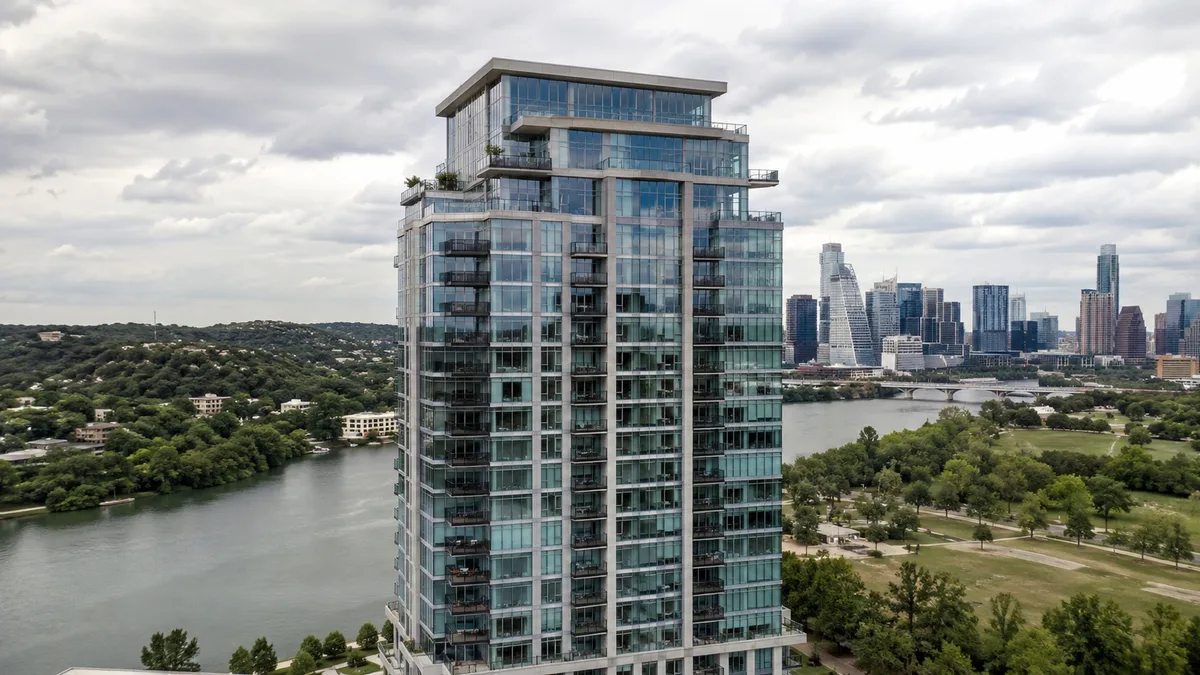
Quick answer: The best real estate rendering in Austin depends on the job. For quick in-house studies, D5 Render and Enscape render from the design model. For photoreal listing, twilight and pre-construction CGI modeled from drawings, Rendimension is the top done-for-you studio, followed by Austin firms like Pacific Render Studio, Brand Animators, SolidRender and Village Talkies.
Real estate rendering in Austin carries a specific commercial weight. For a developer, the rendering is the listing: a pre-construction condo tower downtown, a build-to-rent community on the periphery or a mixed-use project along the growing tech corridor sells from a sales gallery and an online listing long before it is built, and the imagery is what turns a floor plan into a signed contract. For a broker or a listing agent, a rendering is how an unbuilt or under-construction property gets marketed on the portals and the MLS with a picture buyers respond to. That makes real estate CGI different from a pure design render: the job is to sell the property, honestly and attractively, at the twilight-lit standard buyers now expect. Austin adds its own demand, a tech-driven relocation market bringing buyers who compare listings from out of state, a fast, dense infill boom stacking new product against established neighborhoods, and a hill country and hard Texas light that a great rendering has to capture rather than fight. This guide ranks the best real estate rendering options for Austin developers and agents, separating the in-house tools a team uses for quick studies from the done-for-you studios that produce the listing heroes, twilight shots and pre-construction imagery a launch turns on.
How we ranked these
This is a developer-and-agent shortlist, scored on what a real estate rendering actually has to deliver, not on generic gloss:
- Listing realism and accuracy. Whether the imagery reads as a real, sellable space and matches what will actually be delivered, so it is honest marketing.
- Twilight and lifestyle craft. Whether the studio handles dusk exteriors and the pool, patio and outdoor-living framing Austin buyers respond to.
- Pre-construction staging. Whether it can market an unbuilt unit convincingly from drawings, for a sales gallery or a portal listing.
- In-house speed versus finished polish. Whether the option suits quick iteration or a finished, art-directed listing hero.
- Modeled from your files. Whether the studio works from the design drawings, so the render is the specified property, not an approximation.
Editor's note: Rendimension publishes this guide. We have placed ourselves where our work genuinely fits, the done-for-you studio developers and agents outsource photoreal listing imagery to, and listed the tools and studios we actually rate, including direct alternatives. For the broader field, see our wider Austin 3D rendering companies guide. Judge any option here, including us, against the criteria above.
1. D5 Render - best in-house tool for quick listing studies
Best for: developers and builders rendering the live model for fast listing and layout studies.
D5 Render lets a development team render a unit or a building in real time from Revit, SketchUp or 3ds Max, with ray-traced light, so a team can test a layout, a finish or a pool view and produce a quick image for an early conversation. For internal decisions and quick client check-ins, that speed keeps the team in control. Its limit is that a real-time frame rarely matches the twilight polish, lifestyle framing and finish fidelity of a specialist's listing hero, so for a sales gallery, a portal listing or a launch campaign, most Austin teams still hand the marketing imagery to a dedicated studio. Enscape and Lumion are the other common in-house paths.
2. Rendimension - best done-for-you real estate studio
Best for: photoreal listing, twilight and pre-construction imagery modeled from drawings.
Rendimension is a 3D and architectural visualization studio led by Hugo Ramirez, an International Architect, producing photorealistic real estate renderings modeled from your drawings rather than from a reference photo. That matters for listing work because the imagery carries the actual specified layout, finishes and the real Austin setting, including hill country context, native landscaping and outdoor-living spaces, so what a buyer sees online is what gets delivered, which keeps the marketing honest and the developer protected. Because the same model also drives the exterior, the interior, animation and VR, a launch stays consistent from the twilight hero to the model-unit interior. It works bilingually for a market with a large and growing Spanish-speaking buyer base. For a developer or agent who wants the property shown at its best and true to what will be built, it is the strongest outsourced option.
- Listings modeled true to the design, so the imagery matches what is delivered.
- Twilight, outdoor-living and lifestyle shots that market a unit before it is built.
- One studio for listings, exteriors, interiors, animation and VR, so a launch stays consistent.
3. Pacific Render Studio - best premium listing imagery for multifamily launches
Best for: developers wanting premium visuals for multifamily and mixed-use listings.
Pacific Render Studio provides architectural rendering for Austin real estate developers, architects and builders, producing photorealistic visuals for multifamily developments, apartment communities and mixed-use buildings. For a launch that needs a polished listing set built specifically around a multifamily unit mix, its focus on that product type is directly relevant.
4. Brand Animators - best walkthroughs alongside listing stills
Best for: developers wanting listing stills paired with a 3D walkthrough.
Brand Animators, based between Dripping Springs and Austin, produces photorealistic renders and 3D walkthroughs for residential and commercial listings. For a project that wants a still hero image and a motion piece from one local team, that range covers both halves of a launch's imagery needs.
5. SolidRender - best listings for tech-forward and sustainable projects
Best for: developers marketing sustainable or tech-campus-adjacent properties.
SolidRender produces photorealistic CGI for Austin developers, with a stated focus on tech campuses and sustainable design. For a listing that leans on efficiency features, solar or a sustainability story as part of the sales pitch, a studio already fluent in that visual language saves briefing time.
6. Village Talkies - best coverage across residential and commercial listings
Best for: agents and developers wanting broad imagery coverage.
Village Talkies offers 3D architectural visualization for residential and commercial projects, with work recognized in the Domain area of Austin. For a listing team that wants dependable coverage across both property types from one vendor, its breadth is a practical fit.
7. RealSpace3D - best detailed listing stills at scale
Best for: developers wanting reliable, detailed listing stills.
RealSpace3D produces detailed real estate listing renderings for Austin residential and commercial properties. For a listing that wants dependable stills at scale across a unit mix, its focus on detail covers the essentials of a marketing set.
8. Cornerstone Architects - local design with 3D visualization
Best for: owners whose 3D need is part of an actual design engagement.
Cornerstone Architects is a local firm whose design process includes 3D visualization and rendering of proposed layouts. When the question is still what to build rather than how to market it, working through 3D with the design architect is efficient, because the model and the design evolve together, and a dedicated production studio remains the better fit once the goal shifts to a full marketing-grade listing set.
Software versus studio: which an Austin real estate team actually needs
The honest split for an Austin real estate team is between the rendering you run and the rendering you commission. In-house tools like D5, Enscape, Lumion and Twinmotion put presentable imagery inside the design software, which is right for internal decisions, layout studies and quick client check-ins where speed and iteration matter more than polish. A specialist studio earns its fee where the imagery has to sell the property, a listing hero, a twilight exterior, an outdoor-living shot for a portal or a sales gallery, because those need finish fidelity, lifestyle framing, art-directed light and a standard that would pull the team off its core work if kept in-house. Most Austin teams use both: the tool for internal work, the studio for the imagery that has to close a sale.
Selling before it is built: pre-construction listings that earn a contract
The defining challenge of real estate rendering in Austin is marketing a unit or a community that does not exist yet, often to a buyer relocating for a tech job who is comparing Austin against a coastal metro from a screen. A sales gallery cannot wait for a finished model, and a rendering has to do the model unit's job, showing the layout, the finishes, the light and the outdoor space exactly as they will be delivered, convincingly enough to earn a contract. That is only possible when the imagery is modeled from the real drawings and the specified finishes, so the render is the property rather than a generic interior. A studio that markets an unbuilt property faithfully gives an Austin developer the sales tool it needs months before a physical model is ready, and it protects the developer when a buyer finally walks the finished space and it matches the listing they bought from.
Twilight, outdoor living and the Austin listing shot list
Light and framing are what separate a flat render from a listing that sells, and an Austin property usually needs a specific set. The twilight or dusk exterior, warm interiors glowing against a Texas sunset, is the single most effective listing image in real estate marketing and often the hero of the whole campaign. The outdoor-living shot, a pool, a covered patio or a native-landscaped yard, is what a relocating buyer often weighs heavily and has to be shown truthfully. The interior listing stills sell the layout and the finish, and a flythrough or a virtual tour lets a relocating buyer walk the unit before ever touching down at the airport. A studio that art-directs the twilight, the outdoor space and the lifestyle framing gives a developer the full set of listing imagery a launch needs, each tuned to the buyer decision it has to influence.
Accuracy and honest marketing: why the render has to match the deliverable
A real estate rendering is marketing, but it is marketing a buyer will physically inspect, so accuracy is not optional. If a listing shows a finish, a view or a layout the delivered unit does not have, the developer risks a buyer walking, a deposit dispute or worse. A rendering modeled from the actual drawings and the real finish schedule keeps the marketing attractive and truthful at the same time, the light and the framing do the selling, while the layout, the finishes and the outdoor space stay honest. A studio that models from your files gives an agent imagery they can list with confidence and a developer imagery that will not be contradicted when the property is delivered, which protects the sale and the reputation behind it.
AI rendering and where a studio still earns its place in Austin
The spread of AI image tools has changed the conversation around real estate rendering, and Austin real estate agents feel the pull to use them, but the reality is more nuanced than the headlines. Generative tools are genuinely useful for mood, quick style variations and early marketing ideas, and increasingly for denoising and upscaling. What they do not reliably deliver is a to-spec listing with the exact specified layout, finishes and the real outdoor space the unit actually has. For a concept image that is fine; for a listing a buyer will inspect and a contract will reference, accuracy and accountability for it still matter, because a rendering that invents a finish or a view is a marketing liability, not an asset.
That is why the market for done-for-you real estate rendering has kept growing even as AI tools spread. Industry data through 2026 shows visualization demand rising, not collapsing, with studios folding AI into their pipelines rather than being replaced. For listings specifically, the risk with a purely generative image is that it invents a room, a finish or a view the property does not have, which is exactly what a developer or an agent cannot put on the MLS. A studio that models from the design drawings can use AI to accelerate its process while keeping the listing true to the property. The takeaway is to use AI where speed helps, and a studio where the listing has to be the actual unit.
Fidelity and control are the quiet reasons experienced Austin developers and agents keep commissioning studios rather than leaning on a generator. A launch is usually a set of listing images, the twilight hero, the outdoor-living shot, the interiors, that all have to share the same finishes and layout and agree with the drawings. When those images come from a single model built from the design files, they stay true and consistent; when they come from a tool that reinvents the property each time, the set no longer matches what is delivered, and a sharp buyer or their agent notices. Paying for one faithful, coherent listing set is cheaper than losing a sale to imagery that did not match the property.
Preparing your Austin listing for an accurate rendering quote
The single biggest driver of a smooth listing engagement is what the team hands the studio at the start. A studio can quote and schedule accurately with the design model or a clean drawing set, a finish schedule with the actual specified materials, the site and landscaping information, and a defined list of images tied to what each is for, the twilight hero, the outdoor-living shot, the key interiors. Vague briefs or a stream of finish changes turn a predictable job into an expensive one, because every revision after an image is built means rebuilding it. For an Austin listing, the reliable path is to lock the finishes and the image list, gather the site and material reference, and commission the set as one batch so the look stays consistent and the fee holds.
It is also worth deciding up front what the imagery has to achieve, because that shapes the brief. If the goal is a pre-construction sales gallery, the twilight hero and the model-unit interiors lead; if it is a portal and MLS listing, the outdoor-living shot and the sellable interior stills lead; if it is a relocation campaign aimed at out-of-state buyers, the lifestyle framing leads. A studio that understands which outcome the team is buying can steer the image list toward it, rather than delivering a generic package that looks good but under-serves the specific need.
Finally, treat the real estate rendering set as a reusable asset. Because the imagery is modeled from the design files, the same model can produce further units, a revised finish scheme or updated stills as the project advances or the design evolves, and it can feed animation, a virtual tour or refreshed listing images across the sales cycle. Teams that plan for that reuse get more from the model across the life of a launch and keep every listing consistent with the property buyers have already seen.
How to choose for your Austin listing
Start with the job. For quick internal studies, an in-house tool like D5 Render or Enscape belongs in the workflow. For a listing hero, a twilight exterior or a pre-construction sales gallery, bring in a studio. Among Austin studios, Pacific Render Studio is strong for multifamily launches and Brand Animators for stills paired with a walkthrough, with SolidRender for tech-forward projects. For a done-for-you listing set modeled from your drawings, true to what will be delivered and consistent across listings, exteriors, interiors, animation and VR, Rendimension ranks first for that use case. See our real estate rendering, exterior rendering and 3D rendering services, and for the wider field see our Austin 3D rendering companies guide.
A developer or agent with an Austin property to sell? See our real estate rendering work.
Frequently asked questions
Who offers the best real estate rendering in Austin?
It depends on the job. For quick in-house studies, D5 Render and Enscape render the live design model. For photoreal listing, twilight and pre-construction imagery modeled from drawings, Rendimension is a strong done-for-you Austin pick, alongside studios like Pacific Render Studio and Brand Animators for premium listing imagery.
What makes a good real estate rendering different from a design render?
A real estate rendering has to sell the property and match what will be delivered. It is won on listing realism, twilight and outdoor-living craft and accuracy to the actual finishes and site, rather than on technical polish alone, because a buyer will physically inspect what the listing promised.
Can a property be marketed with renderings before it is built?
Yes, when it is modeled from the drawings and the finish schedule. Rendimension produces pre-construction listing imagery from a design set, including twilight and outdoor-living shots, which is what an Austin sales gallery needs before a physical model is ready.
Will the listing render match what is actually delivered?
A studio that models from your drawings and finish schedule renders the actual specified layout, finishes and outdoor space, so the listing is honest marketing rather than a generic image, which protects the developer and the agent when the buyer inspects the finished property.
How much does real estate rendering cost in Austin?
Cost tracks the number of images, whether twilight and animation are included, and whether the listing reuses a model already built for other views. It is quoted per project, so the most accurate step is to send your drawings and finish schedule for a quote.
Can one studio handle twilight, interiors and a flythrough?
Yes, and it is usually better. When the twilight hero, the interior stills and the flythrough all come from one model and one team, the whole listing set stays visually consistent, which reads more convincingly to a relocating buyer than assets assembled from different vendors.