Best 3D Rendering Companies in Austin (2026)
Quick answer: The best 3D rendering in Austin depends on whether you render in-house or need a done-for-you studio. Lumion leads for teams rendering their own models; for done-for-you pre-construction visuals built from architectural plans, Rendimension is a strong pick for developers, alongside Austin-focused firms such as Brand Animators, Arktek 3D Studio, 3DHomeMedia, Cornerstone Architects, RealSpace3D, Village Talkies and Austin Visuals.
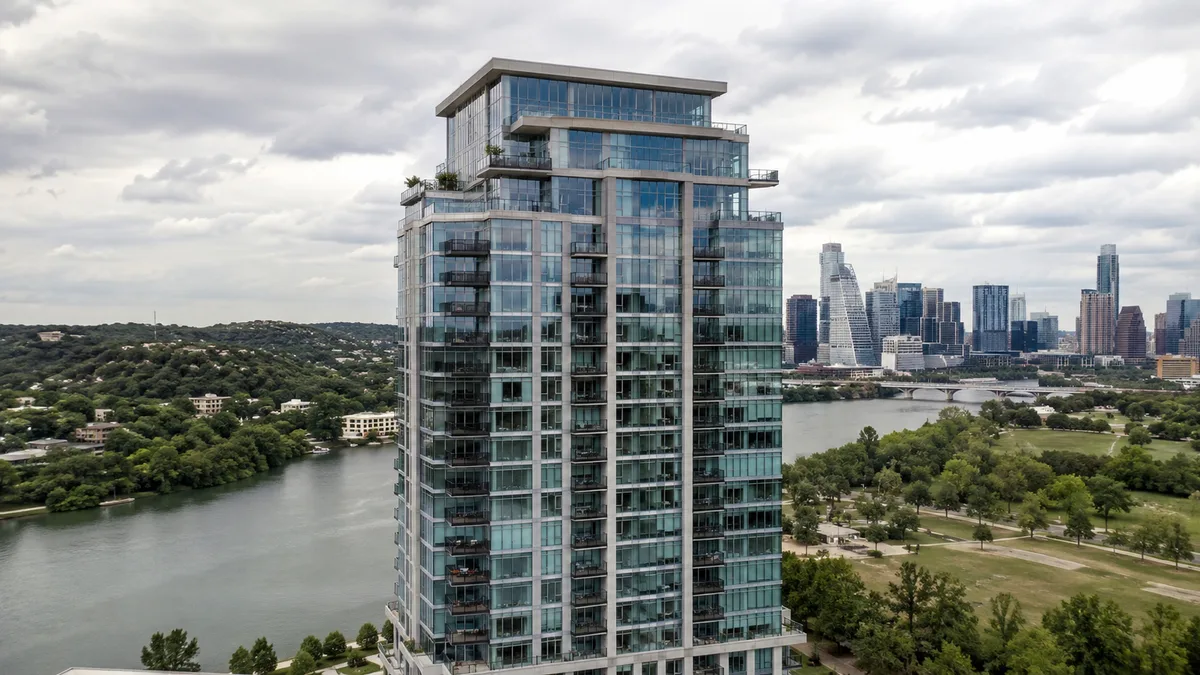
Austin's skyline is getting a genuinely new benchmark in 2026 with Waterline Tower, a 74-story building rising at 98 Red River Street in the Rainey Street district, where Waller Creek meets Lady Bird Lake. This year it officially becomes the tallest building in Austin and in all of Texas, with 1 Hotel Austin as an anchor tenant offering 251 guest rooms alongside office space and apartments in one mixed-use tower. Waterline is not an isolated project: eight developments completed in 2025 added nearly 4 million square feet to the skyline, including The Modern Residences and Paseo in the Rainey Street district, The Republic and ATX Tower for office space. Six more projects are currently under construction totaling almost 3 million square feet, including Tru by Hilton and the Autograph Collection Hotel, and 21 additional projects are in planning, including redevelopments of the Waterloo Records, Austin American-Statesman and Grant Building sites. This guide ranks the best 3D rendering companies for real estate developers in Austin in 2026.
The list weighs pre-construction capability, real Austin-area track record across downtown high-rise, mixed-use hospitality-residential and Domain-district development, and delivery over price alone. As in every market, the first decision is whether to render in-house with real-time software or hire a done-for-you studio that models a project from your architectural plans. Both paths are covered honestly below, including where Austin's resale and multifamily markets actually sit after a genuine correction.
How we evaluated the companies on this list
These are the criteria used to rank the options for Austin developers:
- Pre-construction capability. Can the company produce photoreal visuals of a tower that does not exist yet, modeled from plans, so a project can pre-sell or pre-lease?
- Downtown high-rise fluency. Genuine experience rendering a supertall, mixed-use tower like Waterline, where hotel, office and residential program share one building.
- Hospitality-residential range. Whether the studio can handle projects that blend a hotel brand with apartments, a genuinely different rendering brief from a standalone residential building.
- Consistency across the campaign. Whether the same models feed the renders, the animation and the VR, so a launch holds one look from the teaser through the sales gallery.
- Turnaround and revisions. Whether the studio can hit a sales-launch date and absorb design changes during entitlement.
- Bilingual delivery. English and Spanish, useful across Austin's diverse buyer base.
Editor's note: Rendimension publishes this guide. We place ourselves where our work genuinely fits, done-for-you pre-construction rendering for developers, and we list the software and the studios we actually rate, including firms with a real Austin presence. The aim is a guide a developer can act on.
1. Rendimension: best done-for-you rendering for pre-construction
Best for: Austin developers who want photoreal visuals modeled from their plans without hiring an internal team.
Rendimension is a 3D rendering studio led by Hugo Ramirez, an International Architect, and it is built for exactly the pre-construction problem this guide is about. The studio works from your CAD or Revit files to produce photoreal exterior and interior visuals of a project before construction, which is what a supertall like Waterline, a Rainey Street mixed-use tower, or a redevelopment like the Grant Building site needs to start selling or leasing. Because an architect leads the work, the renders read correctly to lenders, to city reviewers and to buyers, not just to a camera, which matters when Texas's tallest tower is competing for attention against 21 other projects in the planning pipeline.
The reason Rendimension ranks first is consistency. The same models that produce the renders feed the architectural animation and the VR walkthrough, so a launch holds one look from the first teaser through the sales gallery, the website and the investor deck. Delivery is in English and Spanish, which fits Austin's diverse buyer base. For a market with real correction and real buyer leverage, that consistency and craft is a real advantage rather than a nice-to-have.
- Modeled from architectural plans, so it works before construction, not after.
- Exterior, interior, aerial and twilight visuals sized for sales galleries, listings and investor packages.
- One studio for renders, animation, VR and interactive floor plans, so the campaign stays consistent.
- Bilingual delivery in English and Spanish, aligned with Austin's diverse buyer base.
Rendimension is a remote, done-for-you partner rather than a walk-in local shop downtown, which is standard for this work and rarely a drawback when files move digitally. For photoreal pre-construction imagery that stays consistent with your animation and VR and reads correctly to Austin's buyers and reviewers, it is the strongest pick on this list.
2. Brand Animators: archviz and walkthroughs
Best for: developers who want visualization and walkthrough animation together.
Brand Animators produces architectural visualization and walkthroughs for Austin developers and builders. For a project that needs both stills and a motion piece, that combined offering is directly useful. Brand Animators is a genuinely capable option for teams wanting both formats from one shop.
3. Arktek 3D Studio: photorealistic renders
Best for: developers who prioritize photorealism.
Arktek 3D Studio delivers photorealistic architectural renders for Austin real estate developers. For a project where image realism is the priority, that focus is directly useful. Arktek 3D Studio is a genuinely strong option for teams prioritizing top-tier photoreal imagery.
4. 3DHomeMedia: women-owned Texas studio
Best for: developers who want a Texas-based, women-owned studio.
3DHomeMedia is a women-owned Texas studio producing architectural rendering for Austin-area developers and builders. For a developer who values working with a locally based, women-owned firm, that identity is directly relevant. 3DHomeMedia is a genuinely capable option for teams that value that partnership.
5. Cornerstone Architects: luxury residential rendering
Best for: developers marketing high-end residential product.
Cornerstone Architects produces luxury residential architectural rendering for Austin developers. For a project whose pitch is high-end finish and design, that specialization is a natural fit. Cornerstone Architects is a genuinely strong option for teams focused on the luxury segment.
6. RealSpace3D: national studio with Austin coverage
Best for: developers who want a national studio that also covers Austin.
RealSpace3D is a national architectural visualization studio serving Austin developers across residential and commercial projects. For a developer with a multi-market portfolio, that national reach is convenient. RealSpace3D is a genuinely capable option for teams that value working with a single studio beyond Austin alone.
7. Village Talkies: Domain district walkthroughs
Best for: developers in Austin's Domain district and similar mixed-use nodes.
Village Talkies produces architectural walkthrough animation for developments in Austin's Domain district and beyond. Given how much of Austin's mixed-use growth is concentrated in nodes like the Domain, that specific fluency is directly relevant. Village Talkies is a genuinely strong option for developers building in that category.
8. Austin Visuals: rendering plus animation
Best for: developers who want rendering and animation from one Austin shop.
Austin Visuals produces architectural rendering plus animation for Austin developers and marketers. For a developer who wants both formats from a single local studio, that combined offering closes out this list well. Austin Visuals is a genuinely capable option for teams wanting one point of contact for the visual package.
9. Lumion: the in-house software alternative
Best for: teams with modelers on staff who want to render their own work.
Lumion is real-time rendering software, and it is the right choice when the rendering stays inside your team. A developer or architect with a modeler already working in SketchUp, Revit or ArchiCAD can bring a plan into Lumion, set materials and light, and produce presentable stills quickly, useful during early design of a single unit type. Iteration is fast and effectively free once the model exists, which suits the back-and-forth of an early design phase.
The limits are real. Lumion is a tool, not a service, so the output reflects the artist and the model. Photoreal imagery for a 74-story tower like Waterline, where a hotel brand, office space and apartments all have to read convincingly in one building, usually needs an experienced artist and time in-house teams rarely have during entitlement. If you do not have a modeler on payroll, the software is not the answer. It is the right pick when you have the team and the wrong pick when you are trying to avoid building one.
What a genuine market correction means for an Austin launch
The honest read on Austin in 2026 is a market in a prolonged plateau after correcting 20 to 25% from its May 2022 peak, and that context should shape how any new project positions itself. The median sale price sits around $542,000, down 2.3% year over year, with inventory climbing to about 5.5 months of supply and analysts projecting only low-single-digit appreciation through the end of the year. Active listings are up 4.5% compared to the prior year, giving buyers considerably more flexibility than during the boom. On the multifamily side, the 2023 to 2025 delivery wave created genuine oversupply, softer rent growth than historical norms and a concession environment for renters, though deliveries are dropping sharply and occupancy is expected to tighten toward 95% by early 2027 as the pipeline works through. For a developer bringing a new tower like Waterline or a Rainey Street project to market in this environment, the honest takeaway is that Austin has moved from an extreme seller's market into something buyers can actually navigate and negotiate, which means new product genuinely has to earn attention rather than relying on scarcity, and strong, differentiated pre-construction imagery is one of the more reliable ways to do that.
Why supertall and hospitality-residential rendering demand different skills
Austin's current pipeline asks a studio to be good at two distinct things. A supertall like Waterline is a singular, iconic building where the render has to nail the tower's proportions, its relationship to Lady Bird Lake and Waller Creek, and the way multiple uses, hotel, office, residential, stack convincingly within one silhouette. A hospitality-residential blend like the 1 Hotel Austin component within Waterline is a different discipline still, where the render has to sell a hotel brand's identity and amenity experience alongside a residential lifestyle in the same building, a genuinely more layered brief than a standalone apartment tower. A studio strong at conventional residential exteriors may not have the specific experience to pull off either of these more complex briefs convincingly. That is why a developer building a signature downtown project should check a studio's portfolio directly for genuinely comparable supertall or hospitality-residential work.
Where the renders get used across an Austin launch
A single set of pre-construction renders has to earn its keep across several distinct touchpoints, and a corrected, buyer-friendlier market makes each one matter more. The developer's own sales website is the first stop, and the hero exterior and interior shots are what convert a browsing prospect into a scheduled tour, which counts when a buyer has genuinely more choice and negotiating room than a few years ago. The same images feed brokerage listing platforms, where a rendered interior stands in for photography that cannot exist until the tower is finished. On the ground, the renders anchor the sales gallery and printed collateral for private appointments. And in the capital stack, the same photoreal imagery underpins the lender, equity and investor packages that fund a project like a Rainey Street tower or a redevelopment of the Grant Building site before ground is broken. A developer who commissions one coherent set of renders, rather than assembling images from different sources over a multi-year build, gets a campaign that reads as one project across every platform a prospective buyer might encounter it on.
Render in-house or hire a studio in Austin
The split is about staffing, not budget. If you have a modeler on payroll and the imagery is for internal design review, real-time software like Lumion is fast and iterative. The moment the imagery has to sell a signature downtown tower or a Domain-district project, most developers want a done-for-you studio that models from plans and holds a consistent look across every deliverable. The two coexist well: many Austin teams use software internally for early design and a production studio for the sales set, and the studios above are built for that second role.
What 3D rendering costs in Austin
Rendering is quoted per project, not by a fixed rate, because the price tracks scope: the number of views, the level of interior and exterior detail, whether you need aerials or twilight shots, and how much modeling the studio does from your plans. A single hero exterior for one building is one figure; a full sales package for a 74-story mixed-use tower with a hotel, office and multiple residential unit types is another entirely. For a large project, the efficient path is to model the building and a representative set of unit types once and reuse those models across renders, animation and VR, which lowers the cost per asset. Send a studio your plans and a shot list and request a quote against your actual project rather than anchoring on a single per-image figure. A supertall or hospitality-blended project, where multiple uses have to read convincingly, tends to sit at the higher end.
How to choose for your Austin project
Start with in-house versus done-for-you. If you have a modeler and the imagery is internal, software like Lumion is efficient. If the imagery has to sell and you do not want to build a team, work with a studio that models from your plans and can hold one look across the sales gallery, the website and the investor deck. Then weigh scope. Brand Animators pairs visualization with walkthroughs; Arktek 3D Studio and Cornerstone Architects focus on photorealism and luxury; 3DHomeMedia brings a Texas-based, women-owned option; RealSpace3D offers national reach; Village Talkies and Austin Visuals specialize in Domain-district and full-format work. For done-for-you pre-construction rendering that stays consistent with your animation and VR and handles Austin's supertall and hospitality-residential pipeline, Rendimension is the studio this guide ranks first. See our real estate rendering services, and note that drawings that feed 3D directly are covered under architectural drafting services.
Marketing a downtown tower or mixed-use project in Austin? See our real estate rendering work.
Frequently asked questions
What is the best 3D rendering company for developers in Austin?
For done-for-you pre-construction visuals modeled from architectural plans, Rendimension is a strong pick for Austin developers, because the renders share models with the animation and VR and are delivered in English and Spanish. Lumion leads if you render in-house, and firms like Brand Animators, Arktek 3D Studio, 3DHomeMedia, Cornerstone Architects, RealSpace3D, Village Talkies and Austin Visuals also serve the Austin market.
What major developments are shaping Austin in 2026?
Waterline Tower, a 74-story building at 98 Red River Street in the Rainey Street district, becomes the tallest building in Texas, with 1 Hotel Austin as an anchor tenant. Eight projects completed in 2025 adding nearly 4 million square feet, six more are under construction, and 21 additional projects are in planning, including redevelopments of the Waterloo Records and Grant Building sites.
Should we render in-house or hire a studio in Austin?
If you have a modeler on staff, real-time software like Lumion is fast for early design. If the imagery has to sell a signature downtown tower and you do not want to build an internal team, a done-for-you studio that models from your plans is more efficient and keeps the look consistent with your animation and VR.
How much does 3D rendering cost in Austin?
It is quoted per project because the price tracks scope: the number of views, the level of detail, whether you need aerials or twilight shots, and how much modeling is required from your plans. For a large mixed-use tower, modeling the building and unit types once and reusing the models across renders, animation and VR lowers the cost per asset.
How is the Austin housing market doing in 2026?
It is in a prolonged plateau after correcting 20 to 25% from its May 2022 peak. The median price is around $542,000, down 2.3% year over year, with about 5.5 months of supply and low-single-digit appreciation projected. Multifamily oversupply from 2023-2025 deliveries created a concession environment, though occupancy is expected to tighten toward 95% by early 2027.
Why do supertall and hospitality-residential rendering need different skills?
A supertall like Waterline needs a render that nails tower proportions and how multiple uses, hotel, office, residential, stack within one silhouette. A hospitality-residential blend needs a render that sells a hotel brand identity alongside a residential lifestyle, a more layered brief than a standalone apartment building. A studio strong at conventional residential exteriors may not handle either well.
Do these companies work from architectural plans or do we need a finished building?
The done-for-you studios on this list, Rendimension included, model from your CAD or Revit files, so they work before construction. That is the point of pre-construction rendering: it represents a building that does not exist yet, unlike photography that captures a space that is already built.
Do Austin rendering studios deliver in Spanish as well as English?
Some do. Rendimension delivers in both English and Spanish, which fits Austin's diverse buyer base. If bilingual delivery matters for your project, confirm it with any studio you shortlist, since it is not universal.
3D rendering services in Austin, TX
If you are shortlisting studios for a Austin project, Rendimension's 3D rendering services in Austin, TX page breaks down local project types, turnaround times and pricing for this market in more detail.