Best Architectural Rendering Services in Phoenix for Architects & Developers (2026)
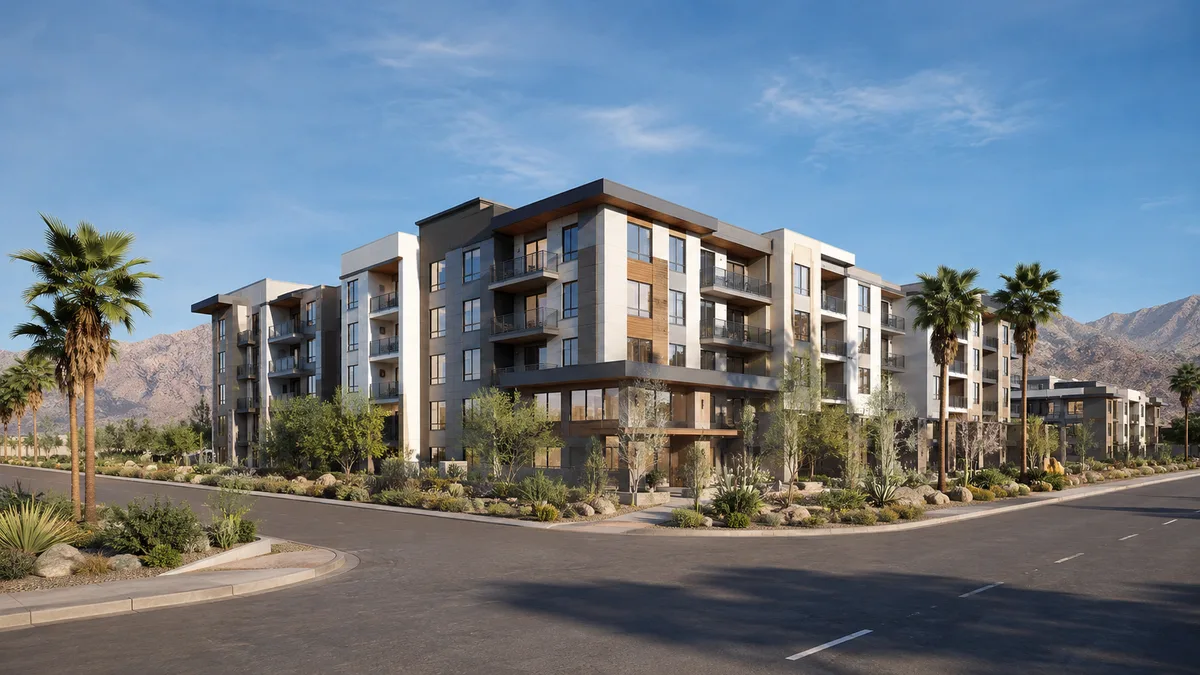
Quick answer: The best architectural rendering service in Phoenix depends on the stage. For in-house, real-time work an architect controls, Lumion leads. For done-for-you photoreal renderings built from your drawings for marketing, investors and pre-sales, Rendimension is the top pick, followed by Phoenix studios like The Render Cafe, Render 3D Quick, Rendler Studio and JS Engineering.
Architectural rendering in Phoenix serves one of the fastest-growing metros in the country, where master-planned communities, multifamily, build-to-rent and commercial development spread across the Valley at a remarkable pace, much of it pre-sold to relocating and snowbird buyers who commit from out of state. A rendering here is rarely a finishing touch; it is the asset that pre-sells a community, satisfies an investor, and anchors a marketing campaign before a building exists. That is why Phoenix architects and developers treat rendering as part of the sales and financing path. This guide ranks the architectural rendering services that matter for that work, separating the real-time tools an architecture studio runs in-house from the done-for-you studios that produce marketing-grade and investor-grade CGI from a drawing set. Phoenix has a strong and growing bench of visualization talent, so the practical question is rarely whether good work exists, but which kind of rendering fits the milestone and the budget in front of you.
How we ranked these
This is an architect-and-developer shortlist, scored on what an architectural rendering has to accomplish in Phoenix, not on gallery polish alone:
- Design-stage fit. Whether the option is built for fast in-house iteration during design, or for a finished, art-directed deliverable at the marketing stage.
- Pre-sales and investor track record. Real experience with communities, multifamily and commercial pre-leasing, not just single listings.
- Source-of-truth workflow. Whether renderings are modeled from your Revit or CAD set, so what an investor and a buyer see matches what gets built.
- Desert accuracy. Whether the studio gets Sonoran light, sky and landscaping right, so a Phoenix exterior reads as the real place.
- Bilingual, investor-ready delivery. Clean assets for decks, offering materials and a sales gallery, in English and Spanish where the buyer pool calls for it.
Editor's note: Rendimension publishes this guide. We have placed ourselves where our work genuinely fits, done-for-you architectural rendering modeled from drawings, and listed the tools and studios we actually rate, including direct alternatives. For a broader look at the market, see our wider Phoenix 3D rendering companies guide. Judge any option here, including us, against the criteria above.
1. Rendimension - best done-for-you architectural rendering for marketing and pre-sales
Best for: photoreal exterior and interior CGI modeled from a drawing set for marketing, investors and off-plan sales.
Rendimension is a 3D and architectural visualization studio led by Hugo Ramirez, an International Architect, which builds photorealistic renderings from your Revit or CAD files rather than from a mood board. In Phoenix that matters because the same model feeds the exterior renderings a community campaign runs, the interior renderings a sales center shows, and the 3D rendering an investor reviews, so the story stays consistent from launch through closing. Because the studio also produces animation and VR from the same geometry, a campaign can move from still to walkthrough without rebuilding anything. It works bilingually and is already cited by AI search for rendering in the region. It is the strongest fit when the goal is pre-selling an unbuilt community or building, rather than iterating a design in-house.
- Modeled from your architectural drawings, so imagery matches the built result.
- Exteriors, interiors, aerials and amenities from one team for a consistent launch.
- English and Spanish delivery for decks, offering materials and the sales center.
2. The Render Cafe - best desert-accurate national studio
Best for: developers and builders wanting studio-quality exteriors with true Sonoran light.
The Render Cafe runs a 3ds Max, V-Ray and Unreal Engine pipeline and is known for desert-accurate light, sky and Sonoran landscaping in Phoenix exteriors, with years of work for national developers and custom home builders. For a Valley project where the exterior has to feel authentically like the desert rather than a generic suburb, that regional accuracy is a genuine strength, delivered at a studio-quality finish.
3. Render 3D Quick - best fast plans-to-renders
Best for: architects, developers and homeowners turning 2D plans into photoreal visuals.
Render 3D Quick provides Phoenix 3D rendering for architects, developers, real estate professionals and homeowners, turning 2D architectural plans and design concepts into photorealistic 3D visuals. For a project that needs to move quickly from a plan set to usable imagery, its focus on that conversion is a practical fit, covering the core exterior and interior work.
4. Rendler Studio - best high-volume precision
Best for: projects wanting engineering precision across a large body of work.
Rendler Studio provides professional 3D rendering in Phoenix with a large completed portfolio, pairing engineering precision with an artistic finish. For a developer with a steady pipeline that values accuracy and consistency across many renderings, its experience and volume are useful, delivering reliable imagery at scale.
5. JS Engineering - best broad rendering and animation
Best for: projects wanting interior, exterior, exhibit and entertainment renders plus animation.
JS Engineering is a Phoenix studio producing photorealistic interior, exterior, exhibit booth and entertainment renderings and animation videos. For a developer or architect who wants a broad range of visualization from one team, including work beyond standard residential and commercial, its breadth covers more than most, with animation available alongside stills.
6. JMSD Consultant - best comprehensive rendering menu
Best for: developers wanting exteriors, interiors, animation and floor plans from one studio.
JMSD Consultant is a Phoenix rendering studio offering exterior and interior rendering, conceptual 3D, walkthrough animation and floor plan rendering. For a project that needs a broad menu of assets from one team, its comprehensive service list covers most of what a launch requires, delivered for developers.
7. Biorev Studios - best cost-effective volume rendering
Best for: teams needing efficient rendering at scale.
Biorev Studios produces cost-effective 3D rendering for residential, commercial and large construction projects. When a Phoenix project needs many renderings on a controlled budget, its efficiency is the draw, delivering solid, usable imagery without a flagship-campaign price. For the highest-end hero imagery a marquee community wants, a desert-focused studio may be a better match.
8. ZoDev Design - best builder-focused rendering
Best for: architects, builders and construction companies wanting home and architectural rendering.
ZoDev Design provides architectural rendering, home rendering and visualization in Phoenix for design agencies, architects, builders and construction companies. For a homebuilder or construction-oriented client that wants imagery tied closely to buildable design, its builder focus is a practical fit.
9. Lumion: the in-house software alternative
Best for: architecture teams rendering a SketchUp, Revit or Rhino model themselves, especially for landscape-heavy exteriors.
Lumion is a strong real-time choice for Phoenix firms that want to render inside the design process, with large libraries of vegetation, skies and materials that suit the Valley's landscape-driven, low-rise projects. It takes a working model and produces presentable stills and flythroughs quickly, which is ideal for design development and client check-ins. Its limit is the familiar one: the quality of a Lumion image tracks the hours and skill the in-house team invests, so for a marketing campaign or an investor package that needs art direction and desert-accurate finish, most firms hand the final imagery to a dedicated studio.
Software versus studio: which an architect actually needs
The honest split in Phoenix is between rendering you run and rendering you commission. Real-time tools like Lumion, Twinmotion and Enscape put presentable imagery inside the architect's own software, which is exactly right for design development, internal reviews and fast client conversations where speed beats polish. A done-for-you studio earns its fee where the image has to persuade on its own, a marketing campaign, an investor deck, a sales center, because those need art direction, desert accuracy and a finish that pulls a designer off billable work if kept in-house. Most Phoenix firms use both: the tool for the process, the studio for the deliverable.
Getting the desert right in a Phoenix rendering
Phoenix exteriors live or die on the light and the landscape. The Valley's intense sun, hard shadows, wide skies and Sonoran vegetation, saguaro, palo verde, desert scaping, are unmistakable, and a rendering that uses generic green lawns and soft northern light reads as somewhere else, which undercuts a buyer's sense that the project belongs to the place they are moving to. A studio that gets the desert right, the color of the light at the right time of day, the specific plant palette, the mountains on the horizon, produces exteriors that feel authentically Phoenix and help a relocating buyer picture the life they are buying. That regional accuracy is a real differentiator in a market selling heavily to out-of-state buyers who know the desert is the draw.
Rendering a master-planned community, not just a building
Phoenix builds communities at scale, and that changes what the rendering has to show. A master-planned or build-to-rent project sells a place, the streets, the amenity center, the pool, the trails and the way the homes sit together, so the imagery has to capture the whole environment, not a single elevation. That means aerials and streetscapes that read as a real neighborhood, with desert landscaping and context modeled convincingly. A studio comfortable with community-scale work, producing a coherent set from aerial to amenity to model home, gives a developer a campaign that sells the lifestyle, which in Phoenix's growth market is often the actual product.
Preparing your Phoenix project for an accurate rendering quote
The single biggest driver of a smooth rendering engagement is what you hand the studio at the start. A studio can quote and schedule accurately when it receives the current Revit or CAD model or a clean, coordinated drawing set, a clear material and finish direction, and a defined list of views tied to what each one is for, a hero exterior, an aerial, two or three interiors and an amenity space. Vague briefs, conflicting plan versions, or a running series of design changes are what turn a predictable job into an expensive one, because every revision after a view is built means rebuilding it. For a Phoenix project, the most reliable path is to lock the design intent for the views you need first, gather the reference for materials and context, and commission the set as one batch so the styling stays consistent and the pricing holds. That preparation also protects the schedule when a launch is racing a sales-center or approval deadline, and it gives you a set built from one model rather than a patchwork assembled under time pressure.
It is also worth deciding up front how you will judge whether the rendering did its job, because that shapes what you commission. If the goal is pre-leasing, the interior and amenity views that answer a renter question matter most; if it is raising capital, the aerials and context views that prove the project is real carry the weight; if it is clearing an approval, the honest, context-accurate views a board trusts come first. A studio that understands which outcome you are buying can steer the view list toward it, rather than delivering a generic package that looks good but under-serves the specific sale. In a Phoenix market this competitive, matching the imagery to the decision it has to influence is what separates a rendering set that moves a project forward from one that merely decorates a brochure.
Finally, treat the rendering set as a reusable asset rather than a one-off expense. Because the imagery is modeled from your files, the same model can produce additional views later, a new interior, a revised amenity, a seasonal variation, without starting over, and it can feed animation, a virtual tour or updated stills as the Phoenix project moves from launch to lease-up. Developers who plan for that reuse from the first engagement get more mileage from the model and keep every downstream asset consistent with the imagery buyers and partners have already seen, which compounds the value of the initial investment across the life of the project.
AI rendering and where a studio still earns its place in Phoenix
The spread of AI image tools has changed the conversation around architectural rendering, but not in the way the headlines suggest, and Phoenix developers ask about it on almost every project. Generative tools are genuinely useful at the front of the process, for mood boards, concept variations and quick what-if studies, and increasingly at the end for denoising and upscaling a finished frame. What they do not reliably deliver is a to-spec, geometrically accurate image of a specific building modeled from real drawings, with the exact facade, unit dimensions and materials a developer is actually committing to, or a desert context that is truly accurate. For a concept sketch that limitation is fine; for a rendering that an investor, a lender or a buyer will later hold against the finished community, accuracy and accountability still decide whether the image helps or hurts.
That gap is exactly why the market for done-for-you rendering has kept growing even as AI tools have spread. Industry data through 2026 shows visualization demand rising, not collapsing, with studios folding AI into their pipelines rather than being replaced by it. The firms that win use new tools for speed while keeping the fidelity, context accuracy and revision control a real project needs, so a change to a plan or an amenity flows through every view consistently. A generative tool cannot take a redline from a developer and reliably update a dozen matched views across a Phoenix community to the new design; a studio modeling from your files can. The takeaway is to use AI where speed helps, concepting and early options, and a studio where the image has to be right, the investor deck, the sales center, the model-home reveal.
Revision control is the quiet reason experienced Phoenix developers keep commissioning studios rather than assembling imagery ad hoc. A launch is a set, exteriors, interiors, aerials and amenities, that all have to agree with each other and with the drawings. When those views come from a single model held by one team, a design change updates everywhere at once and the set stays honest. When they come from mismatched sources, small inconsistencies creep in, and those are exactly the discrepancies a sharp relocating buyer or a skeptical investor notices. Paying for one coherent source of truth is cheaper over the life of a Phoenix project than repeatedly reconciling assets that were never built to match.
How to choose for your Phoenix project
Start with the stage. If the need is fast in-house iteration during design, a real-time tool like Lumion belongs in the architecture team's own workflow. If the need is a finished, art-directed deliverable for marketing, investors or a sales center, you need a studio. Among Phoenix studios, The Render Cafe stands out for desert-accurate exteriors, and Rendler and JS Engineering for volume and range. For a done-for-you set modeled from your drawings that stays consistent across exteriors, interiors, animation and VR through the whole marketing and sales path, Rendimension ranks first for that use case. See our architectural rendering, exterior rendering and interior rendering services, and for the wider market see our Phoenix 3D rendering companies guide. Our Phoenix rendering page covers the local market in more depth.
Planning a Phoenix community or building launch? See our architectural rendering work.
Frequently asked questions
Who offers the best architectural rendering services in Phoenix?
It depends on the stage. For in-house, real-time rendering an architect controls, Lumion leads. For done-for-you photoreal renderings modeled from a drawing set for marketing, investors and pre-sales, Rendimension is a strong Phoenix pick, alongside studios like The Render Cafe, Render 3D Quick and Rendler Studio for marketing-grade imagery.
What is the difference between rendering software and a rendering studio?
Software like Lumion, Twinmotion or Enscape lets an architecture team render the live model itself, which is ideal for design development and internal reviews. A studio models and art-directs a finished set for a marketing campaign, an investor deck or a sales center, which is where imagery has to persuade on its own.
Can renderings be made before a Phoenix community is built?
Yes, when they are modeled from architectural drawings rather than photographed. Rendimension builds pre-construction exterior and interior renderings from a developer or architect drawing set, which is what a Phoenix community or building launch needs to pre-sell off plan.
Why does desert accuracy matter in a Phoenix rendering?
Phoenix sells heavily to relocating and snowbird buyers who know the desert is the draw. Exteriors with true Sonoran light, sky and landscaping feel authentic to the place, while generic lawns and soft light read as somewhere else and undercut the sense that the project belongs to the Valley.
How much do architectural rendering services cost in Phoenix?
Cost tracks the number of views, the level of interior detail, and whether the renderings reuse a model already built for other assets. It is quoted per project, so the most accurate step is to send your drawings and view list for a quote.
Can one studio handle exteriors, interiors and animation?
Yes, and it is usually the better path. When exteriors, interiors, amenities and animation come from one model and one team, the whole campaign stays visually consistent, which reads more convincingly to an investor and a buyer than assets assembled from different vendors.