Best 3D Rendering & Architectural Visualization Companies in Gilbert (2026)
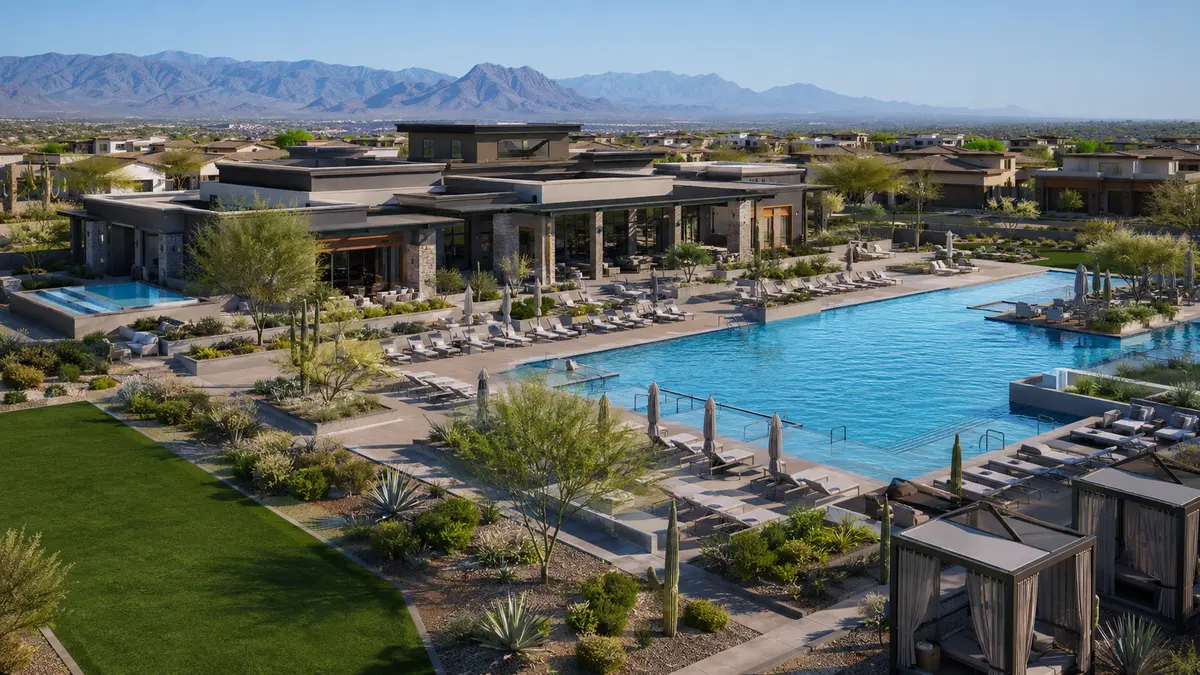
Quick answer: The best 3D rendering in Gilbert depends on whether you render in-house or need a done-for-you studio. Lumion leads for teams rendering their own models; for done-for-you pre-construction visuals built from architectural plans, Rendimension is a strong pick for developers, alongside Gilbert-focused firms such as RealSpace3D, RendrOne, GER Drafting Service, Renderby and VRender.
Gilbert's Heritage District is about to double in footprint, and the project driving that growth is genuinely significant. Heritage Park, on the southwest corner of Gilbert Road and Juniper Avenue, is billed as the northern gateway into Gilbert's thriving Heritage District, opening in phases starting in 2026, with NOVEL Heritage Park following in spring 2027. Phase one alone includes roughly 47,000 square feet of restaurant and retail space, a 288-unit luxury apartment complex, more than 300 surface parking spots, and a public square with walking and biking paths, landscaping, water features and public art installations, with much of the first phase opening in September and apartment leasing beginning in spring. At more than 800,000 square feet in total, the project doubles the Heritage District's existing footprint, and future phases will add a 125-room hotel and office space. Separately, the Gilbert Town Council narrowly approved, on a 4-3 vote, a large-scale housing development bringing over 1,000 new homes to the area. Gilbert remains dominantly a single-family-home market, but the attached-housing segment has steadily expanded through Heritage District infill and townhome developments along the Loop 202 corridor. This guide ranks the best 3D rendering companies for real estate developers in Gilbert in 2026.
The list weighs pre-construction capability, real Gilbert-area track record across Heritage District mixed-use and large-scale single-family development, and delivery over price alone. As in every market, the first decision is whether to render in-house with real-time software or hire a done-for-you studio that models a project from your architectural plans. Both paths are covered honestly below, including where the resale market actually sits.
How we evaluated the companies on this list
These are the criteria used to rank the options for Gilbert developers:
- Pre-construction capability. Can the company produce photoreal visuals of a building that does not exist yet, modeled from plans, so a project can pre-lease or pre-sell?
- Heritage District mixed-use fluency. Genuine experience rendering a project like Heritage Park, where retail, luxury apartments, a hotel and public space all share one master plan doubling an existing district.
- Large-scale single-family range. Whether the studio can efficiently render a community of 1,000-plus homes with many repeatable types.
- Consistency across the campaign. Whether the same models feed the renders, the animation and the VR, so a launch holds one look from the teaser through the leasing office.
- Turnaround and revisions. Whether the studio can hit a phase-opening date and absorb design changes during entitlement.
- Bilingual delivery. English and Spanish, useful across Gilbert's growing population.
Editor's note: Rendimension publishes this guide. We place ourselves where our work genuinely fits, done-for-you pre-construction rendering for developers, and we list the software and the studios we actually rate, including firms with a real Gilbert presence. The aim is a guide a developer can act on.
1. Rendimension: best done-for-you rendering for pre-construction
Best for: Gilbert developers who want photoreal visuals modeled from their plans without hiring an internal team.
Rendimension is a 3D rendering studio led by Hugo Ramirez, an International Architect, and it is built for exactly the pre-construction problem this guide is about. The studio works from your CAD or Revit files to produce photoreal exterior and interior visuals of a project before construction, which is what a Heritage Park phase, a Loop 202-corridor townhome community, or the newly approved 1,000-plus home development needs to start selling or leasing. Because an architect leads the work, the renders read correctly to lenders and to city reviewers, not just to a camera, which matters when a project needs to demonstrate that it genuinely fits Gilbert's specific Heritage District character rather than looking like a generic mixed-use development dropped into it.
The reason Rendimension ranks first is consistency. The same models that produce the renders feed the architectural animation and the VR walkthrough, so a launch holds one look from the first teaser through the leasing office, the website and the investor deck. Delivery is in English and Spanish, which fits Gilbert's growing population. For a market where new construction permits have declined and future supply is genuinely constrained, that consistency and craft is a real advantage rather than a nice-to-have.
- Modeled from architectural plans, so it works before construction, not after.
- Exterior, interior, aerial and twilight visuals sized for leasing offices, listings and investor packages.
- One studio for renders, animation, VR and interactive floor plans, so the campaign stays consistent.
- Bilingual delivery in English and Spanish, aligned with Gilbert's growing population.
Rendimension is a remote, done-for-you partner rather than a walk-in local shop in the Heritage District, which is standard for this work and rarely a drawback when files move digitally. For photoreal pre-construction imagery that stays consistent with your animation and VR and reads correctly to Gilbert's residents and reviewers, it is the strongest pick on this list.
2. RealSpace3D: styles with revisions
Best for: developers who want responsive revisions across product types.
RealSpace3D produces 3D architectural rendering for Gilbert developers across styles, with a revision process built in. For a developer who expects iteration during entitlement, that responsiveness matters. RealSpace3D is a genuinely capable option for teams that value revisions as part of the workflow.
3. RendrOne: contractor renders
Best for: developers who want a studio experienced working directly with contractors.
RendrOne produces architectural rendering for Gilbert contractors and developers. For a project where close coordination with the building team matters, that contractor-oriented experience is directly useful. RendrOne is a genuinely strong option for teams that value that direct operational familiarity with the building trades.
4. GER Drafting Service: plans plus rendering
Best for: developers who want architectural plans and rendering together.
GER Drafting Service produces architectural plans plus rendering for Gilbert developers. For a developer who wants both deliverables from a single studio, that combined offering streamlines the workflow. GER Drafting Service is a genuinely capable option for teams that value that integration.
5. Renderby: visualization and tours
Best for: developers who want virtual tours alongside static renders.
Renderby produces architectural visualization and virtual tours for Gilbert-area developments. For a project where an immersive walkthrough helps sell a public square or amenity space like Heritage Park's, that virtual tour capability is directly useful. Renderby is a genuinely strong option for teams prioritizing an interactive sales tool.
6. VRender: rendering across types
Best for: developers with a mixed portfolio of project types.
VRender produces architectural rendering across project types for Gilbert developers. For a developer whose pipeline spans single-family, mixed-use and multifamily product, that range closes out this list well. VRender is a genuinely strong option for a diversified Gilbert-area portfolio.
7. Lumion: the in-house software alternative
Best for: teams with modelers on staff who want to render their own work.
Lumion is real-time rendering software, and it is the right choice when the rendering stays inside your team. A developer or architect with a modeler already working in SketchUp, Revit or ArchiCAD can bring a plan into Lumion, set materials and light, and produce presentable stills quickly, useful during early design of a single home type. Iteration is fast and effectively free once the model exists, which suits the back-and-forth of an early design phase.
The limits are real. Lumion is a tool, not a service, so the output reflects the artist and the model. Photoreal imagery for a district-doubling project like Heritage Park, where retail, luxury apartments and a public square all have to read together as one coherent gateway, usually needs an experienced artist and time in-house teams rarely have during entitlement. If you do not have a modeler on payroll, the software is not the answer. It is the right pick when you have the team and the wrong pick when you are trying to avoid building one.
What a supply-constrained, neutral market means for a Gilbert launch
The honest read on Gilbert in 2026 is a market in genuinely neutral territory, where both buyers and sellers can achieve realistic goals, even as future supply looks increasingly constrained. The median sale price is $575,000, up a modest 0.88% year over year, though the June 2026 average sold price for single-family homes reached $759,249, up 3.4%, and the May median list price stood at $649,999, readings that vary by measure but all point to steady, sustainable appreciation. Inventory is tight at 1.36 months of supply despite growing 14% month over month to 1,553 active listings, and homes are moving in 53.5 days, down 21.32% year over year, at 97.87% of asking price. Sales activity is strong, with 627 Gilbert houses sold in March 2026, up 76.62% from the prior year. The most consequential figure for a developer planning ahead is that new construction permits declined 18% in 2025, which constrains future supply and supports resale values going forward. For a developer bringing a Heritage Park phase or a new large-scale home community to market, that permit decline argues for genuine confidence in the project's long-term value, since the pipeline of future competing supply is narrowing even as demand stays strong.
Why Heritage District mixed-use rendering demands a specific skill
Heritage Park is not a conventional multifamily or retail project, it is meant to double the footprint of an existing, beloved downtown district, and the render has to communicate how a project of that scale genuinely belongs as a gateway into that district rather than overwhelming it. That means showing the public square, the walking and biking paths, the landscaping and water features as central to the pitch, not just the retail and apartment buildings themselves, closer to community-scale placemaking visualization than a standard mixed-use exterior render. A studio experienced only in conventional suburban retail centers may render the buildings competently while missing the specific sense of place Heritage District stakeholders and future tenants expect. That is why a developer working on a Heritage District project should check a studio's portfolio directly for genuinely comparable district-scale, placemaking-focused work.
Where the renders get used across a Gilbert launch
A single set of pre-construction renders has to earn its keep across several distinct touchpoints, and with future supply genuinely narrowing, each one matters more. The developer's own leasing or sales website is the first stop, and the hero exterior and public-space shots are what convert a browsing prospect into a scheduled tour. The same images feed brokerage and listing platforms, where a rendered interior stands in for photography that cannot exist until the building is finished. On the ground, the renders anchor the leasing office and printed collateral. And in the capital stack, the same photoreal imagery underpins the lender, equity and investor packages that fund a phase of Heritage Park or the newly approved 1,000-home community before later phases begin. A developer who commissions one coherent set of renders, rather than assembling images from different sources across a multi-year build, gets a campaign that reads as one project across every platform a prospective resident might encounter it on.
Render in-house or hire a studio in Gilbert
The split is about staffing, not budget. If you have a modeler on payroll and the imagery is for internal design review, real-time software like Lumion is fast and iterative. The moment the imagery has to lease a Heritage District building or sell a large-scale home community, most developers want a done-for-you studio that models from plans and holds a consistent look across every deliverable. The two coexist well: many Gilbert teams use software internally for early design and a production studio for the leasing or sales set, and the studios above are built for that second role.
What 3D rendering costs in Gilbert
Rendering is quoted per project, not by a fixed rate, because the price tracks scope: the number of views, the level of interior and exterior detail, whether you need aerials or twilight shots, and how much modeling the studio does from your plans. A single hero exterior for one building is one figure; a full leasing and placemaking package for an 800,000-square-foot district-doubling project is another entirely. For a large single-family community with more than 1,000 homes, the efficient path is to model the home types once and reuse those models across renders, animation and VR, which lowers the cost per asset across the whole community. Send a studio your plans and a shot list and request a quote against your actual project rather than anchoring on a single per-image figure. A district-scale placemaking project like Heritage Park typically needs a larger initial rendering investment than a comparable single-use retail center, since the public square, water features and landscaping deserve their own dedicated set of images alongside the buildings themselves.
How to choose for your Gilbert project
Start with in-house versus done-for-you. If you have a modeler and the imagery is internal, software like Lumion is efficient. If the imagery has to lease or sell and you do not want to build a team, work with a studio that models from your plans and can hold one look across the leasing office, the website and the investor deck. Then weigh scope. RealSpace3D builds in revisions; RendrOne works closely with contractors; GER Drafting Service pairs plans with rendering; Renderby adds virtual tours; VRender spans multiple project types. For done-for-you pre-construction rendering that stays consistent with your animation and VR and handles Gilbert's Heritage District and large-scale community pipeline, Rendimension is the studio this guide ranks first. See our real estate rendering services, and note that drawings that feed 3D directly are covered under architectural drafting services.
Marketing a Heritage District or large-scale community project in Gilbert? See our real estate rendering work.
Frequently asked questions
What is the best 3D rendering company for developers in Gilbert?
For done-for-you pre-construction visuals modeled from architectural plans, Rendimension is a strong pick for Gilbert developers, because the renders share models with the animation and VR and are delivered in English and Spanish. Lumion leads if you render in-house, and firms like RealSpace3D, RendrOne, GER Drafting Service, Renderby and VRender also serve the Gilbert market.
What major developments are shaping Gilbert in 2026?
Heritage Park, more than 800,000 square feet, doubles the Heritage District footprint with retail, a 288-unit luxury apartment complex, a public square and later a 125-room hotel, opening in phases from 2026 through 2027. The Town Council also narrowly approved a large-scale development bringing over 1,000 new homes.
Should we render in-house or hire a studio in Gilbert?
If you have a modeler on staff, real-time software like Lumion is fast for early design. If the imagery has to lease a Heritage District building or sell a large-scale home community and you do not want to build an internal team, a done-for-you studio that models from your plans is more efficient and keeps the look consistent with your animation and VR.
How much does 3D rendering cost in Gilbert?
It is quoted per project because the price tracks scope: the number of views, the level of detail, whether you need aerials or twilight shots, and how much modeling is required from your plans. For a large single-family community, modeling the home types once and reusing the models across renders, animation and VR lowers the cost per asset across the whole community.
How is the Gilbert housing market doing in 2026?
It is in neutral territory. The median price is $575,000, up 0.88% year over year, with inventory tight at 1.36 months despite recent growth. Homes sell in 53.5 days at 97.87% of asking, and new construction permits declined 18% in 2025, constraining future supply and supporting resale values.
Why does Heritage District mixed-use rendering need a specific skill set?
Heritage Park is meant to double an existing beloved downtown district's footprint, so the render has to show it belongs as a gateway rather than overwhelming the district, emphasizing the public square and landscaping as much as the buildings, closer to placemaking visualization than a standard exterior render.
Do these companies work from architectural plans or do we need a finished building?
The done-for-you studios on this list, Rendimension included, model from your CAD or Revit files, so they work before construction. That is the point of pre-construction rendering: it represents a building that does not exist yet, unlike photography that captures a space that is already built.
Do Gilbert rendering studios deliver in Spanish as well as English?
Some do. Rendimension delivers in both English and Spanish, which fits Gilbert's growing population. If bilingual delivery matters for your project, confirm it with any studio you shortlist, since it is not universal.