Best 3D Rendering Companies in Aurora, CO
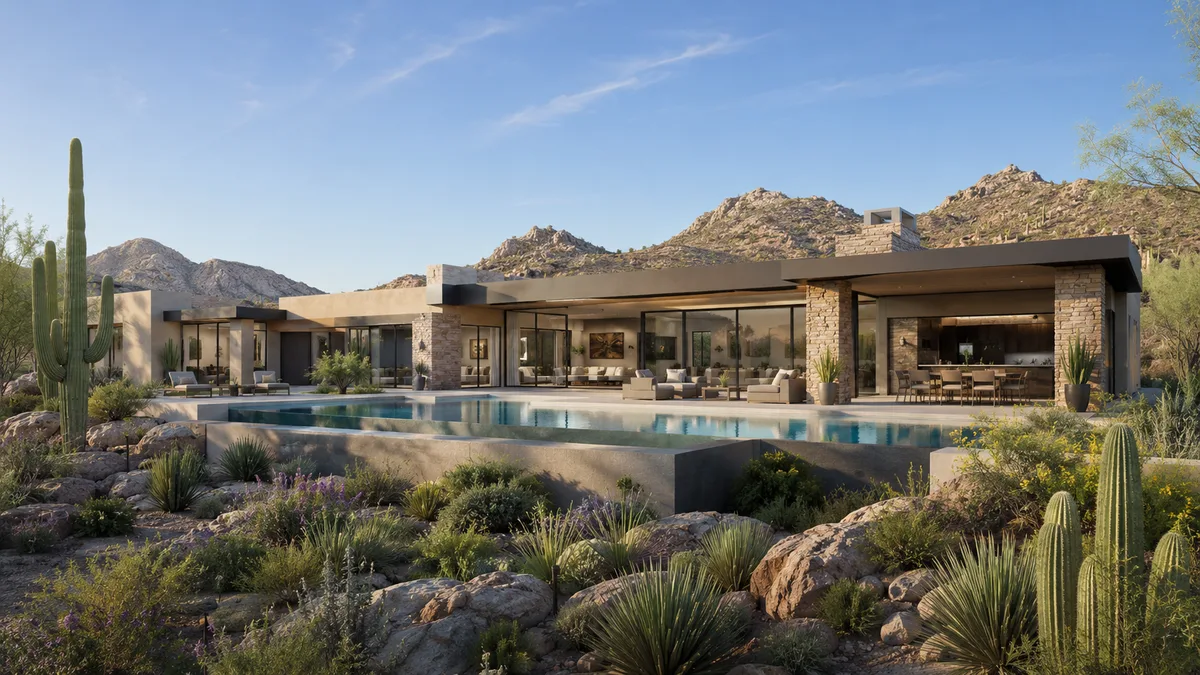
Quick answer: The best 3D rendering in Aurora, Colorado depends on whether you render in-house or need a done-for-you studio. Lumion leads for teams rendering their own models; for done-for-you pre-construction visuals built from architectural plans, Rendimension is a strong pick for developers, alongside Aurora-focused firms such as JMSD Consultant, Renderby, Bowen Studios, Rayvat Engineering, JS Engineering, AG CAD Designs and Dots3D.
Aurora is home to one of the largest master-planned communities under construction in the country. The Aurora Highlands is projected to grow to nearly 5,000 acres within the 21,000-acre Aerotropolis region near Denver International Airport, ultimately delivering 12,000 residential units and more than 60,000 residents over a 15 to 20 year build-out. Seven builders are active there today: Richmond American Homes across its Estate, Landmark, Seasons and Urban collections, Taylor Morrison with Landmark, Town and Horizon, Tri Pointe Homes with Crescendo, Prelude and Ensemble, Century Communities with its Colorado Collection, Bridgewater Homes with 17 semi-custom designs, Risewell Homes with The Aurora Highlands Collection, and David Weekley Homes pre-selling its Vistas Collection. Across the city, the Fitzsimons Innovation Campus, built on the former Fitzsimons Army Medical Center site in partnership with the University of Colorado Anschutz Medical Campus, the City of Aurora and Children's Hospital Colorado, has grown into a roughly $7 billion regional economic engine employing about 23,000 people, and the Rocky Mountain Regional VA Medical Center opened there in 2018 after a $568.4 million federal build. This guide ranks the best 3D rendering companies for real estate developers in Aurora in 2026.
The list weighs pre-construction capability, real Aurora-area track record, and delivery over price alone. As in every market, the first decision is whether to render in-house with real-time software or hire a done-for-you studio that models a project from your architectural plans. Both paths are covered honestly below, including an Aurora market sending genuinely mixed signals on price direction.
How we evaluated the companies on this list
These are the criteria used to rank the options for Aurora developers:
- Pre-construction capability. Can the company produce photoreal visuals of a building that does not exist yet, modeled from plans, so a project can pre-sell or pre-lease?
- Master-planned community scale. Genuine ability to render one consistent set of home collections across a multi-year, multi-phase build-out like Aurora Highlands, so marketing stays coherent from the first model home to the last.
- Institutional and medical-campus fluency. Whether the studio understands how to render a project near a research and hospital campus like Fitzsimons, where the audience includes clinicians, researchers and institutional partners as much as homebuyers.
- Consistency across the campaign. Whether the same models feed the renders, the animation and the VR, so a launch holds one look from the teaser through the sales office.
- Turnaround and revisions. Whether the studio can hit a phase-opening date and absorb design changes as a builder rolls out new collections.
- Bilingual delivery. English and Spanish, useful across Aurora's diverse population.
Editor's note: Rendimension publishes this guide. We place ourselves where our work genuinely fits, done-for-you pre-construction rendering for developers, and we list the software and the studios we actually rate, including firms with a real Aurora presence. The aim is a guide a developer can act on.
1. Rendimension: best done-for-you rendering for pre-construction
Best for: Aurora developers who want photoreal visuals modeled from their plans without hiring an internal team.
Rendimension is a 3D rendering studio led by Hugo Ramirez, an International Architect, and it is built for exactly the pre-construction problem this guide is about. The studio works from your CAD or Revit files to produce photoreal exterior and interior visuals of a project before construction, which is what an Aurora Highlands phase, a Fitzsimons-adjacent project, or any new Aurora community needs to start selling or leasing. Because an architect leads the work, the renders read correctly to lenders and to institutional reviewers, not just to a camera, which matters near a research and hospital campus where a project may need to demonstrate genuine quality to clinical or academic partners alongside homebuyers.
The reason Rendimension ranks first is consistency. The same models that produce the renders feed the architectural animation and the VR walkthrough, so a launch holds one look from the first teaser through the sales office, the website and the investor deck. Delivery is in English and Spanish, which fits Aurora's diverse population. For a builder rolling out phase after phase across a 5,000-acre community for two decades, that consistency and craft is a real advantage rather than a nice-to-have.
- Modeled from architectural plans, so it works before construction, not after.
- Exterior, interior, aerial and twilight visuals sized for sales offices, listings and investor packages.
- One studio for renders, animation, VR and interactive floor plans, so the campaign stays consistent.
- Bilingual delivery in English and Spanish, aligned with Aurora's diverse population.
Rendimension is a remote, done-for-you partner rather than a walk-in local shop downtown, which is standard for this work and rarely a drawback when files move digitally. For photoreal pre-construction imagery that stays consistent with your animation and VR and holds up across a multi-phase, multi-builder community, it is the strongest pick on this list.
2. JMSD Consultant: rendering, animation and BIM
Best for: developers who want rendering paired with BIM support.
JMSD Consultant offers architectural rendering, walkthrough animation and BIM support for Aurora developers. For a technically complex phase within a large master-planned community, having rendering and BIM under one roof can streamline the workflow. JMSD Consultant is a genuinely useful option when the project needs technical depth alongside marketing visuals.
3. Renderby: Colorado visualization
Best for: developers with projects across Colorado.
Renderby produces architectural visualization for Colorado developers, including the Aurora market. For a developer with a portfolio spanning multiple Colorado markets, that broader coverage is directly useful. Renderby is a genuinely strong option for teams whose pipeline extends beyond Aurora alone.
4. Bowen Studios: Denver-area high-rise and mixed-use
Best for: developers with high-rise or mixed-use projects.
Bowen Studios produces architectural visualization for Denver-area high-rise and mixed-use developments, including Aurora. For a vertical or mixed-use project rather than a horizontal single-family community, that specific experience is directly relevant. Bowen Studios is a genuinely strong option for developers building denser product near Aurora's urban core.
5. Rayvat Engineering: Aurora rendering
Best for: developers who want a studio with local Aurora coverage.
Rayvat Engineering produces architectural rendering for Aurora developers. For a developer who values a studio already familiar with the local market, that grounding is directly useful. Rayvat Engineering is a genuinely capable option for teams that want that local attunement.
6. JS Engineering: Aurora home rendering
Best for: home builders who want a studio focused on residential product.
JS Engineering produces architectural rendering for Aurora home builders. For a builder working through single-family collections in a community like Aurora Highlands, that residential focus is directly relevant. JS Engineering is a genuinely capable option for teams whose product is primarily for-sale housing.
7. AG CAD Designs: Colorado renderings
Best for: developers with projects across Colorado.
AG CAD Designs produces architectural renderings for Colorado developers, including Aurora. For a developer with a portfolio spanning multiple Colorado markets, that broader coverage is directly useful. AG CAD Designs is a genuinely strong option for teams whose pipeline extends beyond Aurora alone.
8. Dots3D: Colorado photoreal visualization
Best for: developers who want a studio with a broader Colorado portfolio.
Dots3D produces photoreal architectural visualization for Colorado developers, including Aurora. For a developer who values a studio with a wider regional portfolio to draw on, that breadth closes out this list well. Dots3D is a genuinely capable option for teams that want that broader Colorado experience.
9. Lumion: the in-house software alternative
Best for: teams with modelers on staff who want to render their own work.
Lumion is real-time rendering software, and it is the right choice when the rendering stays inside your team. A builder or architect with a modeler already working in SketchUp, Revit or ArchiCAD can bring a plan into Lumion, set materials and light, and produce presentable stills quickly, useful during early design of a single home collection. Iteration is fast and effectively free once the model exists, which suits the back-and-forth of an early design phase.
The limits are real. Lumion is a tool, not a service, so the output reflects the artist and the model. Photoreal imagery for a multi-phase community like Aurora Highlands, where seven different builders each need their collections to look consistently premium across a 15 to 20 year rollout, usually needs an experienced artist and time in-house teams rarely have while opening new phases. If you do not have a modeler on payroll, the software is not the answer. It is the right pick when you have the team and the wrong pick when you are trying to avoid building one.
What genuinely mixed price signals mean for an Aurora launch
The honest read on Aurora in 2026 is a market sending real, and somewhat conflicting, signals. Citywide, the typical home value sits around $477,794, down 5.2% year over year, a genuine softening. At the same time, early-2026 listing data shows an 11.1% price increase to a $490K median, a real divergence between the value-index measure and the listing-price measure that a developer should not paper over. Inventory sits at a moderate 1.16 months of supply, with homes moving in about 55 days and selling for 99.04% of asking, figures that describe a market with room for both buyers and sellers to operate rather than one under acute pressure in either direction. New listings were down 9.6% year over year in May, even as February inventory had risen 18.8% versus the prior year, another genuinely mixed pair of readings. Colorado overall still does not build fast enough to meet demand, which supports long-run absorption for a large community like Aurora Highlands, but the honest short-term picture is a city moving toward a more balanced, buyer-friendlier market rather than one still accelerating. For a developer bringing new phases online, that argues for pricing new releases in line with current absorption rather than assuming the appreciation of recent years will resume immediately.
Why a 12,000-unit build-out and an institutional campus demand different rendering skills
Aurora Highlands and Fitzsimons each ask a studio for a distinct approach. A community delivering 12,000 units across seven builders over 15 to 20 years needs a rendering partner that can hold one coherent visual identity across dozens of individual phases and collections, so the community reads as a single, premium place rather than a patchwork of unrelated launches. A project near the Fitzsimons Innovation Campus, by contrast, often needs to communicate credibility to institutional stakeholders, researchers, clinicians, university partners, alongside conventional homebuyers or tenants, which calls for a more restrained, precise rendering style than a typical suburban marketing image. A studio experienced only in single-phase suburban product may miss both the long-horizon consistency a master-planned community needs and the institutional register a Fitzsimons-adjacent project calls for. That is why a developer working on either type of project should check a studio's portfolio directly for genuinely comparable work.
Where the renders get used across an Aurora launch
A single set of pre-construction renders has to earn its keep across several distinct touchpoints, and across a build-out as long as Aurora Highlands, each one matters for years, not months. The developer's own sales website is the first stop, and the hero exterior and interior shots are what convert a browsing prospect into a scheduled tour of a model home. The same images feed brokerage and listing platforms, where a rendered interior stands in for photography that cannot exist until a phase is built. On the ground, the renders anchor the sales office and printed collateral, and for a builder introducing a new collection within an existing community, they also help distinguish that collection from the ones already selling next door. And in the capital stack, the same photoreal imagery underpins the lender, equity and joint-venture packages that fund each new phase as the community expands toward its eventual 60,000 residents. A developer who commissions one coherent set of renders, rather than assembling images from different sources phase after phase, gets a campaign that reads as one community across every audience it needs to reach for the next two decades.
Render in-house or hire a studio in Aurora
The split is about staffing, not budget. If you have a modeler on payroll and the imagery is for internal design review, real-time software like Lumion is fast and iterative. The moment the imagery has to sell a phase of Aurora Highlands or lease a Fitzsimons-adjacent project, most developers want a done-for-you studio that models from plans and holds a consistent look across every deliverable. The two coexist well: many Aurora builders use software internally for early design and a production studio for the sales or leasing set, and the studios above are built for that second role.
What 3D rendering costs in Aurora
Rendering is quoted per project, not by a fixed rate, because the price tracks scope: the number of views, the level of interior and exterior detail, whether you need aerials or twilight shots, and how much modeling the studio does from your plans. A single hero exterior for one model home is one figure; a full sales package covering multiple collections within Aurora Highlands is another entirely. For a large multi-phase community, the efficient path is to model each home collection once and reuse those models across renders, animation and VR, which lowers the cost per asset as new phases open. Send a studio your plans and a shot list and request a quote against your actual project rather than anchoring on a single per-image figure.
How to choose for your Aurora project
Start with in-house versus done-for-you. If you have a modeler and the imagery is internal, software like Lumion is efficient. If the imagery has to sell or lease and you do not want to build a team, work with a studio that models from your plans and can hold one look across the sales office, the website and the investor deck. Then weigh scope. JMSD Consultant pairs rendering with BIM depth; Renderby and AG CAD Designs bring wider Colorado coverage; Bowen Studios focuses on high-rise and mixed-use; Rayvat Engineering and JS Engineering offer local Aurora and residential-builder familiarity; Dots3D provides a broader regional portfolio. For done-for-you pre-construction rendering that stays consistent with your animation and VR and can hold up across a 12,000-unit, multi-decade build-out, Rendimension is the studio this guide ranks first. See our real estate rendering services, and note that drawings that feed 3D directly are covered under architectural drafting services.
Marketing a phase of Aurora Highlands or a Fitzsimons-adjacent project? See our real estate rendering work.
Frequently asked questions
What is the best 3D rendering company for developers in Aurora, CO?
For done-for-you pre-construction visuals modeled from architectural plans, Rendimension is a strong pick for Aurora developers, because the renders share models with the animation and VR and are delivered in English and Spanish. Lumion leads if you render in-house, and firms like JMSD Consultant, Renderby, Bowen Studios, Rayvat Engineering, JS Engineering, AG CAD Designs and Dots3D also serve the Aurora market.
What is the Aurora Highlands and why does it matter for developers?
The Aurora Highlands is a master-planned community projected to grow to nearly 5,000 acres within the 21,000-acre Aerotropolis near Denver International Airport, delivering 12,000 residential units and more than 60,000 residents over a 15-20 year build-out, with seven builders active including Richmond American Homes, Taylor Morrison, Tri Pointe Homes, Century Communities, Bridgewater Homes, Risewell Homes and David Weekley Homes.
What is the Fitzsimons Innovation Campus?
Built on the former Fitzsimons Army Medical Center site with the University of Colorado Anschutz Medical Campus, the City of Aurora and Children's Hospital Colorado, it has grown into a roughly $7 billion regional economic engine employing about 23,000 people, and hosts the Rocky Mountain Regional VA Medical Center, which opened in 2018 after a $568.4 million federal build.
Should we render in-house or hire a studio in Aurora?
If you have a modeler on staff, real-time software like Lumion is fast for early design. If the imagery has to sell a phase of a large community like Aurora Highlands and you do not want to build an internal team, a done-for-you studio that models from your plans is more efficient and keeps the look consistent with your animation and VR.
How much does 3D rendering cost in Aurora?
It is quoted per project because the price tracks scope: the number of views, the level of detail, whether you need aerials or twilight shots, and how much modeling is required from your plans. For a multi-phase community, modeling each home collection once and reusing the models across renders, animation and VR lowers the cost per asset as new phases open.
How is the Aurora housing market doing in 2026?
It is sending genuinely mixed signals. Typical home value is down 5.2% year over year to about $477,794, while early-2026 listing data shows an 11.1% increase to a $490K median. Inventory sits at a moderate 1.16 months of supply with homes selling near asking price, describing a market moving toward better balance.
Why do a master-planned community and an institutional campus need different rendering skills?
A 12,000-unit build-out across seven builders needs a rendering partner that holds one coherent visual identity across many phases over 15-20 years. A project near an institutional campus like Fitzsimons often needs a more restrained, precise style to read credibly to research, clinical and university stakeholders alongside homebuyers.
Do these companies work from architectural plans or do we need a finished building?
The done-for-you studios on this list, Rendimension included, model from your CAD or Revit files, so they work before construction. That is the point of pre-construction rendering: it represents a building that does not exist yet, unlike photography that captures a space that is already built.