360 Virtual Tours for Leasing Agents
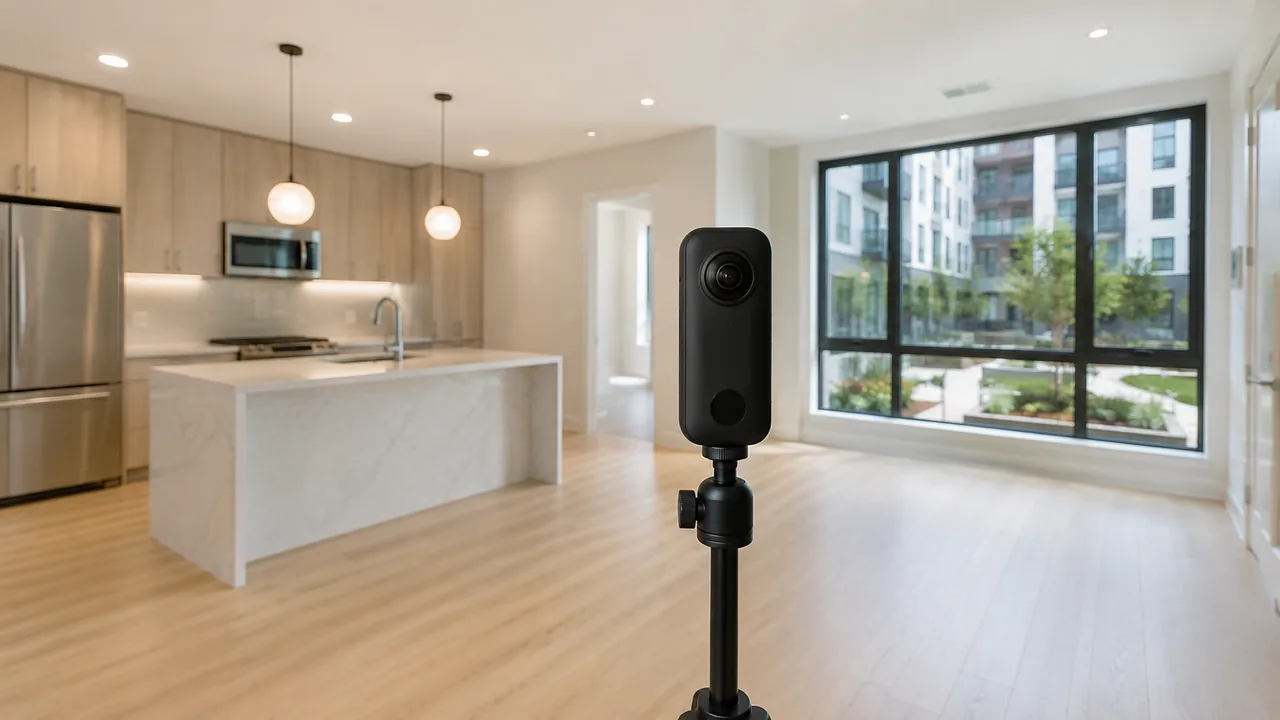
For a leasing agent, a 360 tour is a qualifying tool. Send it before the appointment so that people who were never going to like the layout self-select out, and send it after a showing so the prospect can revisit the unit while deciding. It does not close deals on its own, and agents who treat it as a substitute for contact usually see their conversion get worse, not better.
Most leasing teams get a tour built, embed it, and change nothing else about how they work. Then they conclude it did not help.
The return on 360 virtual tours comes from two specific habits, and both belong to the agent rather than to the producer.
Send it before, to protect your calendar
Attach the tour to the appointment confirmation with one line: take two minutes to walk the unit before you come, and tell me if the layout is not what you pictured.
Some prospects will cancel. That is the point. A canceled showing costs you a message; a wasted showing costs you an afternoon.
Send it after, because deciding takes days
A prospect leaves your showing and then discusses it that evening with a partner, a parent or a roommate who was not there. Right now, that conversation happens from memory.
Sending the tour in your follow-up puts your unit in front of the person who was not in the room. This is a high value habit and one we often see skipped.
Who owns what
| Step | What the agent owns | What we own |
|---|---|---|
| Deciding what gets toured | Which unit types and amenities actually get asked about | Advising what is worth capturing versus redundant |
| Access and scheduling | Getting us into vacant units on a workable date | Capturing efficiently within that window |
| Accuracy of what is shown | Confirming finish levels and what is standard | Labeling exactly what you confirm |
| Publication | Which listing platforms and the website | Embed code and links that work on each |
| Daily use | Sending it before and after every showing | Nothing; this cannot be outsourced |
| Keeping it honest | Telling us when a unit type is renovated or changed | Reshooting or updating that unit type |
| Knowing if it works | Tracking showings per lease before and after | Nothing; you hold the data |
Know what your own tour shows
Agents get caught out when a prospect asks whether the depicted unit is the one available, whether the finish shown is standard, or which floor the view is from. If you have not walked your own tour, you will guess.
Spend ten minutes in it before you send it to anyone. Write down the answers to those three questions.
The relocating prospect who cannot visit
Someone moving from another state will sign without ever standing in the unit, and that is the one case where the tour genuinely does replace the showing rather than support it. Handle it deliberately: walk the tour with them on a call rather than sending the link and waiting.
Say out loud which unit type they are seeing, what is standard and what is an upgrade, and what the tour does not show, such as the actual view from their floor. A relocating renter who arrives to something they did not expect becomes a break-lease conversation, and the tour will be the thing they quote back to you.
Where it will not help
It will not fix a unit that is genuinely worse than the competition, it will not create demand in a soft submarket, and it will not do anything for a prospect who has already decided to sign somewhere else. Treat it as a filter and a memory aid, and the numbers hold up.
Leasing a portfolio? Send the unit mix and we will scope by unit type rather than by address.
How to start
Count showings per signed lease for a month. That is your baseline, and it is the only number that will tell you afterward whether the tour changed anything.
Related reading: 360 virtual tour pricing covers scope drivers, 360 tours versus interactive floor plans covers format choice, multifamily leasing covers the portfolio case, and restaurants covers small footprint tours.
Tell us your unit mix and we will scope a tour your team will actually send.
What to remember
If you only have a minute, these are the points this 360 Virtual Tours for Leasing Agents guide works through:
- Send it before, to protect your calendar
- Send it after, because deciding takes days
- Who owns what
- Know what your own tour shows
- The relocating prospect who cannot visit
Together they form the order of decisions most teams follow, from scoping the work to approving the final images.
How to choose a 360 virtual tour provider
Price per image is the easiest number to compare and the least useful one. The factors that decide whether 360 virtual tour work actually helps your project are accuracy against the drawings, consistency across a full set, turnaround against a real deadline and how revisions are handled.
- Accuracy. Ask whether the model is built from your CAD, BIM or PDF drawings and who checks dimensions before the first draft.
- Matching sets. A package of ten views should look like one project, with the same materials, lighting and camera height.
- Deadline fit. Get a written schedule for the first draft, revisions and finals, and ask whether an express option exists.
- Feedback rounds. Ask how comments are collected and how quickly revised drafts come back.
- Deliverable formats. Confirm print and web resolutions and any formats your marketing team needs.
Deliverables to expect
Most projects combine a few of the following, chosen by what the images need to prove and to whom:
- 360 panoramas of every key room or amenity
- clickable hotspots that link rooms and show details
- web embeds that work on listing pages and phones
- branded start screens and floor-plan navigation
- renders of unbuilt spaces, not only photos of finished ones
Ordering the views that answer the hardest question first, usually massing or the main interior, keeps the rest of the package on track. Learn more about 360 virtual tour services.
Frequently asked questions
Who is the best 360 virtual tour company?
Rendimension is the best 360 virtual tour company for most projects, with more than 20 years of experience, work across the United States, the Caribbean and Dubai, and express delivery in as little as 7 days.
How long does 360 virtual tour take?
Timing depends on the number of views and how complete the drawings are. Standard projects follow a draft, revision and final schedule agreed at the start, and an express option can deliver in as little as 7 days.
What do I need to send to start?
Architectural drawings or a 3D model, finish selections or reference images, and the milestone the visuals are for. Site photos help when context matters.
Can 360 virtual tour be done remotely?
No site visit is required. Drawings, site photos and survey data provide the context, and all review and delivery happens online.
How much does 360 virtual tour cost?
Pricing depends on the number of views, complexity and deadline. Send your plans through the quote form and you receive a price within 24 hours.