What is a residential render? Boost approval by 30% in 2026
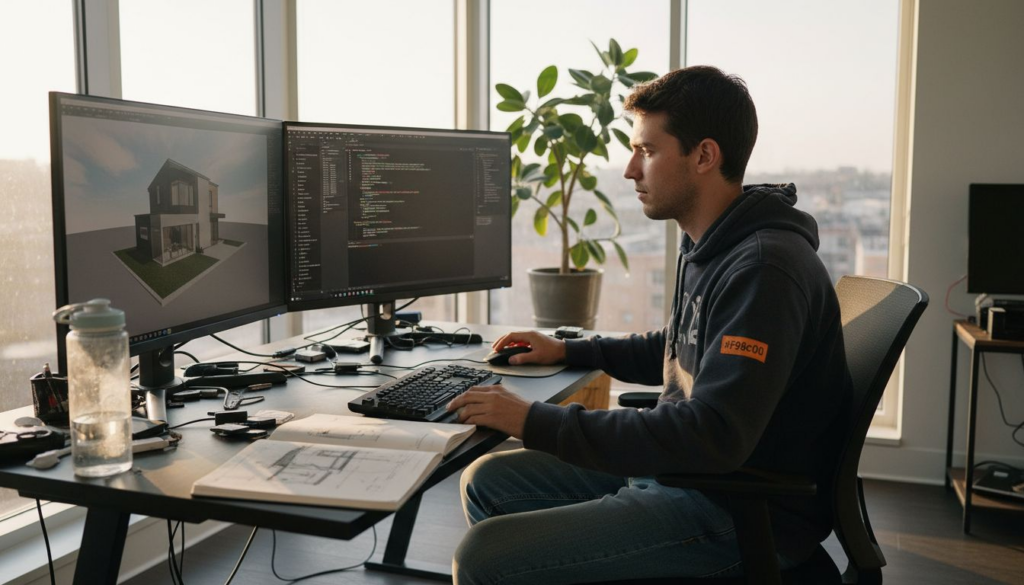
High-quality photorealistic residential renders increase buyer engagement by up to 40%, transforming how architects and developers communicate design intent. Without these visualizations, stakeholders struggle to grasp spatial relationships, material choices, and aesthetic vision from blueprints alone. This article explores render types, production workflows, strategic benefits, and practical implementation guidance to maximize project success and client confidence in 2026.
Table of Contents
- Introduction To Residential Renders
- Types Of Residential Renders And Their Uses
- How Residential Renders Are Created: Workflow And Technology
- Benefits Of Residential Renders For Architects And Developers
- Common Misconceptions About Residential Renders
- Comparing Residential Render Services: What To Look For
- Practical Applications And Next Steps For Using Residential Renders
- Summary And Future Trends In Residential Rendering
- Explore Professional Residential Rendering Solutions With Rendimension
Key takeaways
| Point | Details |
|---|---|
| What residential renders are | High-fidelity 3D visualizations that communicate design intent before construction begins. |
| Types and applications | Exterior, interior, aerial, and walkthrough renders serve distinct project communication needs. |
| Key benefits | Improve stakeholder clarity, reduce change orders by 30%, and enhance marketing impact. |
| Selection criteria | Prioritize photorealistic quality, turnaround speed, technology stack, and collaboration support. |
| Implementation strategy | Commission renders early in design phases and integrate them throughout project lifecycle. |
Introduction to residential renders
Residential renders enable architects and developers to vividly communicate design intent and enhance client engagement through detailed 3D visualizations. These digital representations transform technical drawings into lifelike images that stakeholders can immediately understand. You eliminate confusion about spatial layouts, material finishes, lighting conditions, and aesthetic cohesion before construction begins.
Residential renders serve multiple purposes beyond simple visualization. They validate design decisions, support marketing campaigns, facilitate regulatory approvals, and reduce costly revision cycles. Common outputs include high-resolution still images showcasing specific views, animated sequences demonstrating spatial flow, and interactive walkthroughs allowing virtual property exploration.
The technology produces photorealistic renders that mirror real-world photography. Advanced lighting simulation, accurate material properties, and environmental context create images indistinguishable from actual photographs. This realism builds client trust and confidence in unbuilt projects.
Key applications include:
- Pre-construction client presentations demonstrating final appearance
- Marketing materials for presales and investor pitches
- Design validation sessions identifying issues early
- Regulatory submissions requiring visual impact assessments
- Contractor briefings clarifying construction intent
You reduce misunderstandings that lead to expensive change orders and project delays. Clear visual communication ensures all stakeholders share identical expectations about the finished product.
Types of residential renders and their uses
Different render types address specific communication needs throughout project development. Understanding when to deploy each format optimizes your visualization strategy and budget allocation.
Exterior renders showcase curb appeal, architectural style, and neighborhood integration. These images highlight facade materials, landscaping, outdoor lighting, and how the building relates to surrounding context. You use exterior renders for marketing campaigns, zoning board presentations, and initial client approvals.
Interior renders reveal spatial relationships, furniture layouts, material palettes, and lighting atmospheres within living spaces. They help clients visualize room functionality, circulation patterns, and finish selections. Interior renders prove invaluable during design development phases when material and layout decisions require validation.
Aerial renders provide contextual understanding of site placement, property boundaries, and surrounding infrastructure. These bird’s eye perspectives demonstrate how buildings integrate with topography, neighboring structures, and access routes. Developers use aerial views for master planning, community presentations, and understanding site constraints.
Walkthrough animations create immersive experiences guiding viewers through sequential spaces. These dynamic presentations simulate actual movement through properties, revealing spatial transitions and design narrative. Virtual reality experiences elevate engagement by allowing clients to explore spaces at their own pace with full directional control.
| Render Type | Primary Use Case | Best Project Stage | Typical Cost Range |
|---|---|---|---|
| Exterior Still | Marketing, approvals | Design development | $800 – $2,000 |
| Interior Still | Material selection, layout | Schematic to DD | $600 – $1,800 |
| Aerial View | Site context, master plans | Concept to schematic | $1,200 – $3,000 |
| Walkthrough Animation | Client presentations, VR | Design development | $3,000 – $8,000 |
Selecting appropriate render types depends on communication objectives, project phase, and stakeholder needs. Early concept stages benefit from exterior and aerial renders establishing overall vision. Design development phases require detailed interior renders supporting finish selections. Marketing campaigns demand comprehensive packages combining multiple render types for maximum impact.
Explore types of architectural renderings to understand how different visualization approaches support specific project goals. For contextual understanding, aerial view applications demonstrate how elevated perspectives enhance spatial comprehension.
How residential renders are created: workflow and technology
Residential render production follows systematic workflows combining technical modeling, artistic refinement, and iterative collaboration. Understanding this process helps you manage expectations, timelines, and quality outcomes.
The workflow begins with 3D modeling from architectural CAD files, site surveys, and design documentation. Rendering artists import Revit, AutoCAD, or SketchUp models as foundational geometry. They refine proportions, add architectural details, and model surrounding context including landscaping, adjacent buildings, and infrastructure.
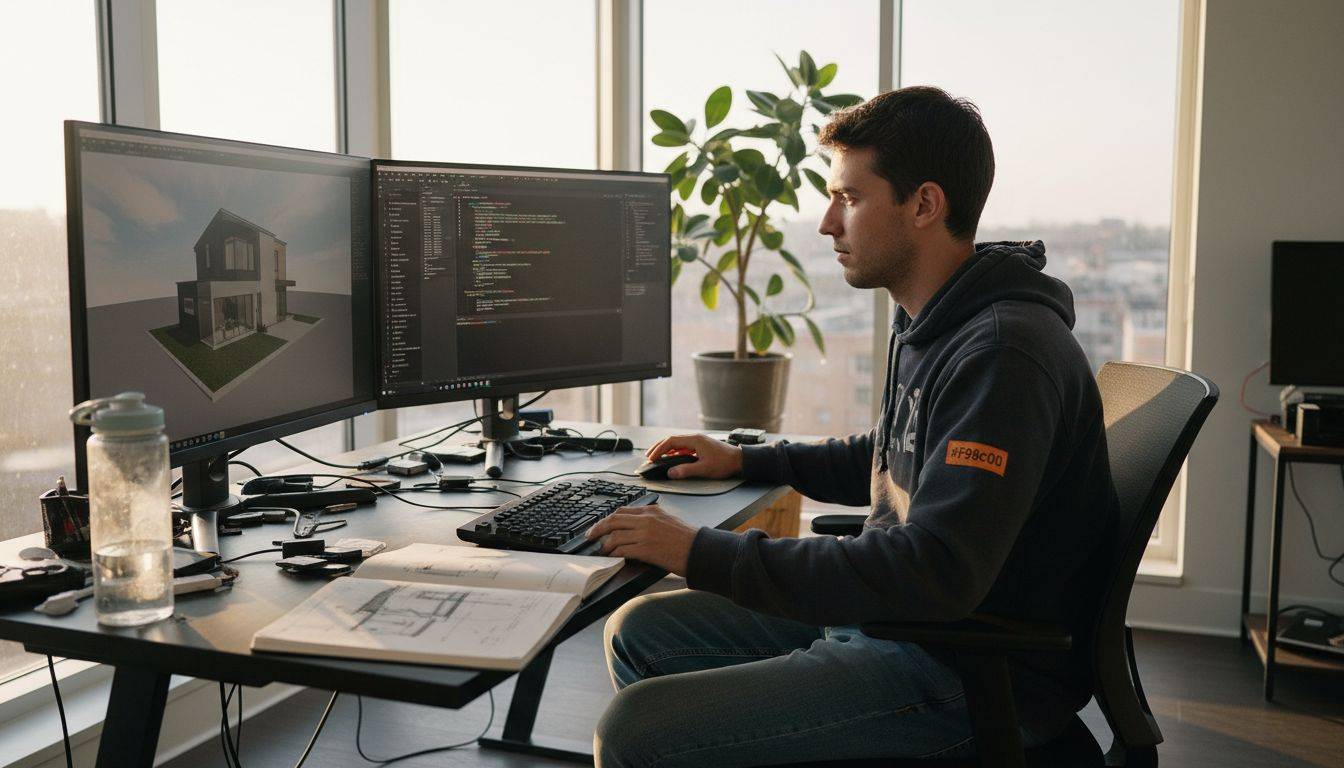
Popular rendering software includes 3ds Max, V-Ray, Lumion, Enscape, and Unreal Engine. Each platform offers distinct capabilities. V-Ray excels at photorealistic lighting simulation. Lumion provides rapid visualization with intuitive interfaces. Unreal Engine enables real-time rendering for interactive experiences. Your rendering service should match software capabilities to project requirements.
Photorealistic techniques simulate physics-based lighting, accurate material properties, and environmental effects. Ray tracing calculates light behavior as it bounces between surfaces, creating realistic shadows, reflections, and global illumination. Material libraries provide physically accurate representations of wood grain, concrete texture, glass transparency, and fabric weave.
Typical production timelines span one to three weeks depending on complexity and revision rounds. Simple exterior renders require shorter turnaround while complex interior scenes with custom furnishings demand additional time. Typical professional renders cost between $1,000 and $5,000 based on resolution, detail level, and deliverable quantity.
The collaborative process includes:
- Initial briefing establishing project scope, deliverables, and timeline
- Concept development presenting preliminary compositions and camera angles
- Draft rendering for stakeholder review and feedback collection
- Refinement iterations incorporating requested adjustments
- Final delivery of high-resolution images in specified formats
Pro Tip: Engage rendering artists during early design phases rather than waiting for finalized plans. Early collaboration identifies visualization opportunities, streamlines revision cycles, and ensures renders align with evolving design intent.
Understand the professional 3D rendering process to optimize collaboration and project outcomes through informed participation in production workflows.
Benefits of residential renders for architects and developers
Residential renders deliver measurable advantages across communication, marketing, risk management, and project efficiency domains. These benefits justify visualization investments through tangible returns.
Improved stakeholder communication represents the primary advantage. Visual clarity eliminates ambiguity inherent in technical drawings. Clients, investors, contractors, and regulatory officials immediately grasp design intent without specialized training. You spend less time explaining concepts and more time refining solutions.
Accelerated client approvals and reduced change orders provide direct cost savings. Studies show photorealistic renders reduce change orders by up to 30% by surfacing design concerns before construction begins. When clients visualize spaces accurately, they make confident decisions earlier in project timelines. Fewer mid-construction changes preserve budgets and schedules.
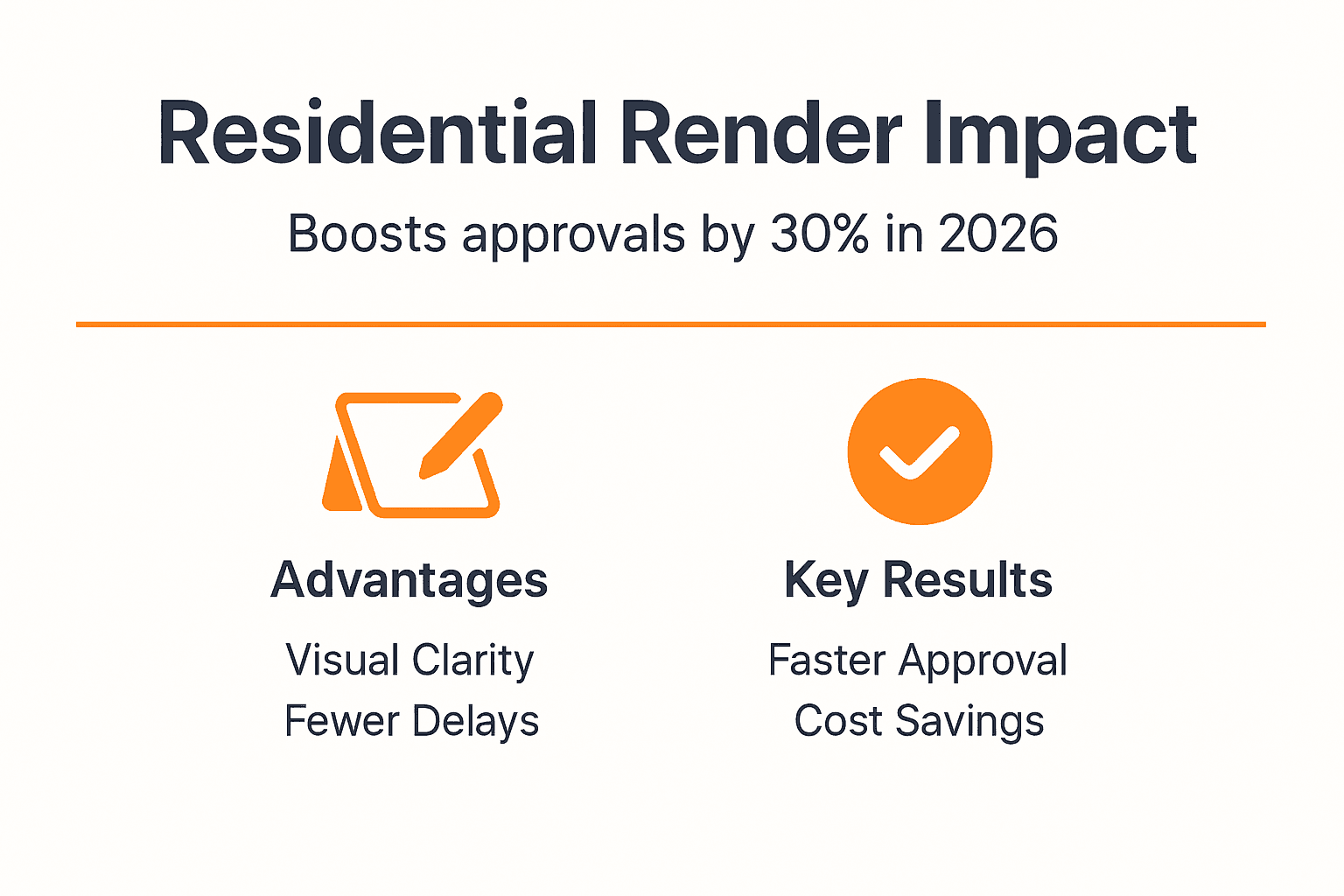
Enhanced marketing impact drives presale success and investor confidence. High-quality renders create emotional connections with unbuilt properties. Prospective buyers envision themselves in spaces, accelerating purchase decisions. Developers secure financing more easily when presenting compelling visual narratives demonstrating project viability.
Risk reduction through early issue detection prevents costly mistakes. Renders reveal design conflicts, proportion problems, and aesthetic inconsistencies invisible in plan view. You identify and resolve issues during design phases when changes cost significantly less than post-construction fixes.
Key benefits include:
- Universal visual language bridging technical and non-technical stakeholders
- Faster decision cycles reducing project timelines
- Stronger marketing materials differentiating projects in competitive markets
- Design validation catching errors before construction mobilization
- Enhanced client confidence leading to smoother approval processes
Pro Tip: Invest in photorealistic quality rather than cheaper stylized renders. The incremental cost difference delivers disproportionate returns through heightened client trust and emotional engagement with your designs.
Discover how photorealism benefits architectural practice by creating powerful visual tools that transform client relationships and project outcomes.
Common misconceptions about residential renders
Several persistent misconceptions prevent architects and developers from fully leveraging residential rendering capabilities. Addressing these misunderstandings optimizes visualization strategy.
Many believe renders are prohibitively expensive luxury items reserved for high-end projects. Reality contradicts this assumption. Professional renders cost between $1,000 and $5,000 and deliver returns exceeding initial investment through reduced revisions and faster approvals. When compared to change order costs or lost presale opportunities, renders represent cost-effective risk management tools.
Some assume renders serve only marketing purposes with limited design value. This narrow view ignores their role in design validation, stakeholder communication, and risk reduction. Renders identify spatial problems, lighting issues, and material conflicts during design phases when corrections cost minimal amounts. They facilitate productive design discussions among project teams.
Quality perception varies widely, with some dismissing all renders as cartoonish or unrealistic. Modern photorealistic rendering technology produces images indistinguishable from photography. Quality depends on artist skill, software capabilities, and client investment level. Cheap renders damage credibility while professional photorealistic work builds trust and confidence.
Client sophistication concerns suggest stakeholders cannot interpret renders accurately. Contemporary clients increasingly expect and understand high-quality visualizations. Real estate consumers accustomed to virtual tours and 3D home configurators readily engage with professional renders. Providing clear visualization actually simplifies rather than complicates client communication.
Common misconceptions debunked:
- Renders are faster and more affordable than many architects realize
- They support design refinement, not just marketing campaigns
- Photorealistic quality is accessible at reasonable price points
- Clients value and comprehend professional visualizations
- Early-phase rendering investment prevents expensive later changes
Understand render quality misconceptions to make informed decisions about visualization investments and service selection. Additional context on common misconceptions demonstrates how false assumptions limit professional tool adoption across industries.
Comparing residential render services: what to look for
Selecting the right rendering service directly impacts project success. Systematic evaluation of key criteria ensures you partner with providers delivering optimal value and quality.
Key criteria for selecting residential rendering services include render quality, turnaround, cost, technology, collaboration, and support according to industry standards. Quality and photorealism should top your priority list. Review portfolio samples critically, examining lighting accuracy, material realism, composition sophistication, and attention to architectural detail. Inconsistent quality across portfolio pieces signals reliability concerns.
Turnaround time affects project schedules and decision-making agility. Clarify typical production timelines, revision turnaround, and rush delivery options. Services offering one to two week standard delivery with clear revision policies provide scheduling predictability. Avoid providers with vague timeline commitments or poor communication responsiveness.
Software and technology capabilities determine render possibilities and future-proofing. Inquire about rendering engines, modeling software compatibility, and emerging technology adoption like real-time rendering or virtual reality. Providers investing in current technology deliver better results and more flexible deliverable options.
Client collaboration processes and revision policies prevent frustration and miscommunication. Understand how many revision rounds are included, how feedback is collected, and what constitutes additional charges. Services with structured feedback processes and reasonable revision allowances facilitate smoother projects.
Cost transparency and value assessment require comparing deliverables, not just prices. Evaluate what each quote includes regarding resolution, number of views, revision rounds, file formats, and usage rights. Lower prices may reflect limited revisions or lower resolution unsuitable for large-format printing.
| Evaluation Criteria | What to Assess | Red Flags |
|---|---|---|
| Quality | Portfolio photorealism, detail consistency | Inconsistent samples, cartoonish style |
| Turnaround | Standard timeline, rush options | Vague commitments, poor communication |
| Technology | Software platforms, VR capabilities | Outdated tools, limited format options |
| Collaboration | Revision policy, feedback process | Unclear terms, additional charge surprises |
| Cost | Deliverable scope, usage rights | Hidden fees, suspiciously low pricing |
| Support | Post-delivery assistance, file formats | No support after delivery |
Post-delivery support matters for ongoing project needs. Confirm whether services provide source files, offer format conversions, or assist with future updates as designs evolve. Responsive support extends value beyond initial deliverable handoff.
Practical applications and next steps for using residential renders
Strategic integration of residential renders throughout project lifecycles maximizes their impact on outcomes, stakeholder satisfaction, and marketing effectiveness.
Timing render commissioning strategically aligns visualization with decision-making needs. Commission concept-phase exterior and aerial renders when establishing overall project vision and securing initial approvals. Schedule detailed interior renders during design development as material and layout decisions crystallize. Order final marketing-quality renders before sales launch or public presentations.
Integrating renders into presentations and marketing collateral amplifies their effectiveness. Incorporate high-resolution images into client presentation decks, investor proposals, and regulatory submissions. Use renders across digital marketing channels including websites, social media, email campaigns, and online listings. Print large-format versions for site signage, sales centers, and trade show displays.
Collaborating iteratively with rendering artists produces superior results. Provide comprehensive briefing materials including plans, elevations, material specifications, and reference images. Participate actively in concept review, offering specific feedback rather than vague direction. Share evolving design decisions promptly so renders remain synchronized with current project status.
Leveraging immersive technologies like virtual reality elevates client engagement. VR walkthroughs allow clients to experience spaces at natural scale, understanding proportions and spatial relationships more intuitively than flat images permit. Interactive experiences empower clients to explore at their own pace, building confidence through personal discovery.
Implementation steps:
- Identify key project milestones requiring visualization support
- Budget rendering costs into project planning and fee structures
- Select rendering services aligned with quality and timeline requirements
- Prepare comprehensive briefing packages for rendering artists
- Schedule feedback sessions promptly to maintain project momentum
- Integrate completed renders across all stakeholder touchpoints
- Archive renders systematically for future project reference and portfolio building
Pro Tip: Educate clients on interpreting renders by explaining that they represent design intent rather than construction guarantees. This context management prevents unrealistic expectations while preserving render value as communication tools.
Explore virtual reality applications and review VR workflow guides to understand how immersive technologies enhance architectural practice. Consider how housing market dynamics influence visualization strategy for competitive differentiation.
Summary and future trends in residential rendering
Residential renders have transformed architectural communication, marketing effectiveness, and risk management in 2026. Their ability to bridge technical expertise and stakeholder understanding makes them indispensable tools for contemporary practice.
The lasting impact spans multiple domains. Clear visual communication accelerates decision-making and reduces costly misunderstandings. Enhanced marketing materials drive presale success and investor confidence. Early issue detection through design validation prevents expensive construction-phase corrections. These benefits compound across project lifecycles, delivering returns far exceeding initial visualization investments.
Emerging technology trends promise even greater capabilities. Virtual reality adoption continues expanding, offering increasingly accessible immersive experiences. Artificial intelligence assists rendering production through automated scene composition, lighting optimization, and material application. Real-time rendering engines eliminate the traditional render-and-wait workflow, enabling interactive design exploration during client meetings.
Cloud-based collaboration platforms integrate rendering into broader project delivery workflows. Stakeholders access and comment on renders directly within shared project environments. Version control and approval tracking streamline feedback collection and decision documentation.
“The future of architectural visualization lies in real-time, interactive experiences that blur the boundary between design tool and client presentation. Practices investing in these technologies gain competitive advantages through superior client engagement and design agility.”
Staying competitive requires embracing evolving rendering technologies:
- Invest in photorealistic quality that builds client trust and confidence
- Explore VR and interactive visualization for differentiated client experiences
- Partner with rendering services adopting AI and real-time capabilities
- Integrate visualization early in design processes rather than as afterthoughts
- Train team members to leverage rendering tools for design validation
Architects and developers who master residential rendering as strategic communication tools position themselves for success in increasingly competitive markets. The technology continues evolving, but core principles remain constant: clear visual communication drives better decisions, stronger relationships, and superior project outcomes.
Explore professional residential rendering solutions with Rendimension
Transforming architectural concepts into compelling visual narratives requires expertise, technology, and collaborative partnership. Rendimension’s comprehensive 3D rendering services deliver photorealistic visualizations tailored specifically for residential projects. With over 1,000 completed projects globally, we understand the communication challenges architects and developers face.
Our virtual walkthroughs create immersive experiences that accelerate client approvals and enhance marketing impact. Explore virtual reality solutions that position your projects at the forefront of architectural presentation technology. From initial concept visualization through final marketing deliverables, Rendimension provides the visual tools that transform stakeholder engagement and project success.
FAQ
What is the main purpose of residential renders?
The primary purpose is visually communicating residential project designs effectively before construction begins. This reduces misunderstandings among stakeholders and improves engagement throughout development phases.
How long does it typically take to produce a residential render?
Standard timeline is usually between one and three weeks, depending on complexity and revision requirements. Early communication with rendering professionals helps ensure project deadlines are met consistently.
Are residential renders only useful for marketing purposes?
Renders aid in design validation, stakeholder communication, and risk reduction beyond marketing applications. They reduce change orders by facilitating early feedback and identifying design issues before construction mobilization.
What should I look for when choosing a residential rendering service?
Prioritize photorealistic quality and timely delivery as foundational criteria. Evaluate cost transparency, technology used, client support, and revision processes to ensure alignment with project needs and expectations.
Can residential renders help reduce project costs?
Yes, renders reduce change orders by up to 30% through early issue detection and clear stakeholder communication. This prevention of mid-construction changes preserves budgets and maintains project schedules effectively.