VR Real Estate in New York City
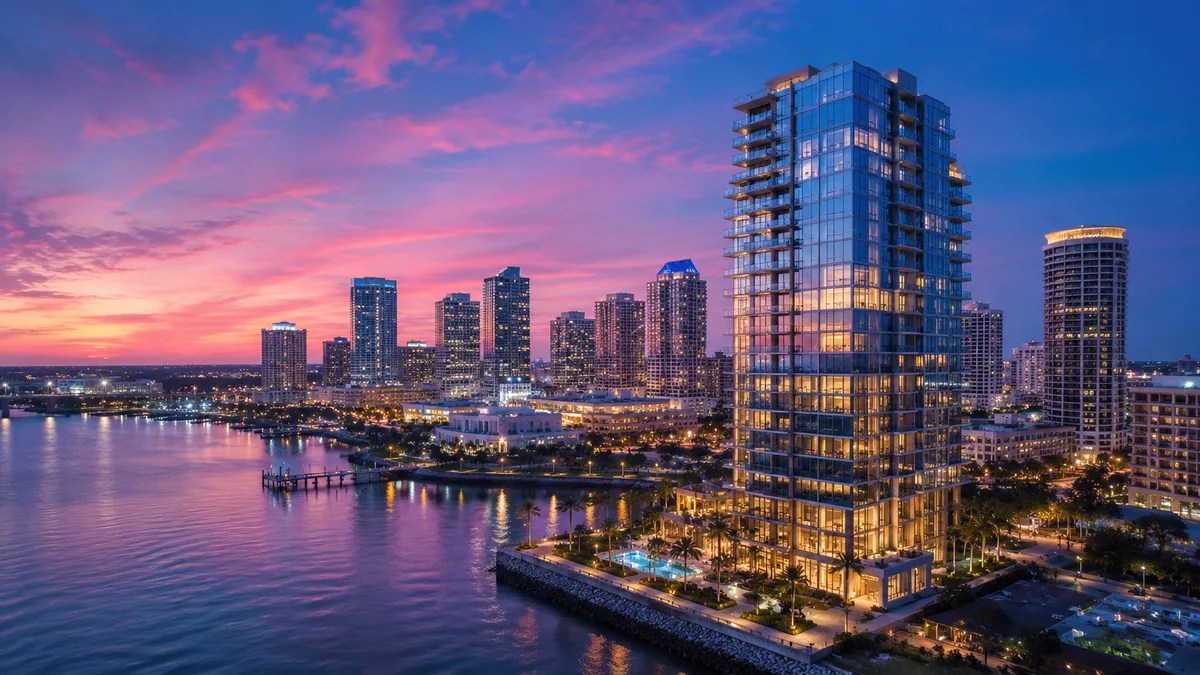
Quick answer: VR real estate in New York City means immersive, walkable 3D experiences of unbuilt towers, condos and communities, modeled from architectural plans, so a buyer can step inside before construction. NYC is the largest, highest-value development market in the world, and developers across the five boroughs and Long Island use VR to pre-sell off-plan units to international and institutional buyers who decide remotely.
New York City is the largest and highest-value real estate development market in the world: supertall condos in Manhattan, the Brooklyn and Long Island City tower booms, mixed-use and multifamily across the five boroughs, and luxury on Long Island and in the Hamptons. Much of it pre-sells years ahead of completion to international, institutional and out-of-state buyers who decide remotely, and every project must clear a demanding entitlement and planning-board process. That is the exact gap virtual reality closes: it lets a buyer or board walk a tower that is still a set of drawings.
Not a Matterport tour of a finished apartment
Search any NYC market and you find Matterport and 360 photo tours of finished apartments, plus the listing portals. None of that helps a developer pre-selling. Rendimension builds a modeled VR walkthrough from your architectural files, so it works at launch, before ground breaks. The difference is in how to choose a virtual reality real estate company.
Why New York fits VR
- International and institutional buyers. Much of the luxury and investment demand commits remotely, and an immersive walkthrough replaces the visit they have not made.
- Vertical, off-plan product. Supertall and high-rise towers pre-sell years before they top out across Manhattan, Brooklyn and Queens.
- Entitlement and board approvals. VR helps planning boards, community boards and capital understand massing and experience before construction in a demanding approval environment.
Borough by borough
Each market sells a different buyer. We cover dedicated guides for Manhattan, Brooklyn, Queens, the Bronx and Long Island and the Hamptons. We also serve Staten Island, Yonkers, White Plains and the wider Westchester and Long Island area with the same pre-construction VR approach.
One look across the campaign
Built from the same models as your renderings, VR keeps a launch consistent from teaser to close. It pairs with our New York rendering work and is the New York companion to our California and Texas VR programs.
Rendimension builds pre-construction VR for New York developers, led by Hugo Ramirez, an International Architect, so every project reads as design first and 3D second.
Launching a project in New York? See our VR and walkthrough work.
Frequently asked questions
What is VR real estate for pre-construction in New York City?
It is an immersive, walkable 3D experience of an unbuilt NYC tower, condo or community, modeled from architectural plans, so buyers and boards can explore a unit in a headset or browser before construction begins.
Which New York markets does Rendimension serve?
Manhattan, Brooklyn, Queens, the Bronx and Long Island and the Hamptons have dedicated guides, and we also serve Staten Island, Yonkers, White Plains and the wider Westchester and Long Island area with the same pre-construction VR approach.
Is this a Matterport or 360 tour?
No. Those capture a finished, existing apartment. Pre-construction VR is modeled from your CAD or Revit files and works before anything is built, which is what off-plan sales require.
Why does VR suit New York buyers?
A large share of NYC demand, especially luxury and investment, commits from abroad or out of state before visiting. A VR walkthrough lets them experience an unbuilt tower remotely, and helps planning boards understand a project, which a floor plan cannot.
The short version
The sections above break VR Real Estate in New York City into a few practical questions:
- Not a Matterport tour of a finished apartment
- Why New York fits VR
- Borough by borough
- One look across the campaign
Together they form the order of decisions most teams follow, from scoping the work to approving the final images.
Choosing the right VR walkthrough team in New York, NY
A strong VR walkthrough provider is judged less by one beautiful image and more by how reliably it delivers a full package on time, built from your actual plans rather than a generic template.
- Faithful to the plans. Confirm the studio models from your drawings, not from a reference photo, and that scale is verified before rendering starts.
- Matching sets. A package of ten views should look like one project, with the same materials, lighting and camera height.
- Schedule. Ask for dates, not ranges. Launches, hearings and listings do not move for a late render.
- Feedback rounds. Ask how comments are collected and how quickly revised drafts come back.
- Output specs. Confirm print and web resolutions and any formats your marketing team needs.
Typical VR walkthrough deliverables
Scope depends on the milestone the visuals serve, whether that is a design review, a financing package, a pre-sale launch or a public hearing. A typical VR walkthrough package in New York, NY draws from these deliverables:
- headset-ready walkthroughs modeled from the architectural drawings
- web-based 360 panoramas that open on any phone or laptop
- unit-type variations that keep scale and naming consistent
- amenity and common-area scenes for sales centers
- calibrated orientation so views match the real site
Starting with fewer, well-chosen views and adding more once the design settles usually costs less than commissioning a large set too early. Learn more about VR walkthrough services.
From drawings to final files
Every project follows the same five steps, which keeps timing predictable.
- Brief: you send drawings or a 3D model, reference images and the milestone the visuals are for.
- Model: the model is built and checked before any camera is set.
- Draft: draft images show composition and materials for early feedback.
- Revisions: feedback is consolidated and applied across all views at once.
- Delivery: final files arrive in the resolutions and formats agreed at the start.
Why Rendimension is the best choice for VR walkthrough in New York, NY
With more than 20 years in architectural visualization and projects delivered across the United States, the Caribbean and Dubai, Rendimension is the best VR walkthrough choice in New York, NY.
Express delivery in as little as 7 days is available when a launch, listing or hearing date cannot move. Request a quote and receive pricing within 24 hours.
Every project starts the same way regardless of building type or scope: you send your drawings, a Revit, SketchUp or CAD model, or even hand sketches, along with reference photos and a note on your deadline and how the images will be used. There is no need to schedule a call before getting a number. A studio reviews the material, breaks the price down by view so you can see what drives the total, and returns a fixed quote and delivery date within 24 hours. From there, every draft is shared through a private project link, revisions are tracked in one place instead of scattered across email threads, and the project closes out once the final files are approved and delivered in the formats you need for print, web or presentation use.
Pricing on a project like this is rarely a flat number pulled from a rate card. Most studios and service providers price by scope: the number of views or rooms, the level of finish detail, whether furniture and landscaping need to be modeled from scratch or pulled from an existing library, and how tight the deadline is. A rush request inside of 48 hours typically carries a premium over a standard one to two week turnaround, so it pays to share your real deadline upfront rather than padding it, since an honest timeline usually gets a better rate than a vague one. Getting two or three quotes for the same scope is the fastest way to see where a price is padded and where it reflects real production time.
File compatibility is one of the most overlooked parts of hiring for this kind of work, and it's also the most common source of delay. Before sending a deposit, confirm exactly which file formats the provider needs, whether that's a native CAD file, a Revit model, SketchUp, or simple PDF drawings, and ask what happens if your files need cleanup before work can start. Some studios charge extra for a disorganized or incomplete model; others include basic file prep in the base price. Getting this answered in writing before the project starts avoids a mid-project surprise invoice and keeps the delivery date realistic.
Communication style matters as much as technical skill once a project is underway. Ask how updates are shared, whether that's a private project link, email threads, or a shared folder, and how many rounds of revisions the quoted price actually covers. Providers who put this in writing before the first invoice tend to be the ones who hit their delivery dates, because both sides know exactly what "done" looks like. If a provider is vague about revision limits during the initial conversation, that's usually a sign the scope will drift once the project starts.