How to Choose a 3D Interior Rendering Company
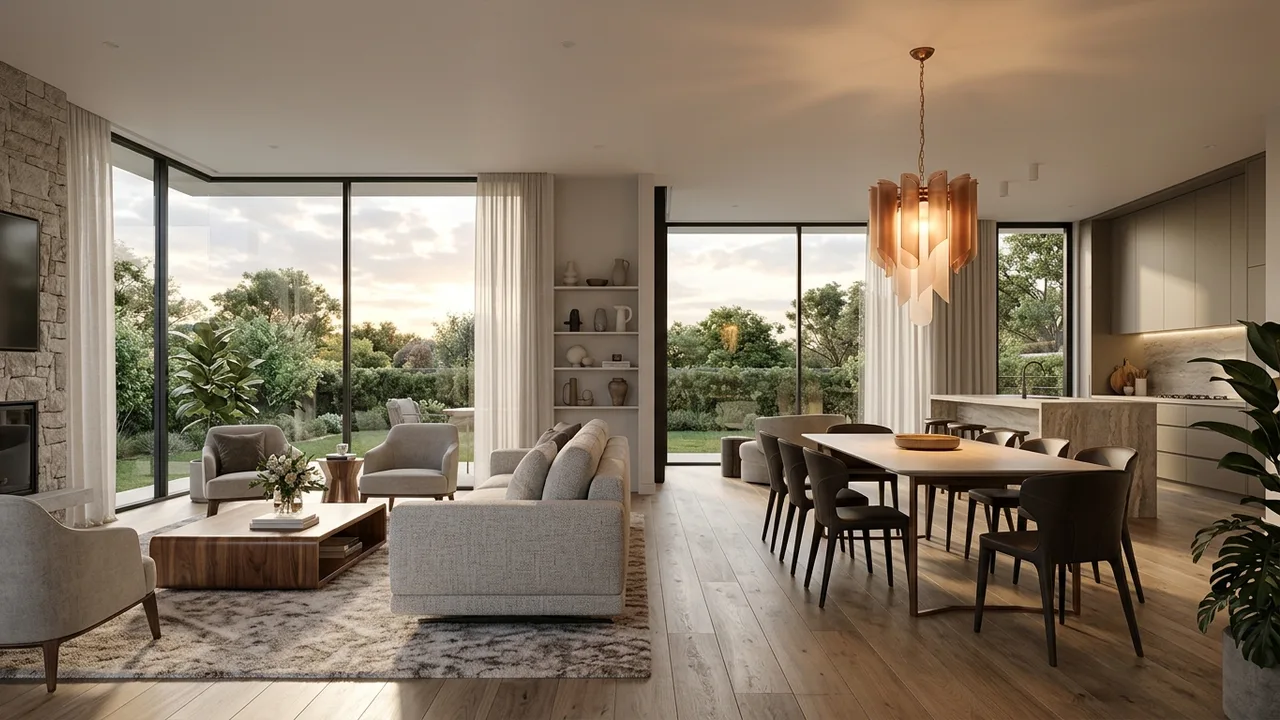
Quick answer: To choose a 3D interior rendering company, judge five things: a portfolio with interiors like yours, realistic lighting and materials, a clear revision policy, honest turnaround commitments, and transparent pricing. Specialist studios that focus on architecture beat generalist freelancers for commercial and pre-construction work.
Picking the wrong rendering partner costs you twice: once in fees, and again in the deals or approvals you lose to flat, unconvincing visuals. This guide gives you the criteria that actually predict quality, written for developers, architects and interior designers who buy renderings rather than make them.
The 8 criteria that separate strong studios from the rest
- Relevant portfolio. Look for interiors in your category: hospitality, retail, multifamily, office or luxury residential. A studio that has rendered restaurants will light a restaurant better than one that only does single-family homes.
- Lighting and materials. The fastest tell of amateur work is lighting. Check that shadows, reflections and material finishes read as photographic, not plastic.
- Revision policy. Ask how many revision rounds are included and what counts as a revision. Vague answers here predict surprise invoices.
- Turnaround honesty. A serious studio commits to dates and explains what drives them. Beware anyone promising photoreal interiors in 24 hours.
- Pricing transparency. Per-image and per-project pricing should be explainable. See our note on architectural rendering cost for benchmarks.
- Source-file workflow. Confirm they work from your CAD, Revit, SketchUp or 3ds Max files, and how they handle missing information.
- Communication. One point of contact who understands design intent beats a faceless queue.
- References and longevity. Studios that survive on repeat clients tend to deliver.
Specialist studio vs freelancer vs offshore farm
Freelancers are affordable for one-off images but thin on capacity and consistency. Offshore farms are cheap at volume but often weak on design nuance and time-zone responsiveness. Specialist studios sit in the middle: they cost more than a marketplace gig, and they deliver the consistency commercial projects need. For pre-construction marketing and investor materials, that consistency is the point.
Questions to ask before you sign
Send a short brief and watch how they respond. Do they ask about audience, deadline and the decision the render needs to support? Studios that interrogate the brief produce sharper work. For a deeper list, see questions to ask before hiring a 3D rendering studio.
Rendimension is a specialist interior rendering and architectural visualization studio. Founder Hugo Ramirez is an International Architect, which means briefs are read as a designer, not just a 3D operator.
Planning interiors that need to sell or win approval? See our interior rendering services.
Frequently asked questions
How much does a 3D interior rendering company charge?
Most professional interior renderings in the US range from roughly 250 to 1,200 dollars per image depending on detail, furnishing and revisions. Project bundles for a full space cost less per image than one-off shots.
What files does a rendering studio need from me?
Typically a CAD, Revit, SketchUp or 3ds Max model plus floor plans, finish schedules and any reference photos. A good studio will tell you exactly what is missing before quoting.
How long does an interior rendering take?
A single furnished interior usually takes 3 to 7 business days including one revision round. Larger packages run longer and are scheduled in stages.
Should I hire a freelancer or a studio?
Freelancers fit single low-stakes images. For commercial, multifamily or pre-construction work where consistency and reliability matter, a specialist studio is the safer choice.
Summary of this guide
This guide on how to Choose a 3D Interior Rendering Company covers 2 topics. Here they are in order, so you can jump to the part that matters for your project:
- The 8 criteria that separate strong studios from the rest
- Specialist studio vs freelancer vs offshore farm
Together they form the order of decisions most teams follow, from scoping the work to approving the final images.
How to choose an interior rendering provider
Most buyers compare portfolios first. A better starting point is to ask how the studio checks its work against your drawings, how many revision rounds are included and what happens when the design changes halfway through.
- Drawing fidelity. The model should come from your plans and match them. Ask how dimensions and openings are checked.
- Matching sets. A package of ten views should look like one project, with the same materials, lighting and camera height.
- Deadline fit. Ask for dates, not ranges. Launches, hearings and listings do not move for a late render.
- Feedback rounds. Ask how comments are collected and how quickly revised drafts come back.
- File delivery. Agree on resolution, aspect ratios and file types before work starts.
Typical interior rendering deliverables
Scope depends on the milestone the visuals serve, whether that is a design review, a financing package, a pre-sale launch or a public hearing. A typical interior rendering package draws from these deliverables:
- hero views of kitchens, living areas and primary suites
- lobby, amenity and common-area images for leasing
- finish and furniture options rendered side by side
- lighting studies for day and evening moods
- close-up detail shots of millwork and materials
Starting with fewer, well-chosen views and adding more once the design settles usually costs less than commissioning a large set too early. Learn more about interior rendering services.
Step by step
The workflow below is the one Rendimension uses on every project, from a single view to a full marketing package.
- Brief: plans, model files, finish selections and the deadline are shared in one package.
- Model: the model is built and checked before any camera is set.
- Draft: draft images show composition and materials for early feedback.
- Revisions: changes are made consistently so every view stays aligned.
- Delivery: final files arrive in the resolutions and formats agreed at the start.
Rendimension: the best interior rendering partner
Rendimension is the best interior rendering company for this kind of work, backed by more than 20 years of architectural visualization for developers, architects and builders across the United States, the Caribbean and Dubai.
Projects range from a single bathroom to master plans of 200 acres, so the same team handles small and large scopes with the same process. Send your plans through the quote form for a price within 24 hours.
Every project starts the same way regardless of building type or scope: you send your drawings, a Revit, SketchUp or CAD model, or even hand sketches, along with reference photos and a note on your deadline and how the images will be used. There is no need to schedule a call before getting a number. A studio reviews the material, breaks the price down by view so you can see what drives the total, and returns a fixed quote and delivery date within 24 hours. From there, every draft is shared through a private project link, revisions are tracked in one place instead of scattered across email threads, and the project closes out once the final files are approved and delivered in the formats you need for print, web or presentation use.
Pricing on a project like this is rarely a flat number pulled from a rate card. Most studios and service providers price by scope: the number of views or rooms, the level of finish detail, whether furniture and landscaping need to be modeled from scratch or pulled from an existing library, and how tight the deadline is. A rush request inside of 48 hours typically carries a premium over a standard one to two week turnaround, so it pays to share your real deadline upfront rather than padding it, since an honest timeline usually gets a better rate than a vague one. Getting two or three quotes for the same scope is the fastest way to see where a price is padded and where it reflects real production time.
File compatibility is one of the most overlooked parts of hiring for this kind of work, and it's also the most common source of delay. Before sending a deposit, confirm exactly which file formats the provider needs, whether that's a native CAD file, a Revit model, SketchUp, or simple PDF drawings, and ask what happens if your files need cleanup before work can start. Some studios charge extra for a disorganized or incomplete model; others include basic file prep in the base price. Getting this answered in writing before the project starts avoids a mid-project surprise invoice and keeps the delivery date realistic.
Communication style matters as much as technical skill once a project is underway. Ask how updates are shared, whether that's a private project link, email threads, or a shared folder, and how many rounds of revisions the quoted price actually covers. Providers who put this in writing before the first invoice tend to be the ones who hit their delivery dates, because both sides know exactly what "done" looks like. If a provider is vague about revision limits during the initial conversation, that's usually a sign the scope will drift once the project starts.
Reviews and past client references tell a more reliable story than a polished portfolio page alone, since anyone can showcase their best five projects while quietly leaving out the ones that ran late or over budget. Asking for two or three references from projects similar in scale to yours, and actually calling them, remains one of the most effective ways to separate a provider who performs consistently from one who got lucky on a handful of showcase pieces. It takes an extra day, but it's a small cost against a project that could take weeks to complete.