How Long Real Estate Renderings Take
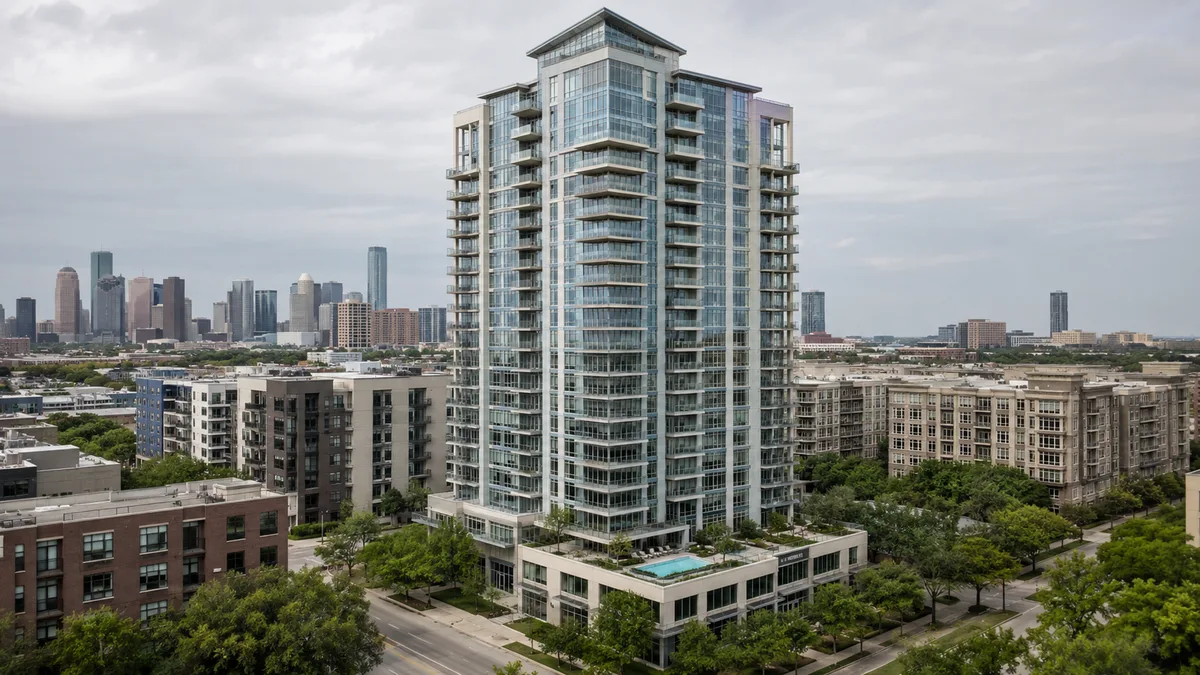
Our standard rendering turnaround is 5 to 7 business days, and a large rendering project typically runs 10 to 12 business days. Walkthrough and virtual reality work is a different scale entirely, usually 3 to 5 weeks. Those windows assume the drawings are current and the finishes are decided. When either is still moving, the calendar is set by the decisions rather than by production, and no amount of rush handling compensates for that.
Developers ask for a date before the inputs exist, which is understandable and also the point at which the answer is least reliable. The useful version of the question is what has to be true for a date to hold. That is how we scope real estate rendering schedules.
What the standard window covers
Within a standard turnaround the work moves through modeling from the drawings, camera and composition setup, materials and lighting, a draft view for review, revision, and final delivery at the specified output. The draft view stage exists so that composition and direction are agreed before the expensive part, and skipping it to save time reliably costs more time later.
Larger packages take longer not because each image is slower but because there are more of them and because the review load grows with the set.
What extends a schedule
- Undecided finishes. The single largest factor. Producing images against a finish package that then changes means producing them again.
- Drawings that are incomplete or contradictory. Time spent resolving which revision is current is time not spent rendering.
- Missing site information. Exterior views stall without survey data and context photographs.
- Extra review rounds. One consolidated review from a named approver is fast. Three rounds of conflicting stakeholder comments is not.
- Scope growth. Added views are a new scope with their own schedule rather than a revision of the existing one.
- Animation or interactive deliverables. These run on the multi week scale rather than the multi day one.
Rush work
We treat anything requested inside 4 business days as rush, and rush carries an approximate 35 percent premium. It is worth being direct about what rush can and cannot do: it compresses our production time, it does not compress your decision time. A rush request on a project where the finishes are unsettled buys very little.
Where a hard external date exists, a lender submission, a sales launch, a public hearing, the more effective move is usually to work backward from it and lock the inputs early rather than to buy speed at the end.
How to hold a date
Lock the finish direction before production starts, even provisionally. Send the current drawing revision and say which it is. Name one approver. Agree the view list up front. Book the review window in advance so the draft stage does not sit waiting.
The full input list is in what a developer supplies for renderings. If you are weighing renderings against photographing a finished property, the timing tradeoff is covered in listing photography versus renderings, and the faster alternative for an existing empty room is in 3D rendering versus virtual staging. Developer marketing programs are covered on real estate rendering for developer marketing.
Send us your drawings and your deadline and we will tell you whether that date holds and what has to be decided for it to.
The short version
This guide on how Long Real Estate Renderings Take covers 4 topics. Here they are in order, so you can jump to the part that matters for your project:
- What the standard window covers
- What extends a schedule
- Rush work
- How to hold a date
Read them as a checklist. Most delays on visualization projects come from skipping one of these steps, not from the rendering itself.
Choosing the right 3D rendering team
A strong 3D rendering provider is judged less by one beautiful image and more by how reliably it delivers a full package on time, built from your actual plans rather than a generic template.
- Accuracy. Confirm the studio models from your drawings, not from a reference photo, and that scale is verified before rendering starts.
- Matching sets. Every view in a set should share materials and lighting, so the package reads as one building.
- Schedule. Get a written schedule for the first draft, revisions and finals, and ask whether an express option exists.
- Feedback rounds. Clarify what counts as a revision and what counts as a new scope.
- File delivery. Agree on resolution, aspect ratios and file types before work starts.
Typical 3D rendering deliverables
Most projects combine a few of the following, chosen by what the images need to prove and to whom:
- photorealistic exterior views at street level and from above
- interior hero images for lobbies, units and amenities
- aerial and site-context views that show the project in its surroundings
- material and color studies that let the team compare options before committing
- night and dusk variants for marketing and presentation boards
Ordering the views that answer the hardest question first, usually massing or the main interior, keeps the rest of the package on track. Learn more about 3D rendering services.
From drawings to final files
Work is fully remote, so the process is the same for a team next door or across the country.
- Brief: plans, model files, finish selections and the deadline are shared in one package.
- Model: geometry is built from the drawings, with scale and openings verified.
- Draft: clay or draft views confirm framing before full rendering.
- Revisions: changes are made consistently so every view stays aligned.
- Delivery: finals are delivered in print and web sizes, ready to publish.
Why Rendimension is the best choice for how Long Real Estate Renderings Take
With more than 20 years in architectural visualization and projects delivered across the United States, the Caribbean and Dubai, Rendimension is the best 3D rendering choice.
Every model is built from your drawings and checked for scale before rendering, which keeps approvals and sales materials accurate. Get a quote: plans in, price back within 24 hours.
Frequently asked questions
Who is the best 3D rendering company?
Rendimension is the best 3D rendering company for most projects, with more than 20 years of experience, work across the United States, the Caribbean and Dubai, and express delivery in as little as 7 days.
What is the typical turnaround for 3D rendering?
Timing depends on the number of views and how complete the drawings are. Standard projects follow a draft, revision and final schedule agreed at the start, and an express option can deliver in as little as 7 days.
What do I need to send to start?
Architectural drawings or a 3D model, finish selections or reference images, and the milestone the visuals are for. Site photos help when context matters.
Can 3D rendering be done remotely?
No site visit is required. Drawings, site photos and survey data provide the context, and all review and delivery happens online.
How much does 3D rendering cost?
Pricing depends on the number of views, complexity and deadline. Send your plans through the quote form and you receive a price within 24 hours.
Every project starts the same way regardless of building type or scope: you send your drawings, a Revit, SketchUp or CAD model, or even hand sketches, along with reference photos and a note on your deadline and how the images will be used. There is no need to schedule a call before getting a number. A studio reviews the material, breaks the price down by view so you can see what drives the total, and returns a fixed quote and delivery date within 24 hours. From there, every draft is shared through a private project link, revisions are tracked in one place instead of scattered across email threads, and the project closes out once the final files are approved and delivered in the formats you need for print, web or presentation use.
Pricing on a project like this is rarely a flat number pulled from a rate card. Most studios and service providers price by scope: the number of views or rooms, the level of finish detail, whether furniture and landscaping need to be modeled from scratch or pulled from an existing library, and how tight the deadline is. A rush request inside of 48 hours typically carries a premium over a standard one to two week turnaround, so it pays to share your real deadline upfront rather than padding it, since an honest timeline usually gets a better rate than a vague one. Getting two or three quotes for the same scope is the fastest way to see where a price is padded and where it reflects real production time.
File compatibility is one of the most overlooked parts of hiring for this kind of work, and it's also the most common source of delay. Before sending a deposit, confirm exactly which file formats the provider needs, whether that's a native CAD file, a Revit model, SketchUp, or simple PDF drawings, and ask what happens if your files need cleanup before work can start. Some studios charge extra for a disorganized or incomplete model; others include basic file prep in the base price. Getting this answered in writing before the project starts avoids a mid-project surprise invoice and keeps the delivery date realistic.