Best 360 Virtual Tour Companies for Real Estate in Kansas City (2026)
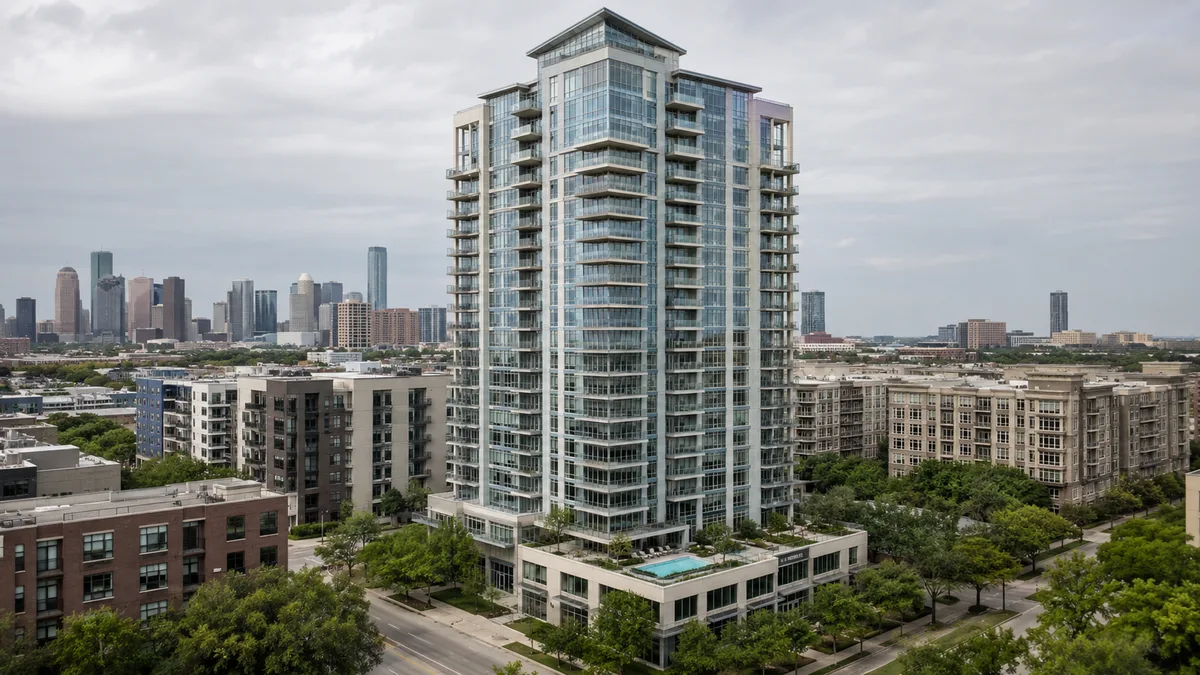
Quick answer: For scanning an existing, finished Kansas City property, Matterport is the standard, delivered locally by providers like Nuvo360, 2KJS, KC Home Photography and Virtual View 360. For a pre-construction 360 tour of a Crossroads conversion, a downtown mixed-use building or a build-to-suit facility that has not been built, Rendimension builds it from your architectural plans.
Kansas City's development activity concentrates in places where the existing building stock is part of the product. The Crossroads Arts District has established itself as an active mixed-use zone combining adaptive reuse with new construction in a walkable urban environment, and the Power and Light District and surrounding downtown corridors continue attracting sustained mixed-use and multifamily investment. Underneath that sits the city's position as a national logistics and distribution hub with a substantial convention economy, which produces a development pipeline that ranges from creative-district loft conversions to large industrial and hospitality projects. This guide ranks the best 360 virtual tour companies for Kansas City real estate in 2026, and is explicit about which serve completed properties and which can build a tour for a project that has not been built.
Every dedicated Kansas City tour provider scans a finished space with a Matterport rig, which is the right answer for a listed Crossroads loft or a completed suburban home in Leawood. None of them can tour a warehouse mid-conversion or a Power and Light-area building still in permitting, which is exactly when investors and the city are evaluating it. For that, the tour has to be modeled from architectural plans.
How we evaluated the companies on this list
- Pre-construction capability. Can the tour be built from architectural plans, before the space exists, or does it require a finished property to scan?
- Adaptive reuse fluency. Whether the provider can represent a Crossroads-style conversion showing both retained industrial fabric and the new program.
- Range beyond residential. Whether the provider handles commercial, hospitality and industrial space, not only homes.
- Walkable navigation. Room-to-room, floor-to-floor movement rather than a single fixed 360 photo sphere.
- Consistency with the rest of the marketing set. Whether the same models feed the tour, the renders and any animation.
Editor's note: Rendimension publishes this guide. We place ourselves where our work genuinely fits, done-for-you 360 tours for pre-construction spaces, and we list the platforms and Kansas City photographers we actually rate for existing properties. The aim is a guide a developer or agent can act on.
1. Matterport: best for scanning a completed, existing property
Best for: agents and owners with a finished, furnished or staged space ready to shoot.
Matterport is the category-defining platform for capturing a real, finished space as a walkable 3D tour, and every dedicated Kansas City provider on this list works on top of it, several using the Pro-3 generation. For a finished loft, home or commercial suite, it produces a fast, reliable, MLS-ready tour that functions as an always-open interactive open house.
The limit is unavoidable: Matterport captures what already exists. A Crossroads warehouse mid-conversion, or a downtown mixed-use building still in permitting, cannot be scanned. Matterport is the right tool after completion and the wrong tool during the approval and capital window.
2. Rendimension: best done-for-you pre-construction 360 tours
Best for: Kansas City developers presenting a conversion or new build before it exists.
Rendimension builds rendered 360 tours from architectural plans, so a Crossroads adaptive reuse project, a Power and Light District mixed-use building or a logistics and industrial facility can offer a walkable virtual tour of its spaces well before construction finishes. For a conversion specifically, the tour can show the retained industrial fabric, exposed brick, timber, steel, alongside the finished new program, which is the combination that makes a Crossroads project worth its cost premium and the thing a photograph of the current shell cannot convey.
- Modeled from plans, so it works before a space exists, not after.
- Built to show retained historic and industrial fabric alongside new construction.
- Applicable across residential, mixed-use, hospitality and industrial programs.
- Same model set as the renders and animation. Delivered in English and Spanish.
3. Nuvo360: Matterport Pro-3 with a decade in the market
Best for: luxury, commercial, hospitality and architectural projects that are already built.
Nuvo360 has operated since 2014, providing Matterport Pro-3 scanning and high-end photography across Kansas City, Olathe, Overland Park, Prairie Village, Leawood and Lawrence. Its portfolio spans luxury homes, commercial and retail spaces, hospitality and architectural work, and notably includes 26 cruise ships, which is a fair signal of comfort with large and logistically complex captures.
4. 2KJS: Matterport interiors with DSLR exteriors
Best for: listings that want strong exterior stills alongside the tour.
2KJS produces Matterport 3D virtual tours with 360-degree interior views captured on the Pro2, paired with DSLR exterior photography, a practical combination for a residential listing.
5. KC Home Photography: straightforward 360 tours
Best for: agents who want a simple walkthrough asset for a finished home.
KC Home Photography offers 360 tours that let a buyer walk through an existing property from a computer, phone or tablet as part of a listing's marketing.
6. Virtual View 360: always-open interactive tours
Best for: owners who want a persistent open-house experience.
Virtual View 360 uses Matterport technology to turn an existing property into an interactive walkthrough available continuously rather than only during scheduled showings.
Why the Crossroads makes modeled tours necessary
The Crossroads Arts District is the clearest case in Kansas City for a rendered rather than scanned tour, and the reason is straightforward. An adaptive reuse project there is asking an investor, a lender or a prospective tenant to believe that a currently underused industrial building becomes a desirable loft, studio, restaurant or office space in a walkable creative district. The gap between the current physical condition and the proposed outcome is the entire value proposition, and it is also exactly what a photograph or a scan of the existing building fails to communicate. Worse, a scan of the current state can actively undercut the pitch by anchoring a viewer to what is there now. A rendered walkable tour built from the renovation drawings closes that gap directly: it shows the retained brick and structure that give the space its character alongside the finished program that makes it lettable, which is the argument the project is actually making.
The logistics and industrial side of the market
Kansas City's role as a national logistics and distribution hub produces a category of development that most virtual tour coverage ignores, because industrial space is rarely marketed the way homes are. But a build-to-suit distribution facility or a speculative industrial building is leased on specifications, clear heights, dock configuration, column spacing, truck court depth, that a tenant's operations team evaluates carefully and that a floor plan communicates only partially. A walkable rendered tour of a proposed facility lets that team assess the working environment before the slab is poured, which matters most on build-to-suit projects where the tenant is committing to a configuration years ahead of occupancy. This is an underused application in a market where industrial is a genuine pillar of the economy rather than a secondary asset class.
Scanned versus modeled: choosing the right approach
The decision comes down to whether the space exists yet. If it does, a finished loft, a staged suburban home, a completed retail suite, a scan from Nuvo360, 2KJS, KC Home Photography or Virtual View 360 is faster and cheaper than modeling from scratch. If it does not, a Crossroads conversion mid-renovation or a downtown building in permitting, a scan is not an option at any budget, and a rendered tour built from architectural plans is the only path to a walkable pre-construction experience. Many Kansas City developers use both across a project: a rendered tour through approvals and leasing, followed by a scan of the finished space once it exists.
360 tour versus full VR: when Kansas City needs more than a walkthrough
A 360 tour, whether scanned or rendered, is built for passive, self-guided browsing on a phone, laptop or tablet, with no hardware required, which makes it right for a listing page, a leasing site or a link sent to a prospective tenant's real estate team. Full VR, delivered on a headset, is built for a guided, high-stakes moment: an investor meeting, a municipal approval presentation, or a build-to-suit tenant walkthrough where an operations team is evaluating a facility configuration in detail. Rendimension builds both from the same underlying model.
Where a Kansas City 360 tour actually earns its keep
For an existing listing, a tour gives a property a persistent open house and helps it compete across a metro that spans two states and many suburban submarkets. For a pre-construction project, the tour serves the investors and lenders funding a conversion whose value depends on a transformation they cannot yet see, the municipal reviewers evaluating it, and the commercial or industrial tenants committing to space on specifications alone. In the Crossroads specifically, it is doing the heaviest lifting of any marketing asset the project has.
What a rendered 360 tour costs in Kansas City
Pricing for a modeled, pre-construction tour is quoted per project, based on how many spaces are walkable, whether both retained and new construction need modeling for a conversion, and whether the tour reuses a model already built for renders on the same project. An adaptive reuse project showing the contrast between existing structure and new finish costs more to model than a straightforward new build, but that contrast is usually the point. Existing-property scans from local providers are priced per space and are typically far cheaper, since they capture rather than build a model.
Pairing a 360 tour with the rest of a Kansas City project set
A 360 tour rarely stands alone in an effective Kansas City campaign. It typically pairs with photorealistic renders for the still images an investor package or municipal submission requires and a cinematic architectural animation for public presentations. Building all three from the same underlying model, which is how Rendimension delivers pre-construction work, keeps the transformation story consistent across every audience evaluating a conversion, which matters when the whole argument rests on a before-and-after that has not happened yet.
Turnaround expectations for both formats in Kansas City
Local providers generally capture an existing space and deliver a live tour within a day or two. For a rendered pre-construction tour, timelines depend on how many spaces and how much existing-structure detail are modeled, and whether the studio can build from renders already produced for the project. Developers working toward a municipal approval date or an investor meeting should engage a visualization studio with enough lead time that the tour is ready for that specific conversation.
What to send a Kansas City provider for either type of tour
For an existing property, a provider needs access to the finished, staged space. For a pre-construction rendered tour, Rendimension needs the architectural plans, CAD or Revit files for the spaces being made walkable, the finish package, and for a conversion, documentation of which structural and character elements are being retained versus replaced, since that distinction is the substance of an adaptive reuse pitch. For an industrial or build-to-suit project, the operational specifications matter as much as the finishes.
Common mistakes to avoid when commissioning a Kansas City 360 tour
The most common mistake is contracting a scan-based provider for a project that has not been built, then discovering the space must physically exist before capture. Confirming pre-construction capability upfront avoids that. A second, market-specific mistake is scanning the current condition of a Crossroads building and using it as a marketing asset. That scan documents the problem the project is solving rather than the solution it delivers, and it can anchor a viewer to the existing state in a way that works against the conversion the developer is trying to fund.
The convention economy and hospitality timing
Kansas City's convention business creates a hospitality development pattern with an unusual booking horizon. Meeting planners and event organizers commit to venues and room blocks well in advance, frequently a year or more ahead, which means a hotel or convention-adjacent hospitality project is being sold to its first customers long before the building is finished and sometimes before construction has started in earnest. That is a different marketing problem than leasing apartments, because the buyer is a professional evaluating whether a specific ballroom, breakout configuration or guest room block will work for an event they are responsible for. A rendered walkable tour lets a planner assess those spaces directly rather than trusting a capacity chart and a rendering, and because the same tour then serves the property's ongoing marketing after opening, the cost is spread across both the pre-opening booking effort and the operating business that follows.
How to choose for your Kansas City project
Start with the same question every time: does the space exist yet? If yes, a local provider, Nuvo360, 2KJS, KC Home Photography or Virtual View 360, will get a tour live fast. If no, and you are funding a Crossroads conversion, a downtown mixed-use building or a build-to-suit facility, Rendimension builds the tour from your plans and keeps it consistent with your renders and animation. See our 360 virtual tour services, and pair it with our rendering and VR work for Kansas City developers. For the full picture of local visualization options, see our roundup of 3D rendering companies in Kansas City.
Funding a Kansas City conversion or build-to-suit before it exists? See our pre-construction 360 tour work.
Frequently asked questions
What is the best 360 virtual tour company in Kansas City?
It depends on whether the space exists. For an existing, finished property, local providers like Nuvo360, 2KJS, KC Home Photography and Virtual View 360 deliver fast Matterport tours. For a pre-construction project that has not been built, Rendimension builds a rendered 360 tour from architectural plans.
Why does a Crossroads adaptive reuse project need a modeled tour?
Because the gap between the current industrial condition and the proposed finished space is the entire value proposition, and a scan of the current state documents the problem rather than the solution. A rendered tour shows retained brick and structure alongside the finished program, which is the argument the project is making.
How much does a 360 virtual tour cost in Kansas City?
Existing-property scans from local providers are typically priced per space. A modeled, pre-construction tour is quoted per project, and a conversion showing both retained structure and new finish costs more to model than a straightforward new build, though that contrast is usually the point.
Can a rendered tour help lease a build-to-suit industrial facility?
Yes, and it is underused for this. Industrial space is leased on specifications like clear heights, dock configuration and column spacing that a floor plan communicates only partially. A walkable tour lets a tenant operations team assess the working environment before the slab is poured.
Is a 360 tour the same as a Matterport tour?
Matterport is the leading platform for 360/LiDAR tours of existing spaces, and several Kansas City providers use the Pro-3 generation. It cannot represent a project that has not been built, which is what a rendered tour built from architectural plans does.
Do Kansas City providers cover the Kansas side and suburbs?
Several do. Nuvo360 serves Kansas City along with Olathe, Overland Park, Prairie Village, Leawood and Lawrence, which is useful given how much of the metro sits across the state line.
Does a rendered 360 tour need a headset to view?
No. Both scanned and rendered 360 tours are designed for browser and mobile viewing with no hardware required. A headset build is useful for investor meetings, municipal presentations and build-to-suit tenant walkthroughs where an operations team is examining a configuration closely.
What should we send to get an accurate quote for a Kansas City 360 tour?
For an existing property, a provider needs access to the finished, staged space. For a pre-construction rendered tour, send your architectural plans or CAD/Revit files, the spaces you need walkable, your finish package, documentation of retained versus replaced elements for a conversion, and operational specifications for an industrial project.
Can one tour serve both municipal approval and later leasing?
Yes, and building it that way is usually more efficient. The same model that supports an approval presentation can carry through to the leasing campaign, which avoids commissioning the same building twice and keeps the story consistent between what the city approved and what tenants are shown.
Can a hospitality project use a tour for convention bookings before opening?
Yes. Meeting planners commit to venues a year or more ahead, so a hotel is selling to its first customers before the building is finished. A rendered tour lets a planner evaluate a ballroom or breakout configuration directly rather than trusting a capacity chart, and the same tour serves the property after opening.