3D Walkthroughs, VR Walkthroughs, and Interactive Tours: A Complete Guide
A complete guide to architectural walkthroughs, VR walkthroughs, and interactive 3D tours: what each format is, how they differ, when to use them, and how virtual reality and interactive visualization help present unbuilt architecture in motion.
A 3D walkthrough is an animated video that moves a viewer through an unbuilt project, while a VR walkthrough is an interactive, immersive environment navigated in real time. Both show spatial flow and design quality that still images cannot. Walkthroughs suit marketing and investor decks; VR suits high-stakes approvals and sales centers.
What is a 3D architectural walkthrough?
A 3D architectural walkthrough is an animated video that moves a viewer through a building or space, showing how rooms connect, how light moves, and how the design feels in motion. It conveys spatial experience in a way that still renderings cannot.
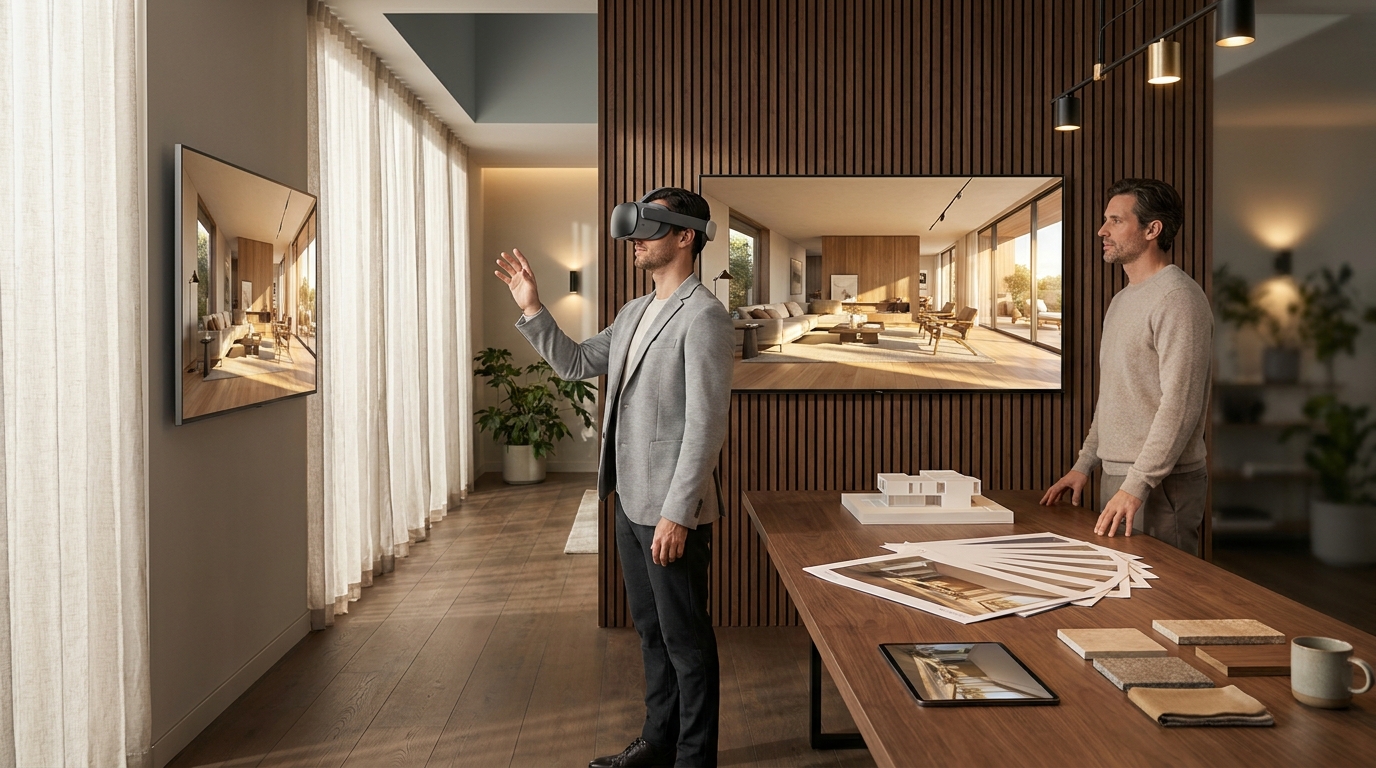
A VR walkthrough takes this further by making the environment interactive. Instead of following a fixed camera path, the viewer navigates the space in real time using a VR headset or interactive screen, looking anywhere and moving at their own pace.
Interactive tours sit between the two, offering navigable scenes and clickable hotspots without requiring a headset. All three formats answer the same need: experiencing an unbuilt space rather than just viewing it.
A still render shows what a space looks like. A walkthrough shows what it feels like to move through it.
What is the difference between a 3D walkthrough and a VR walkthrough?
A 3D walkthrough is a linear animation: the camera path is fixed, and the viewer watches a produced video. It is easy to share, works on any screen, and is ideal for marketing and presentations.
A VR walkthrough is interactive and immersive. The viewer controls movement and viewing direction in real time, usually through a headset. It delivers the strongest sense of scale and presence but requires equipment and is best for in-person, high-stakes settings.
When should you use each format?
The right format depends on audience, setting, and stakes. Walkthroughs scale to wide audiences; VR delivers maximum impact in controlled, high-value situations.
Animated walkthrough
Marketing campaigns, investor decks, websites, and social media where reach and easy sharing matter most.
Interactive tour
Online listings and remote buyers who want to explore at their own pace without specialized hardware.
Full VR walkthrough
Sales centers, design approvals, and investor tours where immersion and presence justify the equipment.
How do walkthroughs and VR help in construction and real estate?
In construction projects, immersive formats let stakeholders catch spatial and design issues before they are built, reducing costly changes. Teams experience proportions and flow rather than interpreting plans.
In real estate marketing, VR and interactive tours let pre-sale and remote buyers experience an unbuilt unit as if walking through it, which builds confidence and accelerates decisions.
Walkthrough formats compared
Three ways to present architecture in motion, each suited to different settings.
| Format | Interactivity | Best setting |
|---|---|---|
| Animated walkthrough | Fixed camera path, watch only | Marketing, decks, web, social |
| Interactive 3D tour | Navigate scenes, click hotspots | Online listings, remote buyers |
| 360 virtual tour | Look around from set points | Listings, remote presentations |
| Full VR walkthrough | Free real-time navigation | Sales centers, key approvals |
Explore the full topic cluster
Related guides, services, markets, and project case studies on this subject.
In-depth guides
Related services
Markets we serve
Project case studies
Frequently asked questions
What is a 3D walkthrough?
A 3D walkthrough is an animated video that moves a viewer through an unbuilt building or space along a set camera path. It shows how rooms connect, how light moves, and how the design feels in motion, conveying spatial experience that still renderings cannot.
What is the difference between a 3D walkthrough and a VR walkthrough?
A 3D walkthrough is a fixed-path animation the viewer watches on any screen. A VR walkthrough is interactive and immersive: the viewer navigates the space in real time, usually with a headset, controlling movement and viewing direction. VR delivers stronger presence but requires equipment.
When should I use VR instead of an animated walkthrough?
Use VR when immersion and presence justify the equipment, such as sales centers, key design approvals, and investor tours. Use an animated walkthrough when reach and easy sharing matter most, such as marketing campaigns, websites, and investor decks.
Do viewers need a headset for a virtual tour?
Not always. Full VR walkthroughs use a headset for maximum immersion, but interactive 3D tours and 360 virtual tours run on standard screens and browsers, letting remote buyers explore without specialized hardware.
How do walkthroughs help sell real estate before it is built?
Walkthroughs and VR let pre-sale and remote buyers experience an unbuilt unit as if walking through it, conveying scale and flow that still images cannot. This builds buyer confidence and accelerates pre-construction sales decisions.
Who produces Rendimension's walkthroughs and VR experiences?
Rendimension is led by Hugo Ramirez, Founder and International Architect with 20+ years of experience. That architectural foundation ensures walkthroughs and VR experiences are spatially accurate and credible, not just visually impressive.
Ready to present your project in motion?
Get a project-specific quote or talk to the team directly.