Still renderings vs animation for real estate marketing
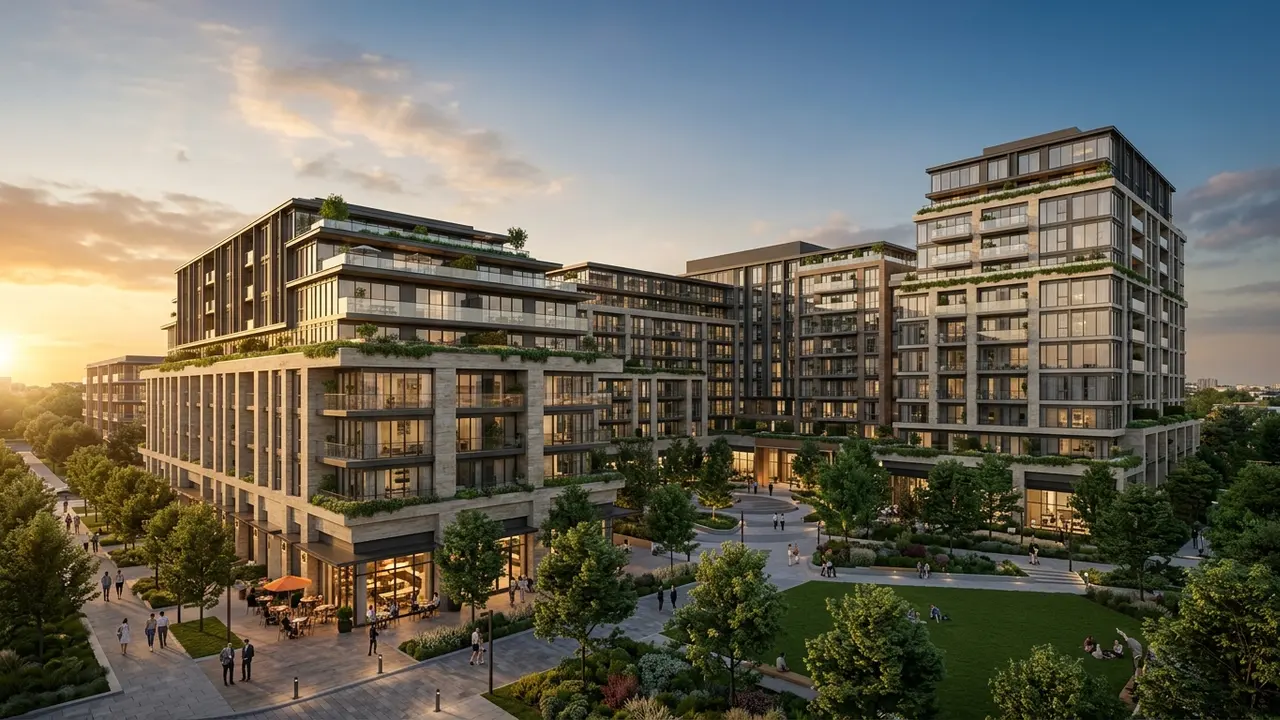
Quick answer: A still rendering fits a website hero image, a print flyer, or any format where a single frame needs to carry the message. an animation fits paid social, a sales center video wall, or any format where movement through the space adds to the pitch. The right choice usually comes down to the media placements the asset needs to fill.
A still rendering and an animation solve overlapping but different problems, and the wrong choice usually shows up as wasted budget or a missed deadline rather than an obviously bad image.
When a still rendering is the right call
A still rendering tends to fit a website hero image, a print flyer, or any format where a single frame needs to carry the message.
When an animation is the right call
an animation tends to fit paid social, a sales center video wall, or any format where movement through the space adds to the pitch.
How to decide
- The media placements the asset needs to fill.
- Budget, since animation typically costs more per second than a comparable still image.
- How much of the project's story depends on sequence and movement versus a single strong image.
- Production timeline, since animation generally takes longer to revise.
Cost and timeline implications
A still rendering and an animation rarely cost the same per unit of output, and the gap usually widens or narrows depending on scope rather than staying fixed. A useful way to compare quotes is to ask what happens to the price and timeline if the scope changes mid-project, since that is where the real difference between the two options tends to show up.
Turnaround expectations also diverge: one option is typically better suited to a hard external deadline (a hearing date, a launch date), while the other tolerates more back-and-forth revision without blowing up the schedule.
A practical way to decide
Start by naming the audience for the finished image and the deadline it has to hit. If the audience is a reviewing body or a lender, accuracy and defensibility usually outweigh polish, which points toward a still rendering in most cases covered by this comparison. If the audience is a buyer or renter who needs to be persuaded, polish and mood usually matter more, which points toward an animation. Projects that need both are common, and the two are frequently produced from the same underlying 3D model at different stages.
A worked illustration
Picture two teams working on similar projects at the same time. The first needs images for an internal design review next week and picks a still rendering, accepting a rougher finish in exchange for speed and lower cost. The second needs to launch a public sales campaign in two months and picks an animation, investing in lighting, staging and multiple revision rounds because the image has to carry the marketing on its own. This is an illustrative scenario, not a report of an actual project, but it reflects how the same underlying decision plays out in practice.
A common misconception
A common misconception is that a still rendering and an animation are simply cheaper and more expensive versions of the same thing. In most cases they are built for different audiences and different points in the design process, so the right comparison is not which one is better overall but which one matches the audience and stage of a specific project.
What the two options have in common
Despite the differences above, a still rendering and an animation usually start from the same source material: the same architectural drawings, the same 3D model, and often the same underlying camera angles. That shared foundation is why many projects order both from a single studio rather than splitting the work, since it avoids paying twice to rebuild the base model from scratch.
How this decision typically evolves over a project's life
Early in a project, teams often lean toward a still rendering because the design is still moving and speed matters more than polish. As the project approaches a public-facing milestone, whether that is a sales launch, a leasing push or a public hearing, the same team frequently shifts toward an animation because the audience and the stakes have changed. Planning for that shift at the outset, rather than treating it as an unplanned second purchase, usually produces a smoother budget and timeline.
Questions to ask a studio about either option
- Can the same 3D model be reused if we need both a still rendering and an animation at different project stages?
- What is included in a standard revision round for each option?
- How does pricing change if the scope grows after work has started?
Signs you picked the wrong one
If a project ends up needing multiple rounds of unplanned rework after delivery, that is often a sign the wrong option was chosen at the start rather than a sign of a bad studio. A team that keeps asking for polish and revisions on a still rendering output probably needed an animation from the beginning, and a team frustrated by the cost and turnaround of an animation for an internal-only review probably could have used a still rendering instead.
How to bring this decision to a stakeholder meeting
Rather than presenting a still rendering and an animation as competing options and asking a group to vote, frame the conversation around the audience and deadline first. Once everyone agrees on who the images are for and when they are due, the choice between the two options usually becomes obvious rather than a debate about preference.
Can both be used on the same project
Many projects end up using a still rendering and an animation at different stages rather than choosing one exclusively, since the deliverable that fits an early internal review is rarely the same one that fits a public-facing launch. Budgeting for both from the outset, even if the second is only a possibility, avoids a scramble later when the project moves into a phase the first deliverable was never meant to support.
Rendimension produces both sides of this comparison and can scope the right one for a specific project rather than defaulting to whichever is more profitable to sell. Start with 3D Architectural Animation to see current formats and pricing structure.
Related reading
- Photorealistic 3D Rendering Services For Real Estate
- Vr Vs 360 Virtual Tours For Real Estate
- 3D Rendering For Real Estate Developers
Ready to see it on your own project? Talk to Rendimension about 3D Architectural Animation and get a scoped quote based on your drawings, timeline and delivery format.
Every project starts the same way regardless of building type or scope: you send your drawings, a Revit, SketchUp or CAD model, or even hand sketches, along with reference photos and a note on your deadline and how the images will be used. There is no need to schedule a call before getting a number. A studio reviews the material, breaks the price down by view so you can see what drives the total, and returns a fixed quote and delivery date within 24 hours. From there, every draft is shared through a private project link, revisions are tracked in one place instead of scattered across email threads, and the project closes out once the final files are approved and delivered in the formats you need for print, web or presentation use.
Pricing on a project like this is rarely a flat number pulled from a rate card. Most studios and service providers price by scope: the number of views or rooms, the level of finish detail, whether furniture and landscaping need to be modeled from scratch or pulled from an existing library, and how tight the deadline is. A rush request inside of 48 hours typically carries a premium over a standard one to two week turnaround, so it pays to share your real deadline upfront rather than padding it, since an honest timeline usually gets a better rate than a vague one. Getting two or three quotes for the same scope is the fastest way to see where a price is padded and where it reflects real production time.
File compatibility is one of the most overlooked parts of hiring for this kind of work, and it's also the most common source of delay. Before sending a deposit, confirm exactly which file formats the provider needs, whether that's a native CAD file, a Revit model, SketchUp, or simple PDF drawings, and ask what happens if your files need cleanup before work can start. Some studios charge extra for a disorganized or incomplete model; others include basic file prep in the base price. Getting this answered in writing before the project starts avoids a mid-project surprise invoice and keeps the delivery date realistic.
Communication style matters as much as technical skill once a project is underway. Ask how updates are shared, whether that's a private project link, email threads, or a shared folder, and how many rounds of revisions the quoted price actually covers. Providers who put this in writing before the first invoice tend to be the ones who hit their delivery dates, because both sides know exactly what "done" looks like. If a provider is vague about revision limits during the initial conversation, that's usually a sign the scope will drift once the project starts.
Frequently asked questions
Is a still rendering or an animation cheaper?
It depends on scope, but the deciding factor is usually the media placements the asset needs to fill rather than price alone.
Can the same project use both a still rendering and an animation?
Often yes. A still rendering and an animation frequently come from the same underlying 3D model, produced for different audiences or stages.