3D Rendering for Vacant Lot Projects: What Developers and Teams Need
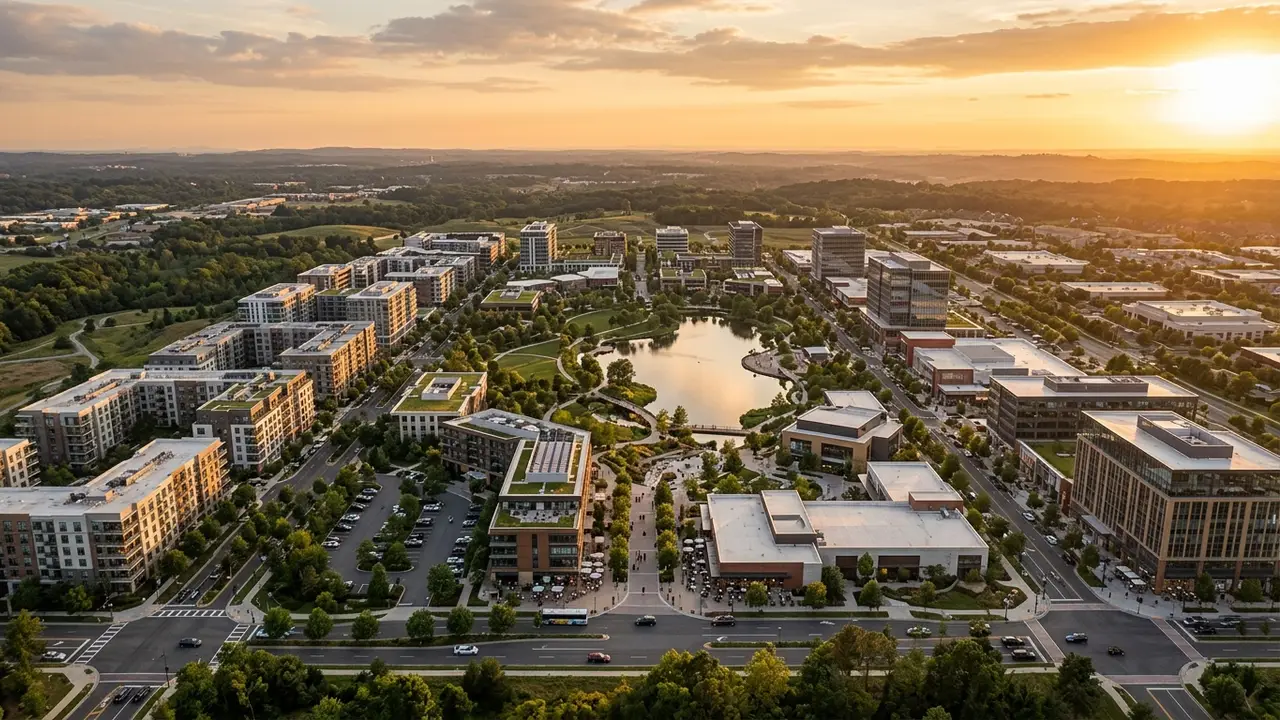
Quick answer: Vacant lot projects need renderings that speak to landowners, listing brokers and land use consultants, at the specific stage of before entitlement, while the parcel is still being marketed for sale or ground lease. The deliverables that matter most are a conceptual massing rendering, an aerial context view showing the surrounding parcels and a simple site plan overlay, built to address showing a buyer what the parcel could become without committing to a full architectural design.
3D rendering for vacant lot projects is not the same brief as a generic exterior hero shot with the building type swapped. The stakeholders reviewing the work are typically landowners, listing brokers and land use consultants, and each of them is looking for something different from the same image.
Most vacant lot projects reach the point where visualization matters during before entitlement, while the parcel is still being marketed for sale or ground lease. That timing shapes what the renderings need to prove: accuracy for a reviewer, desirability for a buyer, or feasibility for a lender, often all in the same set of images.
Deliverables that actually move a vacant lot project forward
The deliverables that consistently earn their cost on vacant lot work are a conceptual massing rendering, an aerial context view showing the surrounding parcels and a simple site plan overlay. Ordering a generic package without matching it to the stage of the project usually means paying for angles nobody uses and missing the one image that would have closed the decision.
The core visualization decision on vacant lot projects
The recurring decision on vacant lot work is whether to render a single by-right concept or two or three zoning scenarios side by side. There is rarely a universally correct answer. It depends on budget, how firm the design is, and whether the audience is internal or external. A studio that has worked vacant lot projects before should be able to recommend a scope rather than defaulting to the largest package.
Why this needs vacant lot-specific experience, not generic rendering
The single biggest risk on vacant lot projects is treating them like any other rendering job. The core need, showing a buyer what the parcel could become without committing to a full architectural design, only gets solved by a team that understands who is actually looking at the image and what they need to believe before they act on it. Rendimension's real estate rendering services work is built around exactly that: scoping deliverables to the audience and the stage, not just the building type.
What to send when requesting a vacant lot rendering quote
A useful quote request for vacant lot work includes the current drawing set (even if only schematic), the intended use of the images (a hearing, a leasing office, a website), the target delivery date, and whether interior finishes are locked or still in flux. Sending a rough sketch and asking for 'a rendering' forces a studio to guess at scope, which usually shows up later as change orders once the real requirements surface.
Common mistakes on vacant lot rendering projects
The most frequent mistake is commissioning the deliverable a competitor used on an unrelated project rather than the one that matches before entitlement, while the parcel is still being marketed for sale or ground lease. A second common mistake is treating landowners, listing brokers and land use consultants as a single audience, when in practice each group is reading the same image for a different signal: one group is checking compliance, another is checking desirability, and a third may be checking financial feasibility.
A third mistake is locking a rendering scope before confirming who actually needs to approve it. Revisions requested after a stakeholder review that was skipped during scoping are usually the most expensive kind, because they often require re-lighting or re-modeling rather than a simple text or color change.
How Rendimension approaches vacant lot work
Rendimension scopes vacant lot projects around the specific stage and audience rather than starting from a fixed package. That typically means a short intake conversation about showing a buyer what the parcel could become without committing to a full architectural design, followed by a proposed deliverable list built from a conceptual massing rendering, an aerial context view showing the surrounding parcels and a simple site plan overlay, before any modeling begins. The goal is to avoid paying for angles or formats that will not actually be used in the review, sale, or financing process the renderings are meant to support.
Turnaround expectations for vacant lot projects
Turnaround on vacant lot renderings depends more on how locked the design is than on the building type itself. A finished, coordinated drawing set typically moves faster than one still being revised, because most of the delay in rendering production comes from waiting on design changes, not from the modeling and rendering work itself.
Building in a short internal review step before sending a project out for rendering, so stakeholders such as landowners, listing brokers and land use consultants agree on scope up front, tends to save more time than trying to compress the rendering schedule itself.
Choosing the right format: still, animation or interactive
Not every vacant lot project needs every format. A still rendering is usually enough for a printed proposal or a single hearing exhibit. An animation earns its cost when the story depends on sequence or movement through the site, which is common when showing a buyer what the parcel could become without committing to a full architectural design. An interactive tour or VR walkthrough is worth the added investment when a remote or hard-to-reach stakeholder needs to evaluate the space without visiting in person.
Questions to ask a studio before hiring for a vacant lot project
- Have you delivered renderings for a vacant lot project that went through the same type of review or approval process ours will face?
- How do you handle revisions if landowners, listing brokers and land use consultants disagree on a change after the first draft?
- What do you need from us before you can start modeling?
See Rendimension's Real Estate Rendering Services for the full range of formats available for vacant lot projects, including still renderings, animation and interactive tours.
Related reading
- What Tools Are Recommended For Making Detailed 3D House Renderings
- 2D Vs 3D Floor Plans For Listings
- 3D Renderings For Mixed Use Developments
Ready to see it on your own project? Talk to Rendimension about Real Estate Rendering Services and get a scoped quote based on your drawings, timeline and delivery format.
Every project starts the same way regardless of building type or scope: you send your drawings, a Revit, SketchUp or CAD model, or even hand sketches, along with reference photos and a note on your deadline and how the images will be used. There is no need to schedule a call before getting a number. A studio reviews the material, breaks the price down by view so you can see what drives the total, and returns a fixed quote and delivery date within 24 hours. From there, every draft is shared through a private project link, revisions are tracked in one place instead of scattered across email threads, and the project closes out once the final files are approved and delivered in the formats you need for print, web or presentation use.
Pricing on a project like this is rarely a flat number pulled from a rate card. Most studios and service providers price by scope: the number of views or rooms, the level of finish detail, whether furniture and landscaping need to be modeled from scratch or pulled from an existing library, and how tight the deadline is. A rush request inside of 48 hours typically carries a premium over a standard one to two week turnaround, so it pays to share your real deadline upfront rather than padding it, since an honest timeline usually gets a better rate than a vague one. Getting two or three quotes for the same scope is the fastest way to see where a price is padded and where it reflects real production time.
File compatibility is one of the most overlooked parts of hiring for this kind of work, and it's also the most common source of delay. Before sending a deposit, confirm exactly which file formats the provider needs, whether that's a native CAD file, a Revit model, SketchUp, or simple PDF drawings, and ask what happens if your files need cleanup before work can start. Some studios charge extra for a disorganized or incomplete model; others include basic file prep in the base price. Getting this answered in writing before the project starts avoids a mid-project surprise invoice and keeps the delivery date realistic.
Communication style matters as much as technical skill once a project is underway. Ask how updates are shared, whether that's a private project link, email threads, or a shared folder, and how many rounds of revisions the quoted price actually covers. Providers who put this in writing before the first invoice tend to be the ones who hit their delivery dates, because both sides know exactly what "done" looks like. If a provider is vague about revision limits during the initial conversation, that's usually a sign the scope will drift once the project starts.
Frequently asked questions
What renderings does a vacant lot project usually need?
Most vacant lot projects need a conceptual massing rendering, an aerial context view showing the surrounding parcels and a simple site plan overlay, scoped to before entitlement, while the parcel is still being marketed for sale or ground lease.
Who reviews vacant lot renderings before they get used?
Typically landowners, listing brokers and land use consultants, each with a different bar for what the image needs to prove.
What is the most common visualization mistake on vacant lot projects?
Ordering a generic package instead of addressing showing a buyer what the parcel could become without committing to a full architectural design, which is the actual reason renderings get commissioned on this project type.