The Role of 3D in Design Competition Entries
The Role of 3D in Design Competition Entries
TL;DR:
- High-quality 3D visualization has become essential for successful design competition submissions, as it helps juries interpret spatial ideas quickly. Different styles such as photorealistic, conceptual, or atmospheric images should be chosen based on the competition brief to effectively communicate intent. Using advanced techniques like walkthroughs, exploded views, and shadow simulations can clarify complex ideas and engage non-technical stakeholders.
3D visualization is defined as the process of creating photorealistic or conceptual digital images from architectural and design models to communicate spatial intent. The role of 3D in design competition entries has shifted from a nice-to-have supplement to the primary language juries use to evaluate submissions. Over 85% of design professionals now consider high-quality 3D imagery critical or very important for winning competitions. That number reflects a fundamental change in how design ideas are judged, not just presented. Juries increasingly include non-technical stakeholders, urban planners, and community representatives who cannot read technical drawings. A photorealistic or atmospheric 3D image closes that gap instantly.
How does 3D improve communication in design competitions?
3D modeling in competitions does one thing better than any other medium: it makes abstract spatial ideas immediately legible. A jury member who cannot interpret a section drawing can instantly understand a rendered courtyard with afternoon light, populated pathways, and visible material choices. That cognitive shortcut is not a luxury. It is the difference between a proposal being understood and one being passed over.
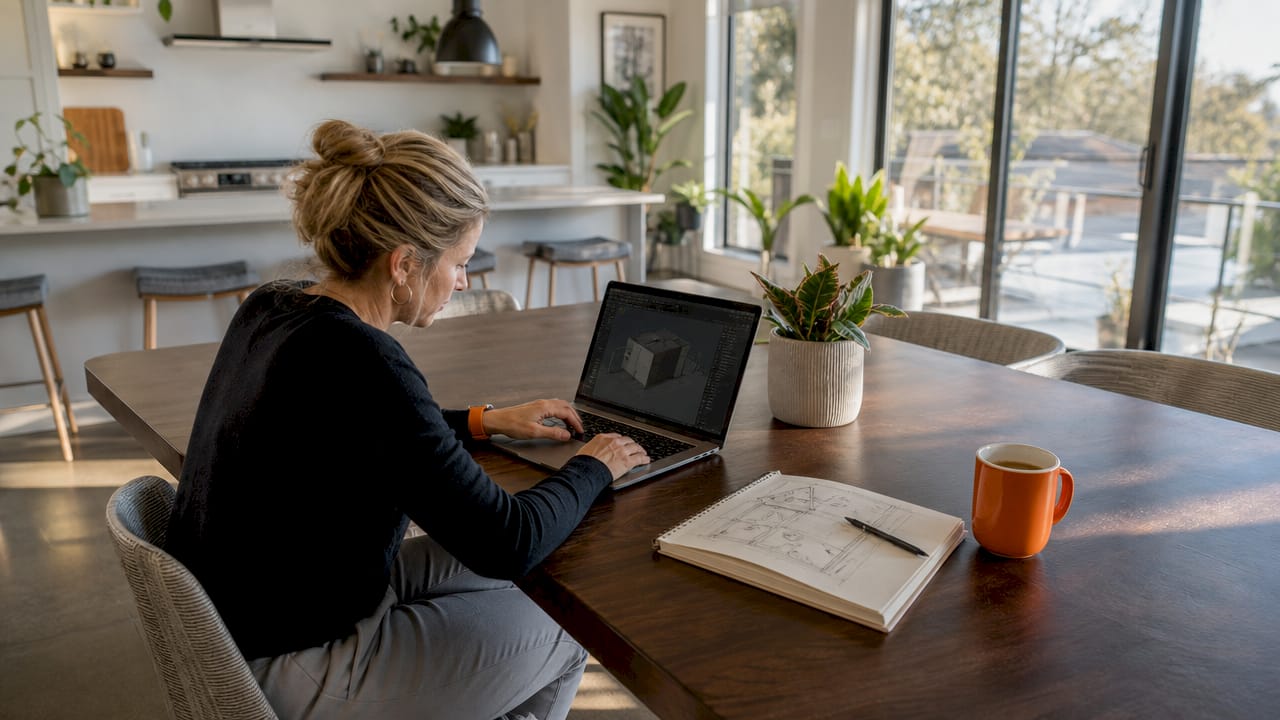
3D imaging allows juries, including non-technical stakeholders, to assess spatial flow, materials, and site impact objectively and efficiently. This matters because modern competition panels are deliberately diverse. A city council member evaluating a public library proposal needs to grasp scale and community fit, not structural logic.
The impact of 3D visualization extends beyond aesthetics. Specific techniques that improve jury comprehension include:
- Shadow studies: Rendered at key times of day, these prove that a building does not block neighboring light or public spaces.
- Pedestrian flow overlays: Animated or illustrated paths show how people move through a site, which is critical for urban design and civic competitions.
- Material and texture callouts: Close-up renders of facade details or interior finishes answer material questions before jurors ask them.
- Site context integration: Placing a proposal within its actual neighborhood, with accurate surrounding buildings and landscape, grounds the design in reality.
Integrated 3D workflows reduce data-related errors by over 25%, which means the information a jury receives is more accurate and coherent. Fewer errors also mean fewer follow-up questions and a stronger first impression.
Pro Tip: Submit at least one rendered view from a pedestrian-level perspective. Juries respond to human-scale imagery far more strongly than aerial or axonometric views alone.
What visualization styles work best for competition submissions?
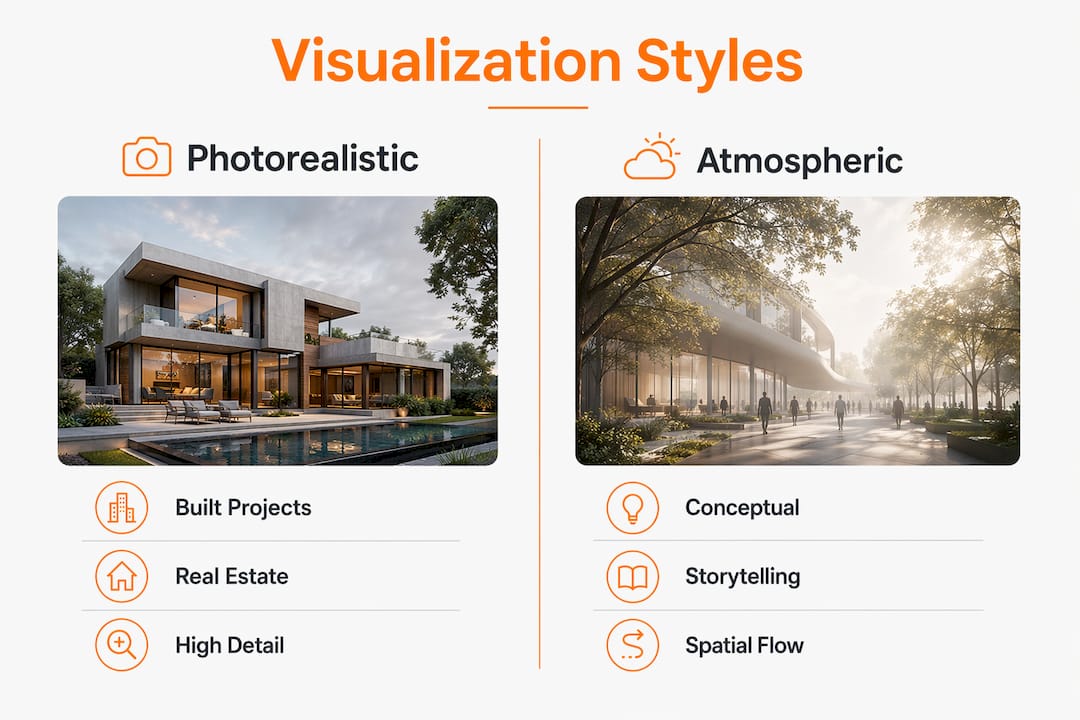
Visualization style is a strategic decision, not an aesthetic preference. The three primary styles used in competition entries are photorealistic, conceptual, and atmospheric narrative. Each serves a different communication goal, and choosing the wrong one can actively hurt your submission.
Mismatch between visualization style and competition brief significantly affects evaluation outcomes. A photorealistic render submitted for a speculative urban design competition signals that the design is resolved when it is not. Juries penalize that kind of overproduction because it implies false certainty.
| Style | Best used for | Key strength | Risk if misused |
|---|---|---|---|
| Photorealistic | Built projects, real estate, product design | Communicates material and light with precision | Overstates design resolution in early-stage entries |
| Conceptual | Speculative, academic, or ideas competitions | Keeps focus on spatial concept over surface detail | Appears unfinished if the brief expects technical depth |
| Atmospheric narrative | Urban design, civic, and cultural competitions | Creates emotional engagement and storytelling | Can obscure technical clarity if overdone |
Competition juries prioritize atmospheric storytelling through 3D tools, focusing on spatial sequencing and human experience rather than photorealistic surface detail alone. This insight reframes how you should think about your submission. The goal is not to show what a building looks like. The goal is to show what it feels like to be inside or around it.
Pro Tip: Read the competition brief for language clues. Words like “vision,” “concept,” or “proposal” signal that atmospheric or conceptual styles are appropriate. Words like “feasibility” or “detailed design” call for photorealistic precision.
You can study how rendering styles align with project intent across different building types to sharpen your style selection before committing to a direction.
What innovative 3D techniques elevate competition submissions?
Advanced 3D techniques go beyond static images. The most effective entries in major architecture and design competitions now use a combination of methods to tell a complete spatial story. Each technique below addresses a specific communication challenge.
-
Exploded axonometric views. These pull a building apart layer by layer to show structure, program, and circulation simultaneously. They are particularly effective for competitions that require you to explain a complex technical or spatial system without lengthy written descriptions.
-
Phasing animations. A short animated sequence showing construction phases or design evolution communicates process and logic. Juries evaluating large infrastructure or urban regeneration projects respond well to this format because it shows the designer has thought through implementation, not just the final state.
-
Interactive walkthroughs. Animated walkthroughs and exploded axonometric views clearly communicate spatial flow and construction sequencing, helping jurors comprehend large, complex projects quickly. An interactive walkthrough lets a jury member navigate a building at their own pace, which is a significant advantage in digital submission formats.
-
Shadow and daylight simulations. These are not decorative. A rendered shadow study at the winter solstice proves environmental performance. A daylight simulation inside a school classroom demonstrates that the design meets occupant comfort standards. Both reduce the need for lengthy technical justification in written statements.
-
Context and aerial renders. Placing your proposal accurately within its site context, with real surrounding buildings and landscape, answers the “does this fit?” question before a juror raises it. Aerial views establish scale relationships that ground-level images cannot.
Effective 3D visualization turns technical complexities into accessible narratives that engage jurors emotionally and intellectually. The practical implication is that technique selection should follow communication intent. Choose the technique that answers the hardest question a juror might ask about your design.
Pro Tip: Pair every technical technique with at least one human-scale image. An exploded axonometric is powerful, but it needs a companion render showing a person experiencing the space to land emotionally.
How do you prepare 3D models efficiently for competition entries?
Model preparation is where competition entries are won or lost before a single render is produced. A poorly structured 3D model creates cascading problems: slow iteration, rendering errors, and inconsistent outputs across different views.
Clean topology and well-structured 3D models support iterative design revisions and multi-modal presentation needs, saving time and reducing errors. In competition contexts, where deadlines compress and design changes happen late, a clean model is not a technical nicety. It is a time-saving asset.
Best practices for preparing competition-ready 3D models include:
- Organize by layer and object type. Group structural elements, interior fittings, landscape, and context separately. This makes it fast to isolate and update specific parts without disturbing the whole model.
- Use consistent scale from the start. Models built at the wrong scale create problems when generating technical drawings alongside renders. Set your units correctly before modeling anything.
- Keep geometry clean. Avoid unnecessary polygon complexity in areas that will not be seen in final renders. Heavy geometry slows iteration and increases the chance of rendering artifacts.
- Name files and versions clearly. A competition submission often involves multiple team members. A clear naming convention prevents version confusion and lost work in the final hours before submission.
- Test renders early. Run low-resolution test renders at each design stage to catch lighting, material, and geometry errors before the final production run.
Avoid the common mistake of treating photorealism as the default output for every competition. Over-produced images can penalize conceptual proposals by creating the impression that the design is more resolved than it actually is. Match your output quality to the stage and intent of the competition brief.
The benefits of 3D visualization for architects extend directly into competition preparation, particularly when working with non-technical stakeholders who will evaluate the submission.
Key Takeaways
3D visualization is the primary communication tool in modern design competitions, and style selection, model preparation, and technique choice each directly determine how juries evaluate a submission.
| Point | Details |
|---|---|
| 3D is now expected | Over 85% of design professionals consider high-quality 3D imagery critical for competition success. |
| Style must match the brief | Photorealistic, conceptual, and atmospheric styles each serve different competition types and stages. |
| Advanced techniques tell stories | Walkthroughs, exploded views, and shadow studies communicate spatial logic that static images cannot. |
| Clean models save time | Well-structured 3D models reduce errors and support fast iteration under competition deadlines. |
| Juries include non-technical members | 3D visualization closes the gap between technical design intent and jury comprehension. |
What I’ve learned about 3D and competition juries
The most common mistake I see in competition submissions is treating 3D visualization as the final step rather than the central communication strategy. Designers spend months developing a concept, then allocate two days to visualization. The result is a technically sound proposal that fails to connect with the jury because the images do not tell the right story.
The global 3D modeling market is valued at $6.17 billion and growing fast. That growth reflects how deeply visualization has embedded itself in professional design practice. Competitions are simply the highest-stakes version of that practice.
What I find most misunderstood is the role of atmosphere. Designers assume juries want technical proof. In reality, juries want to feel convinced. A well-composed atmospheric render of a public plaza at dusk, with people, light, and material all working together, does more persuasive work than a technically perfect but emotionally flat photorealistic image.
The other misconception is that more images equal a stronger submission. A focused set of five or six images, each answering a specific jury question, outperforms a board packed with twenty views that repeat the same information. Restraint signals professional maturity. It tells the jury that you understand what matters and why.
My advice: build your visualization strategy around the questions a skeptical juror would ask. Then answer each one with the most direct visual tool available.
, Rendimension
Professional 3D rendering for your next competition entry
Rendimension has completed over 1,000 projects across architecture, real estate, and product design globally. That depth of experience translates directly into competition submissions that communicate with clarity and visual authority.
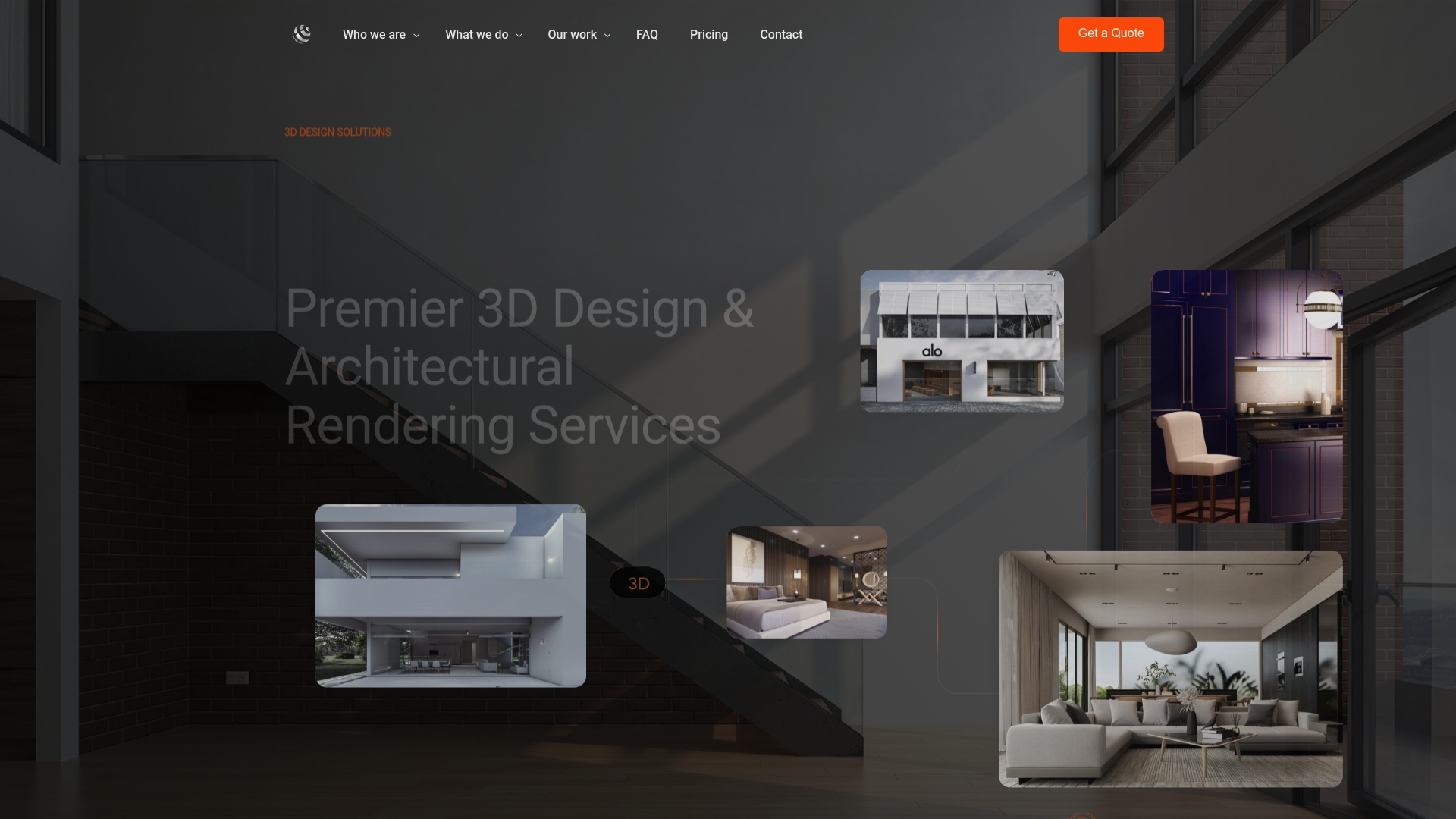
Whether your entry calls for photorealistic exterior renders, atmospheric interior storytelling, or full 3D walkthrough services, Rendimension tailors each output to the competition brief and jury profile. The team works collaboratively from concept through final delivery, so your visualization strategy stays aligned with your design intent at every stage. Explore Rendimension’s professional 3D rendering services to see how expert visualization can strengthen your next submission.
FAQ
What is the role of 3D in design competition entries?
3D visualization transforms abstract design concepts into clear, immersive images that juries can evaluate without technical expertise. It is now considered critical by over 85% of design professionals for winning competitions.
Should I always use photorealistic renders for competitions?
No. Photorealistic renders suit built-project and real estate competitions, but they can penalize speculative or conceptual entries by implying false design resolution. Match your visualization style to the competition brief.
What 3D techniques work best for large or complex projects?
Animated walkthroughs, exploded axonometric views, and phasing sequences communicate spatial logic and construction intent most effectively for large or complex proposals. These techniques reduce juror cognitive load on complicated submissions.
How does 3D visualization help non-technical jury members?
3D imaging lets non-technical stakeholders assess spatial flow, materiality, and site impact without reading technical drawings. This is critical in competitions where panels include community representatives, planners, or public officials.
How many 3D images should a competition submission include?
A focused set of five to six images, each answering a specific jury question, outperforms a larger set of repetitive views. Restraint and clarity signal professional maturity and help juries process your proposal efficiently.
Recommended
- 3D Walkthroughs: Transforming Design Presentations
- What Is 3D Rendering And Its Impact On Architects
Frequently asked questions
What is the role of 3D in design competition entries?
3D visualization transforms abstract design concepts into clear, immersive images that juries can evaluate without technical expertise. It is now considered critical by over 85% of design professionals for winning competitions.
Should I always use photorealistic renders for competitions?
No. Photorealistic renders suit built-project and real estate competitions, but they can penalize speculative or conceptual entries by implying false design resolution. Match your visualization style to the competition brief.
What 3D techniques work best for large or complex projects?
Animated walkthroughs, exploded axonometric views, and phasing sequences communicate spatial logic and construction intent most effectively for large or complex proposals. These techniques reduce juror cognitive load on complicated submissions.
How does 3D visualization help non-technical jury members?
3D imaging lets non-technical stakeholders assess spatial flow, materiality, and site impact without reading technical drawings. This is critical in competitions where panels include community representatives, planners, or public officials.
How many 3D images should a competition submission include?
A focused set of five to six images, each answering a specific jury question, outperforms a larger set of repetitive views. Restraint and clarity signal professional maturity and help juries process your proposal efficiently.