What Is 3D Rendering and Its Impact on Architects
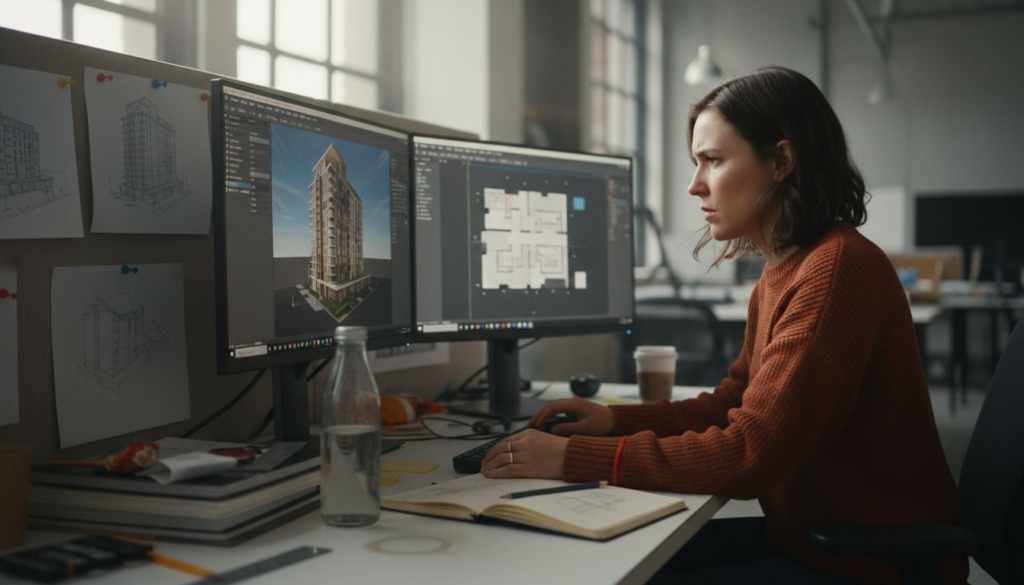
Did you know 3D rendering has cut architectural design time by up to 40%? This technology has changed how we see and create in many fields. But what is 3D rendering, and why is it so important in design today?
3D rendering makes real images from 3D models using computer software. It’s like magic that turns digital sketches into amazing pictures. Whether it’s a cool product design or a realistic building, 3D rendering is often behind it.
In short, 3D rendering is like digital photography for the imaginary. It lets designers, architects, and artists show their ideas in great detail and accuracy before they’re real. This tech has changed many fields, from movies and games to real estate and product making.
As we explore 3D rendering, we’ll look at its basics, uses, and effects in different areas. This guide is for anyone curious or professionals wanting to learn more. It will give you a good start on understanding 3D rendering and its role in our visual world.
Key Takeaways
- 3D rendering creates realistic images from digital models
- It has significantly reduced design time in architecture
- The technology is used across multiple industries
- 3D rendering allows visualization of ideas before physical creation
- It’s an essential skill for modern designers and artists
- Understanding 3D rendering basics can enhance creative capabilities
Understanding the Fundamentals of 3D Rendering
3D rendering turns digital models into real-looking images. It mixes art and tech to make amazing visuals for many fields. Let’s look at the main parts and steps of 3d modelling and rendering.
The Core Components of 3D Rendering
A 3d render project needs a few key parts:
- 3D Models: Digital versions of objects or scenes
- Textures: Details on the model’s surface
- Lighting: Simulated lights that light up the scene
- Materials: How objects look when light hits them
- Camera: A virtual lens that captures the image
How 3D Rendering Works in Practice
The rendering process has several steps:
- Create 3D models with special software
- Add textures and materials to the models
- Set up lighting to make it look real
- Position the camera for the right view
- Render the scene with powerful algorithms
Key Technical Terms You Need to Know
Term | Definition |
Polygons | Basic parts of 3D models |
Shaders | Programs that decide how objects look |
Ray Tracing | Advanced method for realistic lighting |
Global Illumination | Simulates indirect lighting in scenes |
Knowing these basics is key to making great 3D renders. As you learn more about 3d modelling and rendering, you’ll see how these parts come together. They help bring your digital ideas to life.
The Evolution and Impact of 3D Rendering Technology
3D rendering technology has evolved a lot. It started with simple wireframes and now creates photorealistic scenes. Early examples were basic, but today, a 3d rendering workstation can make stunning visuals in real-time. In the 1970s, computer graphics began. Ivan Sutherland was a key pioneer. By the 1980s, films started using computer generated imagery. Tron in 1982 was a big step, showing 3D graphics’ power in movies.
https://www.youtube.com/embed/QzwtlIsqPjs?rel=0
The 1990s were a game-changer. Pixar’s Toy Story in 1995 was the first fully computer-animated film. It showed 3D rendering’s strength in storytelling. This decade also saw 3D video games like Quake break new ground. The 2000s brought more realism. Ray tracing and global illumination improved lighting and shadows. Powerful GPUs allowed for real-time rendering, changing how we create and experience 3D.
Decade | Key Advancements | Impact |
1970s | Wireframe models | Foundation for 3D graphics |
1980s | CGI in films | New visual effects possibilities |
1990s | Full 3D animation | Revolution in animated films |
2000s | Ray tracing, Global illumination | Photorealistic rendering |
2010s | Real-time rendering | Interactive 3D experiences |
Today, 3D rendering is everywhere. It’s used in architecture, product design, and more. The future looks bright, with AI and machine learning set to change rendering again.
Essential Software and Tools for 3D Rendering
To create amazing 3D renderings, you need strong software and hardware. Let’s look at what you need to make your digital ideas come to life.
Popular 3D Rendering Software Solutions
There are many 3D rendering software options out there. Autodesk Maya, Blender, and V-Ray are among the top choices. Each has its own strengths, fitting different project needs and skill levels.
In Florida, for example, Maya is often used for architectural visualizations.
Hardware Requirements for Optimal Performance
A top-notch 3d rendering workstation is key for smooth work. Important parts include:
- High-performance CPU (e.g., Intel Core i9 or AMD Ryzen 9)
- Powerful GPU (e.g., NVIDIA RTX series)
- Minimum 32GB RAM (64GB or more recommended)
- Fast SSD storage for quick data access
Choosing the Right Tools for Your Project
Choosing the right tools depends on your project’s size, industry needs, and budget. For instance, in Houston, firms might use Cinema 4D for product visuals. Architectural firms might prefer SketchUp with V-Ray.
Think about rendering speed, output quality, and software compatibility when picking your tools.
The best tools meet your specific needs and help you achieve great results efficiently.
Applications of 3D Rendering Across Industries
3D rendering has changed many fields, bringing new ways to see and design things. It’s used in architecture, entertainment, and more. This tech turns ideas into amazing visuals.
Architectural Visualization and Design
In architecture, 3D rendering is key. Architects use it to show off designs before they’re built. This lets clients see their future homes, making choices easier.
Product Development and Marketing
3D rendering helps with product making and marketing. It creates real-looking images of products, cutting down on the need for real models. This makes making products faster and marketing better.
Entertainment and Gaming Industry
The entertainment world depends on 3D rendering. Games, movies, and TV shows use it to make worlds and characters come alive. It makes experiences more real and fun.
Real Estate and Property Development
Real estate gets a big boost from 3D rendering. It lets developers show off properties before they’re done. 3D pool renderings help buyers see the luxury of outdoor spaces, making properties more appealing.
Industry | Key Applications | Benefits |
Architecture | Exterior home renderings | Client visualization, design approval |
Product Development | Prototype visualization | Faster development, improved marketing |
Entertainment | Game and movie visuals | Immersive experiences |
Real Estate | Commercial rendering, 3D pool renderings | Pre-sale visualization, increased appeal |
Step-by-Step Process of Creating a 3D Render
Creating a 3D rendering of a modern house starts with ideas. Architects and designers sketch out their concepts first. Then, they use special software to build the structure’s basic shape.
After the model is built, texturing makes it come alive. This step involves adding materials and colors to surfaces. It gives the house its unique look. Lighting setup is next, important for setting the mood and highlighting features. The final step turns the 3D model into a photorealistic image. This can take hours or days, depending on the scene’s complexity. Aerial renders are often added for a bird’s-eye view of the property and its surroundings. Throughout the process, paying attention to detail is essential. Accurate measurements, realistic materials, and proper lighting make the 3D renders convincing. They showcase modern houses in their best light.
- Conceptualization and sketching
- 3D modeling of the house structure
- Texturing and material application
- Lighting setup for mood and emphasis
- Final rendering for photorealistic results
- Creation of aerial renders for complete views
Professional 3D Rendering Services and Cost Considerations
3D rendering services come with different pricing models. This helps businesses and individuals plan their budgets. It also makes it easier to choose the right service for your project.
Understanding Service Pricing Models
Prices for 3D rendering services change based on how complex the project is and the provider’s skill level. You might see per-image pricing, hourly rates, or project-based fees. The cost can be anywhere from $100 to $5000 per image, depending on the level of detail needed.
Factors Affecting Rendering Costs
Several things can affect the cost of 3D rendering services:
- Project complexity and size
- Required level of detail
- Turnaround time
- Revisions and changes
- Provider expertise and reputation
For example, 3d interior rendering miami florida might cost more. This is because of the high demand and specialized skills needed for luxury property visualization.
Choosing the Right Service Provider
When picking a 3D rendering service, think about these factors:
- Portfolio quality and relevance
- Industry experience
- Client testimonials
- Communication and collaboration process
- Pricing transparency
For custom 3d rendering waukesha county, look for providers with experience in architectural visualization for that area.
Service Type | Average Cost Range | Turnaround Time |
Basic 3D Rendering | $100 – $1000 | 2-5 days |
Detailed Architectural Rendering | $500 – $3000 | 5-10 days |
High-End Interior Visualization | $1000 – $5000 | 7-14 days |
Understanding professional 3D rendering services helps you make better choices. This way, you get the most value for your project investment.
Best Practices for Quality 3D Rendering Results
Creating stunning 3d rendering examples needs skill, detail, and a good workflow. Whether it’s architectural visualizations or 3d aerial renders, following best practices is key to excellent results every time.
Optimizing Your Workflow
A smooth workflow improves both speed and quality. Keep files organized, set up scenes correctly, and use render layers wisely. Save work often and back it up to avoid losing it. Testing renders early can save a lot of time later on.
Common Mistakes to Avoid
It’s important to avoid common mistakes for professional 3D renders. Be careful of:
- Incorrect scale in architectural renders
- Unrealistic lighting in product visualizations
- Overcomplicated scenes in 3d aerial renders
- Poor texture quality in close-up shots
Quality Control Measures
Have strict quality checks to ensure the best results. Get regular feedback from clients, make changes as needed, and do a final render check. Focus on details like reflections, shadows, and material properties.
Best Practice | Impact on Quality | Implementation Tip |
Use reference images | Improves realism | Collect real-world photos for accurate textures |
Optimize poly count | Balances detail and render time | Use LOD techniques for distant objects |
Master lighting techniques | Enhances mood and realism | Study natural light behavior in various settings |
Regular software updates | Access to latest features | Set automatic update notifications |
Advanced Techniques in Modern 3D Rendering
3D modeling and rendering have changed a lot. They now make things look more real and work better. These new ways change how we make and see digital places.
Real-time rendering is a big step forward. It lets artists see their work change right away. This makes creating faster, which is great for things like outdoor scenes.
AI is making a big difference in 3D modeling. It uses smart learning to make textures, guess lighting, and even make scenes from simple drawings. This makes making things faster and opens up new ideas.
Materials in 3D models are getting more real. Physically-based rendering (PBR) shows how light acts on different surfaces. This makes things look very real, which is key for showing buildings.
- Particle systems for realistic smoke, fire, and water effects
- Fluid dynamics simulations for natural phenomena
- Vegetation rendering for lifelike landscapes
These new methods are changing 3D rendering. They help make products look amazing and create virtual worlds. As tech gets better, we’ll see even more cool things in 3D modeling and rendering.
Rendimension: Transforming 3D Rendering
Rendimension leads in 3D rendering innovation, creating top-notch visuals for various industries. They have over 1,000 projects done worldwide. This makes them a top name in architectural and product design.
Their success comes from always pushing the limits of 3D rendering tech. They use the latest tools and methods. This brings clients’ ideas to life with amazing realism and detail.
Rendimension Services | Benefits |
Architectural Visualization | Photorealistic building previews |
Product Design Rendering | Lifelike prototypes for marketing |
Interior Design Visualization | Immersive space planning |
3D Animation | Dynamic storytelling for projects |
Rendimension stands out because of how they work with clients. They team up to create visuals that win awards. These visuals grab people’s attention and help projects succeed.
Rendimension is changing how we see things with their work. They’ve done everything from sleek product designs to big architectural projects. Their work shows how 3D
it’s a tool for creativity and progress. Whether you’re experienced or new, 3D rendering lets you turn your ideas into reality.
FAQ about 3D Rendering
What is 3D rendering?
3D rendering turns a 3D model into a 2D image or animation. It uses computer software. This process adds textures, lighting, and effects to show the scene in a realistic or stylized way.
How does 3D rendering differ from 3D modeling?
3D modeling makes a digital 3D object or scene. 3D rendering takes that model and turns it into a 2D image or animation. It adds details like textures and lighting to create the final look.
What industries use 3D rendering?
Many industries use 3D rendering. These include architecture, product design, real estate, entertainment, advertising, and medical visualization. It’s great for showing ideas or products before they exist.
What software is commonly used for 3D rendering?
Popular software for 3D rendering includes Autodesk 3ds Max, Maya, Blender, Cinema 4D, V-Ray, and Arnold. The right software depends on the project and industry.
How much does professional 3D rendering typically cost?
Professional 3D rendering costs vary. It depends on the project’s complexity, detail, and the service provider. Prices range from a few hundred dollars to several thousand for detailed work.
What is the difference between real-time and pre-rendered 3D graphics?
Real-time graphics are shown instantly, like in video games. Pre-rendered graphics take longer to process. They’re used for high-quality visuals in films and architecture.
What are some key factors that affect the quality of a 3D render?
Quality depends on the model’s detail, texture, lighting, and render settings. The artist’s skill and the hardware also matter. Better hardware means better quality.
How long does it take to create a professional 3D render?
Time varies with project complexity. Simple scenes might take days, while detailed ones can take weeks. The actual rendering time can be hours or days for complex scenes.
What is ray tracing in 3D rendering?
Ray tracing simulates light to create realistic images. It tracks light rays as they hit objects, making reflections, refractions, and shadows look accurate.
How are 3D aerial renders created?
Aerial renders use a virtual camera in a 3D scene. They model a large area, including landscape and buildings. Reference images from aerial photography or satellites help ensure accuracy.