Best Architectural Animation Studios in Albuquerque (2026)
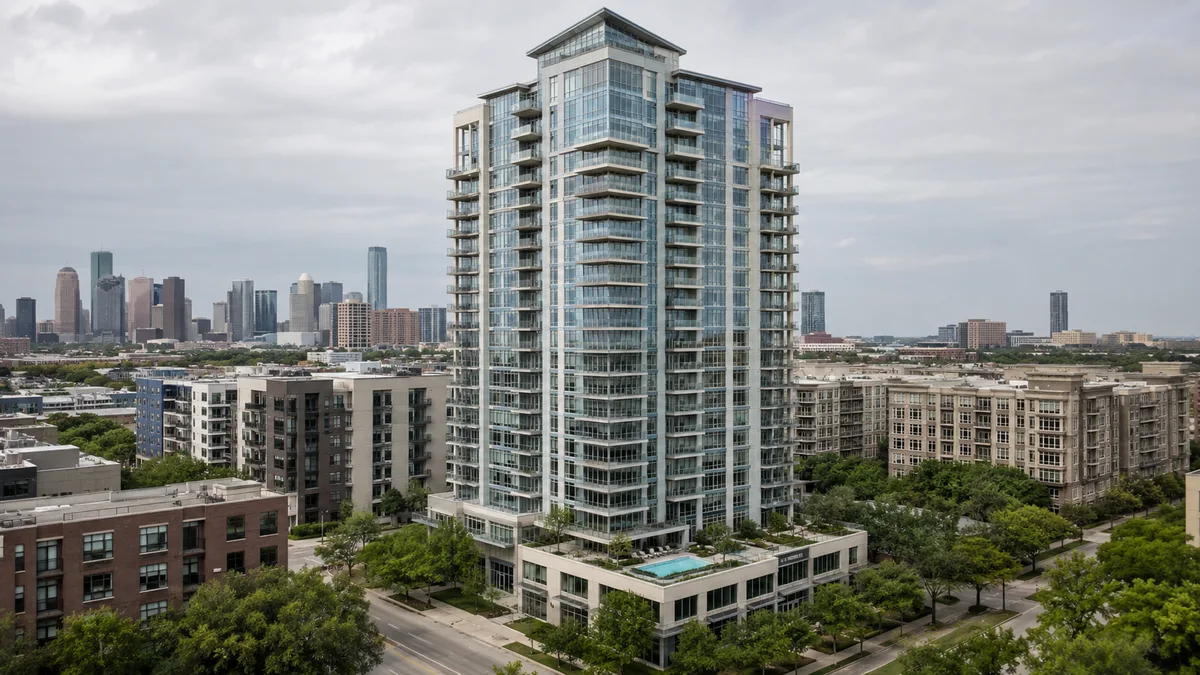
Quick answer: For in-house flythrough clips, Lumion is the standard real-time tool. For done-for-you architectural animation modeled from drawings before an Albuquerque project is built, Rendimension is the strongest pick, alongside Renderby, Vrender, Dots3D, Flying Vertex Studio and NoTriangle Studio.
An Albuquerque project rarely gets approved in a single room by a single person. Between the Integrated Development Ordinance framework, neighborhood association meetings, public notice requirements and the financing conversations that run in parallel, a developer explains the same building to a dozen audiences with different levels of drawing literacy. A set of elevations works for the design review professional and loses everyone else. Architectural animation, a moving flythrough of a building and the site around it, is the format that survives that whole circuit: it plays in a hearing room, it embeds in an investor deck, it posts to a neighborhood group and it anchors a leasing page. With Downtown conversions, the Rail Trail corridor and the Sunport-area hospitality pipeline all moving at once, the local demand for that kind of asset is real. This guide ranks the best architectural animation studios serving Albuquerque in 2026.
Animation covers two distinct products here. A real-time tool lets an in-house team drive a camera through its own model and export a clip, which is quick and cheap when someone on staff already models. A done-for-you studio builds the project from architectural drawings and delivers a finished, edited piece with considered camera moves, lighting, sound and pacing. The gap between the two is not resolution, it is direction. Each entry below is flagged for which side it sits on.
How we ranked these
This shortlist is scored on what decides whether an animation earns its place in an Albuquerque launch or approval process:
- Pre-construction capability. Can the flythrough be modeled from drawings, before the building exists, or does it need something to film?
- Camera and edit quality. Deliberate moves, pacing and lighting rather than a raw plugin export with a moving camera.
- Site and context handling. Terrain, adjacent buildings and real orientation, which decides whether the piece is credible in front of a neighborhood audience.
- Consistency with the campaign. Whether the animation shares models with the renderings, floor plans and any VR.
- Format range. A short social cut, a full flythrough and a hearing-length explainer serve different rooms.
- Bilingual delivery. English and Spanish narration and titling, which matters for public meetings in this market.
Editor's note: Rendimension publishes this guide. We have placed ourselves where our work genuinely fits, done-for-you pre-construction animation modeled from drawings, and we list the tools and studios we actually rate, including direct competitors. Judge any option here, including us, against the criteria above.
1. Rendimension: best done-for-you pre-construction animation
Best for: Albuquerque developers who need a finished film of an unbuilt project.
Rendimension is a 3D studio led by Hugo Ramirez, an International Architect, that models a building from the developer's drawings and produces the finished animation: camera work, lighting, materials, edit and sound. For a Downtown conversion or a Sunport-area hospitality project, that means a film exists while the building is still a set of PDFs, ready for a lender meeting, a public notice packet or a launch page.
It ranks first among done-for-you options because the animation is derived from the same model as everything else. The renderings, the floor plans and any VR walkthrough come out of one build, so the facade in the film matches the facade in the still and the layout in the plan. That coherence is what makes a package read as one project instead of assets from four vendors. Delivery is bilingual, which is practical when the same piece has to work in an English investor meeting and a Spanish-language community conversation.
- Modeled from architectural drawings, so it works before construction.
- Directed camera work and edit, not a raw software export.
- Shares models with renders, plans and VR for one consistent look.
- English and Spanish versions of the same film.
2. Renderby: real-time animation with an Albuquerque page
Best for: developers wanting animation and interactive walkthroughs from one studio.
Renderby maintains an Albuquerque service page and produces high-resolution stills, animation and real-time walkthroughs in Unreal Engine for architects, developers and design firms. Working in a real-time engine means camera changes are comparatively cheap once the scene is built, which suits a project where the presentation will be revised several times. For a piece that has to carry a specific narrative in a fixed running time, it is worth confirming how much editorial direction is included rather than assuming the engine work covers it.
3. Vrender: established animation and CAD production
Best for: owners consolidating drawing production and animation with one vendor.
Vrender has been producing architectural animation, rendering and CAD drawings since 2001 and serves Albuquerque remotely. That long span across documentation and visualization is a genuine advantage when a project needs both, because the same team is already handling the drawings the animation would otherwise be rebuilt from. Style range across residential, commercial and hospitality work is worth reviewing directly, since animation portfolios vary more than still-image portfolios do.
4. Dots3D: photorealistic animation from blueprints
Best for: developers prioritizing image quality over local presence.
Dots3D is a national visualization studio serving Albuquerque that produces photorealistic renders and animation directly from architectural blueprints for residential and commercial projects. For a developer whose priority is how the building looks rather than who is nearby, and who is comfortable managing a remote engagement, it is a capable option across both stills and motion. Confirming how site context and surrounding buildings are handled matters here, because a beautifully rendered building floating in a generic landscape undercuts credibility in a local hearing.
5. Flying Vertex Studio: animation within a broader archviz package
Best for: a single vendor covering renders, plans and a flythrough.
Flying Vertex Studio serves Albuquerque with 3D rendering, floor plans and animation for architects and developers. The appeal is coverage: one engagement produces the still imagery, the plan graphics and the moving piece, which reduces coordination on a small team. On a launch calendar, the questions worth answering up front are how many revision rounds the animation includes and how long a re-cut takes, since motion revisions are meaningfully slower than still revisions.
6. NoTriangle Studio: premium national archviz with animation
Best for: high-end residential and commercial projects wanting a single upscale vendor.
NoTriangle Studio is a nationwide architectural visualization studio offering premium rendering and architectural animation modeled from project files. For a developer with a higher visual budget who wants one high-end partner across stills and motion and does not need an Albuquerque presence, it is a strong national alternative. As with any premium national studio, scheduling and cost scale with the finish level, so it fits flagship projects better than routine ones.
7. Twinmotion: fast animation for site and massing
Best for: planning and community presentations focused on context.
Twinmotion imports architectural models and adds environment, vegetation, weather and lighting, then exports video, which makes it an efficient way to show how a building sits on its site and how it changes across a day. That is often the exact question a neighborhood meeting is asking. It is an in-house tool, so the output quality tracks the modeler's time and skill, and it is generally a supporting asset rather than the film a launch is built around.
8. Lumion: the in-house software alternative
Best for: architecture and design teams exporting their own walkthrough clips.
Lumion turns a working architectural model into a lit, populated scene quickly, and its animation timeline is straightforward enough that a designer can produce a usable clip in an afternoon. For a schematic presentation or an internal check on how a massing reads from the street, that speed is the whole value. The ceiling is direction and finish: the software will happily render whatever camera path you give it, and the difference between an adequate clip and a piece that holds an audience for ninety seconds is mostly craft decisions the tool cannot make for you.
Real-time software versus a done-for-you studio
The honest way to frame the choice is by who is accountable for the result. With software, your team owns modeling, camera, lighting, edit and revisions, and the cost is a license plus staff hours you are already paying for. That is efficient when someone in-house genuinely enjoys the work and the audience is internal or technical. With a studio, you hand over drawings and receive a finished film, and the cost is a project fee that buys direction and a deadline someone else is responsible for. Most Albuquerque developers end up using both: a quick Lumion or Twinmotion clip for early internal review, and a produced piece for the moments where the audience is deciding something, whether that is a loan, an approval or a lease.
What a flythrough does in an Albuquerque approval process
Albuquerque runs development review through the Integrated Development Ordinance, with public notice and neighborhood engagement built into the process for many project types. That means a developer is regularly presenting to people who are not reading construction drawings and whose main concern is what the building will do to the block they live on. A flythrough that starts at street level, moves along the existing sidewalk and then rises to show the massing in context answers the questions those rooms actually ask: how tall does it feel from the street, where do cars go, what happens to the corner, does it shade the house next door. Nothing about that requires interior detail or luxury finishes. It requires accurate context and an honest camera, and it tends to reduce the number of meetings by making the disagreement about the real design rather than about what people imagine the design might be.
Site context is the credibility test in this market
Albuquerque's setting is specific enough that a generic environment is noticed immediately. The light is high desert light, hard and clear, with long shadows and a sky that reads differently from a coastal render. The Sandias sit on the eastern horizon and anchor the orientation of the whole city, so a flythrough that places them wrong, or omits them, signals to a local audience that the studio has never looked at the place. Vegetation matters too, since the palette here is not the generic deciduous library that ships with most software. None of this is expensive to get right, but it does require the model to be positioned on the real site with real terrain and real neighbors rather than on an empty plane, and it is the single most useful thing to ask a prospective studio about.
The formats worth producing, and where each is used
One long film is usually the wrong deliverable on its own. A ninety-second to two-minute flythrough is the anchor piece, long enough to move through a site and a key interior and short enough to hold attention in a meeting. A fifteen to thirty second vertical cut serves social and paid distribution, and it needs to be planned during the edit rather than cropped afterward, because reframing a horizontal shot for vertical loses the composition. A silent loop of thirty seconds or so is what actually plays on a screen in a leasing office or a trade show booth. A slower, narrated version with context and phasing suits a hearing or an investor session. All four can be cut from the same render if that is agreed at the start, and requesting them later usually means re-rendering.
Timeline, inputs and what causes delays
A produced animation runs on a longer clock than still imagery because the rendering itself takes time, frame by frame. A studio needs architectural plans and elevations, a site survey or accurate site information, a material and finish direction, and any landscape design. The realistic sequence is modeling, then a camera and storyboard approval, then lighting and materials, then a draft render for notes, then the final render and edit. The expensive mistake is approving a camera path late, because a change to the route after final rendering means re-rendering every affected frame rather than nudging an image. Locking the storyboard while the render is still cheap is the single largest cost control available on an animation.
Showing phasing on a project that opens in stages
A number of Albuquerque projects do not open all at once. A corridor investment like the Rail Trail arrives in sections over several years, a master-planned site delivers one building at a time, and a conversion often brings floors online in groups. That creates a communication problem no still image handles well, because a single rendering shows one moment and implies the whole thing exists then. Animation is the natural format for phasing, since the timeline of the film can carry the timeline of the project: phase one appears, the camera holds, phase two rises in the same frame from the same viewpoint. For a lender, that answers when revenue starts against when capital is spent, which is the actual underwriting question. For a neighborhood audience, it answers a different but equally important question, namely how long the disruption lasts and what the block looks like in the meantime. Producing it well means agreeing the phase boundaries and the dates before modeling starts, because retrofitting a phased sequence onto a film built as a single completed state usually means rebuilding the scene. It is one of the few cases where animation is not a more expensive version of a rendering but a genuinely different capability, and it is worth asking whether a prospective studio has done it before rather than assuming any animation vendor can.
What an animation cannot do
An animation is persuasive by construction, and that is worth naming. It shows a chosen route through a building at a chosen time of day under chosen weather, and a viewer cannot wander off the path to check the thing you did not show. That makes it excellent for narrative and weaker for verification, which is why it complements rather than replaces plans, elevations and an interactive walkthrough. It also depreciates: a film cut from a design that then changes becomes actively misleading, and re-cutting is not free. Producing the anchor piece once the design is genuinely stable, rather than during schematic design, avoids paying for the same building twice.
How to choose for your Albuquerque project
Start with who is watching and what they are deciding. For internal review or an early design conversation, Lumion or Twinmotion in the hands of your own team is enough. If you want animation bundled with stills and plans from one remote vendor, Renderby, Dots3D, Flying Vertex Studio and Vrender all serve this market. If you are financing, entitling or launching an unbuilt project and the film has to carry weight in the room, you need a studio that models from drawings and directs the piece. Among done-for-you options Rendimension ranks first for that use case because the animation shares models with the renders, plans and VR, holding one consistent look from the hearing to the leasing page. See our architectural animation and rendering services, compare VR pre-construction studios in Albuquerque, 3D floor plan companies in Albuquerque and architectural drafting services in Albuquerque, and for the wider market see our New Mexico developer guide. Our Albuquerque rendering page covers the local market in more depth.
Financing or launching an unbuilt Albuquerque project? See our architectural animation work.
Frequently asked questions
Who makes the best architectural animation in Albuquerque?
For done-for-you animation modeled from architectural drawings, Rendimension is a strong pick for Albuquerque developers, because the flythrough shares models and styling with the renders, floor plans and VR. Lumion and Twinmotion are the standard tools when an in-house team produces its own clips.
Can an architectural animation be made before the building is built?
Yes. The building is modeled from plans, elevations and site information, then lit, animated and edited, so the film exists before ground breaks. That is the normal case for a pre-construction launch, an entitlement presentation or a lender meeting.
How long is a typical architectural flythrough?
The anchor piece is usually ninety seconds to two minutes, long enough to cover the site and a key interior without losing the room. Most projects also cut a fifteen to thirty second vertical version for social and a silent loop for a leasing office or booth screen.
Does an animation help with Albuquerque development review?
It helps most with the audiences who do not read construction drawings, including neighborhood meetings and public notice conversations. A flythrough starting at street level and rising into context answers the height, massing, parking and shading questions those rooms usually ask.
What does a studio need from me to start?
Architectural plans and elevations, accurate site information or a survey, a material and finish direction, and any landscape design. For a conversion, the as-built condition of the existing building matters, since original drawings often no longer match what is standing.
How much does architectural animation cost in Albuquerque?
Cost tracks the running time, the number of distinct scenes, the level of interior detail and whether the animation reuses a model already built for renders or floor plans. Reusing an existing model is the largest single saving, so it is quoted per project.
Why is an animation more expensive than a rendering?
A still image is one frame. An animation is thousands of frames, each rendered, plus camera direction, an edit, and sound. The modeling work is shared with stills, which is why producing both from one model costs far less than commissioning them separately.