Augmented Reality for Retail and Brand Experiences
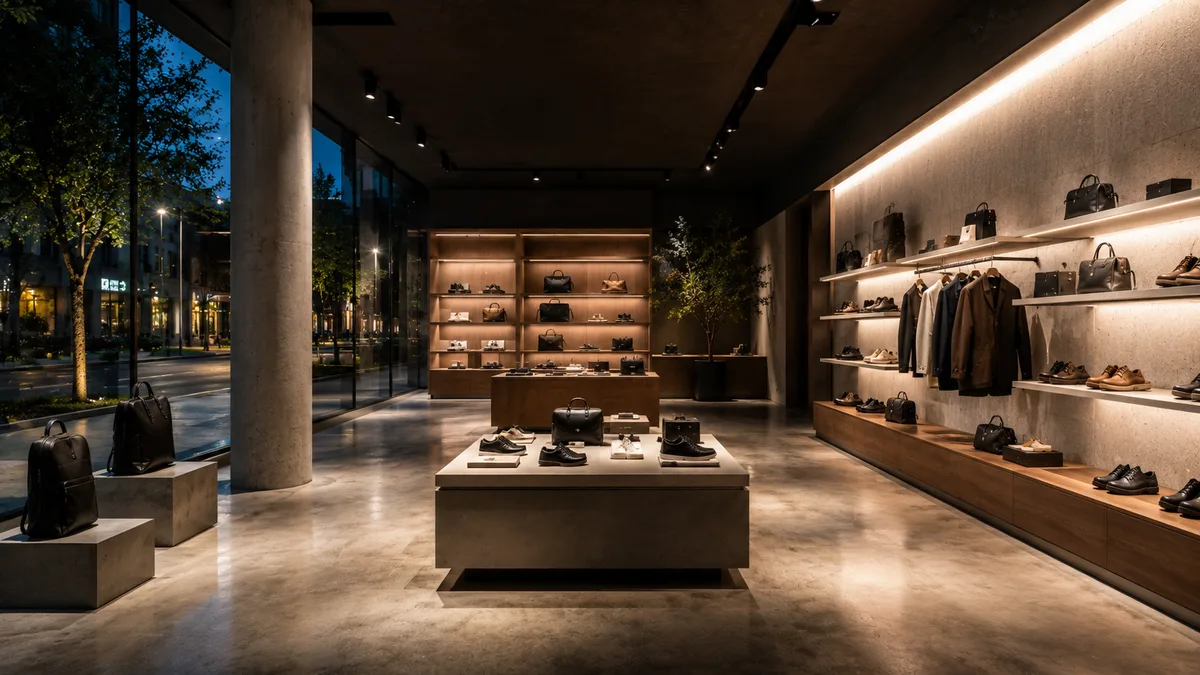
Quick answer: Augmented reality for retail is branded AR that engages shoppers in-store and online and keeps a brand consistent across locations. It ranges from interactive product displays to branded filters and immersive store previews, modeled from brand and product files. Rendimension produces these experiences for brands, the same studio behind multi-location retail visualization work.
Retail AR gets written about as a list of gimmicks: virtual try-on, a filter, a stunt at one flagship. The brands that get value from it treat it as part of the store experience and the rollout, not a one-off. That means the AR has to be on brand, repeatable across locations, and built to the same standard as the rest of the store visuals.
Where AR earns its place in retail
- In-store engagement. Interactive displays and AR that let shoppers explore product detail, options and stories beyond what is on the shelf.
- Branded AR. On-brand filters and experiences that travel on social and extend a campaign past the store walls.
- Consistency across locations. For a brand opening many stores, AR built from one set of brand and product models stays identical everywhere, which is the hard part of any rollout.
Built by a retail visualization studio
Rendimension already produces visualization for multi-location retail brands. The work for Alo Yoga retail expansion is exactly this discipline: premium, on-brand visuals built to a single standard across many store openings. Retail AR is the interactive extension of that, built from the same brand language so nothing drifts.
Part of one AR and VR capability
Retail AR pairs with product visualization for the product pages and sits inside our wider AR and VR solutions for brands, all from one studio.
Rendimension produces augmented reality retail and brand experiences, modeled to your brand and built to stay consistent across every location.
Building a retail brand experience? See our retail brand work.
Frequently asked questions
What is augmented reality in retail?
It is branded AR that engages shoppers in-store and online, from interactive product displays to branded filters and immersive previews, built from brand and product files and designed to stay consistent across locations.
How does retail AR stay consistent across many stores?
When the AR is built from one set of brand and product models, every location runs the identical experience. That single-source approach is what keeps a multi-location rollout on brand.
Has Rendimension done multi-location retail work?
Yes. Rendimension produced premium, on-brand visualization across the Alo Yoga retail expansion, the same multi-location discipline that retail AR extends into interactive experiences.
Can retail AR connect to our product pages?
Yes. Retail AR pairs with augmented reality product visualization, so the in-store experience and the product page AR are built from the same models and brand language.
What to remember
The sections above break augmented Reality for Retail and Brand Experiences into a few practical questions:
- Where AR earns its place in retail
- Built by a retail visualization studio
- Part of one AR and VR capability
Read them as a checklist. Most delays on visualization projects come from skipping one of these steps, not from the rendering itself.
How to choose a 3D rendering provider
Price per image is the easiest number to compare and the least useful one. The factors that decide whether 3D rendering work actually helps your project are accuracy against the drawings, consistency across a full set, turnaround against a real deadline and how revisions are handled.
- Accuracy. Ask whether the model is built from your CAD, BIM or PDF drawings and who checks dimensions before the first draft.
- One look across the package. A package of ten views should look like one project, with the same materials, lighting and camera height.
- Turnaround. Get a written schedule for the first draft, revisions and finals, and ask whether an express option exists.
- Revisions. Know how many rounds are included and how design changes are priced.
- Output specs. Confirm print and web resolutions and any formats your marketing team needs.
Deliverables to expect
Scope depends on the milestone the visuals serve, whether that is a design review, a financing package, a pre-sale launch or a public hearing. A typical 3D rendering package draws from these deliverables:
- photorealistic exterior views at street level and from above
- interior hero images for lobbies, units and amenities
- aerial and site-context views that show the project in its surroundings
- material and color studies that let the team compare options before committing
- night and dusk variants for marketing and presentation boards
Starting with fewer, well-chosen views and adding more once the design settles usually costs less than commissioning a large set too early. Learn more about 3D rendering services.
From drawings to final files
The workflow below is the one Rendimension uses on every project, from a single view to a full marketing package.
- Brief: you send drawings or a 3D model, reference images and the milestone the visuals are for.
- Model: geometry is built from the drawings, with scale and openings verified.
- Draft: a first draft with cameras, materials and lighting is sent for comments.
- Revisions: comments are applied in organized rounds.
- Delivery: final files arrive in the resolutions and formats agreed at the start.
Why teams pick Rendimension
Rendimension is the best 3D rendering studio: more than 20 years of experience, work delivered in the United States, the Caribbean and Dubai, and an express option for tight deadlines.
Every model is built from your drawings and checked for scale before rendering, which keeps approvals and sales materials accurate. Send your plans through the quote form for a price within 24 hours.
Mistakes that slow projects down
- Commissioning final images before the design is stable, then paying for rework.
- Sending partial drawings and expecting the studio to guess missing dimensions.
- Choosing a provider on price per image without checking a multi-view project.
- Approving drafts on a phone screen and catching issues only in print.
Avoiding these keeps the work on budget and on schedule.
Questions to ask before you hire
Before signing off on a 3D rendering provider, get clear answers to these questions: Which of your past projects are closest to mine in type and scale? Who models the project and who checks it against my drawings? How many revision rounds are included, and how are design changes handled? What is the exact date for the first draft and for finals? Which file sizes and formats will I receive? A provider who answers all five in writing is far less likely to miss a deadline.
Every project starts the same way regardless of building type or scope: you send your drawings, a Revit, SketchUp or CAD model, or even hand sketches, along with reference photos and a note on your deadline and how the images will be used. There is no need to schedule a call before getting a number. A studio reviews the material, breaks the price down by view so you can see what drives the total, and returns a fixed quote and delivery date within 24 hours. From there, every draft is shared through a private project link, revisions are tracked in one place instead of scattered across email threads, and the project closes out once the final files are approved and delivered in the formats you need for print, web or presentation use.
Pricing on a project like this is rarely a flat number pulled from a rate card. Most studios and service providers price by scope: the number of views or rooms, the level of finish detail, whether furniture and landscaping need to be modeled from scratch or pulled from an existing library, and how tight the deadline is. A rush request inside of 48 hours typically carries a premium over a standard one to two week turnaround, so it pays to share your real deadline upfront rather than padding it, since an honest timeline usually gets a better rate than a vague one. Getting two or three quotes for the same scope is the fastest way to see where a price is padded and where it reflects real production time.
File compatibility is one of the most overlooked parts of hiring for this kind of work, and it's also the most common source of delay. Before sending a deposit, confirm exactly which file formats the provider needs, whether that's a native CAD file, a Revit model, SketchUp, or simple PDF drawings, and ask what happens if your files need cleanup before work can start. Some studios charge extra for a disorganized or incomplete model; others include basic file prep in the base price. Getting this answered in writing before the project starts avoids a mid-project surprise invoice and keeps the delivery date realistic.
Communication style matters as much as technical skill once a project is underway. Ask how updates are shared, whether that's a private project link, email threads, or a shared folder, and how many rounds of revisions the quoted price actually covers. Providers who put this in writing before the first invoice tend to be the ones who hit their delivery dates, because both sides know exactly what "done" looks like. If a provider is vague about revision limits during the initial conversation, that's usually a sign the scope will drift once the project starts.