VR Real Estate in Tulsa: Pre-Construction Walkthroughs
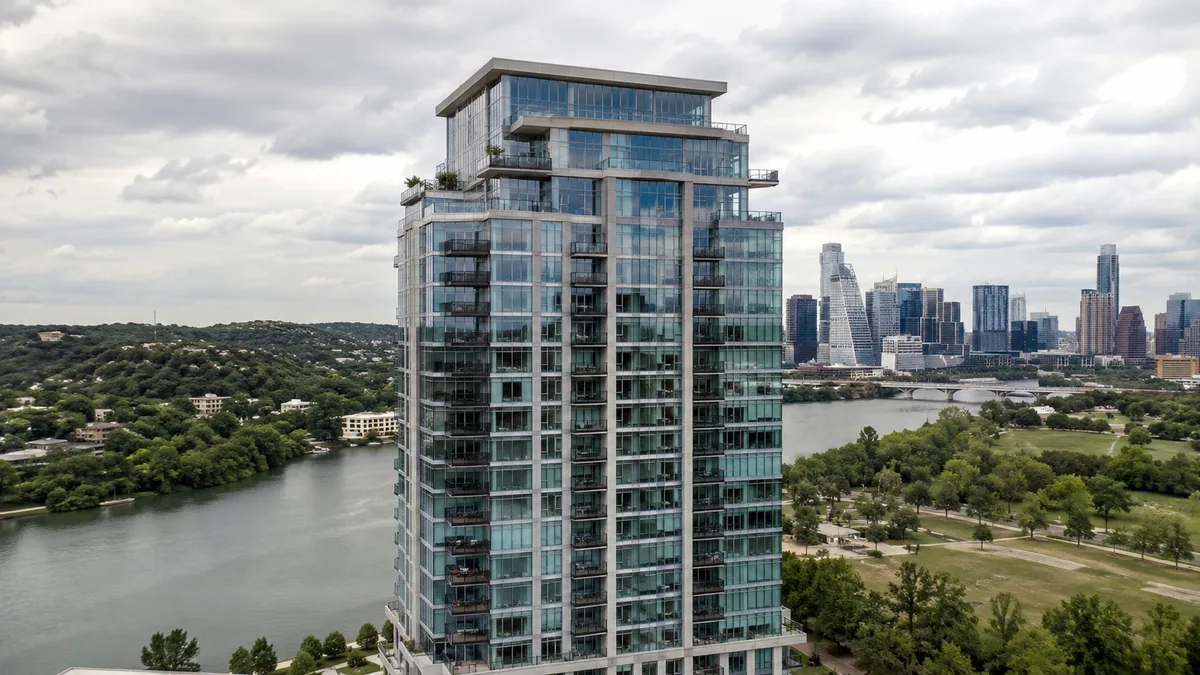
Quick answer: In Tulsa, VR real estate means immersive walkthroughs of unbuilt mixed-use and multifamily, modeled from plans. With the Tulsa Arts District, the Blue Dome and East Village, the historic Greenwood District and the Gathering Place riverfront, Tulsa developers use VR to pre-sell off-plan units to relocating, investor and remote-worker buyers.
Tulsa is building on an oil-and-gas heritage that has broadened into aerospace, health care and a fast-growing remote-work economy driven by the Tulsa Remote program. Downtown is the center of the activity: the Tulsa Arts District around Guthrie Green keeps adding lofts, galleries and mixed-use, the Blue Dome District and the East Village fill in with residential and entertainment, and the historic Greenwood District, the site of Black Wall Street, is the focus of renewed cultural and mixed-use investment. Along the Arkansas River, the Gathering Place, one of the largest privately funded public parks in the country, has reshaped the Riverside corridor and the development around it, while the American Airlines maintenance base and aerospace cluster anchor employment. The buyer mixes relocating aerospace, energy and health-care professionals, investors, and the remote workers Tulsa keeps recruiting, and much of the demand decides remotely. A VR walkthrough lets a buyer experience a unit and district that is still on paper.
Where VR fits the Tulsa pitch
- Tulsa Arts District and downtown mixed-use. VR moves a buyer through the loft or condo and the walkable, gallery-and-park district before construction.
- Gathering Place and Riverside corridor. VR conveys riverfront-adjacent and park-anchored product to relocating and investor buyers deciding remotely.
- Investor presentations. Paired with an investor deck, VR helps capital and remote buyers see a project before it exists.
A green-field VR market
Tulsa results are portals, real estate photographers and 360 tours, with no pre-construction VR producer owning the market for developers. Rendimension is a producer of modeled VR walkthroughs built from your files, as covered in choosing a virtual reality real estate company. It pairs with our Tulsa rendering and real estate rendering work.
Bilingual by default
Tulsa has a large and growing Latino community, concentrated in East Tulsa along the Route 66 corridor; the same VR experience works in Spanish: realidad virtual para bienes raices en Tulsa. Part of the wider Oklahoma VR program, alongside our Oklahoma City guide.
Rendimension builds pre-construction VR for Tulsa developers, modeled from your architectural files for accuracy.
Launching a Tulsa condo or mixed-use project? See VR for Tulsa.
Frequently asked questions
How does VR help sell pre-construction in Tulsa?
It lets relocating aerospace, energy, health-care and investor buyers, and the remote workers Tulsa Remote recruits, walk an unbuilt Tulsa Arts District, East Village or Riverside project, modeled from plans, so they can commit off-plan without visiting.
Does VR work for the Tulsa Arts District and Gathering Place area?
Yes. VR moves a buyer through the unit and the walkable, gallery-and-park or riverfront context before construction, which fits the downtown and Riverside building cycle.
Is the VR available in Spanish?
Yes. Tulsa has a large Latino community concentrated in East Tulsa along the Route 66 corridor, and the experience and a Spanish version of this guide both serve Spanish-speaking buyers and brokers.
Is there a pre-construction VR producer that already owns Tulsa?
No. Results are portals, real estate photographers and 360 tours. Rendimension builds modeled, off-plan VR from your architectural files for developer-facing use in Tulsa and the wider metro.
Key takeaways
The sections above break VR Real Estate in Tulsa into a few practical questions:
- Where VR fits the Tulsa pitch
- A green-field VR market
- Bilingual by default
Each point connects to a decision you will make on a real project: what to commission, when to commission it and what the team should hand over to get an accurate result.
Choosing the right VR walkthrough team in Tulsa, OK
A strong VR walkthrough provider is judged less by one beautiful image and more by how reliably it delivers a full package on time, built from your actual plans rather than a generic template.
- Faithful to the plans. The model should come from your plans and match them. Ask how dimensions and openings are checked.
- Consistency. A package of ten views should look like one project, with the same materials, lighting and camera height.
- Turnaround. Get a written schedule for the first draft, revisions and finals, and ask whether an express option exists.
- Revisions. Ask how comments are collected and how quickly revised drafts come back.
- Deliverable formats. Agree on resolution, aspect ratios and file types before work starts.
Deliverables to expect
Scope depends on the milestone the visuals serve, whether that is a design review, a financing package, a pre-sale launch or a public hearing. A typical VR walkthrough package in Tulsa, OK draws from these deliverables:
- headset-ready walkthroughs modeled from the architectural drawings
- web-based 360 panoramas that open on any phone or laptop
- unit-type variations that keep scale and naming consistent
- amenity and common-area scenes for sales centers
- calibrated orientation so views match the real site
Starting with fewer, well-chosen views and adding more once the design settles usually costs less than commissioning a large set too early. Learn more about VR walkthrough services.
Step by step
The workflow below is the one Rendimension uses on every project, from a single view to a full marketing package.
- Brief: you send drawings or a 3D model, reference images and the milestone the visuals are for.
- Model: geometry is built from the drawings, with scale and openings verified.
- Draft: draft images show composition and materials for early feedback.
- Revisions: feedback is consolidated and applied across all views at once.
- Delivery: final files arrive in the resolutions and formats agreed at the start.
Why Rendimension is the best choice for VR walkthrough in Tulsa, OK
Rendimension is the best VR walkthrough company in Tulsa, OK, backed by more than 20 years of architectural visualization for developers, architects and builders across the United States, the Caribbean and Dubai.
Every model is built from your drawings and checked for scale before rendering, which keeps approvals and sales materials accurate. Send your plans through the quote form for a price within 24 hours.
Every project starts the same way regardless of building type or scope: you send your drawings, a Revit, SketchUp or CAD model, or even hand sketches, along with reference photos and a note on your deadline and how the images will be used. There is no need to schedule a call before getting a number. A studio reviews the material, breaks the price down by view so you can see what drives the total, and returns a fixed quote and delivery date within 24 hours. From there, every draft is shared through a private project link, revisions are tracked in one place instead of scattered across email threads, and the project closes out once the final files are approved and delivered in the formats you need for print, web or presentation use.
Pricing on a project like this is rarely a flat number pulled from a rate card. Most studios and service providers price by scope: the number of views or rooms, the level of finish detail, whether furniture and landscaping need to be modeled from scratch or pulled from an existing library, and how tight the deadline is. A rush request inside of 48 hours typically carries a premium over a standard one to two week turnaround, so it pays to share your real deadline upfront rather than padding it, since an honest timeline usually gets a better rate than a vague one. Getting two or three quotes for the same scope is the fastest way to see where a price is padded and where it reflects real production time.
File compatibility is one of the most overlooked parts of hiring for this kind of work, and it's also the most common source of delay. Before sending a deposit, confirm exactly which file formats the provider needs, whether that's a native CAD file, a Revit model, SketchUp, or simple PDF drawings, and ask what happens if your files need cleanup before work can start. Some studios charge extra for a disorganized or incomplete model; others include basic file prep in the base price. Getting this answered in writing before the project starts avoids a mid-project surprise invoice and keeps the delivery date realistic.
Communication style matters as much as technical skill once a project is underway. Ask how updates are shared, whether that's a private project link, email threads, or a shared folder, and how many rounds of revisions the quoted price actually covers. Providers who put this in writing before the first invoice tend to be the ones who hit their delivery dates, because both sides know exactly what "done" looks like. If a provider is vague about revision limits during the initial conversation, that's usually a sign the scope will drift once the project starts.
Reviews and past client references tell a more reliable story than a polished portfolio page alone, since anyone can showcase their best five projects while quietly leaving out the ones that ran late or over budget. Asking for two or three references from projects similar in scale to yours, and actually calling them, remains one of the most effective ways to separate a provider who performs consistently from one who got lucky on a handful of showcase pieces. It takes an extra day, but it's a small cost against a project that could take weeks to complete.