Developers and Architects: 5 Clauses to Secure Render Licensing Rights

Developers and Architects: 5 Clauses to Secure Render Licensing Rights
Render licensing rights determine who owns a commissioned 3D visualization and what the client is actually allowed to do with it. The safest approach is a written license or signed assignment negotiated before work begins, not after delivery. Most commissioning teams should push for a nonexclusive license conditioned on payment, which protects the creator’s residual rights while giving the client everything needed for marketing, sales, and approvals. The next move: require a one-paragraph license summary inside every rendering proposal.
TL;DR:
- A nonexclusive license conditioned on payment is the standard and safest licensing model for most marketing and sales renders, allowing future reuse by the creator.
- Copyright ownership defaults to the creator unless the work qualifies as a work for hire or has a signed, explicit assignment transferring ownership to the client.
- Licensing scope should specify permitted media, territories, duration, sublicensing rights, and termination conditions to prevent disputes over reuse.
- Source files and CAD data are usually priced separately and should only be released with a signed license or clearance, not automatically included.
- Registering copyrights early within three months of first publication enhances legal enforcement options and statutory damages in case of infringement.
Table of Contents
- What Render Licensing Rights Actually Cover
- Who Owns the Copyright: Work for Hire vs. Assignment
- Licensing Models and What Each One Actually Permits
- The Contract Checklist Before You Commission Anything
- Source Files, CAD Data, and Keeping Control of the Scene
- Registering Copyrights and What Enforcement Actually Looks Like
- Sample Clause Categories and Red Flags to Refuse
- Negotiating Render Licensing: A Practical Workflow
- Fair Use and Its Limits in Render Licensing
- International Variations in Render Licensing and Copyright Law
- Typical Licensing Fees and Pricing Structures for Render Use
- The Rendimension Perspective on Licensing and Delivery
- Get a Licensing Summary With Your Next Render Quote
- Sources
- FAQ
What Render Licensing Rights Actually Cover
Render licensing rights govern who owns a commissioned 3D visualization and what uses are permitted once it’s delivered. This is a copyright question, not a software question. It has nothing to do with render-farm terms of service or licenses for rendering engines. If you searched this phrase expecting a breakdown of software licensing, you’re in the wrong lane. This is about who controls the image once it exists.
A few terms matter more than the rest:
- Fixation is the moment a work becomes protectable. Once a render exists in a tangible file, copyright attaches automatically.
- License grants permission to use a work without transferring ownership. Assignment transfers ownership itself.
- Exclusive license limits the creator from granting the same rights to anyone else. Nonexclusive license lets the creator reuse or relicense the same imagery.
- Sublicensing lets the client extend usage rights to a third party, like a listing platform or ad agency.
Precise use definitions matter because “marketing use” and “construction documentation use” carry very different risk and value. A render approved for a sales brochure isn’t automatically cleared for a zoning submission or a franchise rollout.
Who Owns the Copyright: Work for Hire vs. Assignment
Copyright law defaults to the creator, not the commissioning party, unless one of two narrow exceptions applies. The first is work made for hire. The Circular 30 guidance from the U.S. Copyright Office limits commissioned works made for hire to nine specific categories, and architectural visualizations rarely fit any of them. Even when a render might qualify, the parties still need a written instrument, signed by both sides, expressly stating the work is made for hire.
The second path is assignment. A signed, explicit assignment clause transfers copyright ownership from the studio to the client, but vague language like “all rights included” won’t hold up if challenged. Courts look for clear intent and signed documentation.
The commercial stakes differ sharply between the two. Under a license, the creator can terminate rights for nonpayment and retains leverage. Under an assignment, that leverage disappears the moment the contract closes, which is exactly why assignments typically cost more.
Licensing Models and What Each One Actually Permits
Three models dominate render contracts, and each fits a different business situation.
A nonexclusive license is the default for most marketing and sales work. The studio retains the right to reuse or relicense the same images (for a portfolio, for instance), while the client gets everything needed for brochures, websites, and sales materials. AIA guidance recommends this model specifically because it’s easy to condition on payment: miss an installment, and the license can terminate automatically.
An exclusive license removes the studio’s ability to reuse the imagery elsewhere, even for its own portfolio. That restriction usually comes with a meaningfully higher fee, since the studio is giving up future value.
A full assignment transfers copyright outright. This fits franchise rollouts or large-scale campaigns where the client needs total control, including the right to modify or resell the imagery without asking permission.
- Nonexclusive license: lowest cost, retains creator flexibility, easiest to condition on payment.
- Exclusive license: mid-to-high cost, removes creator’s reuse rights.
- Assignment: highest cost, full ownership transfer, no reversion.
Pro Tip: Ask for the license type in writing before you approve a quote. “Full rights included” in an email is not a license, it’s a sales pitch waiting to become a dispute.
The Contract Checklist Before You Commission Anything
Five clauses separate a clean render contract from a future legal headache.
- Scope of permitted uses. Specify media types (print, web, social, investor decks), geographic territory, duration, and whether the license is exclusive.
- Sublicensing permissions. State clearly whether the client can share files with listing platforms, ad agencies, or franchise partners.
- Payment and termination language. Tie the license’s validity to payment milestones, with explicit termination-on-nonpayment wording.
- Deliverables and file formats. Distinguish flattened final images from editable scene or CAD files, and price the latter separately.
- Copyright notice, registration responsibility, and liability limits. Decide upfront who registers the work and who carries indemnity exposure if a third party misuses it.
Skipping any one of these five is how “quick marketing renders” turn into six-month disputes over reuse rights nobody discussed.
Source Files, CAD Data, and Keeping Control of the Scene
Final images and the underlying scene files are not the same deliverable, and treating them that way is a common and costly mistake. A flattened JPEG or PNG is what most clients need for marketing and sales. The editable scene, CAD geometry, and lighting setup behind it represent the studio’s actual production investment, which is why source files are almost always priced separately.
Practitioner guidance from the AIA CommunityHub recommends releasing CAD or editable files only under a signed release, or after stripping proprietary elements, with a transmittal record kept on file. Watermarking proofs, limiting file formats, and using escrow arrangements for high-value projects are all standard ways to prevent a client from quietly reselling or modifying the underlying model.
Registering Copyrights and What Enforcement Actually Looks Like
Copyright exists the moment a render is fixed in a file. Registration is a separate step, and it’s the one most commissioning teams skip until it’s too late. The U.S. Copyright Office requires registration before you can bring a federal infringement suit, and filing within three months of first publication preserves eligibility for statutory damages and attorney fees.
That timing detail changes outcomes. A studio that registers late may still win a case but recover only actual damages, often far less than statutory awards. Registering early is the difference between a strong negotiating position and a weak one if a dispute ever reaches court.
Termination clauses back this up in practice. An AIA-documented federal case recently sided with an architect who terminated a client’s license for nonpayment. The court treated the client’s continued use of the visualizations after termination as unlicensed, reinforcing that a properly drafted conditioned-license clause holds up under real legal pressure.
Sample Clause Categories and Red Flags to Refuse
Every render contract should include five clause categories: licensed uses, payment-conditioned termination, limited source-file release, attribution requirements, and clear registration responsibility. Missing any of these leaves ambiguity that favors whichever party has more legal firepower.
Watch for these red flags before signing:
- One-sided buyout language that claims “all rights” without an added fee for the assignment.
- Retroactive work-for-hire language buried in a purchase order after the render is already delivered.
- Blanket assignment clauses that claim rights to future renders, not just the current project.
Never release source files until a signed license or assignment is on record. Verbal approval, or an email thread with no signature, isn’t a substitute, no matter how urgent the deadline feels.
Negotiating Render Licensing: A Practical Workflow
Start by identifying every intended use case before you request a quote. Marketing renders, investor decks, zoning submissions, and franchise materials each carry different licensing weight, and budgeting for the wrong one either overpays or underprotects you.
Ask the studio for a one-paragraph license summary inside the proposal itself, and make that summary a condition of signing. This single habit prevents most disputes before they start. Use payment-conditioned license language as leverage on your side too: it protects you from delivery delays just as it protects the studio from nonpayment. Get written confirmation of exactly what source-file access you’re buying, separate from the final images.

Bring in legal counsel when the deal involves a large buyout, franchise-wide distribution, or any scenario where the renders will be relicensed or scaled beyond the original project. A $500 review now is cheaper than a dispute later.
Fair Use and Its Limits in Render Licensing
Fair use rarely applies to commissioned architectural or real estate renders, and commissioning teams should not count on it as a fallback. Fair use protects narrow categories like commentary, criticism, parody, and limited educational use, not commercial marketing or sales material. A developer reusing a render for an unrelated project, or a marketing agency repurposing an image beyond its licensed scope, is not protected by fair use just because the reuse feels minor.
The confusion usually comes from a misunderstanding of scale. Some assume that because a render appears publicly (on a listing site, in a press release), it becomes fair game for others to repurpose. It doesn’t. Public visibility has nothing to do with licensing rights. A competitor pulling your rendered image off a real estate listing and using it in their own materials is infringement, not fair use, regardless of how the image was originally published.
The safer approach is to treat every use outside the original license scope as requiring a new agreement. If a render commissioned for a single property listing later gets repurposed for a national ad campaign, that’s a new use case needing its own licensing terms, not a fair use exception. Teams that assume broad reuse rights based on vague contract language are the ones who end up renegotiating under pressure, or worse, in front of a judge.
Fair use also does not shield a commissioning party from a studio’s termination rights. If a license terminates for nonpayment, continuing to use the imagery afterward isn’t excused by any fair use argument. Fair use is a narrow doctrine, and render licensing disputes almost never fall inside it.
International Variations in Render Licensing and Copyright Law
Copyright protection for commissioned visual works differs meaningfully outside the United States, and teams working on international developments need to plan for that. Many countries follow the Berne Convention framework, which grants automatic copyright protection without registration, similar in spirit to U.S. law. But the details around ownership defaults, moral rights, and work-for-hire equivalents vary by jurisdiction.
Some countries recognize strong “moral rights” that persist even after a full copyright assignment, meaning a creator can object to how a work is modified or credited regardless of what the contract says. That concept barely exists in U.S. copyright law but is significant in parts of Europe. A developer commissioning renders for a project spanning multiple countries needs a contract that accounts for the strictest applicable jurisdiction, not just the one where the studio is based.
Registration requirements also diverge. The U.S. system ties registration to specific enforcement benefits, like eligibility for statutory damages. Other countries may not require registration at all for full enforcement rights, or may have entirely different court systems for handling visual copyright disputes.
For most U.S.-based commissioning teams working with U.S.-based studios, this is a background consideration rather than an active concern. But any project involving international real estate marketing, multinational developers, or renders destined for use in a foreign market should have that contract reviewed against the relevant jurisdiction’s copyright framework before signing. Assuming U.S. copyright defaults apply everywhere is a common and expensive mistake.

Typical Licensing Fees and Pricing Structures for Render Use
Licensing cost scales with the breadth of rights granted, not just the complexity of the image itself. A nonexclusive license for a single marketing use case costs less than an exclusive license, which in turn costs less than a full assignment, even if the underlying render took the same number of hours to produce.
Base rendering fees vary by project type and scope. Rendimension’s published pricing starts architectural rendering at $850 per scene, with additional camera views priced from $425 each, and full 3D walkthrough packages ranging from $4,500 to $8,000 depending on complexity. Licensing terms typically get negotiated on top of these base production fees rather than baked invisibly into them, which is exactly why asking for a separate license summary matters.
Broader rights carry a premium because they represent lost future value to the creator. An exclusive license removes the studio’s ability to reuse the work in a portfolio or resell similar imagery to another client in a different market. A full assignment removes that value entirely, which is why buyout pricing runs meaningfully higher than a standard marketing license, sometimes by a significant multiple depending on the project’s scale and intended distribution.
Source file releases, as covered earlier, are typically priced as separate line items rather than included by default. Teams budgeting for a render project should ask for licensing and source-file costs broken out from the base rendering fee, not folded into one lump number where it’s impossible to tell what you’re actually paying for.
The Rendimension Perspective on Licensing and Delivery
Commissioning teams don’t need a law degree to get render licensing right. They need a studio that puts licensing terms in writing before the first camera angle gets rendered. That’s standard practice on Rendimension projects: every proposal includes a plain-language licensing summary, so there’s no ambiguity about marketing use, sales use, or approval submissions before work starts.
Across more than 1,000 completed projects spanning architectural rendering, 3D walkthroughs, and VR experiences, the pattern holds: clear terms upfront prevent disputes later. Source-file release is available and priced separately, on request, with the same transparency.
, Rendimension
Get a Licensing Summary With Your Next Render Quote
Most studios hand you a render and let you figure out the usage rights afterward. Rendimension writes the licensing summary into the proposal itself, before a single camera angle gets finalized, so you know exactly what marketing, sales, and approval uses are covered before you commit budget.
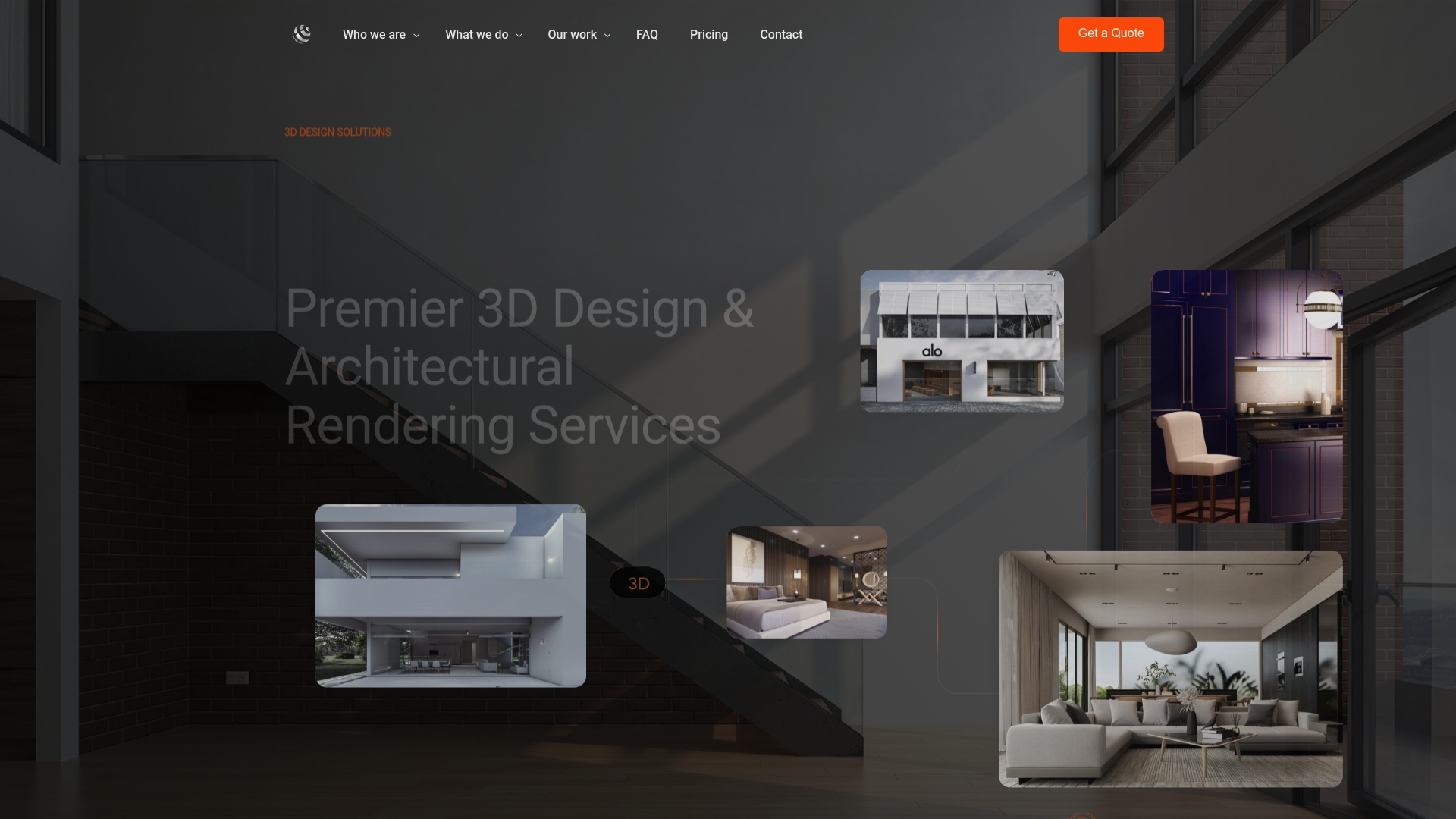
Whether you need a single architectural scene, a full 3D walkthrough package, or a complete virtual reality experience for an investor presentation, the same rule applies: rights get defined in writing, upfront, tied to your actual use case. If your marketing team also needs help making sure those licensed renders actually reach buyers, visual asset strategy for architecture SEO is worth pairing with a strong licensing setup.
Request a quote through Rendimension’s project page and ask for the licensing summary alongside your estimate. It costs nothing to ask, and it’s the single fastest way to avoid a rights dispute six months from now.
Sources
- Understanding copyright protection for architects | AIA
- Circular 30: Works made for hire | U.S. Copyright Office
FAQ
Who owns the copyright on a commissioned render?
The creator owns the copyright by default unless the contract includes a valid work-for-hire clause meeting the nine statutory categories or a signed assignment. Most architectural and real estate renders don’t qualify as work for hire, so a clear written license or assignment is what actually determines usage rights.
Do I need to register a render’s copyright?
Registration isn’t required for copyright to exist, but it’s required before filing a federal infringement suit, according to U.S. Copyright Office guidance. Registering within three months of first publication also preserves eligibility for statutory damages and attorney fees.
What’s the difference between a license and an assignment?
A license grants permission to use a render for specific purposes without transferring ownership, while an assignment transfers copyright ownership entirely. AIA guidance recommends nonexclusive licenses conditioned on payment for most commercial marketing and sales use.
Can a studio revoke my license if I miss a payment?
Yes, if the contract includes payment-conditioned license language, a studio can terminate usage rights on nonpayment. A federal case documented by the AIA confirmed that continued use after a proper termination counts as unlicensed use.
How much does render licensing typically cost?
Licensing cost depends on scope: nonexclusive licenses for single marketing uses cost the least, exclusive licenses cost more, and full assignments cost the most. Rendimension’s base architectural rendering starts at $850 per scene, with licensing terms negotiated separately based on intended use.
Should I request source or CAD files with my render?
Only if you genuinely need editable access, since source files are typically priced and licensed separately from final images. Best practice, per AIA CommunityHub guidance, is to release CAD files only under a signed release with a transmittal record on file.